.webp&w=384&q=75)

Loading, please wait...
Loading, please wait...

Engaging in regular physical activity in CVD remains one of the most effective non-pharmacological interventions to reduce secondary mortality and improve quality of life. However, clinicians consistently observe that maintaining long-term exercise adherence poses substantial behavioral hurdles for high-risk patients. Therefore, understanding the multi-dimensional correlates that dictate movement behaviors is essential for tailoring preventive cardiology strategies. Recent evidence from the Paracelsus 10,000 cohort study provides robust insights into how sociodemographic, clinical, behavioral, and psychological factors intersect to shape physical exercise in vulnerable adults.
To identify the primary drivers of exercise engagement, investigators analyzed data from 1,173 participants presenting with elevated cardiovascular risk or documented cardiovascular disease. The analysis evaluated twenty-nine candidate correlates across multiple physical activity dimensions, utilizing both stepwise multivariable linear regression and advanced machine learning models. Consequently, the researchers discovered that historical exercise habits serve as the strongest independent predictor of current physical activity levels. Furthermore, individuals who maintained an active routine during earlier decades of life displayed significantly higher weekly hours of walking, cycling, and sports participation. In contrast, those with a sedentary past struggled significantly more to achieve current guidelines.
In addition to behavioral history, occupational status and nutritional lifestyle demonstrated meaningful associations with active movement. Specifically, retirement status positively correlated with increased leisure-time physical activity, suggesting that time availability represents a critical facilitator for cardiovascular conditioning. Concurrently, participants who adhered closely to a Mediterranean diet showed substantially higher rates of weekly exercise. Because individuals frequently adopt lifestyle behaviors in clusters, a nutritious diet and routine exercise often reinforce one another. Hence, clinicians should recognize that counseling patients on overall wellness rather than isolated behaviors can foster better adherence and synergistic cardiovascular benefits.
Conversely, psychological distress and systemic disease burden emerged as prominent barriers to active living. Multiple regression analyses demonstrated that both major depression and cumulative comorbidities exhibited strong inverse relationships with physical activity volumes. For instance, depressive symptoms substantially reduced the likelihood of engaging in structured sports or brisk walking routines. Similarly, chronic musculoskeletal limitations and metabolic disorders created physical barriers that discouraged regular exertion. Thus, treating physicians must actively screen for affective disorders and optimize pain management when prescribing structured rehabilitation programs to cardiac cohorts.
Beyond traditional linear regression, the study deployed five distinct machine learning algorithms, including random forest and gradient boosting frameworks, to capture non-linear interactions. Interestingly, these models confirmed that while past activity, retirement, and depressive symptoms predominated across all metrics, specific correlates varied across different types of movement. For example, female participants engaged more frequently in household work and gardening, whereas male participants accumulated higher volumes of leisure-time sports. Consequently, evaluating physical activity through a singular metric risks overlooking meaningful domestic exertion, highlighting the need for gender-sensitive assessment tools in outpatient cardiology settings.
Ultimately, these findings carry practical implications for general practitioners, cardiologists, and exercise physiologists caring for at-risk populations. Because past activity strongly predicts present behavior, clinicians must identify lifelong sedentary habits early and provide structured behavioral support rather than generic advice. Moreover, addressing concurrent depression through integrated behavioral health services can remove substantial hurdles to exercise initiation. By taking into account an individual's occupational transitions, systemic comorbidities, and dietary habits, healthcare providers can design individualized, sustainable exercise prescriptions that effectively mitigate cardiovascular morbidity.
An individual's past history of physical activity during earlier decades strongly predicts their current exercise habits. Patients with lifelong active routines sustain significantly higher weekly activity levels, whereas historically sedentary individuals face steeper behavioral barriers and require structured, ongoing guidance to establish regular exercise.
Retirement often alleviates workplace-related time constraints and occupational fatigue, providing individuals with greater flexibility to schedule structured leisure-time exercise. Consequently, clinicians should utilize the transition into retirement as a strategic window of opportunity to promote cardiovascular rehabilitation and active living habits.
Depression exerts a potent negative effect on exercise adherence by reducing motivation, energy levels, and self-efficacy in patients with cardiovascular disease. Therefore, identifying and treating depressive symptoms through integrated behavioral therapies is essential to help patients initiate and maintain long-term physical activity programs.
Disclaimer: This content is for informational and educational purposes only. It is not intended to provide medical advice, diagnosis, or treatment. Always consult a healthcare professional regarding any medical condition. Refer to the latest local and national guidelines for clinical practice.
References
Kulnik ST et al. Correlates of physical activity behaviour in a population sample with increased cardiovascular risk and established cardiovascular disease: Cross-sectional analysis of data from the Paracelsus 10,000 prospective cohort study in Salzburg, Austria. PLoS One. 2026. doi: 10.1371/journal.pone.0356607. PMID: 42616766.
Pelliccia A et al. 2020 ESC Guidelines on sports cardiology and exercise in patients with cardiovascular disease. European Heart Journal. 2021;42(1):17-96.
Hansen D et al. Exercise prescription in patients with different combinations of cardiovascular disease risk factors: a consensus statement from the EXPERT working group. Sports Medicine. 2018;48(8):1799-1830.

Read summarized clinical updates, watch expert medical content, and earn CME certifications right from your smartphone.
Open your smartphone camera to scan and install.





Cross-sectional data from the Paracelsus 10,000 cohort reveal key correlates of exercise engagement among adults with high cardiovascular risk and established disease. Factors like past activity habits, retirement, diet quality, and depression heavily influence long-term physical activity behaviors.
last month

Pancreatic cancer cachexia affects over 80% of patients, driving severe muscle wasting, systemic inflammation, and treatment intolerance. This review highlights key pathophysiological drivers, exocrine insufficiency, objective CT imaging, and emerging therapies like GDF-15 inhibitors to improve clinical outcomes.
Today

A scoping review reveals how pregnancy affects phonation through laryngeal edema and reduced phonation time rather than major acoustic pitch alterations. Learn how to identify, evaluate, and manage vocal symptoms in expectant mothers.
Today
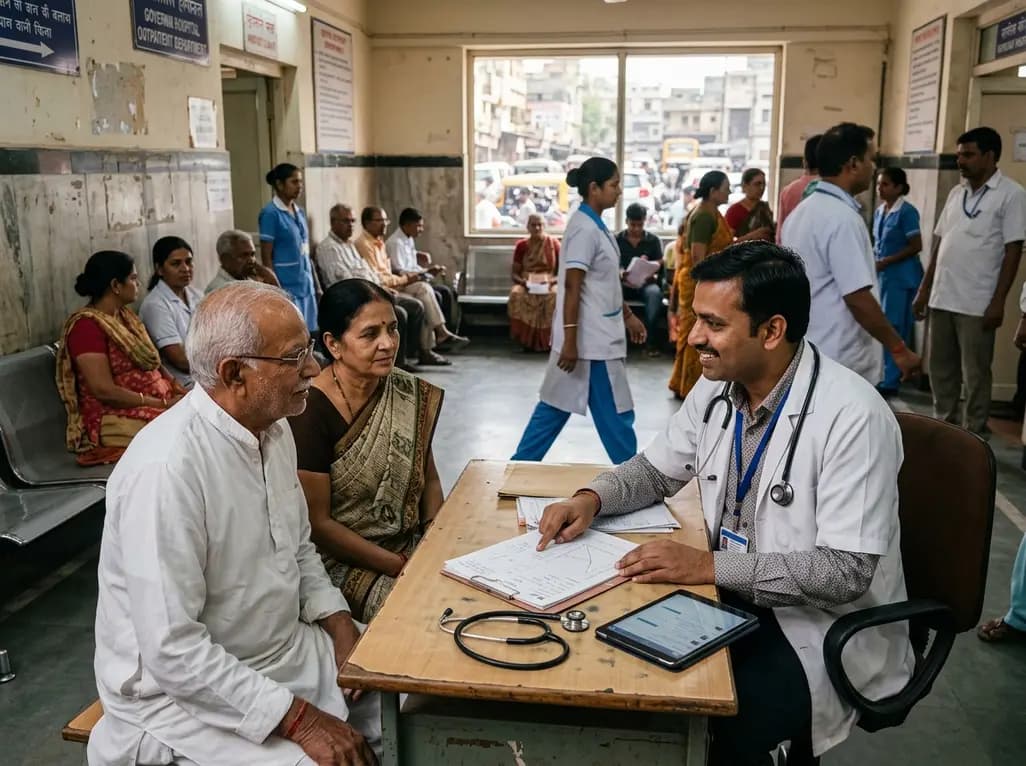
According to WHO data, average lifespan reached 73.3 years in 2023, recovering from pandemic lows. However, healthy life expectancy lags at 62.8 years due to surging noncommunicable conditions like cardiovascular disease and dementia, demanding proactive primary screening and sustained chronic care.
Today

Researchers have engineered an artificial sensory-pain integrated receptor using a multi-threshold organic synaptic transistor. The system distinguishes benign touch from noxious stimuli, enabling safer, more responsive prosthetic limbs with built-in memory and simplified hardware architecture.
Today

Medical robotics is transitioning beyond operative suites into diagnostics, cardiology, and endocrinology. Explore how innovations in tele-robotics, AI integration, and nanomedicine are overcoming geographical barriers and transforming precision healthcare delivery across India's evolving disease landscape.
Today
