.webp&w=384&q=75)

Loading, please wait...
Loading, please wait...
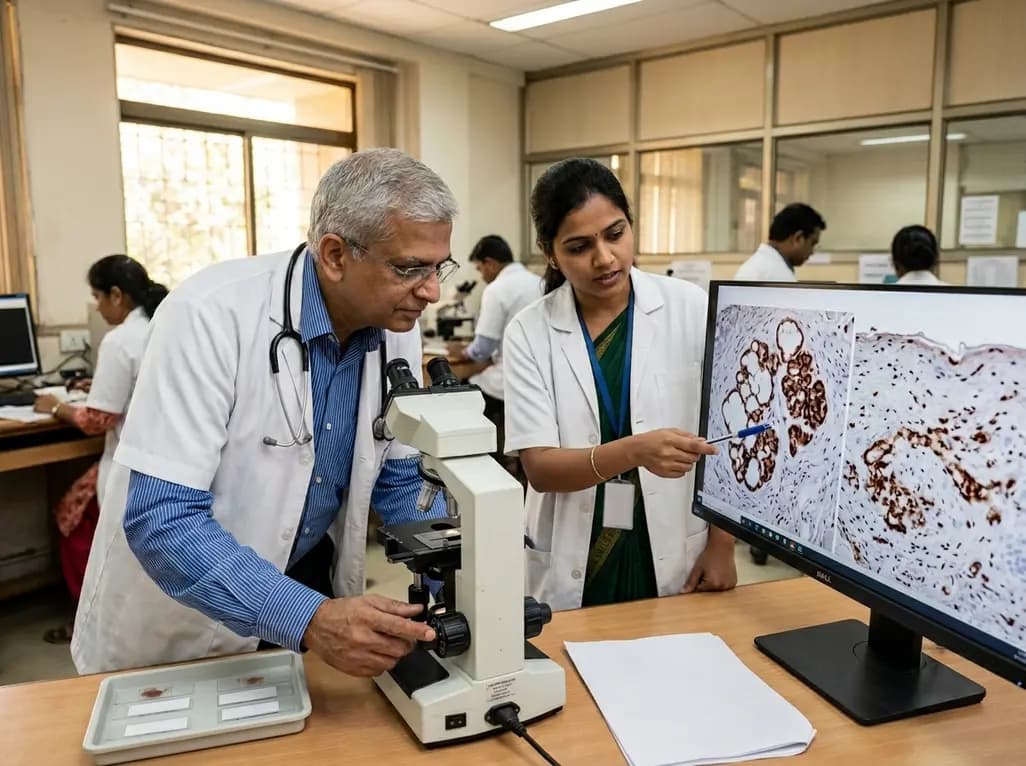
Researchers have recently identified that the expression of phosphorylated MEK1 in CM (Capillary Malformations) plays a pivotal role in the molecular pathogenesis of these vascular lesions. Scientists generally associate capillary malformations with the abnormal dilation of capillaries. This process often results from the activation of the RAS-RAF-MEK-ERK signaling pathway, typically triggered by somatic mutations in the GNAQ or GNA11 genes. However, until recently, clinical evidence demonstrating the actual phosphorylation of MEK within these lesions was scarce.
The latest study categorized CMs into three distinct clinical and histopathological types: flat, hypertrophic, and nodular. Notably, the expression of p-MEK1 was significantly positive in the dilated capillaries located in the upper dermis of flat lesions. Furthermore, double staining with CD34 confirmed that p-MEK1 expression occurs specifically within the vascular endothelial cells. Interestingly, the researchers observed a mosaic pattern where both p-MEK1-positive and p-MEK1-negative vessels existed within the same malformation. Specifically, some positive vessels appeared deeper in the tissue than clinicians previously anticipated.
The discovery of distinct staining patterns offers a major leap forward in dermatopathology. While flat and hypertrophic types showed consistent p-MEK1 activity, the nodular type displayed no p-MEK1 expression in its proliferated capillaries. Consequently, this supports the theory that nodular capillary malformations arise through a unique biological mechanism. Additionally, the study found that other proteins, such as JNK and ERK, were also phosphorylated in these dilated vessels. Therefore, visualizing these affected vessels through p-MEK1 immunostaining provides a reliable tool for both accurate diagnosis and a deeper understanding of the underlying disease drivers.
p-MEK1 expression confirms the activation of the RAS-RAF-MEK-ERK pathway in vascular endothelial cells, which is the primary driver behind capillary dilation in these lesions.
Flat and hypertrophic CMs typically show p-MEK1 positivity in the dermis, whereas nodular CMs lack this expression, suggesting a different pathogenic mechanism for the nodular variant.
Yes, research shows that p-MEK1-positive vessels can appear in both the upper dermis and deeper layers, and they often present in a mosaic pattern alongside negative vessels.
Disclaimer: This content is for informational and educational purposes only. It does not constitute medical advice or establish a doctor-patient relationship. Always seek the advice of a qualified healthcare provider regarding any medical condition. Refer to the latest local and national guidelines for clinical practice.
References
Takiwaki M et al. Analysis of Phosphorylated MEK1 Expression Pattern in Cutaneous Dilated Vessels of Capillary Malformations. J Dermatol. 2026 Jun 15. doi: 10.1111/1346-8138.70355. PMID: 42298299.
Shirley MD et al. GNAQ Mutations in Capillary Malformations. N Engl J Med. 2013;368(21):1971-9.
Fish JE et al. Somatic Gain of KRAS Function in the Endothelium Is Sufficient to Cause Vascular Malformations That Require MEK but Not PI3K Signaling. Circ Res. 2020;127(6):727-743.

Read summarized clinical updates, watch expert medical content, and earn CME certifications right from your smartphone.
Open your smartphone camera to scan and install.





Recent research highlights the role of phosphorylated MEK1 (p-MEK1) in the pathogenesis of capillary malformations. By identifying p-MEK1 expression in vascular endothelial cells, clinicians can better differentiate between flat and nodular CM types, offering new avenues for diagnosis and molecular understanding.
4 months ago

As monsoon seasons elevate arboviral disease threats, Tamil Nadu has initiated an ICMR-monitored evaluation of the tetravalent dengue vaccine in Tenkasi district. Clinicians emphasize clinical monitoring, public prevention, and high-quality early pediatric care to reduce disease morbidity across endemic regions.
Today

Leucine Rich Bio has introduced South Asia's first comprehensive vaginal microbiome test, BugSpeaks. By profiling microbial dysbiosis, pathogens, and antimicrobial resistance, this next-generation diagnostic platform provides clinicians with deeper insights into recurrent infections, fertility, and reproductive health.
Today

Review how tailored exercise programs benefit frail older patients with heart failure. Explore pathophysiological mechanisms, individualized training prescriptions, and strategies to overcome adherence barriers in clinical practice.
Today

This comparative study evaluates posterior labral tears with and without glenohumeral instability, highlighting distinct demographic patterns, MRI underestimation in stable shoulders, and successful arthroscopic repair outcomes.
Today

A clinical study demonstrates that early intervention with tocilizumab, either as monotherapy or bridged with corticosteroids, achieves significant proptosis reduction and resolves active inflammation in treatment-naive thyroid eye disease.
Today
