.webp&w=384&q=75)

Loading, please wait...
Loading, please wait...

In the United States, methadone for opioid use disorder (OUD) remains primarily restricted to specialized opioid treatment programs (OTPs). However, researchers are now exploring pharmacy-based methadone dispensing as a logical solution to bridge the treatment gap. A recent qualitative study conducted in North Carolina investigated how OTP staff members view the implementation of pharmacy-based medication units. While the study found moderate interest in this model, it also highlighted specific administrative and social challenges that require careful navigation.
OTP staff participants identified several significant advantages to integrating methadone services into community settings. Primarily, they endorsed the potential for increased treatment access for patients who face transportation hurdles or restrictive clinic hours. Furthermore, staff members believe that OTP-pharmacy collaboration could streamline care and reduce the heavy burden on centralized clinics. This transition could allow stable patients to receive their medication in a less clinical, more community-integrated environment.
Despite the potential benefits, many staff members voiced concerns regarding the suitability of the pharmacy environment. One major theme was the fear of community pharmacy stigma, which could negatively impact patient retention and well-being. Additionally, some providers worried about the potential loss of integrated counseling services that OTPs typically offer. Consequently, a perceived lack of pharmacy interest was cited as a major hurdle to widespread implementation. Practitioners felt that without dedicated support, pharmacies might view methadone dispensing as a liability rather than a service.
To overcome these obstacles, the study identified five key implementation facilitators. These include the willingness of OTPs to partner with external sites and the capability of pharmacists to manage these specialized services. Moreover, the integration of telehealth can facilitate remote monitoring and consultation, ensuring safety and compliance. Clear communication channels and adequate reimbursement models were also noted as essential for sustaining these partnerships. Therefore, a structured framework is necessary to ensure that both pharmacies and clinics benefit from the model.
The results of this study suggest that while interest in pharmacy-based methadone dispensing is moderate, practical concerns must be addressed before a full-scale rollout. Researchers recommend conducting pilot studies to refine the medication unit model and identify the best practices for the pharmacy setting. By testing these models in controlled environments, stakeholders can better understand how to mitigate stigma and maintain the quality of clinical care.
A medication unit is a satellite location, such as a community pharmacy, that is affiliated with a certified opioid treatment program to provide methadone dispensing and limited clinical services.
Telehealth allows OTP clinicians to provide remote counseling, medical assessments, and supervision of the treatment plan while the patient receives their medication at a local pharmacy.
The primary concerns include potential stigma from pharmacy staff or other customers, the lack of on-site addiction counseling, and the regulatory complexity of managing controlled substances in a retail environment.
Disclaimer: This content is for informational and educational purposes only and does not constitute medical advice, diagnosis, or treatment. Always seek the advice of a qualified healthcare provider regarding a medical condition. The regulations surrounding methadone dispensing vary significantly by region and country. Refer to the latest local and national guidelines for clinical practice.
References
Shubel C et al. Expanding Methadone Access Through Community Pharmacies: A Qualitative Study Exploring Opioid Treatment Program Staff Perceptions of Pharmacy-Based Medication Units. Subst Use Addctn J. 2026 May 31. doi: 10.1177/29767342261449037. PMID: 42218615.
National Drug Dependence Treatment Centre (NDDTC). Methadone Maintenance Treatment in India: A Guide for Practitioners. United Nations Office on Drugs and Crime (UNODC).
Rajagopal MR. Methadone is Now Available in India: Is the Long Battle Over? Indian Journal of Palliative Care. 2017;23(1):1-2.

Read summarized clinical updates, watch expert medical content, and earn CME certifications right from your smartphone.
Open your smartphone camera to scan and install.





A qualitative study explores the perceptions of opioid treatment program staff regarding the use of community pharmacies for methadone dispensing....
4 months ago

A retrospective cohort study reveals that frailty quadruples the odds of pressure injuries in hospitalized older adults. Integrating the Clinical Frailty Scale with comprehensive geriatric care is crucial for identifying vulnerability early and implementing targeted multidisciplinary prevention.
Today

Occult maternal malignancy accounts for 3.82% of persistent unreportable NIPT results with genomic noise. Multiple chromosomal aberrations, notably on chromosome 18, warrant thorough oncological evaluation and whole-body MRI to ensure timely maternal diagnosis while preserving fetal care.
Today

This article reviews the forensic and clinical complexities of acute myocarditis arising on left ventricular hypertrophy in children, highlighting early diagnostic red flags and multidisciplinary postmortem autopsy protocols.
Today
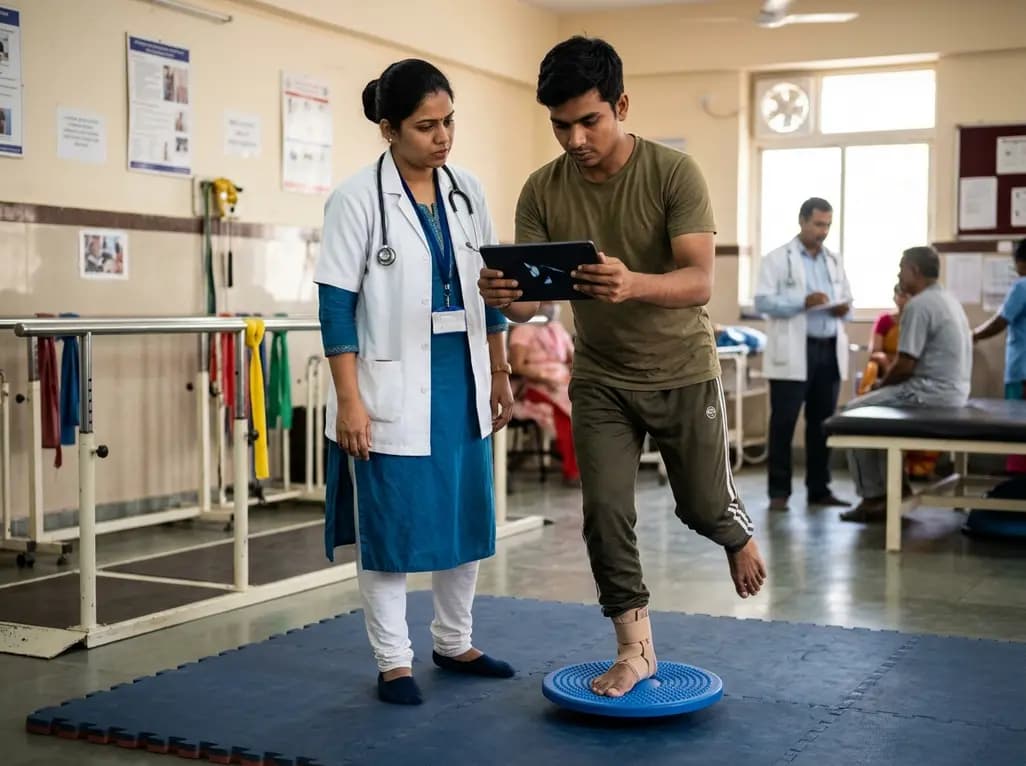
A randomized controlled trial demonstrates that an eight-week dual-task training intervention significantly improves static and dynamic postural control over standard balance exercises in individuals with chronic ankle instability, addressing critical neurocognitive deficits during athletic and daily activities.
Today

A retrospective cohort study of 7,716 ICU patients from the MIMIC-IV database demonstrates that Gradient Boosting Decision Trees significantly outperform traditional SOFA scores in predicting in-hospital mortality among patients with sepsis and diabetes, with SHAP analysis providing clinical interpretability.
Today
