.webp&w=384&q=75)

Loading, please wait...
Loading, please wait...

Pharmacogenetics in malaria therapy is emerging as a critical field for optimizing the treatment of Plasmodium vivax infections. A recent study investigated how polymorphisms in cytochrome P450 (CYP) genes influence the pharmacokinetics of chloroquine (CQ) and primaquine (PQ). Specifically, the research focused on patients with confirmed monoinfections to assess drug levels and clinical outcomes. Researchers analyzed variants in CYP2C8, CYP2C9, CYP2C19, CYP2D6, and CYP3A5 to understand their impact on therapeutic response. These findings provide vital clues for personalizing antimalarial regimens in endemic regions like India.
The study results revealed that specific genetic variants significantly modulate drug metabolism. For instance, the CYP3A5*3 variant showed a strong association with altered levels of desethylchloroquine, which is the primary metabolite of chloroquine. Additionally, carrying the CYP2C19*3 allele appeared to facilitate faster parasite clearance. Although many patients carried reduced-function variants, the standard CQ-PQ regimen achieved complete parasite clearance in all participants. Consequently, this suggests that while genetics influence drug kinetics, clinical efficacy may remain robust under standard dosing protocols in most cases.
Notably, a patient identified as a CYP2D6 poor metabolizer responded successfully to primaquine treatment. This observation is particularly interesting because clinicians typically consider CYP2D6 essential for activating primaquine into its therapeutic forms. Therefore, researchers hypothesize that alternative or compensatory metabolic pathways might exist to support drug activation. Furthermore, the high prevalence of the CYP3A5*3 and CYP2D6*10 alleles underscores the need for ongoing surveillance. Monitoring these genetic markers will be vital for tailoring antimalarial strategies as we move toward malaria elimination.
The CYP3A5*3 variant is associated with significant changes in the levels of desethylchloroquine, the active metabolite of chloroquine. While this may alter the drug's pharmacokinetic profile, evidence suggests that standard doses often remain clinically effective for parasite clearance.
Although CYP2D6 is the primary enzyme for primaquine activation, some patients with reduced or poor metabolism still achieve successful clinical outcomes. This indicates that other metabolic pathways or drug-parasite interactions might compensate for lower CYP2D6 activity.
Disclaimer: This content is for informational and educational purposes only and does not constitute medical advice. Refer to the latest local and national guidelines for clinical practice.
References
1. Phompradit P et al. Pharmacogenetic Profiling of Cytochrome P450 Enzymes in Plasmodium vivax Patients Treated with Chloroquine and Primaquine: Implications for Personalized Malaria Therapy. Am J Trop Med Hyg. 2026 Feb 12. doi: undefined. PMID: 41678828.
2. Bennett JW et al. Global perspectives on CYP2D6 associations with primaquine metabolism and Plasmodium vivax radical cure. PMC. 2022 Nov 15.
3. Cardoso JLM et al. Influence of CYP2D6, CYP3A4 and CYP2C19 Genotypes on Recurrence of Plasmodium vivax. Frontiers in Pharmacology. 2022 Mar 22.

Read summarized clinical updates, watch expert medical content, and earn CME certifications right from your smartphone.
Open your smartphone camera to scan and install.





New research highlights how CYP450 polymorphisms like CYP3A5*3 and CYP2C19*3 influence the metabolism of chloroquine and primaquine in P. vivax patients....
8 months ago

Co-administering antiseizure medications and DOACs frequently causes pharmacokinetic interactions, subtherapeutic drug levels, and thromboembolic failures. This review highlights enzyme induction risks, unpredictable outcomes with levetiracetam, and the vital role of therapeutic drug monitoring.
Today

Demanding exhaustive hormonal profiling can inadvertently discourage clinical studies involving females. Methodological standards must align with the specific scientific question to expand, not restrict, equitable evidence for women.
Today
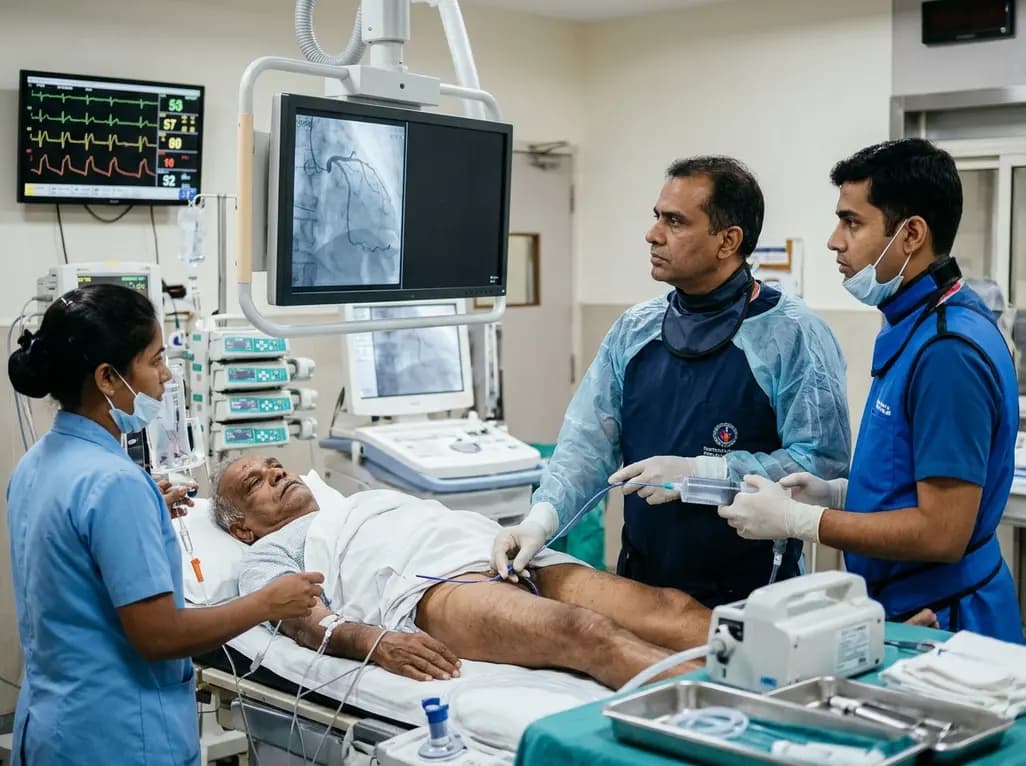
An elderly man with partially repaired Tetralogy of Fallot presented with STEMI caused by coronary embolism rather than atherosclerosis. Successful treatment with sustained mechanical aspiration thrombectomy underscores the vital need for high clinical vigilance in adult congenital heart disease.
Today

A comparative review of tension band wiring and intramedullary screw fixation in thumb metacarpophalangeal arthrodesis, evaluating union rates, hardware complications, and clinical outcomes.
Today

Following regulatory scrutiny from FSSAI regarding promotional representations and lean muscle preservation claims, Dr. Reddy's Laboratories and Nestlé Health Science are currently reviewing the branding and marketing strategy for their joint nutritional supplement Celevida GLP+.
Today
