.webp&w=384&q=75)

Loading, please wait...
Loading, please wait...

Pesticide residue dynamics in leafy vegetables like spinach are a critical focus for public health experts and clinicians. A recent study published in Pest Management Science successfully parameterized the dynamiCROP model for spinach. This species was previously absent from default modeling databases. Consequently, this advancement provides a robust tool for predicting chemical dissipation under controlled conditions.
Researchers applied nine common pesticides to spinach crops during controlled field trials. They incorporated specific parameters, such as the leaf area index and growth stages, to refine the simulations. Therefore, the model demonstrated impressive accuracy, with correlation values exceeding 0.8. Most importantly, the mean absolute error remained below the Maximum Residue Limits (MRLs) established by regulatory bodies.
The study also included a comprehensive dietary risk assessment. While propamocarb initially showed the highest hazard quotient, all chemical levels fell significantly within 14 days. Specifically, the hazard values dropped below 10% of the safety threshold. Furthermore, this model supports science-based regulatory management by addressing gaps in current residue modeling.
In India, where agencies like the FSSAI monitor food safety, such predictive models could enhance national surveillance. Consequently, better data will lead to safer dietary guidelines for consumers and clearer advice from healthcare providers regarding vegetable preparation. These scientific tools are essential for managing the long-term health impacts of agricultural chemicals.
The dynamiCROP model is a predictive tool that simulates how pesticides move and dissipate within food crops. It helps scientists determine if residue levels will be safe by the time a vegetable reaches the market.
This research provides a framework that Indian regulators can use to set more accurate pre-harvest intervals. Consequently, this ensures that leafy vegetables like spinach contain fewer harmful chemicals when consumed.
Disclaimer: This content is for informational and educational purposes only. It does not constitute medical advice or a substitute for professional healthcare. Refer to the latest local and national guidelines for clinical practice.
References

Read summarized clinical updates, watch expert medical content, and earn CME certifications right from your smartphone.
Open your smartphone camera to scan and install.





New research adapts the dynamiCROP model for spinach, allowing for accurate prediction of pesticide residues and enhanced dietary risk assessments....
6 months ago

India is advancing preventive healthcare by integrating genomics, artificial intelligence, and quantum technologies. With the SANGAM programme sequencing one million Indian genomes, clinicians can unlock personalized therapies, detect cardiometabolic risks early, and curb the burden of diabetes and heart disease.
Today

Occult maternal malignancy accounts for 3.82% of persistent unreportable NIPT results with genomic noise. Multiple chromosomal aberrations, notably on chromosome 18, warrant thorough oncological evaluation and whole-body MRI to ensure timely maternal diagnosis while preserving fetal care.
Today

This article reviews the forensic and clinical complexities of acute myocarditis arising on left ventricular hypertrophy in children, highlighting early diagnostic red flags and multidisciplinary postmortem autopsy protocols.
Today
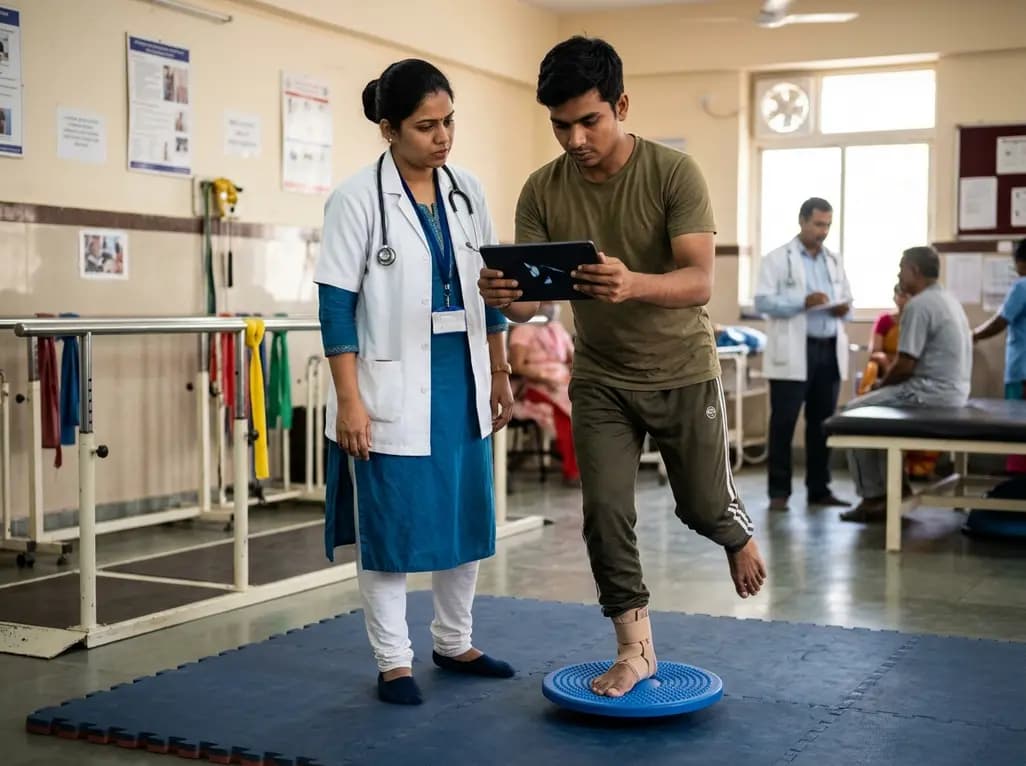
A randomized controlled trial demonstrates that an eight-week dual-task training intervention significantly improves static and dynamic postural control over standard balance exercises in individuals with chronic ankle instability, addressing critical neurocognitive deficits during athletic and daily activities.
Today

A retrospective cohort study of 7,716 ICU patients from the MIMIC-IV database demonstrates that Gradient Boosting Decision Trees significantly outperform traditional SOFA scores in predicting in-hospital mortality among patients with sepsis and diabetes, with SHAP analysis providing clinical interpretability.
Today
