.webp&w=384&q=75)

Loading, please wait...
Loading, please wait...
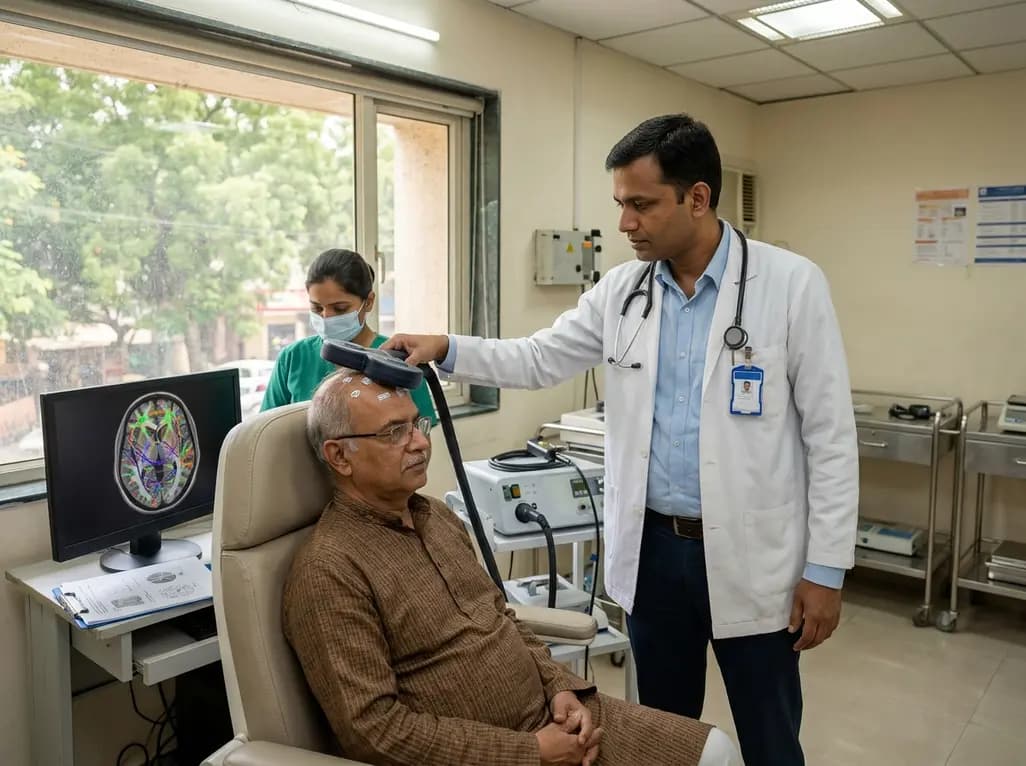
Chronic pain remains a significant clinical challenge globally, often requiring a multifaceted management approach. In recent years, repetitive transcranial magnetic stimulation (rTMS) has emerged as a promising non-invasive tool for providing relief. This technique uses magnetic fields to stimulate specific brain regions, potentially altering the neural circuits responsible for pain perception. However, clinical responses to rTMS are notoriously variable, leading researchers to explore personalized neuromodulation for pain. By tailoring the stimulation site to an individual's unique brain architecture, clinicians hope to improve the efficacy of this intervention. Traditional protocols usually target the primary motor cortex (M1), but this one-size-fits-all strategy does not account for the vast differences in cortical connectivity among patients.
Consequently, the search for objective biomarkers to guide target selection has intensified. Understanding how different brain regions communicate can help identify areas that are more receptive to magnetic pulses. Therefore, researchers are investigating whether pre-therapy connectivity measures can predict which patients will benefit most from neuromodulation. This paradigm shift aims to move away from trial-and-error treatments toward more precise, data-driven interventions. Furthermore, the integration of electroencephalography (EEG) with rTMS provides a window into real-time brain dynamics. This technological synergy allows for a deeper understanding of how the brain responds to stimulation, potentially paving the way for more effective chronic pain management strategies in clinical settings across India and beyond.
The recent trial by De Martino and colleagues utilized a sophisticated approach to evaluate personalized neuromodulation for pain. The research team focused on four potential cortical targets: the primary motor cortex (M1), the dorsolateral prefrontal cortex (DLPFC), the anterior cingulate cortex (ACC), and the posterosuperior insular cortex. Before the treatment sessions began, the researchers recorded TMS-evoked EEG potentials to map the baseline state of these regions. To quantify connectivity, they employed the debiased weighted phase lag index (wPLI), which measures how brain regions lock their oscillatory phases together. This distance-weighted measure reflects both the magnitude and the spatial extent of neural communication, offering a comprehensive view of global brain connectivity.
Based on the principles of homeostatic plasticity, the researchers hypothesized that stimulating areas with low global connectivity would produce superior outcomes. Specifically, they believed these regions might be more "open" or amenable to the modulating effects of rTMS. In contrast, highly connected regions might be more resistant to external influence due to their stable internal dynamics. Therefore, ninety patients were randomized into three distinct groups: Low-Connectivity, High-Connectivity, and Classic-M1. This design allowed the team to directly compare a connectivity-guided strategy against the current standard of care. Each participant received 12 rTMS sessions over eight weeks, a duration chosen to observe potential long-term neural adaptations. By systematically testing these hypotheses, the study aimed to determine if individual brain states could truly dictate the best therapeutic target.
The primary focus of the trial was to determine the proportion of patients who achieved at least a 30% reduction in pain intensity. This metric is widely recognized as a clinically meaningful threshold for chronic pain relief. In addition to the primary outcome, the researchers tracked various secondary measures, including pain interference, sleep quality, fatigue levels, and overall mood. They also utilized the patient global impression of change to capture the participants' subjective experience of their progress. Despite the rigorous methodology and the innovative hypothesis-driven design, the results revealed no significant between-group differences for either primary or secondary outcomes. All p-values remained above the threshold of 0.05, indicating that the connectivity-guided approach did not statistically outperform the classic M1 targeting.
Moreover, the study found that the overall analgesic efficacy was similar across the Low-Connectivity, High-Connectivity, and Classic-M1 groups. This finding suggests that while connectivity is a critical component of brain function, using global measures to select a single rTMS target may not be sufficient to enhance pain relief. Nevertheless, the lack of significant differences does not imply that rTMS itself is ineffective. Rather, it highlights the complexity of the pain-processing network and the difficulty of finding a universal biomarker. Consequently, the research underscores the need for more nuanced targeting strategies that perhaps consider local rather than just global connectivity. It also reminds clinicians that the standard M1 target remains a robust, though imperfect, option in current neuromodulation practice.
One of the most intriguing aspects of this study was the exploratory analysis focusing on local connectivity within the M1 region. Although the global connectivity strategy did not yield the expected benefits, the researchers found a significant correlation in the Classic-M1 group. Specifically, lower pre-therapy local M1 connectivity was associated with greater pain reduction (r = 0.50, p = 0.005). This suggests that the local state of the target region might be a more important predictor of treatment response than its global connections. This finding aligns with the theory of homeostatic plasticity, which posits that neural circuits adjust their sensitivity based on their current level of activity or connectivity.
In this context, a region with low local connectivity may have a greater "plastic potential," making it more responsive to the rhythmic magnetic pulses of rTMS. Conversely, a region that is already highly synchronized locally might have less room for therapeutic modulation. However, it is essential to note that this association was only observed in the Classic-M1 group and not in the Low- or High-Connectivity groups. This discrepancy indicates that M1 might have unique properties compared to other cortical sites like the DLPFC or ACC when it comes to pain modulation. Therefore, these results are considered hypothesis-generating and require further prospective validation. Future research should investigate whether focusing on local M1 dynamics can refine personalized neuromodulation for pain and improve patient outcomes.
For medical professionals in India, these findings offer valuable insights into the evolving landscape of neuromodulation. While the trial did not validate global connectivity as a definitive targeting tool, it reinforced the role of M1-targeted rTMS as a viable intervention for chronic pain. In many Indian clinical settings, rTMS is becoming increasingly available as a third-line treatment for neuropathic pain and fibromyalgia. Given the results of this study, clinicians can continue to rely on standard M1 protocols while remaining aware of the emerging research into personalized biomarkers. Additionally, the study highlights that while advanced EEG-based targeting is scientifically fascinating, it may not yet be necessary for routine clinical practice.
Furthermore, the trial emphasizes the importance of managing patient expectations regarding neuromodulation. Since approximately 30-50% of patients respond to rTMS, identifying responders remains a priority. The association between lower local M1 connectivity and better outcomes suggests that some patients may be naturally more "primed" for rTMS than others. Consequently, clinicians should consider a comprehensive assessment of the patient's pain profile and perhaps look toward future tools that simplify local connectivity measurements. Moreover, the integration of rTMS into a multidisciplinary pain management plan—alongside pharmacotherapy and physical therapy—remains the most effective approach. This holistic strategy ensures that all aspects of the patient's wellbeing are addressed while leveraging the potential of advanced technology.
Moving forward, the field of personalized neuromodulation for pain must bridge the gap between complex research findings and practical application. The De Martino study serves as a critical stepping stone, illustrating that global connectivity measures may be too broad to guide individual therapy. Future trials could benefit from focusing on multi-target stimulation or exploring different stimulation parameters, such as frequency and intensity, tailored to local brain states. Additionally, the use of functional MRI (fMRI) in conjunction with EEG might provide a more detailed map of the pain matrix, allowing for even more precise targeting. Subsequently, the development of easy-to-use bedside tools for assessing local M1 connectivity could revolutionize how rTMS is prescribed.
In conclusion, while the connectivity-guided selection did not enhance analgesic efficacy in this specific trial, the exploratory findings regarding local M1 connectivity offer a promising path forward. This research underscores that the brain's response to neuromodulation is highly individual and likely depends on the baseline physiological state of the targeted cortex. Therefore, the medical community should continue to support large-scale, prospective studies to validate these potential biomarkers. By refining our understanding of how rTMS interacts with neural circuits, we can move closer to a future where chronic pain relief is not just a possibility, but a predictable outcome for patients suffering from these debilitating conditions.
Research suggests that the local connectivity of the primary motor cortex (M1) may serve as a biomarker for rTMS response. In recent studies, patients with lower pre-therapy local M1 connectivity showed more significant pain reduction after rTMS treatment. This is thought to be due to homeostatic plasticity, where less synchronized regions are more receptive to modulation. However, this finding is currently exploratory and requires further validation in larger clinical trials.
While global connectivity measures like wPLI provide a broad overview of brain communication, they may lack the specificity needed to identify the optimal stimulation site for pain relief. The trial showed no difference between connectivity-guided and classic M1 stimulation, suggesting that global measures might not capture the specific dysfunctional nodes in the pain network. Future strategies may need to focus on local target dynamics or specific functional pathways rather than overall global connectivity.
In this clinical trial, participants received 12 rTMS sessions delivered over an eight-week period. Standard clinical protocols often involve an initial induction phase of daily sessions for two weeks, followed by a maintenance phase. While the exact number of sessions can vary based on individual patient needs and the specific pain condition being treated, a consistent schedule is crucial for inducing the long-term neural changes required for sustained pain relief and improved quality of life.
Disclaimer: This content is for informational and educational purposes only and does not constitute medical advice, diagnosis, or treatment. Always seek the advice of your physician or other qualified health provider with any questions you may have regarding a medical condition. Never disregard professional medical advice or delay in seeking it because of something you have read here. Refer to the latest local and national guidelines for clinical practice.
References
De Martino E et al. Personalizing neuromodulation for chronic pain: A connectivity-guided trial. Neurotherapeutics. 2026 Jul 15. doi: undefined. PMID: 42456233.
Soliman et al. Repetitive Transcranial Magnetic Stimulation for Chronic Pain. Lancet Neurol 2025; 24: 413–28.
Indian Journal of Psychiatry. Clinical Practice Guidelines for the Therapeutic Use of Repetitive Transcranial Magnetic Stimulation in Neuropsychiatric Disorders. 2024.
"
Read summarized clinical updates, watch expert medical content, and earn CME certifications right from your smartphone.
Open your smartphone camera to scan and install.





A recent randomized trial investigated whether connectivity-guided target selection could enhance the efficacy of rTMS for chronic pain. While global connectivity strategies did not outperform classic M1 stimulation, local M1 connectivity emerged as a potential predictor of treatment response.
3 months ago

Novel diimide and hydrazone scaffolds, particularly compound #C4, synergistically reactivate latent HIV-1 when combined with JQ1 or PKC activators. Demonstrating donor-matched proviral transcription ex vivo and non-canonical signaling, these findings advance shock and kill strategies toward reservoir eradication.
Today

A cross-sectional study reveals that maternal RSV vaccination coverage reached only 43.7% in Argentina, with maternal vaccine knowledge being the sole independent predictor of uptake. Clinicians play a crucial role in eliminating informational and structural barriers to optimize infant health.
Today

Review how tailored exercise programs benefit frail older patients with heart failure. Explore pathophysiological mechanisms, individualized training prescriptions, and strategies to overcome adherence barriers in clinical practice.
Yesterday

This comparative study evaluates posterior labral tears with and without glenohumeral instability, highlighting distinct demographic patterns, MRI underestimation in stable shoulders, and successful arthroscopic repair outcomes.
Yesterday

A clinical study demonstrates that early intervention with tocilizumab, either as monotherapy or bridged with corticosteroids, achieves significant proptosis reduction and resolves active inflammation in treatment-naive thyroid eye disease.
Yesterday
