.webp&w=384&q=75)

Loading, please wait...
Loading, please wait...

Person-centred HIV prevention focuses on personal preferences and social contexts to improve health outcomes. Consequently, this approach moves away from rigid protocols to address the unique obstacles faced by various populations. A recent scoping review explores these models across sub-Saharan Africa to identify the most effective strategies for engagement.
The review highlights shared decision-making and decentralized delivery as essential components of care. Furthermore, community-based models significantly improve trust and service accessibility. By providing options for prevention methods and locations, healthcare systems can increase satisfaction among marginalized groups. Moreover, integrating psychological safety into clinical settings encourages higher participation rates.
Implementation of person-centred HIV prevention consistently demonstrates improved clinical outcomes and patient retention. In addition, peer-supported initiatives help reach key populations that traditional clinics often overlook. Therefore, these strategies are vital for reaching global health targets and ensuring health equity. Clinics that adopt choice-based models report better adherence to PrEP and antiretroviral therapies.
However, geographical representation remains uneven across the continent. Specifically, West and Central Africa show notable gaps in the adoption of person-centred strategies. Furthermore, adolescents and sexual minorities still face significant equity challenges in various regions. Addressing these structural barriers and psychosocial needs is necessary for achieving long-term success in HIV prevention.
It is a healthcare approach that prioritises individual preferences, social context, and personal needs to improve the delivery and uptake of HIV prevention services.
Peer-led initiatives build community trust and reduce stigma, which significantly improves service accessibility and treatment adherence for key populations.
References
Asogun D et al. Person-centred HIV prevention services in sub-Saharan Africa: a scoping review. AIDS Res Ther. 2026 Feb 05. doi: 10.1186/s12981-025-00839-0. PMID: 41645222.
WHO. Consolidated guidelines on HIV prevention, testing, treatment, service delivery and monitoring: a person-centred approach. World Health Organization; 2021.
UNAIDS. Differentiated Service Delivery for HIV: A Global Overview. 2023.

Read summarized clinical updates, watch expert medical content, and earn CME certifications right from your smartphone.
Open your smartphone camera to scan and install.





How Person-Centred HIV Prevention Boosts Service UptakePerson-centred HIV prevention focuses on personal preferences and social contexts to improve health o...
8 months ago

A retrospective cohort study of 7,716 ICU patients from the MIMIC-IV database demonstrates that Gradient Boosting Decision Trees significantly outperform traditional SOFA scores in predicting in-hospital mortality among patients with sepsis and diabetes, with SHAP analysis providing clinical interpretability.
Today
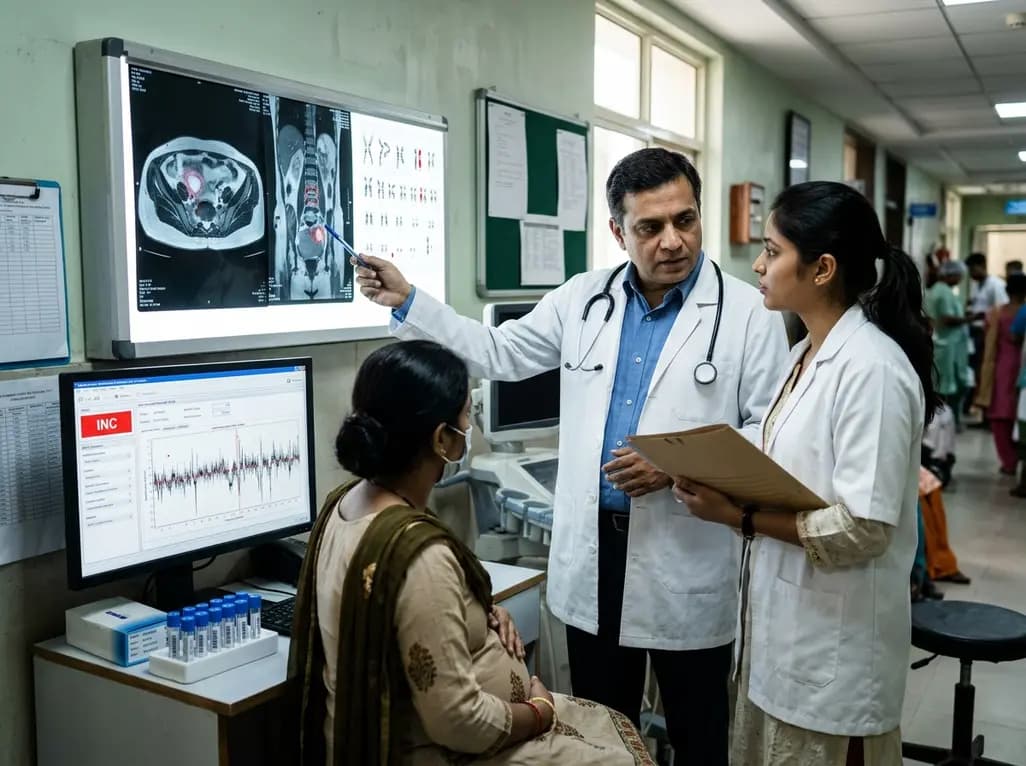
Occult maternal malignancy accounts for 3.82% of persistent unreportable NIPT results with genomic noise. Multiple chromosomal aberrations, notably on chromosome 18, warrant thorough oncological evaluation and whole-body MRI to ensure timely maternal diagnosis while preserving fetal care.
Today

This article reviews the forensic and clinical complexities of acute myocarditis arising on left ventricular hypertrophy in children, highlighting early diagnostic red flags and multidisciplinary postmortem autopsy protocols.
Today

This comparative study evaluates posterior labral tears with and without glenohumeral instability, highlighting distinct demographic patterns, MRI underestimation in stable shoulders, and successful arthroscopic repair outcomes.
Yesterday

A clinical study demonstrates that early intervention with tocilizumab, either as monotherapy or bridged with corticosteroids, achieves significant proptosis reduction and resolves active inflammation in treatment-naive thyroid eye disease.
Yesterday
