.webp&w=384&q=75)

Loading, please wait...
Loading, please wait...

Ocular tuberculosis (TB) often presents complex challenges for clinicians in endemic regions like India. A recent collaborative study led by the LV Prasad Eye Institute (LVPEI) investigated this clinical hurdle. They found that persistent eye TB inflammation remains a major concern even after patients complete a full course of anti-tubercular therapy (ATT). Consequently, researchers analyzed data from 65 patients diagnosed with tubercular serpiginous-like choroiditis (TB-SLC). This specific form of TB affects the back of the eye and can cause severe retinal damage. Therefore, maintaining vigilance after antimicrobial treatment is vital for long-term patient care.
The research discovered that approximately 18.5% of patients continued to exhibit signs of inflammation at the end of their treatment. However, this persistence does not necessarily indicate a lingering bacterial infection. Instead, the study points toward an overactive immune response as the primary driver. The intensity of initial treatment significantly influences these long-term outcomes. For instance, patients who received less intensive anti-inflammatory therapy in the early months were more likely to face complications later. Doctors observed that critical warning signs usually appear within the first 90 days of treatment. Consequently, aggressive management of inflammation during this early window is essential to protect the patient's vision.
Fortunately, most patients responded effectively to increased doses of anti-inflammatory medication. Specialists did not need to alter the standard antibiotic regimen to achieve these results. Furthermore, the findings emphasize that physicians should look beyond the infection itself during follow-ups. Managing the body's immune reaction is just as vital as eliminating the pathogen. This dual approach helps prevent permanent vision loss in vulnerable patients. Ultimately, the study underscores the need for personalized care that balances infection control with targeted immunosuppression.
Q1: Why does inflammation continue after the TB bacteria are cleared?
Persistent inflammation is often driven by the body's overactive immune system rather than a lingering active infection.
Q2: When do signs of persistent inflammation typically appear?
Early warning signs of persistent inflammation usually emerge within the first three months of starting anti-tubercular treatment.
Q3: Does persistent inflammation mean the TB medication has failed?
No, the study showed that most patients responded well to stronger anti-inflammatory drugs without needing changes to their TB treatment regimen.
Disclaimer: This content is for informational and educational purposes only. It does not constitute medical advice or replace professional judgment. Refer to the latest local and national guidelines for clinical practice.
References

Read summarized clinical updates, watch expert medical content, and earn CME certifications right from your smartphone.
Open your smartphone camera to scan and install.





Research shows 18.5% of eye TB patients experience persistent inflammation post-therapy due to immune responses, requiring early anti-inflammatory managemen...
6 months ago
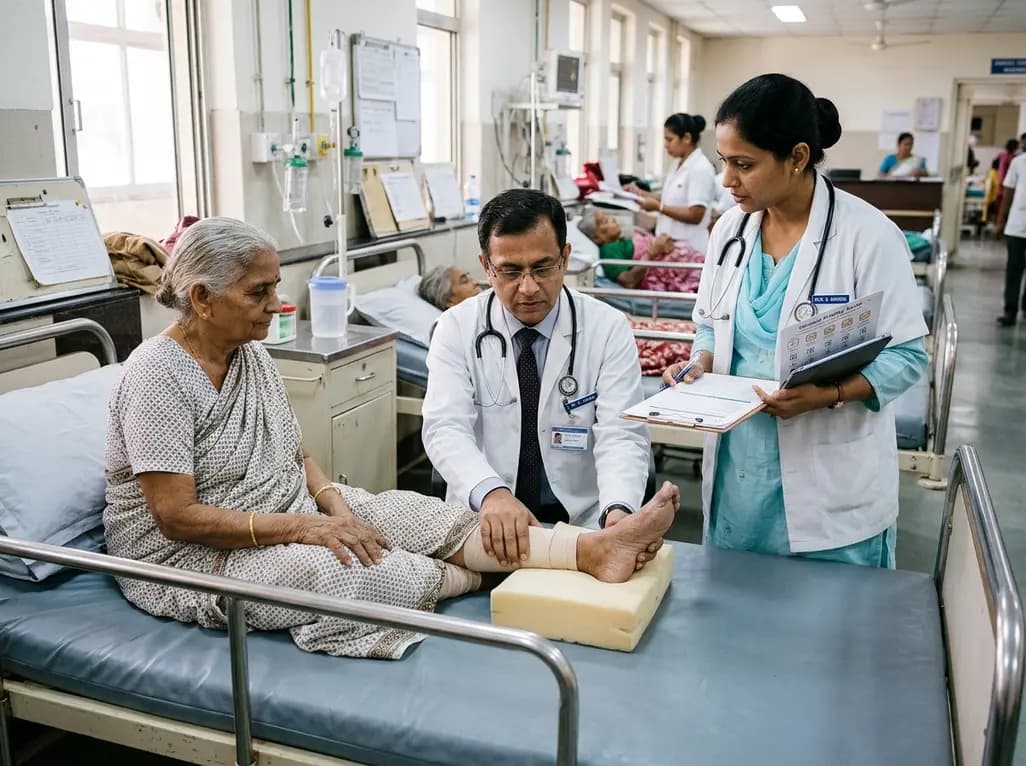
A retrospective cohort study reveals that frailty quadruples the odds of pressure injuries in hospitalized older adults. Integrating the Clinical Frailty Scale with comprehensive geriatric care is crucial for identifying vulnerability early and implementing targeted multidisciplinary prevention.
Today

Occult maternal malignancy accounts for 3.82% of persistent unreportable NIPT results with genomic noise. Multiple chromosomal aberrations, notably on chromosome 18, warrant thorough oncological evaluation and whole-body MRI to ensure timely maternal diagnosis while preserving fetal care.
Today

This article reviews the forensic and clinical complexities of acute myocarditis arising on left ventricular hypertrophy in children, highlighting early diagnostic red flags and multidisciplinary postmortem autopsy protocols.
Today

A randomized controlled trial demonstrates that an eight-week dual-task training intervention significantly improves static and dynamic postural control over standard balance exercises in individuals with chronic ankle instability, addressing critical neurocognitive deficits during athletic and daily activities.
Today

A retrospective cohort study of 7,716 ICU patients from the MIMIC-IV database demonstrates that Gradient Boosting Decision Trees significantly outperform traditional SOFA scores in predicting in-hospital mortality among patients with sepsis and diabetes, with SHAP analysis providing clinical interpretability.
Today
