

Loading, please wait...
Loading, please wait...

Refractory trigeminal neuralgia presents an agonizing clinical dilemma for neurologists and neurosurgeons worldwide. While primary pharmacotherapy and microvascular decompression remain foundational, many individuals experience intractable pain or surgical recurrence. Consequently, clinicians have explored peripheral nerve field stimulation as a salvage neuromodulatory option. Peripheral nerve field stimulation delivers targeted subcutaneous electrical pulses to superficial branches of the trigeminal nerve. However, historical evidence primarily stems from small cohorts with limited follow-up intervals. A pivotal long-term cohort study now sheds crucial light on the durable efficacy of this invasive intervention.
Subcutaneous neuromodulation alters pain processing by delivering electrical currents across peripheral axonal terminals. In trigeminal pathways, the implanted electrodes stimulate A-beta sensory afferents within targeted dermatomal distributions. Consequently, this electrical activity activates inhibitory interneurons within the trigeminal spinal nucleus. Gate control mechanisms thereby suppress incoming nociceptive signals transmitted along A-delta and unmyelinated C fibers. Furthermore, peripheral neurostimulation modulates neurochemical mediators, reducing central sensitization and paroxysmal hyperalgesia.
Physicians frequently consider this modality when traditional pharmacotherapy fails or when patients cannot undergo intracranial decompression. For example, frail elderly patients or individuals with comorbid multiple sclerosis often face substantial operative risks. Therefore, minimally invasive subcutaneous lead placement offers an appealing alternative. However, peripheral tissues in the facial region experience continuous mechanical strain from facial animation, speech, and mastication. In addition, the complex neuroanatomy of the facial branches poses unique anchoring challenges. Over time, biological habituation, lead displacement, and evolving neuropathy can degrade electrical field efficiency. Consequently, short-term pain relief does not always translate into sustained lifelong symptom suppression. Clinicians must therefore understand these biological constraints before recommending permanent device implantation.
To evaluate the true longevity of this intervention, researchers conducted a comprehensive long-term analysis of patients treated at a specialized academic center. The investigators systematically interrogated an institutional surgical database spanning 2012 through 2017. Specifically, they included fifteen adult patients who received permanent subcutaneous neuromodulation hardware for intractable trigeminal pain. The cohort comprised six male and nine female patients, exhibiting an overall median age of 70 years.
Notably, these patients endured intense suffering for decades before undergoing surgical neuromodulation. The cohort demonstrated a median symptom duration of 11.5 years, illustrating severe clinical refractoriness. Furthermore, the underlying etiology varied considerably across the study population. Seven patients presented with classic trigeminal neuralgia, while eight individuals suffered from secondary trigeminal neuralgia. Among secondary cases, multiple sclerosis accounted for seven diagnoses, whereas an inoperable intracranial meningioma caused the remaining case. The researchers tracked these patients across a median follow-up interval of 93 months, extending up to 126 months. Through detailed electronic medical records, clinic visits, and structured telephone interviews, investigators assessed perceived treatment efficacy and validated pain scores. Thus, this extensive observation period provided unique real-world insights into extended therapeutic outcomes.
The study revealed sobering reality regarding the long-term sustainability of peripheral neuromodulation in this patient group. Overall, the Kaplan-Meier survival analysis demonstrated a median time to treatment failure of only two years. Over extended observation, a high proportion of patients experienced complete loss of clinical benefit. At the final evaluation, the median score on the painDETECT questionnaire was 16, signifying substantial persistent neuropathic burden.
Remarkably, the investigation uncovered a statistically significant divergence in therapeutic persistence between sexes. Male participants achieved a median time to failure of 5.1 years. In stark contrast, female patients suffered treatment failure at a median of merely 1.5 years, yielding a significant difference. Furthermore, by the final follow-up visit, half of the male patients still perceived meaningful therapeutic effectiveness. Conversely, none of the female patients reported continued benefit from their stimulator devices. While the exact biological etiology behind this discrepancy warrants further investigation, sex-specific pain processing pathways may play a critical role. In addition, distinct variations in subcutaneous tissue composition and immune response might influence lead interface dynamics. Consequently, clinicians should communicate these stark demographic disparities during shared decision-making discussions.
Beyond declining analgesic efficacy, patients faced substantial morbidity related to device maintenance and surgical complications. Throughout the observation window, investigators documented seven revision surgeries required among four individual patients. These revision procedures addressed mechanical issues such as lead migration, hardware breakage, or persistent localized discomfort. Because facial tissues move constantly during daily expression and eating, anchored leads remain vulnerable to mechanical displacement.
Additionally, four patients required subsequent invasive interventions to manage intolerable pain after neuromodulation failure. These secondary procedures included percutaneous destructive rhizotomies, microvascular decompression, and complete system explantations. Furthermore, foreign body sensation and subcutaneous electrode erosion presented notable clinical challenges for elderly individuals with thin dermis. Such structural complications significantly amplify the cumulative cost and procedural burden for patients. Therefore, healthcare providers cannot regard subcutaneous stimulator placement as a simple, permanent solution. Instead, management requires ongoing multidisciplinary surveillance and frank pre-procedure counseling regarding revision risks. Surgical teams must maintain meticulous anchoring techniques to reduce mechanical failure. Nevertheless, patients must understand that device explantation remains a distinct possibility over a multi-year horizon.
These long-term findings necessitate a fundamental reappraisal of neuromodulatory protocols for refractory facial pain. For decades, clinicians celebrated early post-implantation success reported in short-term literature. However, long-term attrition indicates that early triumph frequently masks progressive therapeutic decay. Consequently, neurosurgeons and pain specialists should not view peripheral stimulation as a definitive cure. Instead, teams should position it as an intermediate, temporizing intervention within a broader multidisciplinary algorithm.
Moreover, patient selection requires rigorous scrutiny of clinical history and realistic personal expectations. Candidates with secondary trigeminal neuralgia due to demyelinating disease require extensive counseling about disease progression. Because multiple sclerosis continuously alters central trigeminal pathways, peripheral stimulation cannot halt underlying plaque development. Furthermore, teams must explicitly highlight the heightened risk of early failure among female candidates. Prior to permanent implantation, practitioners should conduct rigorous trial phases with clear cessation criteria. In addition, clinicians must optimize medical therapies and explore ablative or radiosurgical alternatives before selecting neuromodulation. When teams do proceed with implantation, they should schedule regular objective assessments using validated neuropathic scales. Ultimately, prudent patient counseling and cautious optimism will optimize clinical care and prevent patient disappointment.
Treatment failure frequently results from central neuroplastic adaptations, progressive demyelination in secondary neuralgia, and continuous mechanical stress on facial leads. Over extended periods, biological tolerance reduces neural responsiveness to electrical fields. Furthermore, repetitive facial muscle movement commonly leads to lead migration, electrode fracture, or localized fibrous encapsulation, impairing optimal stimulation delivery.
Female patients experienced earlier failure potentially due to distinct sex-specific differences in central pain processing, neuroimmune signaling, and cutaneous receptor sensitivity. Additionally, variations in facial subcutaneous tissue thickness and dermal collagen structure might accelerate lead displacement. Further large-scale prospective mechanistic studies are essential to clarify these underlying biological and anatomical disparities.
When subcutaneous neuromodulation fails, clinicians can consider percutaneous balloon compression, radiofrequency thermocoagulation, or glycerol rhizotomy. Patients without prior neurovascular surgery may undergo microvascular decompression if vascular conflict exists. Stereotactic radiosurgery offers another non-invasive alternative, while pharmacological optimization with sodium channel blockers remains crucial throughout salvage clinical management.
Disclaimer: This content is for informational and educational purposes only and does not constitute medical advice, diagnosis, or treatment. Healthcare professionals should exercise their independent clinical judgment when evaluating medical literature. Refer to the latest local and national guidelines for clinical practice.
References

Read summarized clinical updates, watch expert medical content, and earn CME certifications right from your smartphone.
Open your smartphone camera to scan and install.





A long-term cohort study evaluates peripheral nerve field stimulation for refractory trigeminal neuralgia, revealing significant late treatment failure, high revision rates, and notable gender disparities in clinical efficacy.
Today

A large retrospective cohort study demonstrates that explainable machine learning models, notably XGBoost, accurately predict hospital admission at emergency triage. By analyzing routine triage parameters, hospitals can streamline bed allocation, decrease boarding times, and alleviate acute care overcrowding.
Today

A new quality-improvement initiative reveals that universal maternal mental health screening in the NICU increased screening rates from 29.5% to 95.0%, with nearly 60% of screened mothers requiring psychosocial referrals, highlighting the urgent need for embedded mental health resources.
Today
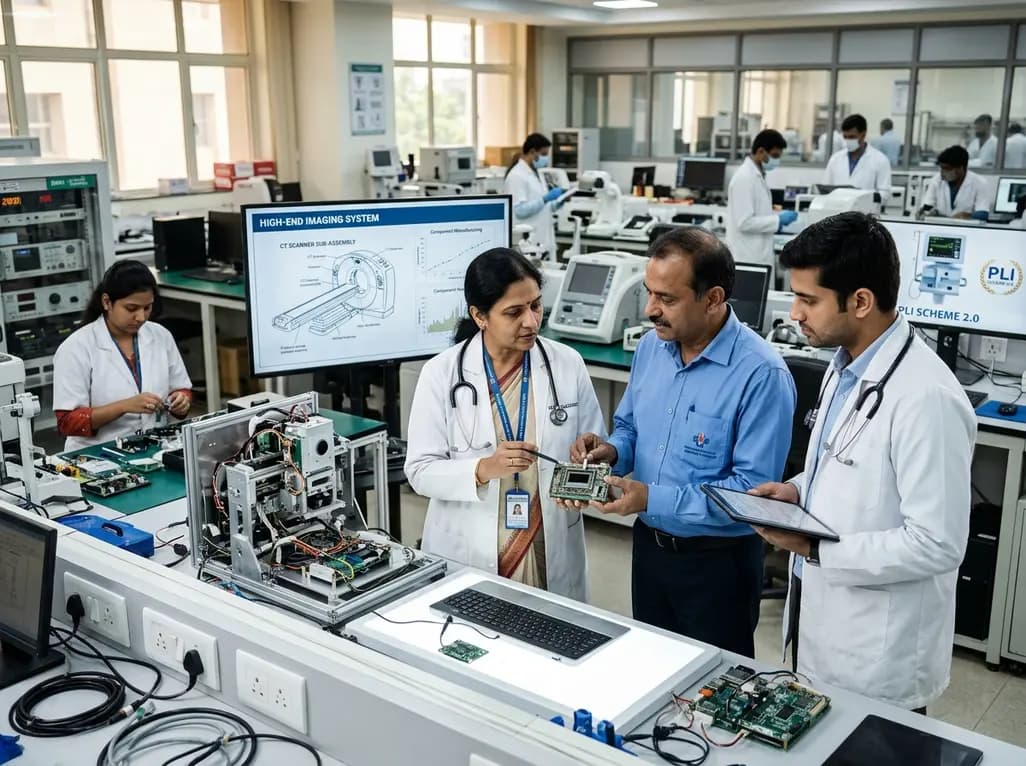
The Department of Pharmaceuticals has extended the medical devices PLI scheme to 2035-36 with a Rs 2,700 crore outlay. Featuring relaxed investment barriers and eliminated sales thresholds, the revised framework targets deep manufacturing, high-end diagnostics, critical MedTech components, and supply resilience.
Today
A metabolomic study reveals that aging delays glutathione synthesis and gamma-glutamylcysteine accumulation following muscle injury. Although precursor supplementation targets this enzymatic bottleneck, in vitro tests show no immediate effect on myogenesis, highlighting the complexity of muscle repair in older adults.
Today

A systematic review evaluates psychological interventions for smoking cessation in diabetes, showing short-term success but highlighting challenges in long-term abstinence.
Today
