.webp&w=384&q=75)

Loading, please wait...
Loading, please wait...

The therapeutic landscape for stage III melanoma has evolved rapidly over the last decade. Traditionally, clinicians focused on adjuvant therapy after surgical resection to eliminate micrometastatic disease. However, emerging research suggests that initiating immunotherapy before surgery—known as a neoadjuvant or perioperative approach—may offer superior biological advantages. Specifically, treating the tumor while it remains in situ allows the immune system to recognize a broader array of tumor antigens. Consequently, this can generate a more robust and diverse T-cell response compared to postoperative treatment alone. A recent retrospective analysis from eight German skin cancer centers provides a comprehensive overview of how perioperative PD-1 monotherapy is currently being integrated into real-world clinical practice. This study evaluates the efficacy and feasibility of starting anti-PD-1 treatment prior to definitive surgery. Furthermore, the findings underscore the clinical benefits observed in routine care, mirroring results seen in tightly controlled prospective clinical trials. As oncology moves toward personalized medicine, understanding these real-world outcomes becomes essential for refining treatment protocols and improving patient survival rates in high-risk melanoma cases.
Researchers conducted a retrospective analysis involving 75 patients with stage III melanoma across eight major skin cancer centers in Germany. These patients received anti-PD-1 monotherapy in a perioperative setting between April 2019 and March 2025. Notably, the study found that surgery was successfully conducted in 75% of the participants. The median time from the initiation of immunotherapy to the surgical procedure was 11 weeks. This timeframe is critical, as it allows for immune priming without causing excessive delays in definitive local treatment. Additionally, the retrospective nature of the data provides a realistic snapshot of how German oncologists are managing these complex cases outside of phase III trials. While some patients did not proceed to surgery, the majority followed the planned perioperative path. Moreover, the study documented that the safety profile was manageable, with no significant new safety signals emerging from this real-world cohort. Therefore, the data support the feasibility of this treatment sequence in standard clinical settings. These results are encouraging for clinicians who are considering transitioning from purely adjuvant strategies to more dynamic perioperative models.
One of the primary strengths of neoadjuvant therapy is the ability to assess treatment efficacy through pathological examination of the resected tissue. In the German study, pathological assessments revealed a major pathological response (MPR) in 46.5% of cases. An MPR is defined as having 10% or less viable tumor cells remaining in the specimen. Furthermore, a partial pathological response was observed in 23.2% of patients, while 30.4% showed no pathological response. These figures are significant because the depth of pathological response often serves as a powerful surrogate marker for long-term prognosis. Specifically, patients who achieve an MPR typically experience much lower rates of disease recurrence. In contrast, those with no response may require a more aggressive post-surgical treatment plan or a switch in systemic agents. Consequently, the high rate of MPR in this real-world setting suggests that perioperative PD-1 monotherapy effectively debulks tumors and primes the immune system in nearly half of the treated population. This histological feedback allows for a more personalized approach to subsequent adjuvant therapy.
The study also focused on the relationship between imaging findings and what pathologists see under the microscope. A moderate to strong correlation between radiological and pathological responses was identified by the researchers. This correlation is vital for clinical decision-making, as it helps surgeons and oncologists predict the likelihood of finding viable cancer during the operation. For instance, if a radiologist identifies significant tumor shrinkage on a CT or MRI scan, there is a higher probability that the patient will achieve an MPR. However, it is important to note that radiological assessments can sometimes be misleading due to phenomena like pseudoprogression, where the tumor appears larger because of immune cell infiltration. Despite these challenges, the German data indicate that routine imaging remains a reliable tool for monitoring perioperative PD-1 monotherapy. Nevertheless, the pathological response remains the gold standard for determining the true efficacy of the neoadjuvant phase. By integrating both radiological and pathological data, clinicians can develop a more comprehensive understanding of the patient's disease status. This integrated approach ensures that the surgical plan is optimized for the best possible outcome.
The outcomes reported in this retrospective analysis are highly comparable to data from landmark prospective studies like the SWOG S1801 trial. In that phase II trial, neoadjuvant pembrolizumab followed by adjuvant pembrolizumab significantly improved event-free survival compared to adjuvant treatment alone. Similarly, the German study observed a melanoma recurrence in only 16 patients (21%) during a median follow-up period of 11.6 months. Consistent with previous findings, the longest recurrence-free survival was seen in the group of patients who achieved a major pathological response. This reinforces the idea that the depth of early response is a critical indicator of long-term success. Furthermore, the 21% recurrence rate in a real-world cohort is remarkably low for stage III disease, suggesting that the perioperative sequence provides durable disease control. In addition, the German data help bridge the gap between clinical trial populations and the more diverse patients seen in everyday practice. While prospective trials provide the highest level of evidence, retrospective real-world data like these confirm that the benefits are reproducible in standard oncology clinics across different regions.
The implementation of perioperative strategies marks a significant shift in the management of stage III melanoma. By utilizing perioperative PD-1 monotherapy, clinicians can offer patients a treatment that not only addresses systemic micrometastases early but also provides a clear window into the tumor's biology. This allows for response-driven treatment adjustments, which could potentially lead to de-escalation of surgery in some patients or intensification of adjuvant therapy in others. Furthermore, the German study demonstrates that this approach is already being successfully integrated into routine practice. For medical educators and practitioners, these findings suggest that the perioperative model should be strongly considered for all eligible stage III patients. As we look toward the future, further research will likely focus on optimizing the duration of the neoadjuvant phase and identifying biomarkers that can predict which patients are most likely to achieve an MPR. For now, the evidence from both clinical trials and real-world analyses points toward a clear survival benefit for the perioperative approach in high-risk melanoma management.
A major pathological response (MPR) occurs when a tumor specimen resected after neoadjuvant therapy contains 10% or less viable cancer cells. In the context of melanoma, achieving an MPR is a strong predictor of favorable long-term outcomes, including extended recurrence-free survival. This histological marker indicates that the immune system, boosted by PD-1 inhibitors, has effectively targeted and destroyed the majority of the primary tumor and surrounding micrometastases before the surgical procedure takes place.
When using a perioperative approach, surgery is typically scheduled after a short course of immunotherapy. In the German retrospective study, the median interval from the start of therapy to surgery was approximately 11 weeks. This timeframe allows for 3 to 4 doses of a PD-1 inhibitor, providing sufficient time for the immune system to mount a response without allowing the primary tumor to progress to an inoperable state. Precise timing is crucial for balancing immune activation and surgical safety.
Yes, the results from the German skin cancer centers closely align with prospective data from trials such as SWOG S1801. Both sets of data show that initiating PD-1 monotherapy before surgery leads to high rates of pathological response and improved survival compared to historical adjuvant-only controls. The real-world recurrence rate of 21% observed in the German study confirms that the benefits of perioperative treatment are reproducible in everyday clinical practice beyond the strict confines of randomized clinical trials.
Disclaimer: This content is for informational and educational purposes only and does not constitute medical advice, diagnosis, or treatment. Always seek the advice of your physician or another qualified health provider with any questions you may have regarding a medical condition. Refer to the latest local and national guidelines for clinical practice.
References
Flatt N et al. Perioperative PD-1-inhibition in melanoma patients - a retrospective analysis from eight German skin cancer centers. J Dtsch Dermatol Ges. 2026 Jul 01. doi: 10.1111/ddg.70355. PMID: 42383346.
Patel SP et al. Neoadjuvant-Adjuvant Pembrolizumab for Resectable Antigen-Positive Melanoma. N Engl J Med. 2023 Mar 02. doi: 10.1056/NEJMoa2211437. PMID: 36812457.
Menzies AM et al. Pathological response and survival with neoadjuvant therapy in melanoma: a pooled analysis from the International Neoadjuvant Melanoma Consortium (INMC). Lancet Oncol. 2021 Mar 01. doi: 10.1016/S1470-2045(20)30603-X. PMID: 33571452.

Read summarized clinical updates, watch expert medical content, and earn CME certifications right from your smartphone.
Open your smartphone camera to scan and install.





A retrospective analysis from eight German skin cancer centers explores the routine use of perioperative anti-PD-1 monotherapy in stage III melanoma patients. The study highlights high major pathological response rates and a strong correlation between radiological and pathological findings.
3 months ago
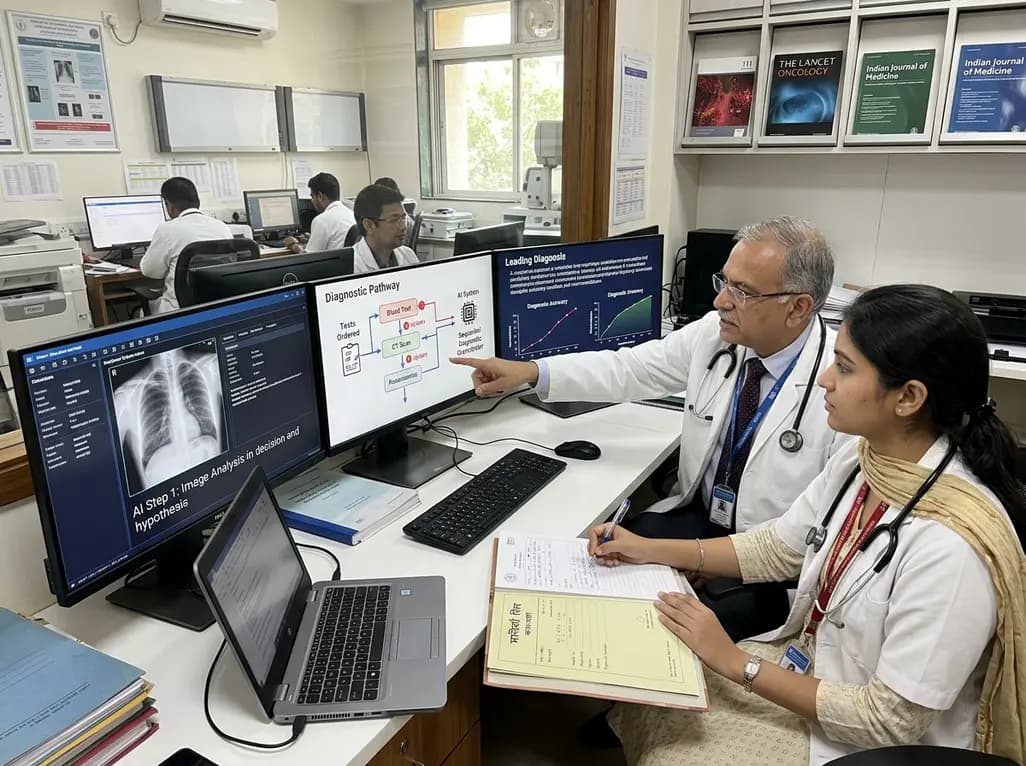
A breakthrough peer-reviewed study demonstrates that a sequential AI diagnosis system can mirror real-world clinical reasoning. By ordering stepwise tests and updating hypotheses dynamically, this multi-agent orchestrator achieved superior diagnostic accuracy while reducing investigative costs.
Today

A prenatal case highlights severe glutaric acidemia type II presenting as bilateral hyperechoic cystic kidneys at 18 weeks. Whole-exome sequencing revealed a novel homozygous ETFDH frameshift variant, demonstrating the power of rapid genetic testing in fetal renal anomalies.
Today

Review how tailored exercise programs benefit frail older patients with heart failure. Explore pathophysiological mechanisms, individualized training prescriptions, and strategies to overcome adherence barriers in clinical practice.
Yesterday

This comparative study evaluates posterior labral tears with and without glenohumeral instability, highlighting distinct demographic patterns, MRI underestimation in stable shoulders, and successful arthroscopic repair outcomes.
Yesterday

A clinical study demonstrates that early intervention with tocilizumab, either as monotherapy or bridged with corticosteroids, achieves significant proptosis reduction and resolves active inflammation in treatment-naive thyroid eye disease.
Yesterday
