.webp&w=384&q=75)

Loading, please wait...
Loading, please wait...
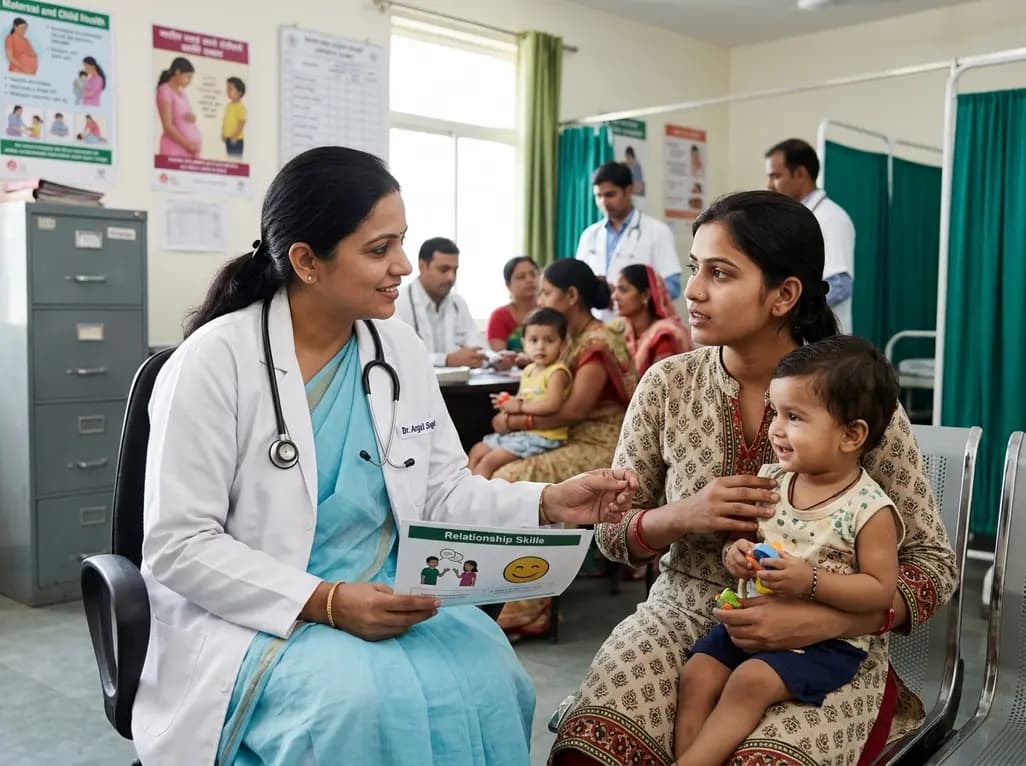
Emerging clinical evidence highlights that perinatal relationship education significantly influences maternal and family health during vulnerable developmental windows. Historically, relationship education programs primarily targeted couples. However, many pregnant individuals navigate interpersonal distress, systemic adversity, or single parenthood without a partner participating in care. Consequently, individual-oriented interventions have emerged as practical alternatives. A major randomized controlled trial evaluating the MotherWise program examined whether individual-oriented education delivered during pregnancy or early postpartum produces long-term indirect benefits for offspring. By evaluating maternal skills at 12 months and child developmental indices at 30 months, researchers mapped how maternal behavioral adaptation cascades into early childhood wellness.
The MotherWise trial utilized the evidence-based Within My Reach curriculum. Investigators randomized 949 perinatal individuals from underserved backgrounds to either the intervention cohort or a control arm. Specifically, 512 participants entered the educational group, while 437 received routine community care. The curriculum emphasized communication strategies, emotional regulation, partner selection, and decision-making regarding personal safety. Most participants encountered significant socio-economic stressors that traditionally elevate risks for intimate partner discord and parental fatigue.
Importantly, the trial focused on evaluating skill acquisition at 12 months post-enrollment. Participants in the intervention arm demonstrated statistically superior conflict management abilities. Furthermore, these mothers exhibited advanced romantic relationship communication and reported stronger personal disapproval of intimate partner violence. These measurable gains confirmed that educating mothers individually builds meaningful interpersonal capabilities. Therefore, structured maternal education establishes a foundation for relational stability, even when partners do not directly attend clinical sessions.
To understand how maternal intervention alters child trajectories, researchers tested path models measuring three distinct intermediate mechanisms. Specifically, they examined general conflict management skills, romantic relationship navigation, and explicit rejection of relationship violence. Each mechanism represents a vital pillar in reducing household toxicity. When mothers acquire constructive dialogue techniques, they de-escalate interpersonal tension before verbal hostility turns volatile.
Additionally, cultivating relationship discernment empowers women to establish healthier emotional boundaries with partners and family members. Structural equation modeling demonstrated that greater disapproval of relationship violence played an essential role in maternal well-being. By challenging cognitive acceptance of relational aggression, mothers foster safer immediate environments. Moreover, refined communication reduces chronic maternal distress, thereby preserving emotional bandwidth for responsive caregiving. Consequently, maternal interpersonal empowerment creates a stabilizing psychological buffer across the entire domestic ecosystem.
Early childhood development depends heavily on household emotional climate. In this clinical investigation, researchers evaluated child behavioral outcomes at 30 months post-enrollment. They measured internalizing and externalizing problem behaviors alongside adaptive social-emotional competencies. The findings confirmed meaningful indirect benefits of the perinatal curriculum on child development.
Specifically, enhanced maternal conflict resolution and strong intolerance toward relationship violence correlated with lower rates of child problem behaviors. Concurrently, refined romantic relationship skills directly predicted higher social-emotional competency in toddlers. Children raised in calmer domestic environments consistently develop better emotional regulation and prosocial behaviors. Furthermore, minimizing exposure to parental aggression protects infant neurodevelopment from toxic stress. Thus, empowering mothers with relationship tools generates enduring developmental advantages that manifest during toddlerhood.
These findings provide clear guidance for obstetricians, pediatricians, psychiatrists, and primary care physicians. Perinatal healthcare visits offer unique touchpoints where clinicians can screen for relational stress and introduce supportive educational modules. Integrating relationship literacy into standard antenatal and postnatal care pathways addresses fundamental social determinants of health.
Furthermore, physicians should recognize that relationship interventions do not always require dyadic couple participation. Individual mothers gain substantial empowerment when taught constructive boundary-setting and communication mechanics. When clinicians identify domestic conflict or parental isolation, referring mothers to structured perinatal programs can prevent downstream behavioral pathology in offspring. Therefore, healthcare systems must broaden maternal health strategies beyond isolated biomedical monitoring to incorporate comprehensive psychosocial skill training.
Intimate partner violence represents a catastrophic threat to maternal-infant health globally. The MotherWise data reveal that individual-oriented curricula systematically strengthen maternal disapproval of violent dynamics. This cognitive shift remains crucial for long-term safety planning and the reduction of family instability.
Moreover, empowering women with assertiveness training and safety knowledge helps disrupt cyclical domestic abuse. When mothers clearly identify unhealthy relationship patterns, they proactively protect their homes from interpersonal trauma. Consequently, their children experience fewer adverse childhood experiences, which significantly lowers lifetime risks of psychological disorders and chronic disease. Healthcare providers must actively promote maternal empowerment initiatives to protect vulnerable family units from the insidious downstream effects of domestic volatility.
Future family health policies should expand public access to individual-oriented relationship education within community clinics and public hospitals. Integrating these curricula into existing group prenatal care or home-visiting models maximizes outreach efficiency. Additionally, digital and hybrid delivery models can help bridge geographical barriers for underserved populations.
Subsequent investigations should explore the sustained impacts of these perinatal interventions into middle childhood and adolescence. Researchers should also evaluate whether maternal relationship training reduces maternal postpartum depression and long-term parental burnout. Investing in maternal relational capabilities represents a high-yield preventive strategy that simultaneously elevates maternal mental health and safeguards future generations.
Individual-oriented relationship education provides evidence-based communication, conflict resolution, and decision-making skills to single or partnered individuals during pregnancy and postpartum. Unlike couple therapy, it does not require partner participation. It focuses on empowering mothers to navigate interpersonal relationships, establish healthy emotional boundaries, and reject domestic violence, ultimately fostering stable and nurturing home environments for child rearing.
Maternal relationship training reduces household conflict and elevates maternal psychological well-being. When mothers master constructive conflict resolution and reject interpersonal aggression, they experience lower emotional distress and create calmer home atmospheres. Consequently, infants and toddlers experience reduced toxic stress exposure, leading to fewer externalizing problem behaviors and significantly improved social-emotional competencies across early development.
Yes, relationship education integrates effectively into standard prenatal workflows, group antenatal visits, and community outreach programs. Obstetricians and family medicine providers can identify relational stressors during routine checkups and refer patients to structured skill workshops. Providing these modules during the perinatal period maximizes maternal engagement and delivers preventive psychosocial support before maladaptive patterns compromise child development.
Disclaimer: This content is for informational and educational purposes only. It is not intended to provide medical advice or to be a substitute for professional medical advice, diagnosis, or treatment. Medical science is constantly evolving; therefore, findings and interpretations may change over time. Always seek the advice of a qualified healthcare provider with any questions you may have regarding a medical condition or treatment. Refer to the latest local and national guidelines for clinical practice.
References
Lee J et al. Indirect Effects of Individual-Oriented Relationship Education on Children's Social-Emotional Outcomes: A Randomized Controlled Trial of MotherWise. Fam Process. 2026 Sep undefined. doi: 10.1111/famp.70189. PMID: 42675014.
Rhoades GK, Allen MOT, Peña R, Hyer J, Mazzoni SE. Relationship education for women during pregnancy: The impact of MotherWise on birth outcomes. Fam Process. 2022 Sep;61(3):1134-1143. doi: 10.1111/famp.12756.
Mazzoni SE, Treter MO, Hyer J, Peña R, Rhoades GK. Impact of Prenatal Group Healthy Relationship Education on Postpartum Contraception. Am J Health Promot. 2023 Jul;37(6):789-796. doi: 10.1177/08901171231165271.

Read summarized clinical updates, watch expert medical content, and earn CME certifications right from your smartphone.
Open your smartphone camera to scan and install.





A randomized controlled trial of the MotherWise program demonstrates that individual-oriented perinatal relationship education enhances maternal conflict management, rejects intimate partner violence, and indirectly improves child social-emotional competency and problem behaviors at 30 months.
4 weeks back

A nationwide multicenter study identified three COPD clinical phenotypes, finding that mild smoking males experience the highest rate of rapid lung function decline. A CatBoost model using six routine clinical and socioeconomic variables accurately stratifies high-risk patients for early therapeutic intervention.
Today
Discover the crucial distinctions between mesonephric and mesonephric-like proliferations of the female genital tract. Learn the key histomorphologic, immunohistochemical, and molecular differences essential for accurate diagnosis and clinical management.
Today
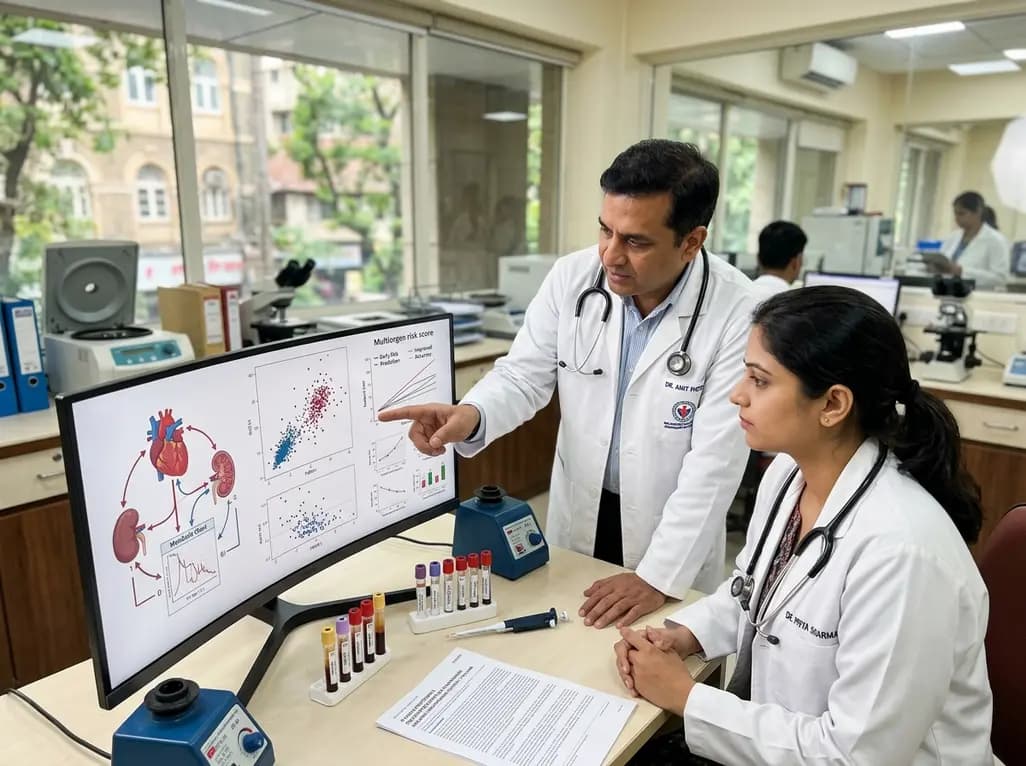
A large UK Biobank study reveals that plasma proteomic signatures capture preclinical organ damage and improve multiorgan risk prediction across early CKM syndrome stages 0 to 2 beyond traditional PREVENT clinical models.
Today
A narrative review investigates whether the articularis genus muscle functions as an independent anatomical entity or blends with the vastus intermedius. We evaluate its morphology, role in retracting the suprapatellar bursa, and direct clinical significance in anterior knee pain and arthroplasty.
Today

A Bayesian multilevel meta-analysis reveals that aerobic training combined with moderate carbohydrate restriction modestly lowers HbA1c in type 2 diabetes. However, sparse data and very low certainty leave incremental benefits over exercise or diet alone unproven, highlighting the need for individualized care.
Today
