

Loading, please wait...
Loading, please wait...

Trigeminal neuralgia causes excruciating, episodic facial pain that severely impairs daily functioning and overall quality of life. Pharmacotherapy remains the first-line intervention, but medical resistance frequently develops over time. Consequently, many patients require definitive surgical interventions to achieve relief. Among these strategies, percutaneous balloon compression has emerged as a reliable, minimally invasive alternative to open craniotomy. However, managing recurrent or persistent pain after failed microvascular decompression presents a substantial clinical challenge for neurosurgeons and pain specialists worldwide.
Microvascular decompression represents the gold-standard surgical treatment for classical trigeminal neuralgia due to its high initial success rate. Furthermore, the procedure avoids direct destructive trauma to the trigeminal sensory nerve root. Unfortunately, pain recurs in up to twenty-five percent of patients over long-term follow-up. In addition, a subset of patients experiences persistent lancinating pain immediately following the initial craniotomy. When decompression fails, repeat posterior fossa exploration carries heightened risks of cerebrospinal fluid leakage, cerebellar injury, and cranial nerve deficits due to extensive postoperative arachnoid adhesions. Therefore, clinicians frequently look toward percutaneous ablative techniques to manage recalcitrant symptoms. These percutaneous interventions include radiofrequency thermocoagulation, glycerol rhizolysis, and mechanical compression via balloon inflation within Meckel's cave. Among these choices, mechanical rhizotomy selectively injures medium and large myelinated nociceptive fibers. Simultaneously, it preserves small unmyelinated fibers that maintain the crucial corneal reflex. As a result, the risk of neurotrophic keratitis remains remarkably low. Despite widespread clinical adoption, surgeons have long questioned whether prior open exploration impairs the efficacy of subsequent percutaneous procedures. Prior operative scarring at the root entry zone could theoretically alter nerve mechanics or blunts clinical responsiveness during secondary interventions.
To address this clinical dilemma, researchers conducted a rigorous retrospective cohort study evaluating procedures performed between January 2019 and December 2023. Specifically, investigators evaluated whether prior microvascular decompression compromises subsequent outcomes. They assigned patients receiving primary intervention to the Primary cohort. Conversely, they allocated patients treated for persistent or recurrent facial pain after open decompression to the Post-MVD cohort. Because baseline patient characteristics often confound observational neurosurgical comparisons, the researchers implemented rigorous propensity score matching. The statistical model incorporated critical prognostic variables, including patient age, biological sex, preoperative pain severity, and trigeminal nerve division involvement. Researchers applied one-to-one nearest-neighbor matching without replacement. Notably, they enforced exact matching on preoperative Barrow Neurological Institute pain grades to prevent baseline severity discrepancies. Furthermore, they employed Mahalanobis distance matching within a narrow caliper for the remaining baseline covariates. This rigorous statistical framework established an evenly balanced cohort of ninety-four total patients, comprising forty-seven individuals in each treatment arm. Consequently, this design eliminated confounding baseline variations between surgical cohorts and established an objective platform to compare therapeutic durability.
The comparative analysis demonstrated that percutaneous balloon compression achieves comparable clinical efficacy regardless of prior surgical history. At the final institutional follow-up, favorable pain relief occurred in 87.2% of patients in both cohorts. Here, favorable pain control represented Barrow Neurological Institute grades one and two, reflecting complete pain relief without medication or mild pain requiring no pharmaceutical intervention. Furthermore, statistical analysis revealed that the overall distribution of pain scores showed no significant divergence between the two study arms. After researchers excluded initial treatment failures, forty-six primary patients and forty-four salvage patients remained for longitudinal evaluation. Survival curves demonstrated that pain-free survival did not differ significantly between primary and salvage groups. Specifically, the hazard ratio for pain recurrence in the post-decompression group compared to the primary group was 0.382, accompanied by a non-significant p-value. Therefore, prior microvascular exploration does not attenuate the fundamental pain-relieving mechanism of subsequent balloon compression. The mechanical compression applied against the petrous apex effectively disrupts pathological paroxysmal pain conduction. Ultimately, these results provide robust objective reassurance that salvage interventions yield immediate therapeutic value equivalent to primary interventional procedures.
Although pain relief rates remained equivalent between both groups, safety profiles revealed important clinical differences. Specifically, researchers observed no significant statistical disparity regarding postoperative trigeminal sensory hypoesthesia. Post-procedural Barrow Neurological Institute numbness scores exhibited comparable distributions across both patient cohorts. Most patients developed predictable ipsilateral facial numbness, which directly correlates with adequate mechanical disruption of sensory fibers. However, patient-reported difficulty with mastication emerged as a significantly more frequent adverse event in the salvage group. At the final institutional follow-up, 21.3% of post-decompression patients reported persistent difficulty with chewing, compared with only 4.3% of primary intervention patients. This statistically significant disparity highlights the additive physiological stress imposed on the motor branch of the trigeminal nerve. During open posterior fossa decompression, manipulating the nerve root can induce subclinical motor axon injury. When surgeons subsequently perform mechanical compression, the motor root within Meckel's cave sustains additional compressive trauma. Consequently, this combined mechanical insult compromises masseter and pterygoid muscle function more severely. Surgeons must proactively discuss this elevated masticatory risk during preoperative informed consent, particularly for patients who rely on preserved bilateral jaw function.
These findings provide clear guidance for multidisciplinary surgical teams, neurologists, and pain management specialists. When microvascular decompression fails or pain returns, patients often feel frustrated and anxious regarding repeat surgical therapy. Because repeat posterior fossa exploration involves extensive surgical risks, minimally invasive percutaneous intervention represents an attractive treatment pathway. This landmark study confirms that prior surgical manipulation does not diminish the high probability of achieving durable pain relief. Hence, clinicians can confidently recommend balloon rhizotomy as an effective second-line therapeutic strategy. However, the significantly elevated incidence of postoperative chewing weakness demands thorough preoperative counseling. Patients should understand that although lancinating pain will likely resolve, transient or prolonged ipsilateral masseter weakness may occur. Clinicians should evaluate baseline dental status, temporomandibular joint function, and contralateral chewing mechanics before proceeding with salvage procedures. In addition, proceduralists should optimize intraoperative balloon geometry and strictly monitor compression times to mitigate excessive motor root trauma. By balancing exceptional pain relief against specific functional complications, healthcare providers can tailor comprehensive salvage treatment protocols for challenging trigeminal neuralgia cases.
Salvage balloon compression provides excellent pain relief for recurrent pain following decompression. Studies show that approximately 87% of patients achieve favorable pain relief without medication. Furthermore, long-term pain-free survival rates remain comparable between patients receiving salvage therapy and those undergoing primary intervention as their initial surgical procedure.
Chewing difficulty arises because mechanical balloon compression directly impacts the trigeminal motor root. Patients who previously underwent open microvascular decompression likely sustained subclinical motor nerve manipulation. The subsequent compressive force from the balloon adds cumulative mechanical trauma, increasing the incidence of symptomatic masseter and temporalis muscle weakness.
No, prior microvascular decompression does not significantly increase the severity of facial numbness following balloon compression. Research confirms that post-procedural sensory numbness distributions remain statistically indistinguishable between primary and salvage groups, because sensory changes reflect localized mechanical rhizotomy within Meckel's cave rather than prior posterior fossa manipulation.
Disclaimer: This content is for informational and educational purposes only, and does not substitute professional medical advice, diagnosis, or treatment. It is intended for healthcare professionals only. Readers should confirm details with reliable academic sources and medical guidelines. Treatment decisions must always be guided by clinical presentation, individual patient history, and institutional protocols. The author and publisher are not liable for any outcomes resulting from the use of this information. Refer to the latest local and national guidelines for clinical practice.
References
Xu X et al. Percutaneous balloon compression after failed microvascular decompression versus primary percutaneous balloon compression for trigeminal neuralgia: a propensity score-matched cohort study. Neurosurg Rev. 2026 Nov 11. doi: 10.1007/s10143-026-04571-9. PMID: 43012913.
Pipek LZ et al. Is percutaneous balloon compression better than microvascular decompression to treat trigeminal neuralgia? A systematic review and meta-analysis. J Clin Neurosci. 2023;109:47-55.
Chen JF et al. Analysis of 37 cases of percutaneous balloon compression for primary trigeminal neuralgia: experience and outcome from a single center. Front Neurol. 2025;16:1423851.

Read summarized clinical updates, watch expert medical content, and earn CME certifications right from your smartphone.
Open your smartphone camera to scan and install.





A propensity score-matched study shows percutaneous balloon compression after failed microvascular decompression provides pain relief comparable to primary PBC for trigeminal neuralgia, though masticatory weakness occurs more frequently.
Today

Gastrointestinal smooth muscle cells rely on nanoscale membrane domains to integrate mechanosensitive currents. Recent insights show that nanodomain architecture, rather than channel properties alone, orchestrates motility, opening new therapeutic avenues for clinical dysmotility and gastrointestinal aging.
Today

A landmark study reveals that lipid-rich malignant ascites alters the T-cell metabolic transcriptome, causing cholesterol efflux and impaired fatty acid oxidation. This suppresses TCR signalling and blocks BiTE immunotherapy, while lipid depletion restores antitumour cytotoxicity in ovarian cancer.
Today
Novel clinical evidence demonstrates the feasibility of combining VA-ECMO with the NyokAssist self-expanding transvalvular pump for active left ventricular unloading in infarct-related cardiogenic shock, achieving successful stabilization and decannulation.
Today
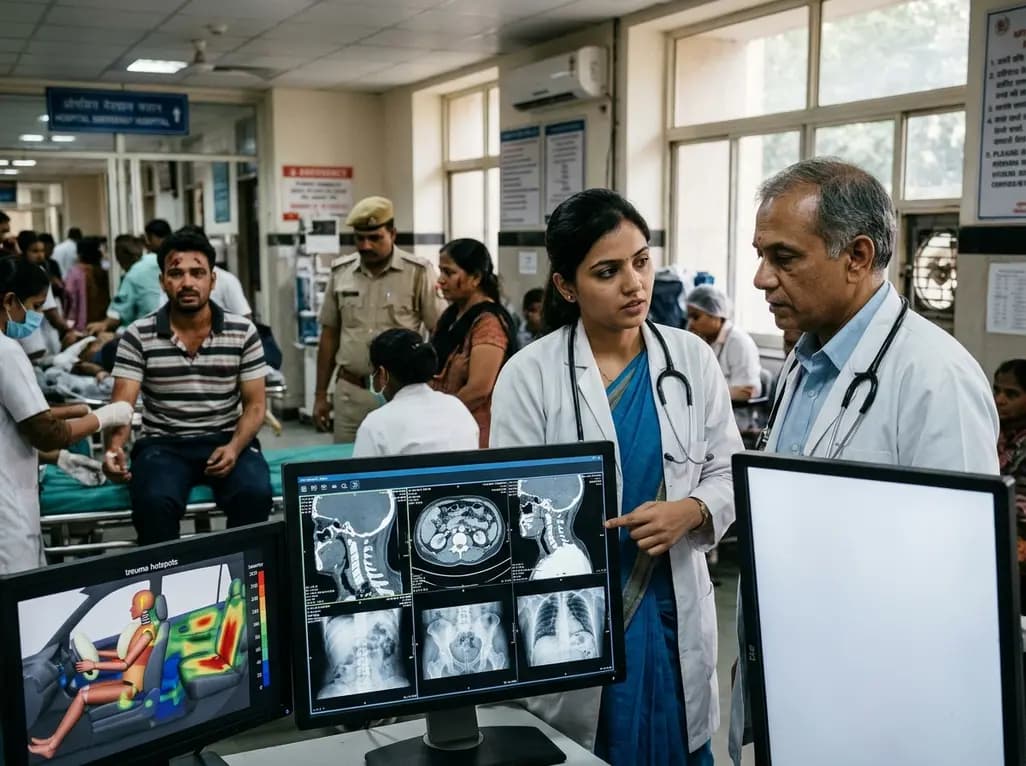
Recent crash analyses demonstrate significant variations in traffic injury severity across vehicle seating positions. Electric vehicle passengers face disproportionately higher trauma risks than drivers, particularly during airbag deployments, demanding adapted emergency assessment and clinical vigilance.
Today

Understand the causal role of Lipoprotein(a) in cardiovascular disease, why international guidelines recommend once-in-a-lifetime molar testing, and the clinical implications of recent phase 3 RNA outcome trials.
Today
