.webp&w=384&q=75)

Loading, please wait...
Loading, please wait...

Hepatitis C virus (HCV) treatment initiation remains a significant challenge among marginalized groups. Specifically, individuals experiencing housing instability often face insurmountable barriers to traditional healthcare. A recent secondary analysis of a randomized controlled trial in Oregon explores how a peer-assisted telemedicine HCV model can bridge this gap. Researchers evaluated whether this innovative approach could outperform enhanced usual care (EUC) for those without stable housing.
The study focused on 203 adults with HCV and a history of injection drug use. Initially, the data confirmed that attaining an HCV cure is naturally more difficult for those with unstable housing. These individuals were 32% less likely to achieve viral clearance compared to their stably housed counterparts. However, the introduction of peer support and remote clinical access dramatically shifted these outcomes.
The results were striking for the most vulnerable participants. Unstably housed individuals assigned to the peer-assisted telemedicine HCV arm were more than six times more likely to achieve a cure than those in the usual care group. Specifically, the relative risk for cure was 6.47 in the telemedicine group. This suggests that the intervention effectively neutralized the negative impact of housing instability on treatment success.
Several factors contributed to this high success rate. Frequent peer contacts provided necessary emotional and logistical support throughout the treatment journey. Furthermore, the use of medication lockers allowed patients to store their drugs safely. This addressed a common practical barrier for people living on the streets or in temporary shelters. Consequently, the combination of technology and human connection proved vital for medication adherence.
In India, the burden of Hepatitis C is significant among high-risk groups, including people who inject drugs and the urban poor. Traditional hospital-based models often fail these populations due to stigma and geographic isolation. Integrating peer-assisted telemedicine HCV services could revolutionize care delivery in Indian states with high prevalence. By decentralizing care and using peer educators, clinicians can reach patients where they are, rather than waiting for them to navigate complex medical systems.
Moreover, this model aligns with India's growing digital health infrastructure. Using mobile clinics or community hubs for telemedicine can reduce the financial and physical strain on patients. Peer specialists act as a "bubble of trust," facilitating communication between the doctor and the patient. This approach not only cures the infection but also reduces drug-related risk behaviors over time.
Housing instability often leads to poor medication storage, missed appointments, and high levels of stress. These factors contribute to lower treatment initiation and cure rates compared to patients with stable housing.
Peer specialists build trust, assist with technology during virtual visits, and provide adherence support. They help patients navigate the healthcare system and overcome social barriers that might otherwise lead to treatment drop-out.
Yes. Medication lockers provide a secure location for patients to keep their Direct-Acting Antiviral (DAA) therapy. This prevents loss or theft of medication, which is a frequent hurdle for individuals without a permanent home.
References
Herink MC et al. Peer-assisted telemedicine for hepatitis C intervention in people experiencing housing instability. Harm Reduct J. 2026 Feb 05. doi: 10.1186/s12954-026-01408-y. PMID: 41645194.
Breskin A et al. Housing status and hepatitis C treatment outcomes: A systematic review and meta-analysis. International Journal of Drug Policy. 2023.
Suryaprasad AG et al. Hepatitis C virus infection in India: A review of the epidemiology and healthcare management. Journal of Gastroenterology and Hepatology. 2024.

Read summarized clinical updates, watch expert medical content, and earn CME certifications right from your smartphone.
Open your smartphone camera to scan and install.





Peer-Assisted Telemedicine Boosts Hepatitis C Cure in Homeless PopulationsHepatitis C virus (HCV) treatment initiation remains a significant challenge among...
8 months ago
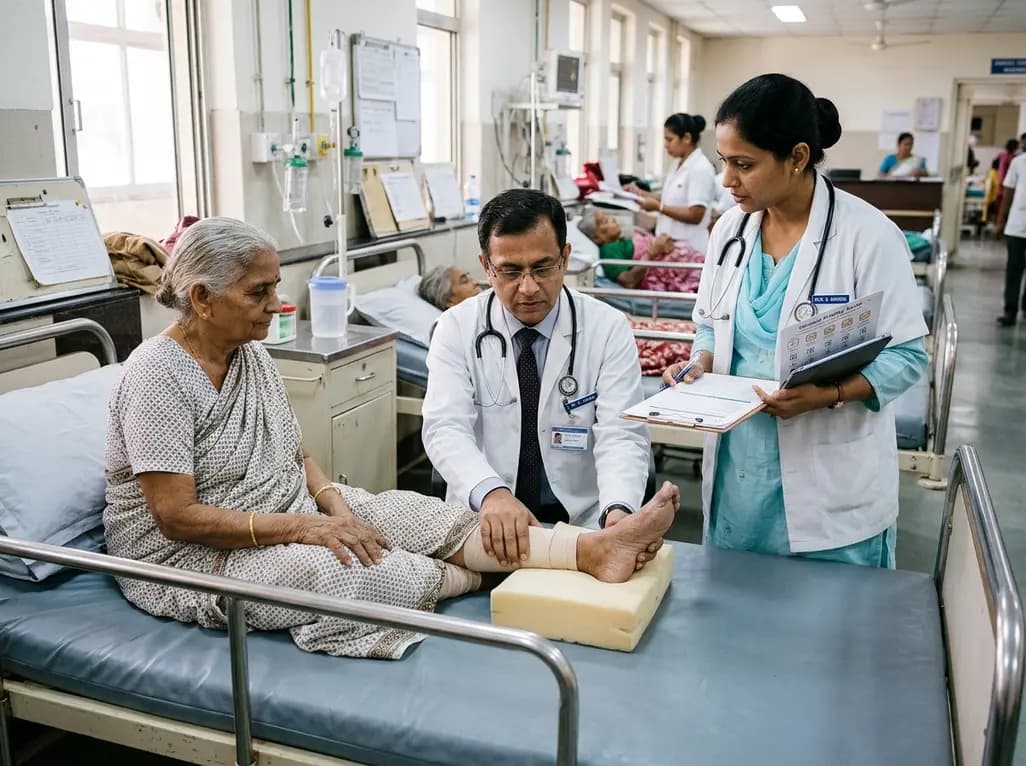
A retrospective cohort study reveals that frailty quadruples the odds of pressure injuries in hospitalized older adults. Integrating the Clinical Frailty Scale with comprehensive geriatric care is crucial for identifying vulnerability early and implementing targeted multidisciplinary prevention.
Today

Occult maternal malignancy accounts for 3.82% of persistent unreportable NIPT results with genomic noise. Multiple chromosomal aberrations, notably on chromosome 18, warrant thorough oncological evaluation and whole-body MRI to ensure timely maternal diagnosis while preserving fetal care.
Today

This article reviews the forensic and clinical complexities of acute myocarditis arising on left ventricular hypertrophy in children, highlighting early diagnostic red flags and multidisciplinary postmortem autopsy protocols.
Today

A randomized controlled trial demonstrates that an eight-week dual-task training intervention significantly improves static and dynamic postural control over standard balance exercises in individuals with chronic ankle instability, addressing critical neurocognitive deficits during athletic and daily activities.
Today

A retrospective cohort study of 7,716 ICU patients from the MIMIC-IV database demonstrates that Gradient Boosting Decision Trees significantly outperform traditional SOFA scores in predicting in-hospital mortality among patients with sepsis and diabetes, with SHAP analysis providing clinical interpretability.
Today
