

Loading, please wait...
Loading, please wait...

The clinical landscape of pediatric Ewing sarcoma has transformed remarkably over the last three decades. Significant advancements in molecular diagnostics, aggressive systemic regimens, and specialized surgical techniques have reshaped outcomes for young patients. Historically, clinicians faced formidable challenges when treating these aggressive malignancies. However, population-based evidence now confirms substantial improvements in long-term survival alongside rising diagnostic rates. Understanding these epidemiological patterns helps multidisciplinary oncology teams optimize current protocols and address lingering therapeutic hurdles.
Recent population data from the Netherlands Cancer Registry reveal compelling trends in pediatric Ewing sarcoma between 1990 and 2018. During this twenty-eight-year period, registry analysts evaluated 464 children and adolescents aged seventeen years and younger. Consequently, investigators noted an average annual percentage change in the age-standardized incidence rate of 2.1%. Specifically, the incidence rose from 3.7 per million person-years during the 1990s to 5.2 between 2010 and 2018. Furthermore, the registry recorded approximately sixteen new pediatric diagnoses each year across the country. Clinicians must consider whether this observed rise reflects true biological changes or superior detection tools. In addition, refined diagnostic pathways and heightened clinical awareness likely contributed to more frequent identification of localized and atypical cases. Therefore, these findings demonstrate that comprehensive surveillance remains vital for capturing evolving disease burdens in pediatric oncology.
Pathologists have expanded their diagnostic armamentarium substantially over the past generation. Historically, pathologists identified small round blue cell tumors primarily through standard histology and rudimentary immunohistochemical markers. Today, however, cytogenetic testing and next-generation sequencing regularly distinguish classic EWSR1 gene fusions from alternative rearrangement variants. For example, molecular tests accurately differentiate round cell sarcomas harboring BCOR or CIC alterations from standard Ewing presentations. Consequently, this high-precision classification eliminates prior diagnostic ambiguities and prevents therapeutic misclassification.
Moreover, modern imaging tools such as whole-body magnetic resonance imaging and positron emission tomography allow earlier identification of primary lesions and occult metastases. Therefore, clinicians can establish precise anatomical staging before initiating therapy. In addition, standardized biopsy protocols and centralized pathological reviews ensure that patients receive correct disease staging upfront. Ultimately, accurate histological verification forms the critical foundation for risk-tailored treatment strategies across oncology centers. Because precise diagnostic distinction guides prognostic stratification, modern molecular pathology plays an indispensable role in patient management.
The centralization of pediatric cancer care has reshaped clinical management paradigms dramatically. In the Netherlands and other developed healthcare systems, centralized pediatric oncology networks now coordinate care for rare sarcomas. Consequently, surgical teams, radiation oncologists, and pediatric oncologists collaborate seamlessly within specialized tumor boards. The registry study documented that utilization of local therapy combined with multi-agent chemotherapy surged from 75% in the 1990s to 94% between 2010 and 2018. Furthermore, multimodal treatment schemes incorporate intensive interval-compressed chemotherapy regimens that rapidly eradicate micrometastases.
Meanwhile, orthopedic surgical oncologists perform complex limb-sparing reconstructions with negative margins far more frequently than in prior decades. In addition, advanced conformal radiation therapy techniques, such as intensity-modulated radiotherapy and proton beam therapy, minimize collateral damage to surrounding tissues. Because specialized teams manage acute toxicities aggressively, treatment delays occur less frequently. Therefore, centralized multidisciplinary care guarantees uniform protocol adherence, which directly enhances therapeutic efficacy. Furthermore, institutional expertise in managing rare bone tumors reduces surgical morbidity and improves long-term functional recovery for pediatric survivors.
Therapeutic improvements have translated into striking clinical gains in patient survival. Specifically, the Dutch registry analysis demonstrated that five-year overall survival rose from 56% in 1990–1999 to 70% in 2010–2018. Similarly, ten-year overall survival climbed from 51% to 65% across the same comparison periods. Multivariable Cox proportional hazards regression confirmed a dramatic reduction in mortality for patients diagnosed during the modern era. Patients treated between 2010 and 2018 achieved a hazard ratio of 0.4 compared to those diagnosed in the earliest decade.
Furthermore, multivariable models controlled for critical variables including sex, age, stage at diagnosis, and tissue-specific primary tumor location. Nevertheless, disease stage remains the single most decisive prognostic indicator in modern oncology. Patients presenting with localized disease experience exceptional long-term survival, whereas individuals with metastatic dissemination continue to face guarded prognoses. As a result, oncologists now focus heavily on early risk stratification to adapt therapy intensity. In addition, older pediatric patients experience worse relative outcomes, highlighting an urgent need for biologically informed prognostic stratification systems.
Despite inspiring historical progress, oncologists continue to encounter formidable clinical obstacles. Notably, older children and adolescents consistently display poorer survival trajectories compared to younger pediatric cohorts. In addition, children diagnosed with primary metastatic disease or early disease recurrence face unacceptable mortality rates. Standard cytotoxic multi-agent regimens have likely reached their therapeutic ceiling, where escalating doses risks severe organ toxicity. Therefore, researchers must pioneer novel targeted strategies to break through these survival plateaus.
Emerging translational studies focus on targeted small-molecule inhibitors, immunotherapy constructs, and epigenetic modulators tailored to underlying fusion oncoproteins. Furthermore, international clinical consortia actively conduct prospective trials evaluating maintenance approaches and novel drug combinations. Clinicians must also prioritize long-term survivorship programs to identify and manage secondary malignancies and cardiotoxic sequelae. Ultimately, closing the survival gap for high-risk cohorts requires relentless international collaboration and rapid bench-to-bedside translation of targeted biologic agents. Consequently, future clinical protocols aim to improve cure rates while simultaneously reducing late toxicities.
The reported increase in incidence stems largely from advancements in diagnostic precision, standardized pathological classification, and centralized national registry reporting. Modern molecular diagnostics, including fluorescent in situ hybridization and reverse transcription polymerase chain reaction, now reliably identify atypical Ewing-like sarcomas that clinicians historically misclassified. Furthermore, widespread availability of high-resolution magnetic resonance imaging and heightened clinical suspicion facilitate prompt identification of subtle initial lesions, thereby increasing overall case ascertainment across pediatric populations.
Survival improvements reflect the systematic integration of centralized multidisciplinary care and intensified multimodal regimens. Nearly all modern pediatric patients now receive intensive multi-agent chemotherapy combined with definitive local therapy, compared to historical eras when fewer patients received dual-modality treatment. Furthermore, improvements in orthopedic limb-salvage surgery, advanced conformal radiation therapy techniques, and supportive clinical care—such as better antimicrobial prophylaxis and hematopoietic growth factors—have substantially lowered treatment-related mortality and disease recurrence.
Despite notable historical progress, the presence of metastatic disease at initial diagnosis remains the most formidable adverse prognostic factor, significantly reducing long-term survival. Additionally, older pediatric age and primary pelvic tumor location correlate with higher hazard ratios for disease relapse and mortality. Because standard cytotoxic chemotherapy has reached maximum tolerable dosing limits, overcoming these persistent therapeutic hurdles necessitates developing novel molecularly targeted therapies, fusion protein inhibitors, and prospective risk-stratified clinical trials.
Disclaimer: This content is for informational and educational purposes only. It is not intended as a substitute for professional medical advice, diagnosis, or treatment. Always seek the advice of your physician or another qualified healthcare provider with any questions you may have regarding a medical condition. Refer to the latest local and national guidelines for clinical practice.
References
Schep-Wijnveen HJM et al. Increased Incidence and Improved Survival of Ewing and Ewing-Like Sarcomas in Children and Young Adolescents in the Netherlands Since the 1990s: A Population-Based Study. Cancer Med. 2026 Nov undefined. doi: undefined. PMID: 42967889.
National Comprehensive Cancer Network (NCCN). NCCN Clinical Practice Guidelines in Oncology: Pediatric Bone Sarcoma. Version 1.2026. Plymouth Meeting: NCCN; 2026.
Leavey PJ, et al. Multimodality treatment and outcomes in pediatric Ewing sarcoma: Consensus guidelines and contemporary protocols. J Clin Oncol. 2021;39(36):4029-4038.

Read summarized clinical updates, watch expert medical content, and earn CME certifications right from your smartphone.
Open your smartphone camera to scan and install.





A three-decade nationwide study shows rising incidence and remarkable survival gains in pediatric Ewing sarcoma, driven by centralized care and multimodal therapy.
Today
Recent research highlights how endoplasmic reticulum and mitochondrial interactions at contact sites regulate ferroptosis in cardiovascular diseases. This article explores lipid peroxidation, organelle crosstalk, and potential therapeutic strategies for ischemic heart disease and heart failure.
Today
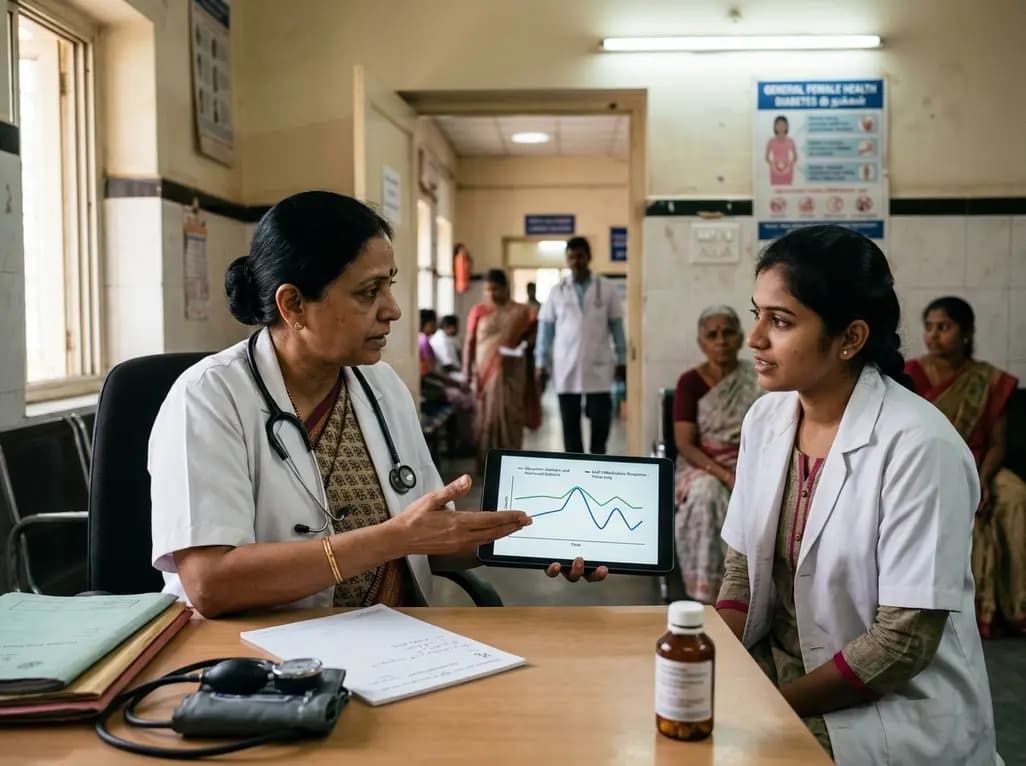
Medical experts caution that GLP-1 receptor agonists offer metabolic support rather than a curative answer for polyendocrine metabolic ovarian syndrome. Clinicians must evaluate glycemic markers, reproductive plans, and lifestyle interventions while discouraging unsupervised medication use among female patients.
Today

A retrospective CAHAL study comparing Amplatzer and Occlutech devices in 413 patients found no significant difference in moderate-to-large residual shunt rates at 6 months follow-up after percutaneous PFO closure, supporting clinical equivalence between both platforms.
Today

A longitudinal feasibility pilot study highlights that combining polygenic risk score disclosure with in-person lifestyle counseling significantly enhances genomic literacy in individuals at risk for type 2 diabetes, overcoming educational disparities and reinforcing patient motivation.
Today
