.webp&w=384&q=75)

Loading, please wait...
Loading, please wait...

Pediatric brain injury often results in long-term cognitive and behavioral challenges that impact the entire family unit. Effective pediatric brain injury intervention strategies must therefore extend beyond the child to include parent-focused training. A recent study evaluated a novel, transdiagnostic training model called Interact-North, designed to equip neuropsychologists with skills to deliver evidence-based family support. This model addresses a critical gap in traditional training, which often prioritizes assessment over direct therapeutic rehabilitation.
Traditionally, neuropsychological training has focused heavily on diagnostic assessment rather than therapeutic intervention. However, the Interact-North model shifts this focus toward a family-centered approach. The training involves a combination of didactic workshops and immersive role-play exercises. Furthermore, trainees receive ongoing support through biweekly group supervision and case-shadowing. This multi-layered approach ensures that clinicians translate theoretical knowledge into practical bedside skills. For instance, the study found that role-play exercises were rated as the most useful component for building clinical confidence.
Results from the 2023 and 2025 cohorts indicate that this training model is highly effective. Trainees reported significantly improved clinical competency and rated the relevancy of the program to their careers very highly. Most notably, clinicians achieved 95% program fidelity during their first independent cases. Consequently, this model proves that structured supervision can rapidly bridge the gap between academic training and high-quality clinical delivery. This is particularly vital for early-career professionals entering the field of neurorehabilitation.
Additionally, the transdiagnostic nature of the program allows it to be applied across various types of acquired brain injuries. This flexibility is particularly valuable in resource-limited settings where specialized services may be scarce. By empowering neuropsychologists with these skills, healthcare systems can improve long-term outcomes for pediatric patients and their caregivers. Ultimately, family-centered care remains the cornerstone of successful recovery in pediatric neurorehabilitation.
Interact-North is a virtual, transdiagnostic parenting intervention designed to support families of children with acquired brain injuries by improving parenting skills and family dynamics through didactic and skill-based learning.
Transdiagnostic training allows clinicians to apply evidence-based interventions across various conditions rather than being limited to a single diagnosis. This increases the versatility of clinicians and ensures that pediatric neurorehabilitation is more accessible to diverse patient populations.
Disclaimer: This content is for informational and educational purposes only. It does not constitute medical advice or a professional relationship. Refer to the latest local and national guidelines for clinical practice.
References
Green R et al. Training outcomes in a transdiagnostic, neuropsychologically - informed parenting intervention for children with early brain injury. J Clin Exp Neuropsychol. 2026 Feb 28. doi: 10.1080/13803395.2026.2637499. PMID: 41762708.
Vassallo S, et al. Pediatric acquired brain injury: A review of family-centered interventions. NeuroRehabilitation. 2023;52(4):511-525.

Read summarized clinical updates, watch expert medical content, and earn CME certifications right from your smartphone.
Open your smartphone camera to scan and install.





A study evaluates the Interact-North training model, improving neuropsychologists' skills in delivering parenting interventions for pediatric brain injury....
7 months ago

A retrospective cohort study of 7,716 ICU patients from the MIMIC-IV database demonstrates that Gradient Boosting Decision Trees significantly outperform traditional SOFA scores in predicting in-hospital mortality among patients with sepsis and diabetes, with SHAP analysis providing clinical interpretability.
Today
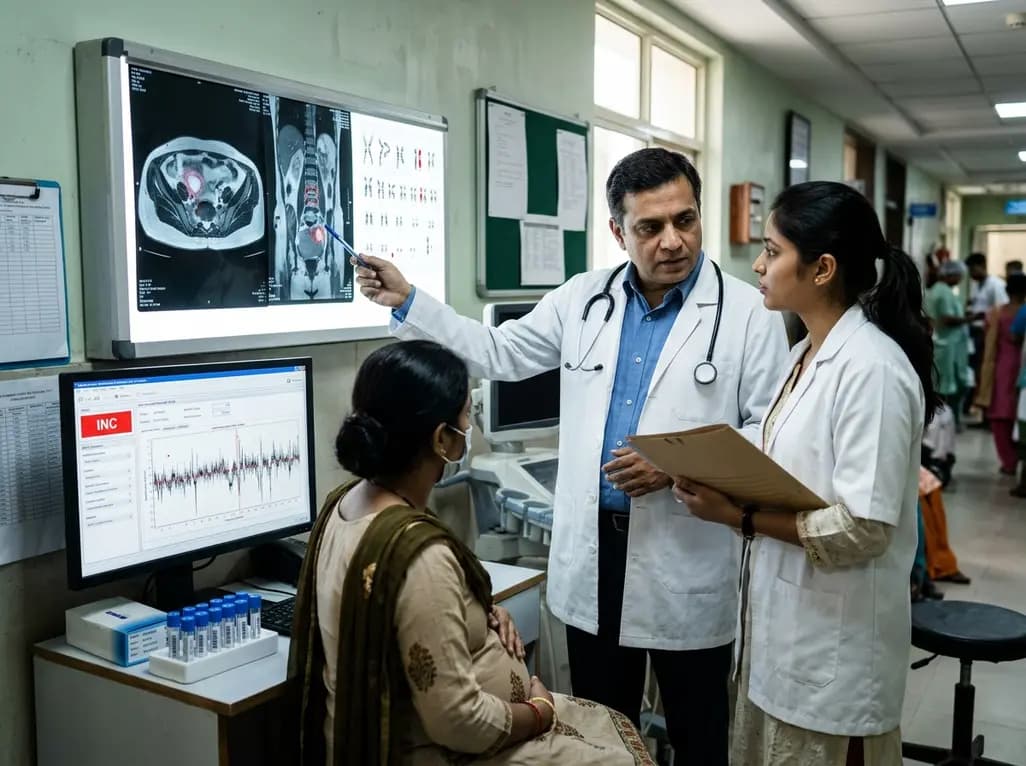
Occult maternal malignancy accounts for 3.82% of persistent unreportable NIPT results with genomic noise. Multiple chromosomal aberrations, notably on chromosome 18, warrant thorough oncological evaluation and whole-body MRI to ensure timely maternal diagnosis while preserving fetal care.
Today
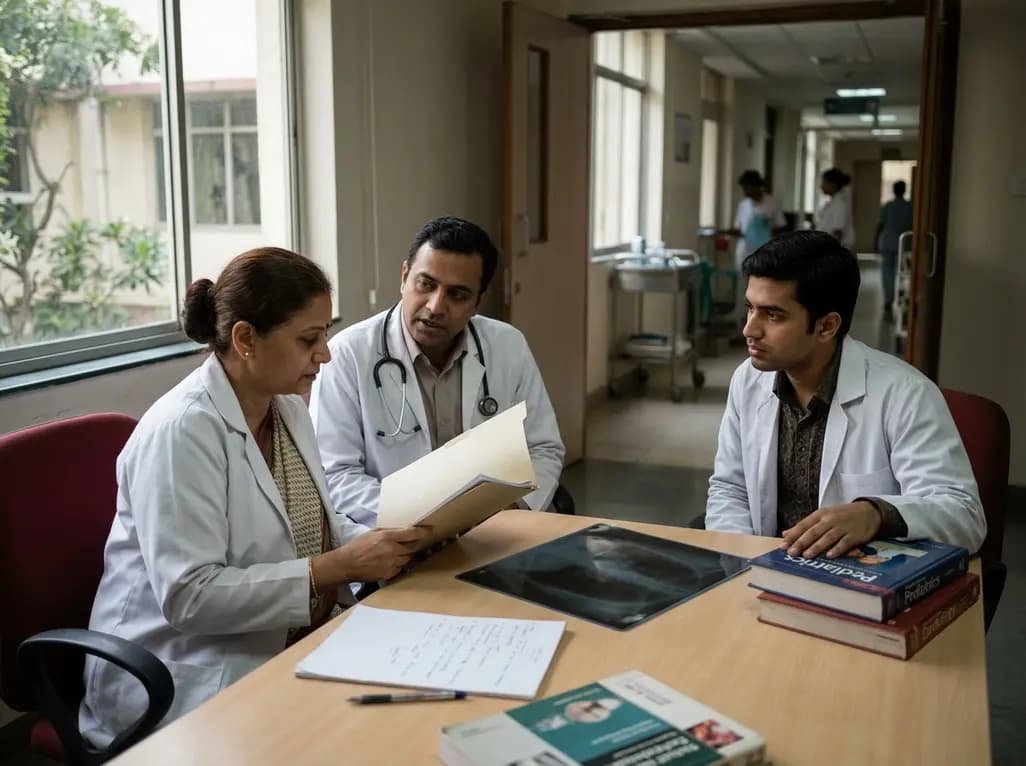
This article reviews the forensic and clinical complexities of acute myocarditis arising on left ventricular hypertrophy in children, highlighting early diagnostic red flags and multidisciplinary postmortem autopsy protocols.
Today

This comparative study evaluates posterior labral tears with and without glenohumeral instability, highlighting distinct demographic patterns, MRI underestimation in stable shoulders, and successful arthroscopic repair outcomes.
Yesterday

A clinical study demonstrates that early intervention with tocilizumab, either as monotherapy or bridged with corticosteroids, achieves significant proptosis reduction and resolves active inflammation in treatment-naive thyroid eye disease.
Yesterday
