

Loading, please wait...
Loading, please wait...

Pediatric neurosurgical oncology demands precision, rigorous perioperative planning, and careful physiological stabilization. Central nervous system neoplasms represent one of the most common solid malignancies among infants and children. Surgical excision remains the definitive cornerstone of therapeutic management. Nevertheless, extensive intraoperative bleeding frequently necessitates allogeneic pediatric blood transfusion. While life-saving during sudden hemodynamic collapse, blood administration introduces substantial clinical risks. These hazards include transfusion-related acute lung injury, severe immunomodulation, systemic infections, and extended intensive care admissions. Consequently, surgical teams must identify baseline risk factors to anticipate transfusion demands effectively.
Allogeneic transfusion protocols in pediatric neurosurgery have evolved dramatically over recent decades. However, blood component therapy still carries significant physiological burdens for young patients. Children possess a much smaller circulating blood volume compared to adults. Therefore, even minor surgical hemorrhage can precipitate rapid, critical hemodynamic destabilization. In addition, exposure to donor erythrocytes triggers transfusion-related immunomodulation, which may adversely affect long-term oncological outcomes. Transfused children often experience increased rates of postoperative fever, surgical site infections, and delayed wound healing. Furthermore, blood component shortages regularly challenge healthcare systems worldwide, particularly within resource-constrained tertiary care centers. Because transfusions carry these inherent systemic risks, surgical teams cannot rely on arbitrary transfusion decisions. Instead, multidisciplinary teams must establish clear, evidence-based indications before entering the operating theater. Understanding distinct physiological predictors enables clinicians to tailor fluid management, refine surgical techniques, and avoid indiscriminate blood administration. Consequently, implementing targeted risk-stratification models improves pediatric patient safety while conserving critical blood bank resources. Pediatric neurosurgeons and neuroanesthesiologists must therefore collaborate closely to anticipate hemorrhagic risks well before skin incision.
A landmark retrospective cohort study conducted between 2017 and 2022 systematically analyzed 268 pediatric patients. These children underwent 334 intracranial tumor resection procedures at a major neurosurgical center. Researchers meticulously examined multiple clinical parameters, including patient age, tumor histology, preoperative laboratory values, and total operative time. The cohort analysis revealed that several baseline factors significantly elevated the likelihood of perioperative transfusion. Specifically, univariate analysis identified patient age younger than five years as a strong risk factor. In addition, tumor volume exceeding 30 cm³ and baseline hemoglobin below 9.05 g/dL substantially heightened transfusion probability. Extended surgical duration exceeding seven hours also demonstrated a clear correlation with increased blood product requirements. Furthermore, transfused pediatric patients faced a significantly higher incidence of postoperative adverse outcomes, with an odds ratio of 2.28. In contrast, children diagnosed with astrocytoma histology exhibited notably lower transfusion rates and reduced overall mortality. Intriguingly, histological grading of astrocytomas and ependymomas did not significantly alter transfusion requirements. Thus, physiological volume and baseline hematological reserve, rather than tumor cellular grade alone, dictated transfusion requirements in this surgical cohort.
Multivariable logistic regression provides essential clarity by isolating confounding surgical variables. In the aforementioned investigation, multivariable analysis confirmed that age under five years remained an independent predictor of transfusion. Similarly, larger tumor volume and lower baseline hemoglobin independently predicted transfusion requirements throughout the perioperative timeline. Younger children face disproportionate physiological vulnerability because their total blood volume averages only 75 to 80 milliliters per kilogram. Consequently, a blood loss of merely 150 milliliters can represent nearly a quarter of total circulating volume in a toddler. Moreover, intracranial neoplasms in young children frequently exhibit aggressive, fragile vascularity that bleeds profusely during microdissection. In addition, large tumor volumes compress major dural venous sinuses, which complicates surgical exposure and promotes substantial venous oozing. When patients enter surgery with preexisting anemia, their compensatory reserve vanishes rapidly. Even modest surgical hemorrhage pushes these children past their critical oxygen delivery threshold. Therefore, neuroanesthesiologists must initiate early red blood cell therapy to prevent cerebral hypoperfusion and metabolic acidosis. Recognizing these independent predictors helps teams assemble specialized resuscitation resources before initiating complex cranial resections.
Implementing proactive Patient Blood Management (PBM) programs addresses modifiable transfusion predictors before patient transfer to the operating suite. PBM relies on three fundamental clinical pillars: optimizing hematopoiesis, minimizing surgical blood loss, and enhancing physiological tolerance of anemia. Because preoperative anemia strongly predicts transfusion, clinicians should diagnose and treat iron deficiency well ahead of elective cranial procedures. Intravenous iron formulations, with or without recombinant erythropoietin, can rapidly boost baseline hemoglobin concentrations in pediatric oncology candidates. Furthermore, neurosurgeons can employ modern intraoperative techniques to curtail excessive blood loss. Bipolar electrosurgery, ultrasonic aspirators, and topical hemostatic matrix sealants drastically diminish microvascular bleeding during tumor debulking. In addition, intraoperative cell salvage offers a viable method to recover and autotransfuse shed erythrocytes during major cranial procedures. Modern leukocyte-depletion filters further protect pediatric patients against malignant cell reinfusion during oncological resections. Antifibrinolytic agents, such as tranexamic acid, also stabilize nascent clot formation and reduce transfusion requirements across complex pediatric craniotomies. Thus, comprehensive PBM bundles allow surgical teams to counteract known risk factors effectively and reduce donor blood exposure.
Pediatric neuroanesthesia demands rigorous physiological vigilance, especially during prolonged tumor resections lasting over seven hours. Extended operative times expose patients to progressive hypothermia, hemodilution, and worsening consumption coagulopathy. Therefore, neuroanesthesiologists must establish continuous arterial line monitoring to assess real-time blood pressure variations and obtain frequent arterial blood gases. In addition, core temperature monitoring and active warming blankets prevent hypothermia-induced platelet dysfunction. Clinicians should also utilize point-of-care viscoelastic testing, such as thromboelastography or rotational thromboelastometry. These functional assays identify specific clotting factor deficits and hyperfibrinolysis far faster than conventional coagulation profiles. Consequently, anesthesiologists can administer targeted factor concentrates, cryoprecipitate, or platelets rather than administering empiric fresh frozen plasma. Moreover, cautious fluid administration prevents excessive crystalloid hemodilution, which preserves native coagulation factor activity. Maintaining normovolemia while avoiding hyperchloremic acidosis also safeguards microvascular perfusion to vulnerable penumbral brain tissue. Close verbal communication between the neurosurgeon and neuroanesthesiologist remains paramount throughout critical dissection phases. By coordinating surgical pauses and optimizing hemodynamic targets, the multidisciplinary team prevents sudden, unmanageable exsanguination.
Blood component administration correlates directly with increased postoperative morbidity, prolonged mechanical ventilation, and extended intensive care hospitalization. Allogeneic leukocytes and storage lesions release bioactive cytokines that trigger systemic inflammatory cascades throughout vulnerable cerebral vasculature. Therefore, minimizing unneeded transfusions preserves immune function and shortens recovery trajectories for pediatric cancer patients. When blood transfusion becomes clinically unavoidable, teams should utilize leukoreduced, irradiated red blood cell units. These processed components decrease the incidence of febrile non-hemolytic reactions and transfusion-associated graft-versus-host disease. Furthermore, neurosurgical units must establish restrictive transfusion protocols rather than relying on liberal hemoglobin thresholds. Current pediatric critical care guidelines generally support restrictive thresholds, recommending transfusion only when hemoglobin falls below 7.0 g/dL in hemodynamically stable children. However, clinicians must individualize these thresholds for patients experiencing acute intracranial hypertension or active cerebral ischemia. Establishing institution-wide registries also enables surgical centers to audit transfusion practices and track clinical outcomes prospectively. Ultimately, structured surveillance and multidisciplinary education elevate surgical standards and foster safer pediatric neurosurgical outcomes.
Independent predictors include patient age under five years, tumor volume exceeding 30 cm³, and preoperative hemoglobin concentrations below 9.05 g/dL. Additionally, prolonged operative duration exceeding seven hours significantly elevates transfusion requirements. Identifying these high-risk clinical features before surgery allows multidisciplinary teams to prepare appropriate conservation and resuscitation strategies.
Young children possess a substantially smaller total circulating blood volume, averaging approximately 75 to 80 mL/kg. Consequently, even modest surgical blood loss depletes a large proportion of their circulatory reserve. Furthermore, intracranial tumors in infants often exhibit high vascularity and rapid growth, which accelerates intraoperative bleeding and necessitates prompt donor erythrocyte support.
Patient Blood Management utilizes proactive strategies to optimize preoperative red cell mass with iron supplementation. Intraoperatively, surgeons apply advanced hemostatic techniques and cell salvage, while anesthesiologists utilize point-of-care coagulation assays and antifibrinolytics. These combined multimodal measures effectively reduce blood loss, preserve patient hemodynamics, and significantly diminish the necessity for donor blood transfusions.
Disclaimer: This content is for informational and educational purposes only and does not constitute medical advice. Healthcare professionals should evaluate individual clinical circumstances when applying this information. Refer to the latest local and national guidelines for clinical practice.
References

Read summarized clinical updates, watch expert medical content, and earn CME certifications right from your smartphone.
Open your smartphone camera to scan and install.





A retrospective cohort study evaluated 268 pediatric patients undergoing 334 intracranial tumor resections to assess blood transfusion risk factors. Age under five years, tumor volume over 30 cm³, and baseline anemia independently predicted transfusion needs, highlighting key patient blood management targets.
Today

A secondary analysis of the prospective international Hyponatremia Intervention Trial (HIT) evaluates how volume status and underlying etiologies in hypotonic hyponatremia shift across adult age groups, highlighting crucial diagnostic and therapeutic challenges for geriatric and internal medicine practice.
Today

A new study evaluates a multilingual digital health platform combining rule-based cervical cancer risk assessment, retrieval-augmented generation AI, and geospatial navigation. The tool dramatically reduces clinical hallucinations while providing actionable health guidance for underserved populations.
Today

A case-control study demonstrates significant lipid profile alterations in myocardial infarction patients, highlighting elevated total cholesterol, triglycerides, and LDL-C alongside decreased HDL-C, emphasizing early lipid screening and aggressive secondary cardiovascular prevention.
Today
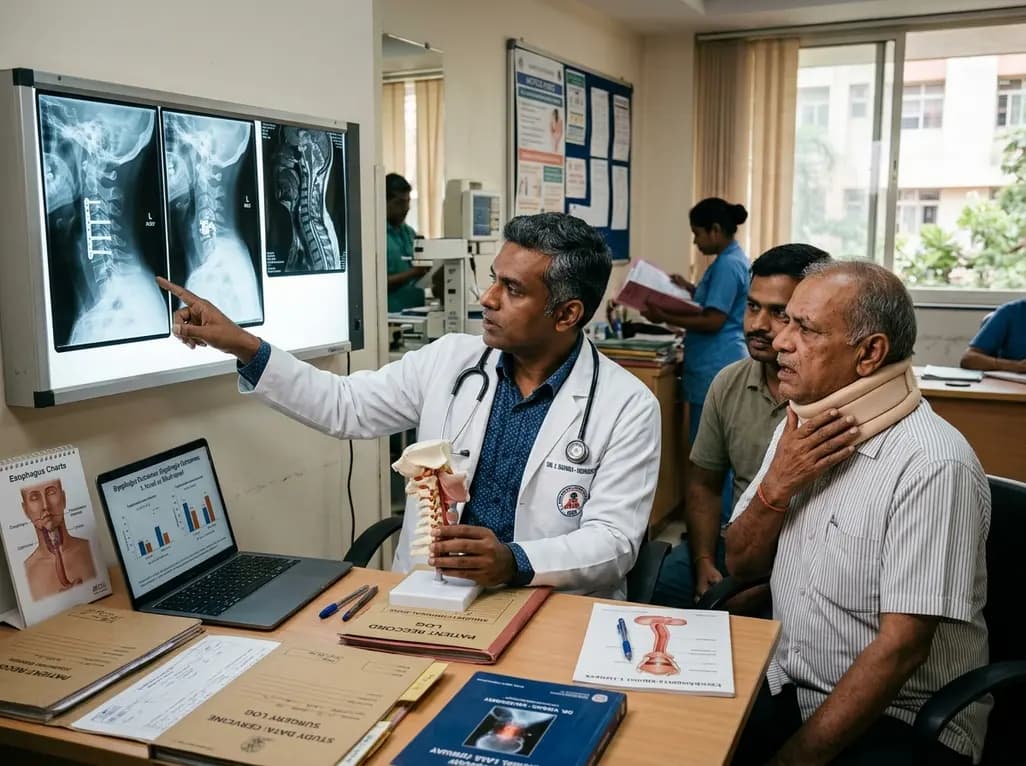
A large registry study reveals that postoperative dysphagia occurs more frequently and persists longer after multilevel anterior cervical spine surgery than single-level procedures. Key risk factors include baseline dysphagia, diabetes, upper cervical segment involvement, and medical comorbidities.
Today

A landmark UK Biobank study by Karolinska Institutet researchers reveals that optimal rest mitigates neurodegeneration in cardiometabolic illness. Patients maintaining high sleep quality demonstrated superior cognitive scores and larger brain volumes, highlighting sleep optimization as an actionable clinical strategy.
Today
