.webp&w=384&q=75)

Loading, please wait...
Loading, please wait...

The shift toward ambulatory care has significantly changed the landscape of pediatric surgery globally. Currently, most children receive surgical interventions in outpatient settings rather than traditional inpatient hospitals. However, this rapid evolution has introduced significant variability in practice patterns and patient outcomes. To address these inconsistencies, clinicians must prioritize the creation of robust Pediatric Ambulatory Anesthesia Standards. While academic centers often lead research initiatives, the results frequently fail to translate into community-based settings. Consequently, a gap persists between evidence-based guidelines and real-world clinical application. This disconnect poses a challenge to universal safety and quality. By recognizing the unique needs of the ambulatory environment, the medical community can begin to bridge this divide. Furthermore, the goal is to ensure that every child receives the same high-quality care, regardless of where they are treated. Establishing these standards requires a comprehensive understanding of current data limitations and a commitment to iterative improvement. This transition demands a collaborative approach that leverages modern data systems and implementation science to harmonize care across all settings. By doing so, we can create a safer future for pediatric patients undergoing surgery.
Traditional research models and existing anesthesia registries have historically provided valuable insights into patient safety. However, these systems often suffer from inherent limitations that hinder their effectiveness in community settings. Most existing databases primarily collect data from large, tertiary, or quaternary academic children's hospitals. Unfortunately, these institutions do not represent the diverse environment where the majority of pediatric anesthesia care is actually delivered. Specifically, many children undergo procedures in smaller community hospitals or standalone surgical centers. Because academic registries often exclude these settings, the benchmarks they produce may not be applicable to the general population. In addition, traditional research often focuses on rare complications rather than the day-to-day nuances of clinical practice. This focus can lead to a lack of actionable knowledge for the average practitioner. Moreover, the slow adoption of clinical guidelines remains a major hurdle. Even when high-quality evidence exists, it can take years for these findings to become standard practice. Therefore, relying solely on traditional registries is no longer sufficient to meet the evolving demands of pediatric care. We need a more inclusive and agile approach to data collection and analysis to ensure that standards of care are universal across all delivery models.
To overcome the constraints of traditional models, experts propose a transition toward a Learning Health System (LHS) consortium. An LHS is a collaborative model where real-world electronic medical record data serves as the foundation for continuous improvement. In this system, clinical practice generates data, which researchers analyze to create new knowledge. Subsequently, clinicians implement this knowledge back into practice to improve outcomes. This iterative cycle ensures that care standards are always evolving based on the latest available evidence. Furthermore, the LHS model prioritizes adaptive methodologies that can respond quickly to new healthcare challenges. Unlike static registries, a Learning Health System fosters a culture of shared responsibility and collective learning. Specifically, it encourages diverse healthcare providers to collaborate across institutional boundaries. By breaking down silos, the medical community can share best practices more effectively and efficiently. This approach also emphasizes the importance of positive deviance by identifying centers that achieve superior results. Consequently, the LHS framework offers a sustainable pathway for developing pragmatic clinical protocols. This system ensures that clinical insights are continuously integrated into the care delivery process for better results and improved patient safety across diverse populations.
One of the most significant hurdles in pediatric anesthesia is capturing data from a wide range of care settings. While academic hospitals provide critical data, we must also include community hospitals and private surgical centers in our analysis. The proposed LHS consortium seeks to extend its reach beyond tertiary care facilities to create a more comprehensive database. This inclusivity is vital because the patient demographics and resources available in community settings differ significantly from those in academic centers. For instance, community practitioners may handle a higher volume of routine cases but have less access to specialized pediatric equipment. By including these diverse environments, the LHS can develop benchmarks that reflect the true reality of pediatric care across the nation. Moreover, this model facilitates the dissemination of standards to every corner of the healthcare system. When community providers participate in the data cycle, they become active stakeholders in the improvement process. This sense of ownership encourages better adherence to safety protocols and clinical guidelines. Additionally, a broader data pool allows for the identification of subtle trends that might be missed in smaller cohorts. Ultimately, including all care settings ensures that innovation benefits every child, regardless of where they receive their medical treatment.
Success in improving pediatric outcomes depends not only on gathering data but also on the effective implementation of findings. This is where implementation science plays a crucial role within the Learning Health System. Implementation science focuses on the methods used to promote the systematic uptake of research findings into routine clinical practice. It addresses the behavioral and organizational barriers that often prevent clinicians from adopting new standards. Within a collaborative consortium, practitioners can share strategies for overcoming these obstacles effectively. For example, some centers might use automated decision-support tools within the electronic medical record to guide anesthetic choices. Others might focus on team-based training and communication protocols to enhance safety. By studying these various approaches, the LHS can identify the most effective ways to drive change across different hospital types. Furthermore, continuous quality improvement (CQI) ensures that the system remains dynamic. Instead of a one-time change, CQI involves ongoing monitoring and adjustment. This process allows the medical community to refine clinical guidelines as new technologies and medications emerge. Consequently, this focus on implementation creates a resilient healthcare system that can adapt to future needs while maintaining high standards.
The future of pediatric ambulatory anesthesia lies in our ability to work together as a unified community. By moving toward a Learning Health System consortium, we can bridge the gap between research and real-world practice. This model offers a sustainable and pragmatic solution to the variability currently seen in clinical outcomes. It prioritizes inclusivity, ensuring that data from community settings informs the standards of the future. As we continue to refine these methodologies, the goal remains to provide every child with the safest care possible. Fostering collaboration and data-driven improvement is the key to achieving this vision for universal pediatric safety.
A Learning Health System (LHS) is a model where clinical practice and research are integrated into a continuous cycle. In pediatric anesthesia, this means using real-world data from electronic medical records to identify best practices. Once researchers analyze the data, the findings are quickly implemented back into clinical care. This approach fosters a culture of constant improvement, ensuring that patient safety protocols evolve alongside technological and pharmacological advancements.
Most children receive surgical care in community-based settings rather than large academic centers. However, traditional registries often lack data from these facilities. Including community hospitals ensures that clinical benchmarks and safety standards reflect the diverse reality of pediatric practice. This inclusivity allows for the identification of unique challenges faced by smaller centers. Consequently, it ensures that all pediatric patients benefit from evidence-based care, regardless of where their surgery is performed.
Implementation science studies the methods that promote the adoption of research findings into routine clinical settings. It identifies the psychological, social, and organizational barriers that often slow down the use of new clinical guidelines. By applying these scientific principles, a Learning Health System can develop effective strategies, such as electronic alerts or standardized checklists, to change clinical behavior. This ensures that new safety standards are successfully integrated into daily practice across diverse healthcare environments.
Disclaimer: This content is for informational and educational purposes only and does not constitute medical advice. Always seek the advice of a qualified healthcare provider with any questions regarding a medical condition. Refer to the latest local and national guidelines for clinical practice.
References
Olbrecht VA et al. Perspectives in Pediatric Ambulatory Anesthesia: Part 4-Evolving Solutions in Pediatric Ambulatory Anesthesia: From Registries to a Learning Health System Approach. Paediatr Anaesth. 2026 Jun 27. doi: 10.1002/pan.70256. PMID: 42365439.
Clausen NG, Hansen TG. From little adults to pediatric patients: quality improvement in pediatric anesthesia. Signa Vitae. 2021; 17(4): 1-3. doi: 10.22514/sv.2021.088.
Vanderhoek SM, Varughese AM, Kudchadkar SR. Pediatric Ambulatory Anesthesia: Confronting Challenges, Embracing Opportunities. Anesth Analg. 2025 Mar 1;140(3):596-598. doi: 10.1213/ANE.0000000000007169.
"
Read summarized clinical updates, watch expert medical content, and earn CME certifications right from your smartphone.
Open your smartphone camera to scan and install.





This article explores the evolution of pediatric ambulatory anesthesia, moving from traditional registries to a Learning Health System (LHS) approach. It highlights the importance of inclusive data from community settings and the role of implementation science in standardizing care for children.
3 months ago
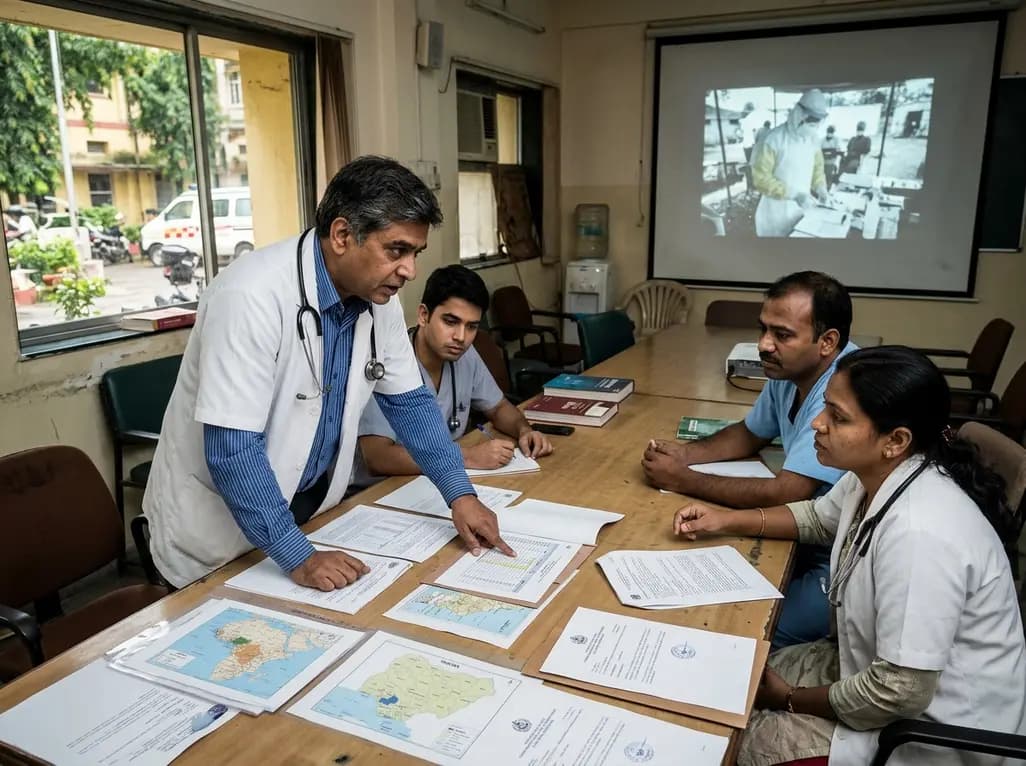
Following Nigeria's first recorded Ebola case linked to regional travel, the Africa CDC has convened an emergency ministerial summit. This alert underscores critical clinical priorities for healthcare professionals, including differentiating early viral infection from malaria, implementing barrier nursing, and triage.
Today

Leucine Rich Bio has introduced South Asia's first comprehensive vaginal microbiome test, BugSpeaks. By profiling microbial dysbiosis, pathogens, and antimicrobial resistance, this next-generation diagnostic platform provides clinicians with deeper insights into recurrent infections, fertility, and reproductive health.
Today

Review how tailored exercise programs benefit frail older patients with heart failure. Explore pathophysiological mechanisms, individualized training prescriptions, and strategies to overcome adherence barriers in clinical practice.
Today

This comparative study evaluates posterior labral tears with and without glenohumeral instability, highlighting distinct demographic patterns, MRI underestimation in stable shoulders, and successful arthroscopic repair outcomes.
Today

A clinical study demonstrates that early intervention with tocilizumab, either as monotherapy or bridged with corticosteroids, achieves significant proptosis reduction and resolves active inflammation in treatment-naive thyroid eye disease.
Today
