.webp&w=384&q=75)

Loading, please wait...
Loading, please wait...
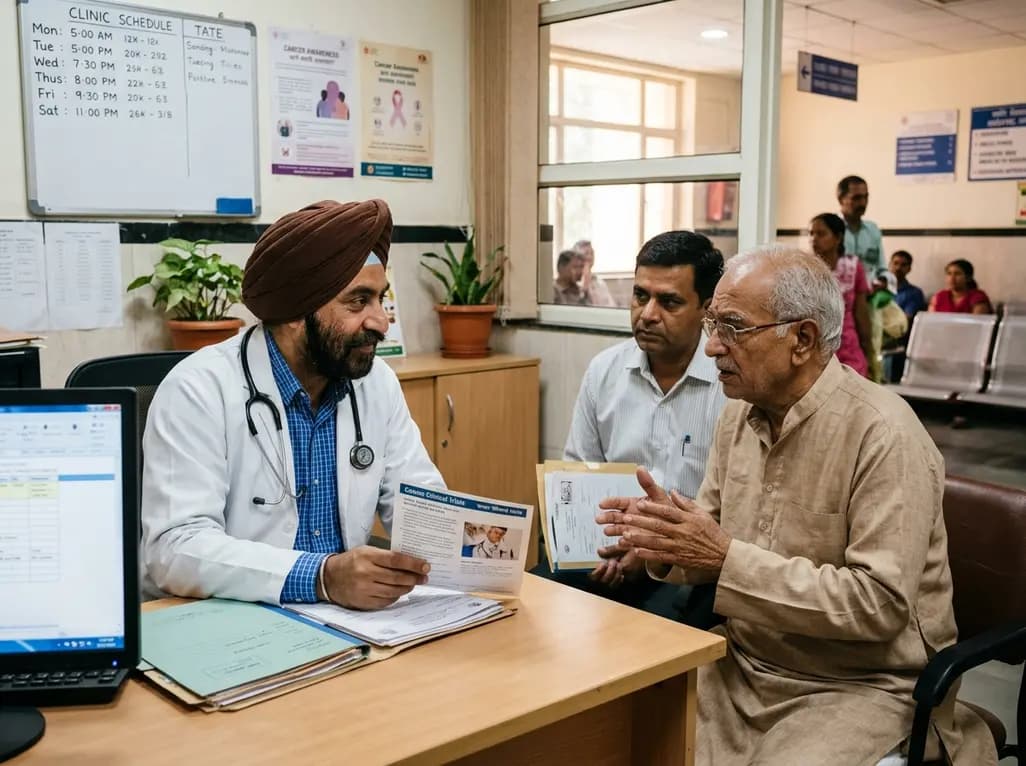
Prostate cancer remains one of the most prevalent malignancies affecting men globally, yet racial and sociodemographic disparities in trial enrollment continue to impede clinical progress. When clinicians propose innovative investigational protocols, patient willingness to engage in dialogue serves as the foundational gateway to enrollment. Historically, researchers examined sociodemographic factors and psychosocial beliefs through isolated statistical models that failed to capture complex intercorrelations. However, entering therapeutic dialogues regarding prostate cancer clinical trials requires navigating intersecting patient perspectives, past healthcare experiences, and deeply rooted systemic factors. Consequently, a comprehensive evaluation of these dynamics offers critical insights into why eligible individuals might hesitate to explore trial opportunities. Understanding these relationships enables oncology teams to address historical barriers proactively. Furthermore, examining interconnected psychosocial constructs allows institutions to refine consent procedures and develop tailored communication frameworks. Therefore, clinicians must assess how patient characteristics operate collectively rather than viewing them in clinical isolation.
To untangle the intricate network of variables influencing therapeutic trial discussions, researchers turned to structural equation modeling. Utilizing baseline data from the Partnering Around Cancer Clinical Trials study, investigators analyzed patient-reported metrics across major comprehensive cancer centers. Traditional regression models often treat individual predictors as entirely independent, which overlooks how social experiences shape health attitudes. In contrast, structural equation modeling evaluates observed behavioral measures alongside latent psychological constructs simultaneously. As a result, this analytical approach accurately maps direct and indirect pathways governing patient dialogue preferences. Specifically, the analysis included Black and White men diagnosed with localized or advanced prostate cancer facing treatment decisions. By employing robust maximum likelihood estimation, investigators successfully evaluated how demographic variables, general interpersonal trust, and multidimensional suspicion converge. Consequently, the findings provide a refined perspective on communication barriers, demonstrating that willingness to discuss trial protocols is not merely a binary decision but the culmination of multidimensional social and psychological interactions.
A primary revelation from recent structural equation modeling is the influential role of group-based medical mistrust. Group-based medical mistrust represents a latent psychosocial construct encompassing perceived healthcare disparities, suspicion of institutional motives, and perceived lack of institutional support. Importantly, the analysis demonstrated a significant negative association between higher group-based medical mistrust and patient willingness to discuss trial opportunities. Black patients reported substantially higher levels of medical mistrust compared with White peers, reflecting historical and ongoing inequities within healthcare environments. However, general trust in one's personal physician did not fully mitigate the systemic suspicion directed toward medical research institutions. Thus, even when a patient trusts their direct urologist or medical oncologist, institutional apprehension can suppress interest in investigational regimens. Healthcare teams must therefore distinguish between individual rapport and broader institutional credibility. Furthermore, acknowledging historical injustices openly within the clinical setting can create a reassuring environment for meaningful dialogue.
Beyond institutional mistrust, fundamental sociodemographic variables exert direct and distinct effects on patient willingness to discuss research protocols. Advanced patient age correlated with significantly lower willingness to engage in clinical trial conversations. Older men frequently contend with multifaceted comorbidities, treatment fatigue, or distinct quality-of-life priorities, making them more hesitant to consider investigational protocols. Conversely, higher formal education levels demonstrated a robust positive association with trial discussion willingness. Educated patients often possess greater baseline health literacy, allowing them to comprehend trial design and therapeutic equipoise more readily. Additionally, socioeconomic disparities intersect with education, creating disproportionate obstacles for socially disadvantaged individuals. Consequently, older individuals with limited formal education experience compounding vulnerabilities that restrict trial access. Clinicians must recognize these structural gradients to tailor educational materials effectively. By actively addressing educational disparities, cancer care teams can ensure that trial invitations remain accessible, clear, and empowering for all patients regardless of background.
Addressing persistent disparities in trial participation demands deliberate, structured communication adjustments during oncology consultations. Because patient willingness represents the vital first step toward informed consent, clinicians must initiate trial dialogues with profound cultural sensitivity and clarity. First, providers should normalize discussing clinical trials as standard care options rather than last-resort measures. Moreover, oncology teams should incorporate multidimensional screening tools to identify medical mistrust and health literacy barriers before formal trial discussions begin. Using dedicated patient navigators and racially concordant trial coordinators can significantly bridge gaps in institutional trust. In addition, urologists and oncologists should use clear language, avoiding dense scientific jargon that might alienate patients with lower formal education. Structured decision aids that clearly detail patient safety safeguards, institutional review board oversight, and potential personal benefits can demystify clinical investigations. Ultimately, fostering an empathetic environment transforms clinical consultations into collaborative partnerships that encourage diverse accrual across all patient populations.
Group-based medical mistrust is a latent psychosocial construct reflecting perceived healthcare disparities, suspicion of medical systems, and lack of support experienced by marginalized communities. Unlike personal trust in an individual physician, this systemic mistrust stems from historical and structural inequities. Consequently, it can significantly discourage patients from participating in investigational therapeutic studies and clinical trial discussions.
Advanced age is negatively associated with a patient's willingness to discuss cancer trials. Older individuals often manage multiple comorbidities, experience functional limitations, or prioritize avoiding experimental burdens over novel therapeutic regimens. Therefore, oncology teams must provide older patients with clear, reassurance-focused explanations regarding safety monitoring, supportive care, and quality-of-life considerations during clinical trial deliberations.
Higher education levels generally correlate with advanced health literacy, greater awareness of biomedical research, and enhanced confidence during medical consultations. Educated patients frequently navigate complex trial concepts, such as randomization and institutional oversight, with greater ease. Thus, simplifying research communication ensures that individuals with limited educational attainment receive equal understanding and encouragement to participate.
Disclaimer: This content is for informational and educational purposes only. It is not intended to be a substitute for professional medical advice, diagnosis, or treatment. Always seek the advice of your physician or other qualified health provider with any questions you may have regarding a medical condition. Refer to the latest local and national guidelines for clinical practice.
References
Liyanage JSS et al. Interconnectedness of Factors Affecting Patient Willingness to Discuss Prostate Cancer Clinical Trials With Physicians. JCO Oncol Pract. 2026 Aug 24. doi: 10.1200/OP-26-00036. PMID: 42636423.
Eggly S, Hamel LM, Heath E, et al. Partnering Around Cancer Clinical Trials (PACCT): Study protocol for an intervention to increase minority accrual to prostate cancer clinical trials. BMC Cancer. 2017;17(1):807.
Kaplan CP, Nápoles AM, Narine S, et al. Knowledge and attitudes regarding clinical trials and willingness to participate among prostate cancer patients. Contemp Clin Trials. 2015;45(Pt B):271-278.

Read summarized clinical updates, watch expert medical content, and earn CME certifications right from your smartphone.
Open your smartphone camera to scan and install.





A structural equation model reveals how group-based medical mistrust, age, and education shape patient willingness to discuss prostate cancer clinical trials, highlighting vital communication targets for oncology teams.
last month

A recent case shows that exertional rhabdomyolysis can trigger marked transaminase spikes despite moderate creatine kinase elevation. Preserved hepatic synthetic function confirms muscle injury rather than liver failure, guiding conservative hydration and preventing unnecessary invasive diagnostics.
Today

A pharmacometric and machine learning study reveals that specific vaginal bacteria alter cervical antiretroviral exposure, highlighting the need for precision HIV PrEP strategies.
Today
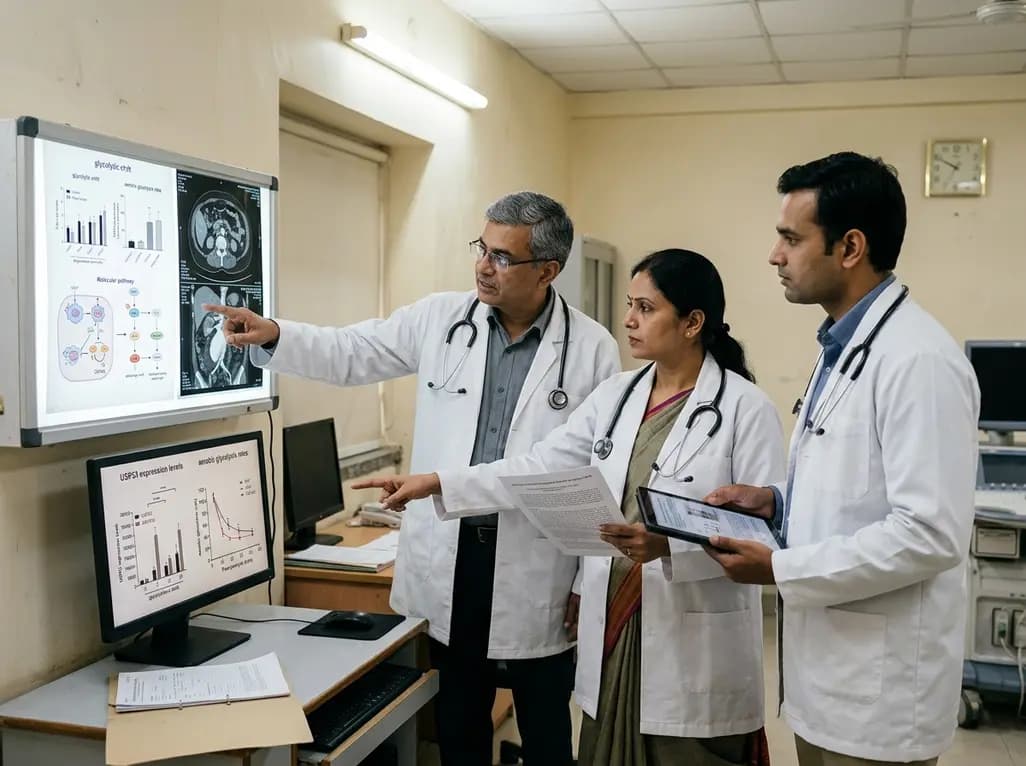
Abdominal aortic aneurysm rupture remains a catastrophic vascular emergency. Groundbreaking research reveals that USP53 accelerates aneurysm progression by reprogramming smooth muscle cell metabolism toward aerobic glycolysis, highlighting a promising target beyond conventional diameter-based surveillance.
Today
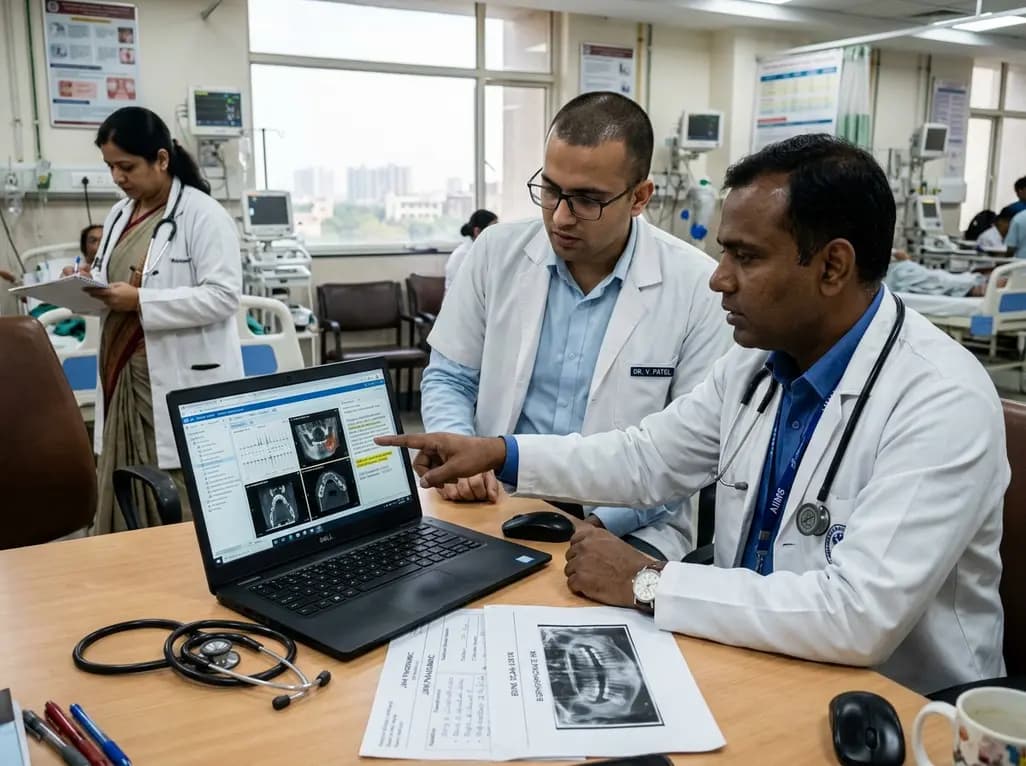
A breakthrough study leverages natural language processing to accurately identify incident medication-related osteonecrosis of the jaw and track antiresorptive drug holidays from clinical narratives in electronic health records, advancing osteoporosis pharmacovigilance and dental safety.
Today
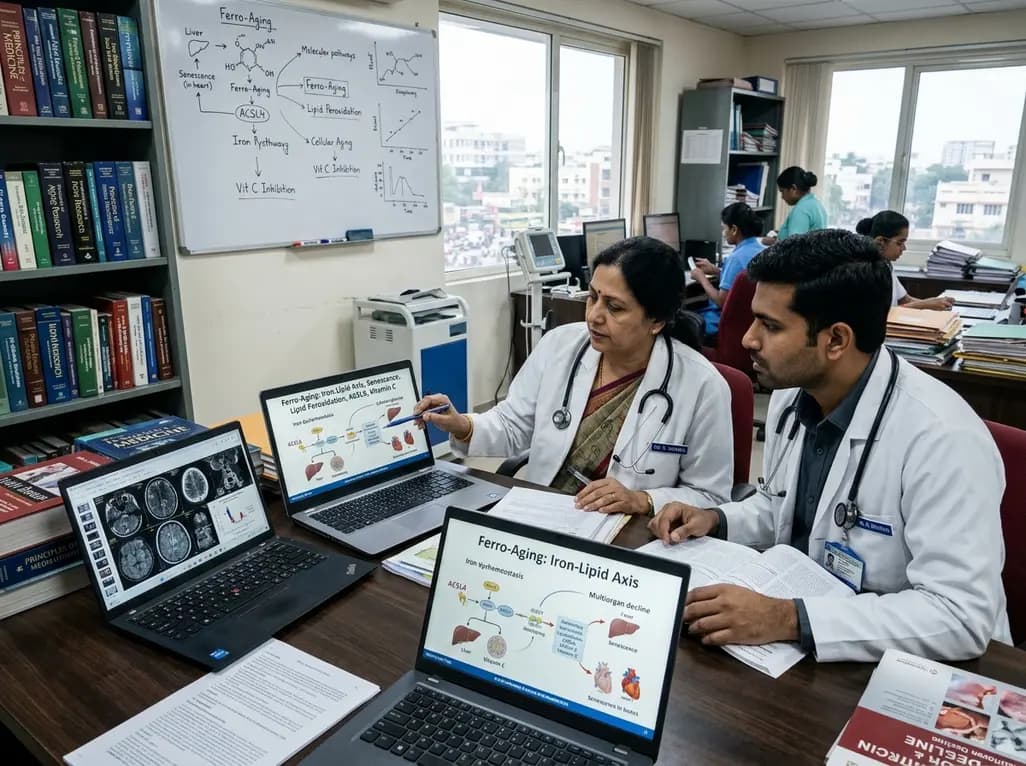
Recent research defines ferro-aging as a conserved iron-lipid axis driving organ decline across primates. Age-related iron dyshomeostasis stimulates ACSL4-mediated lipid peroxidation, promoting cellular senescence. Notably, vitamin C directly inhibits ACSL4, suppressing phospholipid oxidation and multi-organ decay.
Today
