.webp&w=384&q=75)

Loading, please wait...
Loading, please wait...
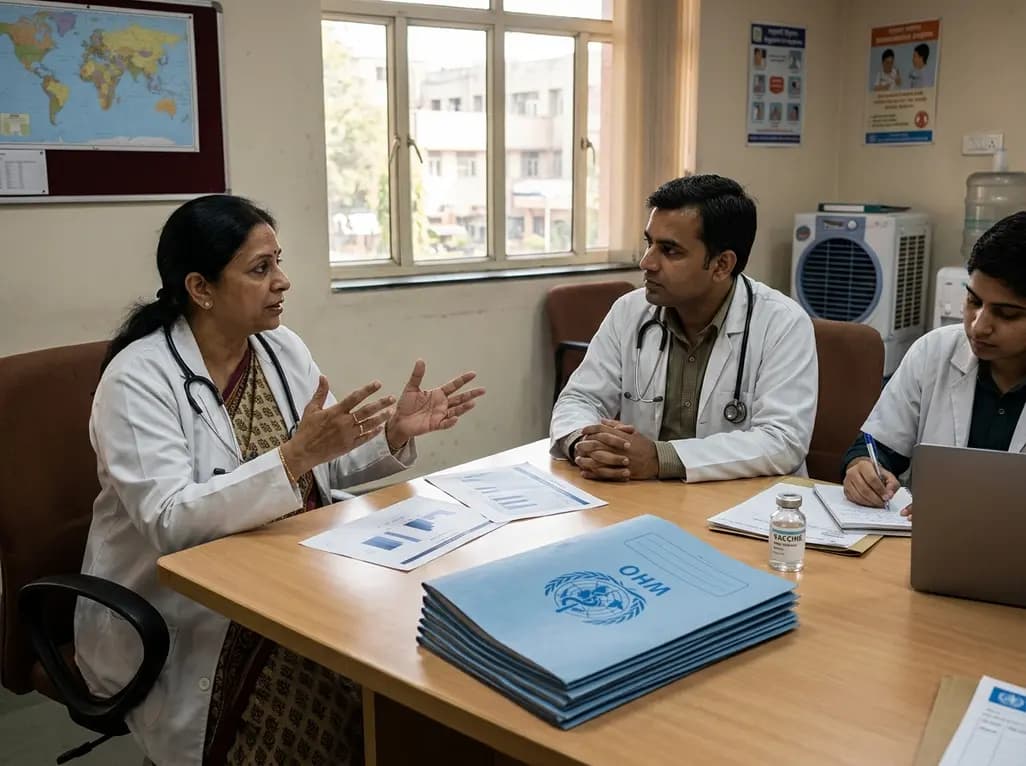
At the United Nations High-Level Meeting on Pandemic Prevention, Preparedness, and Response in New York, India delivered an assertive call for equity. Global health security requires transparent multilateral cooperation. Consequently, India highlighted that the integrity of the World Health Organization Pandemic Agreement hinges on establishing an equitable pathogen benefit sharing mechanism. Union Health Secretary Punya Salila Srivastava emphasized that nations supplying biological samples must receive guaranteed access to medical countermeasures. Historically, developing countries shared viral genetic data promptly during emergencies. However, commercial pharmaceutical manufacturers in high-income countries often monopolized the resulting vaccines, diagnostics, and therapeutics. Therefore, international governance models must eliminate these structural disparities to secure collective biosecurity.
Pathogen genomic sequencing allows researchers to design rapid molecular diagnostics, monoclonal antibodies, and protective vaccines. Consequently, rapid sample sharing serves as the cornerstone of outbreak control. Nevertheless, significant ethical tensions arise when resource-limited countries share viral isolates but encounter prohibitive costs for life-saving therapeutics. The framework for pathogen benefit sharing intends to resolve this long-standing asymmetry. Under this proposed annex, commercial manufacturers utilizing biological materials must allocate a predetermined percentage of production to developing nations. Furthermore, the system mandates real-time access to diagnostic assays and antiviral drugs during public health emergencies. India underscored that ongoing negotiations must proceed without prejudice toward low- and middle-income nations. In addition, implementation mechanisms must align directly with national capacities and economic circumstances. If the global community fails to operationalize this system fairly, surveillance transparency may rapidly deteriorate. For example, countries might hesitate to share biological data if they anticipate domestic pharmaceutical deprivation. Therefore, establishing a reliable, legally grounded framework protects international solidarity and global epidemiological vigilance. Ultimately, mutual accountability remains essential for worldwide microbial surveillance and pandemic resilience. Moreover, Indian policymakers insist that scientific contributions from sovereign nations demand tangible, life-saving reciprocation. This balanced approach protects national sovereignty while fostering robust scientific innovation across borders.
During past pandemics, high-income nations negotiated bilateral advance purchase agreements that exhausted global manufacturing supplies. As a result, developing countries experienced acute shortages of personal protective equipment, mRNA vaccines, and antiviral medications. India demonstrated active solidarity during the COVID-19 pandemic by supplying 300 million vaccine doses to around 100 countries. In addition, Indian manufacturers shipped urgent medical relief and generic drugs to over 150 countries. This humanitarian contribution embodied the philosophy of One Earth, One Health. However, voluntary charity cannot replace binding multilateral guarantees during catastrophic health emergencies. Consequently, national sovereignty must form the foundation of international treaty compliance. Sovereign nations retain legitimate authority over biological specimens identified within their borders. Therefore, international treaties must not infringe upon domestic legal prerogatives or weaken national biosecurity oversight. Furthermore, global policies must facilitate equitable technology transfers rather than imposing restrictive intellectual property barriers. When developing countries produce countermeasures locally, regional supply chains become significantly more dependable. In contrast, heavy reliance on centralized overseas manufacturing amplifies distribution delays. Thus, contractual obligations within global agreements must guarantee direct, unhindered access to licensed medical technologies. Truly equitable access requires enforceable global commitments.
Technology provides the backbone for modern outbreak containment and population-scale clinical logistics. For instance, India deployed scalable digital public infrastructure during the coronavirus emergency to coordinate massive vaccination drives. The CoWIN platform enabled real-time tracking, transparent appointment scheduling, and instant delivery of verifiable digital certificates. Meanwhile, digital tools streamlined clinical resource allocation, oxygen monitoring, and epidemiological contact tracing. Because of these successes, Indian officials at the United Nations urged the international community to recognize digital platforms as public goods. Such open-source systems allow resource-constrained countries to deploy sophisticated disease surveillance without expensive licensing fees. Furthermore, standardized digital architecture enhances cross-border infectious disease surveillance and data sharing. Health authorities can identify localized pathogen clusters before widespread transmission occurs. In addition, digital public goods support clinical trial coordination and pharmacovigilance reporting. Clinicians rely on rapid adverse event reporting to establish safety profiles for newly authorized biological therapies. Consequently, sharing digital tools democratizes health management across diverse economic settings. When countries adopt interconnected platforms, international response teams communicate vital clinical observations much faster. Therefore, digital connectivity prevents blind spots during novel pathogen outbreaks. Ultimately, digital equity strengthens frontline clinical defense against emerging viral variants.
International aid should complement domestic readiness rather than substituting for sustained local investments. Specifically, India outlined essential national commitments at the United Nations assembly to reinforce domestic resilience. These priorities include expanding public health laboratory networks, upgrading biocontainment facilities, and training specialized healthcare personnel. Moreover, robust emergency coordination frameworks ensure rapid hospital bed mobilization and ventilator availability during sudden surges. Health systems must also establish strategic stockpiles of active pharmaceutical ingredients, diagnostic kits, and personal protective gear. However, supply chain vulnerabilities frequently disrupt patient care when cross-border logistics collapse. Therefore, decentralized domestic manufacturing reduces vulnerability to geopolitical shocks and sudden export restrictions. Furthermore, India emphasized integrating One Health principles into national disease monitoring frameworks. Because zoonotic spillovers trigger most emerging infectious threats, veterinarians and human health specialists must collaborate systematically. Integrating animal health, environmental surveillance, and clinical epidemiology prevents silent pathogen transmission. In addition, continuous medical education programs prepare clinical teams for unfamiliar clinical presentations. When domestic health systems function cohesively, nations contain localized outbreaks before global intervention becomes necessary. Thus, sustained domestic investments preserve public health security across diverse demographics. Consequently, resilient primary care networks form the frontline barrier against epidemic propagation.
International health agreements directly influence daily clinical practice across outpatient clinics and tertiary care centers. For example, equitable benefit sharing ensures Indian clinicians receive early access to novel antiviral drugs and monovalent vaccines. During previous outbreaks, delayed therapeutic availability compromised patient outcomes and increased clinical workload in intensive care units. Furthermore, enhanced national laboratory networks expedite molecular confirmatory testing for rare and emerging pathogens. Physicians can diagnose exotic viral fevers promptly instead of relying on empiric antimicrobial treatments. Consequently, rapid diagnostic confirmation prevents the inappropriate use of broad-spectrum antibiotics, curbing antimicrobial resistance. In addition, established domestic stockpiles prevent sudden shortages of critical supportive medications during localized surges. Medical practitioners also gain access to robust epidemiological dashboards powered by integrated public health infrastructure. These real-time data feeds alert clinicians to atypical infectious patterns within their districts. Meanwhile, standardized clinical management guidelines help healthcare workers deliver evidence-based interventions uniformly. Therefore, international diplomacy directly protects the safety and efficacy of frontline healthcare workers. Ultimately, strong global pacts equip healthcare providers with reliable therapeutic armaments during crises. As a result, clinical outcomes improve while nosocomial transmission risks drop considerably.
Q1: What is the primary purpose of the Pathogen Access and Benefit Sharing system?
The Pathogen Access and Benefit Sharing system ensures that countries sharing biological samples receive guaranteed access to medical countermeasures developed from those materials. Currently under negotiation as an annex to the WHO Pandemic Agreement, the framework aims to prevent supply inequities. Therefore, commercial manufacturers must allocate vaccines, diagnostics, and therapeutics to developing nations during emergencies. This mechanism establishes mutual accountability, safeguarding global surveillance transparency and preventing severe shortages in lower-income countries.
Q2: Why does India emphasize national sovereignty in international pandemic agreements?
India emphasizes national sovereignty to ensure that global treaties respect domestic legal frameworks, resources, and healthcare priorities. While international solidarity remains critical, health emergency responses must remain grounded in domestic health systems and national financing. Furthermore, protecting sovereignty ensures that multilateral mechanisms cannot unilaterally override domestic regulatory authorities or biosecurity protocols. Consequently, international assistance should complement and support national pandemic preparedness plans rather than imposing unfeasible external mandates on sovereign nations.
Q3: How does digital public infrastructure improve pandemic response and patient care?
Digital public infrastructure provides scalable open-source tools for rapid disease surveillance, supply chain tracking, and mass vaccination delivery. During health emergencies, platforms like CoWIN enable equitable vaccine administration and immediate clinical documentation. Furthermore, integrated digital architecture streamlines the tracking of hospital resources and critical therapeutics. As a result, clinicians and public health administrators identify localized transmission clusters early, minimize clinical delays, and optimize bedside resource allocation across diverse healthcare facilities.
Disclaimer: This content is for informational and educational purposes only. It does not constitute medical advice or replace professional judgment. Refer to the latest local and national guidelines for clinical practice.
References

Read summarized clinical updates, watch expert medical content, and earn CME certifications right from your smartphone.
Open your smartphone camera to scan and install.





At the UN High-Level Meeting, India called for an equitable Pathogen Access and Benefit Sharing system under the WHO Pandemic Agreement. India urged guaranteed access to vaccines and diagnostics for pathogen-sharing nations while advocating for digital public infrastructure and domestic healthcare resilience.
Today

Novel preclinical research demonstrates that antisense oligonucleotides targeting essential genes such as DARS1, DYNC1I2, and EIF2S3 selectively induce apoptosis in ovarian and lung cancer cells. Conditional biomarker activation provides a viable strategy to spare normal tissue while overcoming therapy resistance.
Today
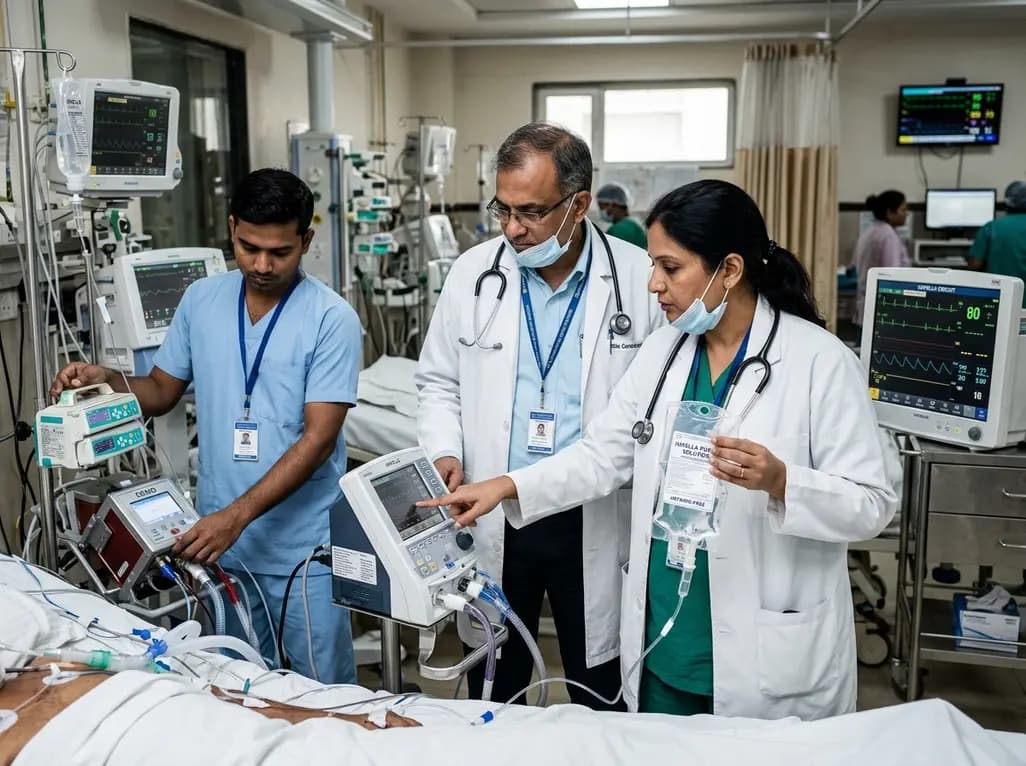
This clinical analysis examines heparin-free versus heparin-containing Impella purge solutions in patients receiving concomitant ECMO support (ECPELLA). Evidence suggests anticoagulant-free purges maintain device patency while reducing bleeding risks, offering a viable strategy alongside systemic anticoagulation.
Today

A 10-year Markov state-transition model shows minimally invasive tubular decompression dominates open laminectomy for pure lumbar spinal stenosis, yielding 5.95 vs 5.91 QALYs and saving $4,167 per patient through reduced complications and lower index costs.
Today
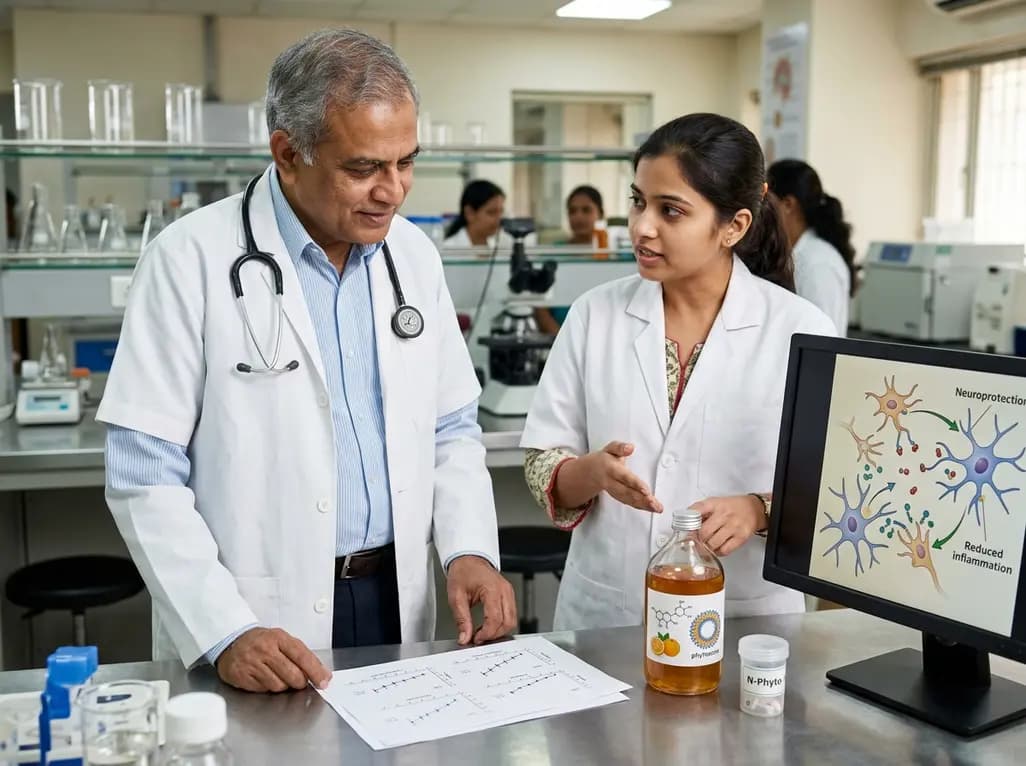
A preclinical study demonstrates that naringin-loaded phytosomes significantly enhance oral bioavailability and provide neuroprotective efficacy in diabetic neuropathy by dampening inflammation, reducing oxidative stress, and relieving neuropathic pain.
Today
