.webp&w=384&q=75)

Loading, please wait...
Loading, please wait...

Epidemiological studies have long demonstrated an intriguing correlation between advanced paternal age and schizophrenia risk in offspring. However, researchers have struggled to identify the precise biological mechanisms driving this vulnerability. Recent whole-genome sequencing research in multiplex families now provides definitive molecular evidence. Specifically, this groundbreaking investigation reveals that spontaneous genetic mutations accumulate during spermatogenesis and accelerate the clinical onset of psychiatric illness in children. Consequently, clinicians gain vital insights into how paternal reproductive aging directly modulates psychiatric manifestations across generations.
Spermatogonial stem cells replicate continuously throughout adult life, unlike maternal oocytes that remain arrested in meiosis. Consequently, continuous rounds of DNA replication introduce baseline transcription errors into the male germline. Advanced paternal reproductive years steadily multiply these replication-associated DNA errors. In a seminal whole-genome sequencing study of Taiwanese multiplex families, researchers evaluated families with co-affected siblings and healthy parents. Notably, 30x whole-genome sequencing mapped the exact distribution of germline variations across generations. The analytical models demonstrated that paternal age strongly predicted increased de novo mutations, adding approximately 1.50 novel mutations per year of paternal aging. Furthermore, paternal age far outweighed maternal age in determining total de novo mutational burden. Therefore, clinicians must recognize that the male germline accumulates continuous point mutations as age advances. These mutations scatter across functionally sensitive coding regions and regulatory sequences throughout the human genome. Ultimately, this biological dynamic provides a clear molecular mechanism for the elevated psychiatric risk repeatedly identified in clinical populations.
Clinicians know that an earlier age at onset of psychosis often predicts severe long-term functional impairment. In this landmark cohort, scientists applied formal causal mediation analysis to unpack this prognostic relationship. The team examined whether de novo mutations mediated the association between advancing fatherhood and earlier disease onset in offspring. Strikingly, each additional de novo mutation shifted the clinical onset of schizophrenia approximately 0.16 years earlier. In addition, mediation modeling revealed that de novo mutations explained roughly 28 percent of the total effect of paternal age on the age of onset. Thus, spontaneous mutations directly alter disease trajectory rather than serving as passive genetic bystanders. Furthermore, this effect persisted across co-affected siblings within multiplex pedigrees, underscoring its robust biological basis. Traditional polygenic inheritance clearly interacts with these sporadic de novo variants, producing earlier neurodevelopmental disruption. Consequently, younger patients born to older fathers frequently present with earlier psychiatric symptoms. These quantitative findings confirm that male germline mutations directly influence psychiatric prognosis in clinical practice.
Understanding the cellular biology of spermatogenesis helps explain why aging fathers transmit higher mutational burdens. Male germ cells undergo hundreds of mitotic divisions before forming mature spermatozoa. Each round of mitotic division creates opportunities for spontaneous replication errors, base mispairings, and double-strand DNA breaks. Moreover, endogenous oxidative stress and declining DNA repair capacity in aging testicular tissue exacerbate these genomic insults. While most de novo variants fall into non-coding regions, a significant subset disrupts critical neurodevelopmental pathways. Specifically, these mutations frequently target synaptic scaffolding genes, neurotransmitter receptors, and chromatin remodeling complexes. Consequently, disrupted neuronal wiring impairs cortical synaptogenesis and dopaminergic signaling networks during early brain maturation. Previous studies primarily relied on lower-resolution exome sequencing or general epidemiologic registers. In contrast, 30x whole-genome sequencing provides a comprehensive readout of non-coding regulatory sequences and structural variants. Therefore, modern genomic technologies unveil how cumulative replication errors undermine neurodevelopmental integrity across familial lineages.
Multiplex families carry a heavy background of inherited polygenic risk factors. However, the presence of multiple affected siblings previously led investigators to focus almost entirely on inherited alleles. This recent investigation challenges that singular assumption by showing that de novo mutations operate within multiplex backgrounds. Even when strong familial heritability exists, spontaneous mutational events still accelerate disease onset. Furthermore, co-affected siblings within the same household showed distinct de novo mutational profiles. This divergence explains why siblings with identical parental risk alleles frequently manifest psychotic disorders at different ages. In addition, environmental stressors and epigenetic modifications may further interact with these unique de novo alterations. As a result, clinicians should abandon the rigid dichotomy between strictly familial and purely sporadic forms of severe mental illness. Instead, schizophrenia emerges from a continuous interplay between inherited polygenic burdens, paternal germline de novo mutations, and environmental exposures. Recognizing this dual genetic architecture enriches diagnostic formulation and therapeutic conceptualization.
Modern trends across global populations show an increasing proportion of couples delaying parenthood. Consequently, physicians in primary care, psychiatry, and reproductive medicine encounter anxious prospective parents inquiring about age-related health risks. Clinicians must frame these genetic discoveries with balanced, nuanced communication. While delayed fatherhood statistically increases de novo mutations, the absolute risk of schizophrenia for an individual child remains relatively low. Therefore, doctors should reassure families while providing evidence-based genetic counseling. In addition, clinicians must emphasize that paternal age represents only one variable among multifactorial risk determinants. Routine whole-genome sequencing for all expectant parents is not yet indicated in standard clinical guidelines. However, pre-conception discussions should highlight paternal reproductive health, lifestyle optimization, and prompt evaluation of early neurodevelopmental milestones in offspring. When evaluating young adults presenting with first-episode psychosis, clinicians should document paternal age alongside comprehensive family pedigrees. Thus, integrating paternal history strengthens psychiatric evaluation and supports personalized clinical vigilance.
The validation of de novo mutations as causal mediators marks an important milestone in psychiatric genomics. Nevertheless, substantial research questions warrant rigorous prospective investigation. First, researchers must determine whether specific classes of de novo mutations produce distinct neurocognitive phenotypes or treatment responses. For example, individuals harboring mutations in glutamate receptors may respond differently to standard atypical antipsychotics. Second, future research should integrate functional multi-omics, including transcriptomic and proteomic analyses, to trace how point mutations disrupt mature neural circuitry. Furthermore, expanding cohorts across diverse global ancestries remains essential to validate these findings across broader human populations. As high-throughput whole-genome sequencing costs decline, clinical psychiatric units may eventually implement rapid genomic testing protocols. Consequently, identifying personalized mutational burdens will refine prognostic stratifications and guide tailored pharmacological interventions. Ultimately, dissecting the molecular pathways connecting paternal age to psychiatric risk paves the path toward precise, neurobiologically informed patient care.
Research shows that advanced paternal age adds approximately 1.50 de novo mutations per year to the offspring genome. Because male germ cells divide continuously throughout adult life, aging fathers accumulate ongoing DNA replication errors. Consequently, children born to older fathers inherit significantly more spontaneous germline mutations than those born to younger fathers.
No, advanced paternal age does not guarantee schizophrenia or earlier onset. Although de novo mutations account for approximately 28 percent of the paternal age effect on onset age, absolute risk remains modest. Schizophrenia develops from complex interactions involving polygenic background, spontaneous germline variants, neurodevelopmental factors, and environmental triggers throughout life.
Routine whole-genome sequencing is not currently recommended for prospective older fathers without specific medical indications. While advanced paternal age increases germline mutations, most mutations do not cause clinical disease. Instead, clinicians advise comprehensive pre-conception counseling, healthy lifestyle practices, and vigilant developmental monitoring of offspring as standard reproductive care.
Disclaimer: This content is for informational and educational purposes only. It should not be used as a substitute for professional medical advice, diagnosis, or treatment. Refer to the latest local and national guidelines for clinical practice.
References

Read summarized clinical updates, watch expert medical content, and earn CME certifications right from your smartphone.
Open your smartphone camera to scan and install.





A landmark whole-genome sequencing study shows that de novo mutations mediate the link between paternal age and schizophrenia onset. Each year of paternal age added 1.50 mutations, explaining earlier disease onset in multiplex families and offering vital mechanistic insights for psychiatric genetics.
Today

An Australian cohort of 34,449 adults in an unsubsidized tirzepatide digital weight loss service showed that peer-referred patients achieved significantly higher 6-month adherence (48% vs 42%) and greater weight loss (16.16% vs 14.06%) than matched non-referred peers, highlighting social support in obesity care.
Today
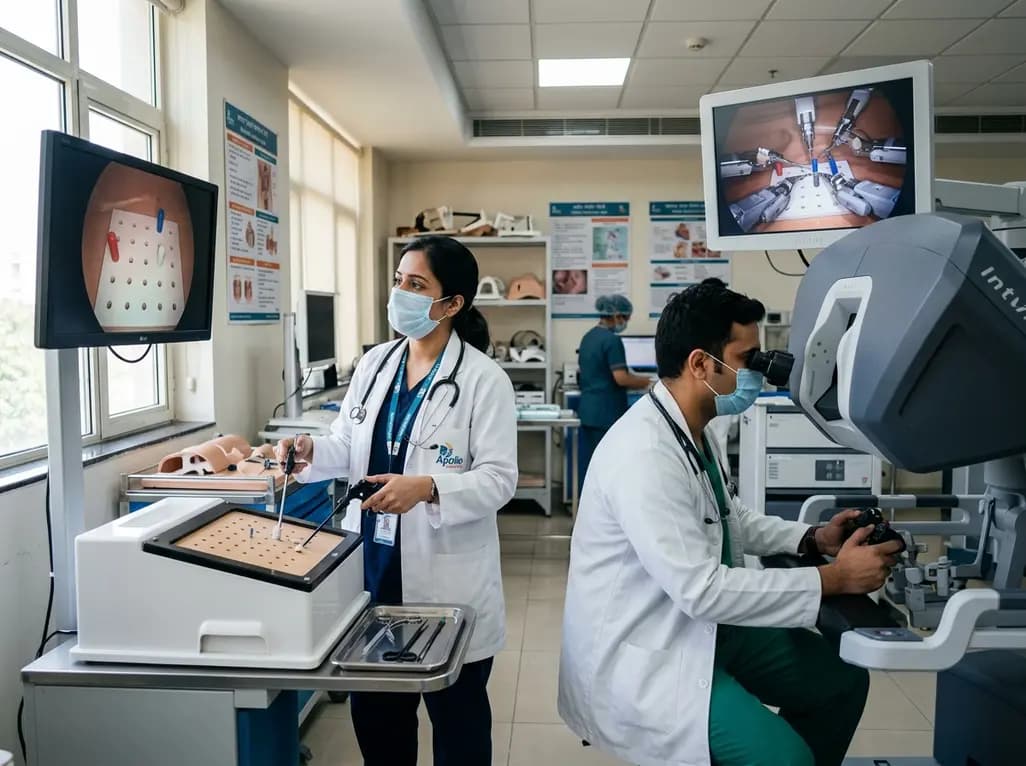
A randomized crossover study demonstrates that conventional and robotic laparoscopy require distinct neuropsychological and psychomotor skills. While trainees master conventional laparoscopy faster, robotic proficiency demands individualized, adaptive curricula tailored to specific learner profiles.
Today

A retrospective study of 109 patients undergoing elective carotid artery stenting evaluated radiation exposure on biplane flat-panel systems. Standardized workflows and dedicated low-dose protocols provide crucial baseline data to establish neurointerventional diagnostic reference levels and optimize patient safety.
Today

A scoping review of 51 studies reveals that spinal manual therapy on the lumbo-pelvic area is commonly used for isolated lower extremity pain, predominantly knee conditions. While thrust manipulation is frequent, reporting deficits highlight the need for standardized technique descriptions to guide practice.
Today

The Supreme Court has reserved its judgment on FSSAI's proposed front-of-pack nutritional warning labels for packaged foods. With debates over compliance timelines, added versus total sugars, and ultra-processed food definitions, this landmark decision carries profound public health implications for India.
Today
