

Loading, please wait...
Loading, please wait...

Metastatic castration-resistant prostate cancer remains an aggressive malignancy with substantial clinical complexity. Over the past decade, standard frontline treatment relied almost exclusively on androgen receptor pathway inhibitors. However, recent scientific advances have established PARP inhibitor combinations as a formidable first-line therapeutic approach. These dual regimens exploit biological synergy between androgen signaling blockade and DNA damage repair pathways. Specifically, androgen receptor pathway inhibitors downregulate transcription of homologous recombination repair genes. Consequently, this suppression creates a functional homologous recombination deficiency phenotype within tumor cells. When clinicians introduce poly(ADP-ribose) polymerase inhibitors alongside these antiandrogens, synthetic lethality triggers catastrophic DNA double-strand breaks. Malignant cells cannot repair this genomic trauma, which accelerates selective apoptotic cell death. Therefore, combining these therapeutic classes enhances antitumor activity beyond single-agent capabilities. Furthermore, emerging evidence indicates that this synergy can benefit patients across multiple molecular subsets. Clinicians must understand how these mechanisms translate into measurable improvements in progression-free intervals.
A recent comprehensive systematic review and meta-analysis synthesized data from 2,024 patients across three landmark phase III trials: PROpel, MAGNITUDE, and TALAPRO-2. These randomized studies evaluated upfront PARP inhibitor combinations compared against standard androgen receptor pathway inhibitor monotherapy. In the PROpel trial, investigators assessed olaparib combined with abiraterone acetate in unselected patients. Meanwhile, the MAGNITUDE trial examined niraparib alongside abiraterone, stratifying cohorts prospectively by biomarker status. In the TALAPRO-2 study, researchers evaluated talazoparib plus enzalutamide across broad patient cohorts. The pooled meta-analysis confirmed a statistically significant 34% reduction in the risk of progression or death. The combined hazard ratio for progression-free survival reached 0.66 with tight confidence intervals. Moreover, secondary endpoints corroborated meaningful delays in radiographic worsening and prolonged time to secondary systemic antineoplastic therapy. Consequently, these findings validate the role of dual therapeutic inhibition as a definitive standard of care in modern clinical practice.
Although combination therapy improves progression-free outcomes across diverse patient cohorts, the magnitude of clinical benefit differs substantially based on genomic alterations. Patients harboring deleterious homologous recombination repair mutations demonstrate the most profound clinical gains. In particular, tumors with BRCA1 or BRCA2 alterations achieve dramatic reductions in disease progression risk. However, patients without detectable repair defects experience more modest survival advantages. In the MAGNITUDE trial, the non-biomarker cohort met prespecified futility criteria early, underscoring the vital importance of molecular profiling. In contrast, trials that enrolled broader populations demonstrated moderate progression-free survival improvements even in biomarker-negative patients. This divergence suggests that pharmacologic androgen receptor suppression can induce subtle DNA repair susceptibilities in select wild-type tumors. Nevertheless, clinicians must prioritize routine germline and somatic genomic sequencing at diagnosis. Accurate genetic identification enables practitioners to select individuals who will derive the most durable oncologic control from upfront combination regimens.
The addition of a targeted poly(ADP-ribose) polymerase inhibitor inevitably intensifies the overall toxicity burden compared to antiandrogen monotherapy. Hematologic adverse events represent the most significant therapeutic challenge during combination therapy. Clinicians frequently encounter severe grade 3 or higher anemia, which often necessitates blood transfusions or temporary dose interruptions. Furthermore, neutropenia and thrombocytopenia occur with notable frequency, demanding systematic laboratory vigilance. Non-hematologic toxicities also warrant consistent clinical attention, including persistent fatigue, nausea, and decreased appetite. In addition, rare but clinically severe complications such as venous thromboembolism and secondary myelodysplastic syndromes require proactive surveillance. Consequently, oncologists must establish rigorous baseline assessments before initiating treatment. Routine complete blood counts every two weeks during initial treatment cycles facilitate timely supportive interventions. By employing dose adjustments, temporary treatment holidays, and supportive medications early, medical teams can effectively mitigate severe adverse effects without prematurely discontinuing effective life-prolonging therapy.
Integrating dual frontline therapy into existing therapeutic algorithms requires thoughtful clinical evaluation and individual risk assessment. Clinicians must weigh the proven progression-free survival advantage against treatment duration, patient performance status, and financial toxicity. In patients with aggressive visceral disease or confirmed BRCA2 deletions, frontline combination regimens deliver clear and immediate clinical benefits. Conversely, for elderly frail individuals with significant cardiovascular comorbidities or pre-existing cytopenias, sequential single-agent therapy may provide a safer trajectory. Moreover, healthcare teams must evaluate prior therapies received during the metastatic hormone-sensitive prostate cancer setting. Because many patients now receive upfront androgen receptor pathway inhibitors earlier in their disease course, clinicians encounter evolving resistance patterns. Therefore, multidisciplinary tumor boards must synthesize molecular data, functional status, and prior treatment exposure when personalizing therapeutic strategies. Ultimately, adopting a biomarker-driven approach ensures optimal drug utilization while maximizing long-term clinical outcomes for men facing advanced prostate cancer.
Patients harboring confirmed homologous recombination repair gene alterations, particularly BRCA1 and BRCA2 mutations, derive the greatest therapeutic benefit from these combinations. Although pooled trial data indicate moderate progression-free survival improvements in biomarker-unselected cohorts, molecularly altered tumors exhibit dramatically superior response magnitudes. Consequently, international guidelines strongly advocate for comprehensive somatic and germline genomic testing before choosing frontline systemic regimens in metastatic castration-resistant disease.
Hematologic adverse events represent the most frequent complications seen with combination therapy, with anemia being the primary grade 3 or 4 toxicity. Patients also frequently report substantial fatigue, nausea, decreased appetite, and intermittent constipation. Because severe cytopenias can arise rapidly, clinicians must perform complete blood counts every two to four weeks initially, adjusting dosages promptly to maintain patient safety.
Regulatory authorities in various jurisdictions have approved specific combinations, such as olaparib plus abiraterone, for unselected patient cohorts. However, clinical guidelines strongly recommend routine genomic testing prior to therapy initiation. Biomarker validation identifies patients who experience definitive survival gains while preventing unnecessary toxicities and high treatment costs in individuals unlikely to derive clinically meaningful therapeutic advantages.
Disclaimer: This content is for informational and educational purposes only... Refer to the latest local and national guidelines for clinical practice.
References
Ben Kridis W et al. PARP inhibitor-based combinations in first-line metastatic castration-resistant prostate cancer: A meta-analysis. Urol Oncol. 2026 Nov 10. doi: undefined. PMID: 43009426.
Saad F, et al. Olaparib plus abiraterone in metastatic castration-resistant prostate cancer: final overall survival from the PROpel trial. Lancet Oncol. 2023;24(10):1094-1108.
Fizazi K, et al. Niraparib in combination with abiraterone acetate for first-line metastatic castration-resistant prostate cancer (MAGNITUDE). J Clin Oncol. 2023;41(8):1519-1530.
Agarwal N, et al. Talazoparib plus enzalutamide in men with first-line metastatic castration-resistant prostate cancer (TALAPRO-2). Lancet. 2023;402(10405):859-870.

Read summarized clinical updates, watch expert medical content, and earn CME certifications right from your smartphone.
Open your smartphone camera to scan and install.





A meta-analysis of phase III trials demonstrates that first-line PARP inhibitor combinations with androgen receptor pathway inhibitors significantly improve progression-free survival in metastatic castration-resistant prostate cancer, especially in patients harboring homologous recombination repair gene alterations.
Today
A large retrospective cohort study demonstrates that explainable machine learning models, notably XGBoost, accurately predict hospital admission at emergency triage. By analyzing routine triage parameters, hospitals can streamline bed allocation, decrease boarding times, and alleviate acute care overcrowding.
Today

A new quality-improvement initiative reveals that universal maternal mental health screening in the NICU increased screening rates from 29.5% to 95.0%, with nearly 60% of screened mothers requiring psychosocial referrals, highlighting the urgent need for embedded mental health resources.
Today
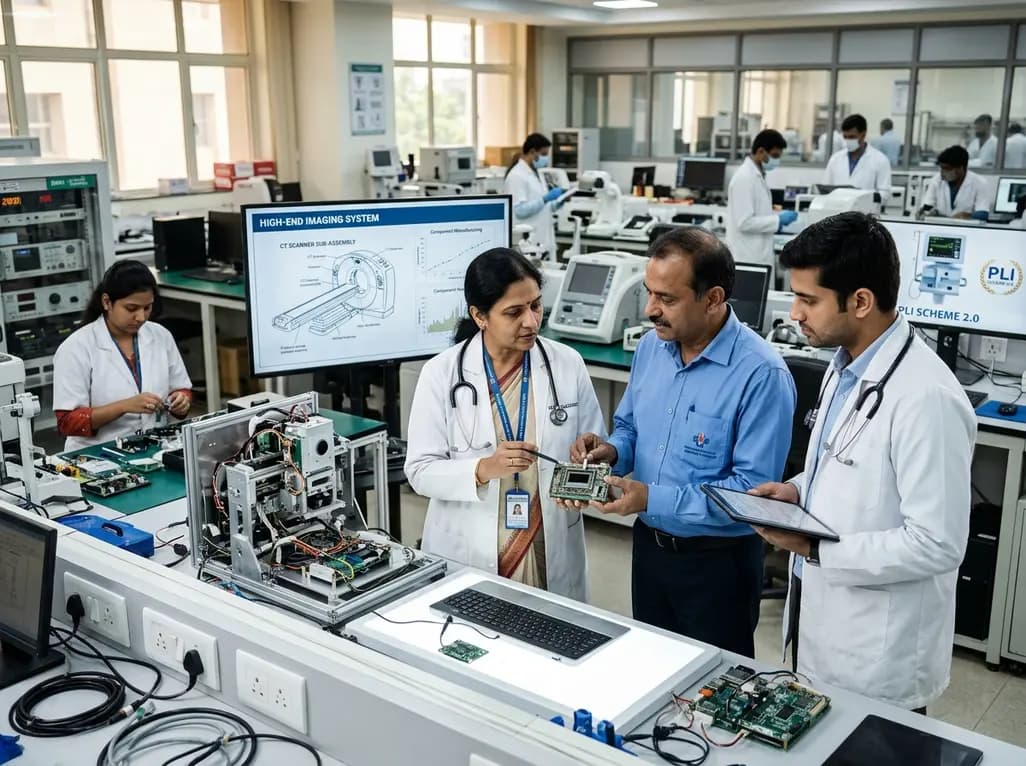
The Department of Pharmaceuticals has extended the medical devices PLI scheme to 2035-36 with a Rs 2,700 crore outlay. Featuring relaxed investment barriers and eliminated sales thresholds, the revised framework targets deep manufacturing, high-end diagnostics, critical MedTech components, and supply resilience.
Today
A metabolomic study reveals that aging delays glutathione synthesis and gamma-glutamylcysteine accumulation following muscle injury. Although precursor supplementation targets this enzymatic bottleneck, in vitro tests show no immediate effect on myogenesis, highlighting the complexity of muscle repair in older adults.
Today

A systematic review evaluates psychological interventions for smoking cessation in diabetes, showing short-term success but highlighting challenges in long-term abstinence.
Today
