.webp&w=384&q=75)

Loading, please wait...
Loading, please wait...
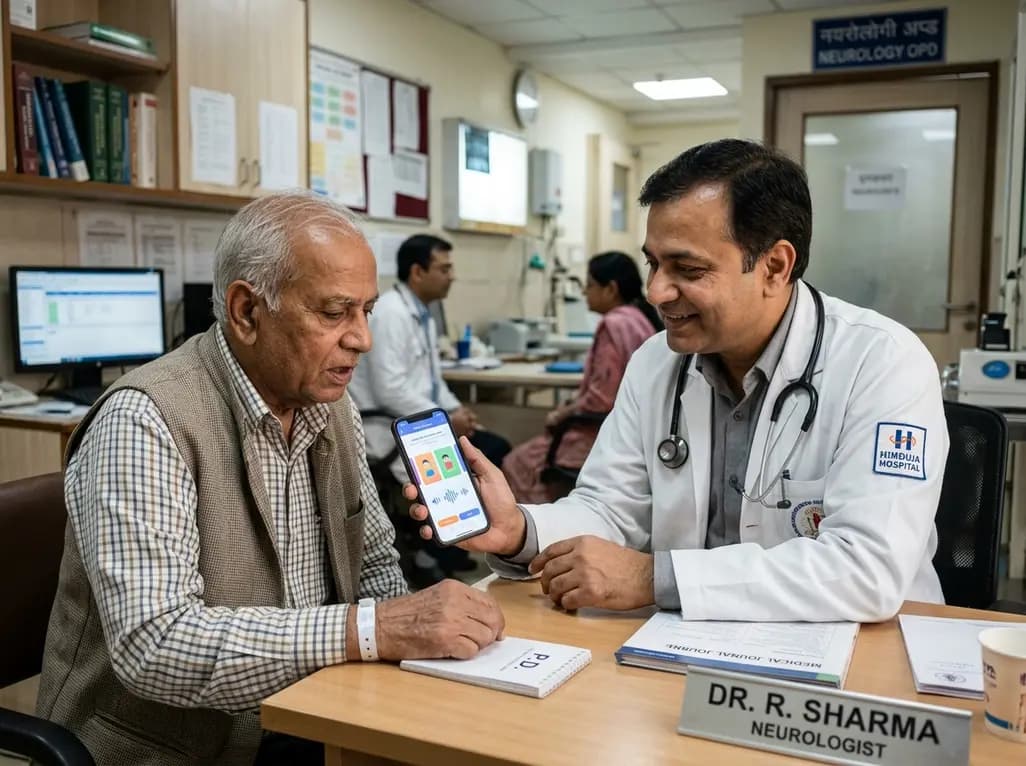
Parkinson disease is the second most common neurodegenerative disorder across the globe, affecting millions of aging individuals. Hypokinetic dysarthria frequently complicates the clinical course of this condition, causing reduced vocal loudness, breathiness, monotone pitch, and imprecise articulation. Consequently, speech impairments profoundly reduce patient confidence and social participation. To address these barriers, mobile health technologies have emerged as promising solutions. Parkinson disease speech therapy apps deliver accessible home-based rehabilitation that complements conventional clinical care. However, because commercial app marketplaces lack rigorous peer review, clinicians must carefully determine the technical quality, usability, and clinical validity of available digital tools.
Hypokinetic dysarthria develops primarily from basal ganglia dysfunction and dopamine depletion, which disrupts motor speech planning and execution. Patients typically experience progressive acoustic changes, including reduced subglottic pressure, vocal fold bowing, and impaired phonatory control. Additionally, individuals often lack internal cueing and sensory awareness, meaning they fail to perceive how soft their speech has actually become.
Because traditional speech-language pathology requires frequent in-person appointments, many patients encounter significant travel barriers and financial burdens. Furthermore, severe motor fluctuations and fatigue restrict travel to specialized neurorehabilitation centers. Consequently, regular voice training frequently declines over time. Digital therapeutic platforms bridge this gap by enabling daily acoustic exercises in home environments. These interactive tools provide continuous visual feedback, structured vocal loudness drills, and repetitive phonatory tasks. When patients practice consistently, they retain functional communicative capacity for longer periods. Therefore, digital speech interventions represent a vital component of modern neurodegenerative supportive care.
To determine whether commercial mobile applications provide safe and reliable rehabilitation, investigators at Weill Cornell Medicine evaluated available platforms. The researchers employed the Mobile App Rating Scale (MARS), a standardized and validated instrument designed to grade digital health applications across key dimensions. These core criteria include engagement, functionality, aesthetics, and information quality.
During the investigation, the authors searched digital platforms systematically to identify speech therapy apps explicitly targeting individuals with Parkinson disease. Importantly, the researchers focused exclusively on freely available applications, thereby reflecting the real-world choices accessible to patients without financial barriers. Four trained raters independently graded the included programs to ensure objective scoring. Moreover, the team calculated interrater reliability across all domains to evaluate observational consistency. By using this rigorous framework, the study identified both the structural strengths and the interface weaknesses inherent in current free software. Consequently, this systematic approach offers clear guidance for clinicians who wish to recommend reliable digital speech adjuncts.
The systematic evaluation yielded intriguing insights into the current state of mobile applications for neurorehabilitation. From an initial pool of 33 candidate applications, only three free apps met all inclusion criteria for Parkinson-specific speech therapy. Fortunately, all evaluated applications scored remarkably high in technical functionality, achieving mean ratings above 4.5. This high score confirms that the software runs smoothly, loads quickly, and provides stable navigation.
However, the analysis revealed significant deficiencies in user engagement, which consistently received the lowest scores across all evaluated apps. Specifically, the applications lacked interactive gamification, customizable challenges, and adaptive feedback mechanisms that sustain user motivation. Furthermore, interrater agreement varied substantially across domains. While engagement demonstrated the highest agreement among raters at 0.83, aesthetic dimensions exhibited the lowest agreement, scoring at or below 0.33. This disparity suggests that visual design preferences remain subjective, whereas functional and motivational limitations are readily apparent. Therefore, future software developers must balance technical stability with compelling interactive features that foster daily user retention.
These findings carry substantial relevance for neurologists, geriatricians, and speech-language pathologists managing progressive movement disorders. While free mobile tools offer structured exercises, they cannot function as standalone replacements for comprehensive clinical therapy. Instead, clinicians should prescribe these applications as structured home adjuncts alongside evidence-based protocols, such as the Lee Silverman Voice Treatment (LSVT LOUD).
When recommending digital tools, healthcare providers must guide patients through setup and establish clear daily practice targets. Because hypokinetic dysarthria involves impaired auditory self-perception, apps that provide objective visual decibel meters help patients calibrate their vocal intensity accurately. In addition, speech pathologists should periodically review digital exercise logs to verify compliance and technique. Providers must also remind patients that free applications often feature generic modules rather than personalized therapeutic regimens. Consequently, clinical supervision remains essential to adjust vocal targets as disease severity progresses. By integrating verified digital tools into multidisciplinary treatment plans, physicians can significantly optimize communication outcomes for vulnerable patients.
Sustaining long-term adherence to vocal therapy remains a formidable challenge for individuals living with Parkinson disease. Due to dopamine depletion, patients frequently experience apathy, depression, and cognitive fatigue, which dampen intrinsic motivation. When mobile applications lack stimulating engagement features, adherence typically drops after the initial weeks of practice.
To mitigate this drop-off, clinicians should encourage family members and caregivers to participate actively in home training sessions. Caregivers can provide social encouragement and assist patients with mobile device navigation. Furthermore, app developers must incorporate user-centered design principles that accommodate motor tremors and visual deficits common in older adults. For instance, enlarged touch targets, high-contrast visual displays, and simplified menu hierarchies dramatically improve accessibility. Additionally, integrating automated auditory reminders and motivational milestone badges can reinforce consistent practice habits. When digital platforms actively accommodate the physical and psychological needs of patients, therapeutic compliance and long-term vocal retention improve substantially.
Although mobile health applications demonstrate great potential for speech rehabilitation, the current evidence base remains preliminary. Most commercially available platforms lack robust clinical trial data demonstrating meaningful improvements in acoustic measures or communicative participation. Therefore, future research must prioritize randomized controlled trials that rigorously compare digital speech therapy against traditional in-person protocols.
Moreover, upcoming software iterations should leverage artificial intelligence to deliver real-time acoustic analysis and personalized vocal feedback. Machine learning algorithms can detect subtle shifts in pitch variability, vocal tremor, and speech rate, thereby adapting exercise difficulty dynamically. Collaborative initiatives between academic medical centers, clinical speech pathologists, and software engineers will be essential to create evidence-based, clinically validated applications. As regulatory standards for digital therapeutics evolve, rigorous clinical validation will ensure that mobile health technologies deliver genuine, measurable benefits to patients with Parkinson disease worldwide.
Parkinson disease frequently causes hypokinetic dysarthria due to dopamine depletion and basal ganglia dysfunction. Patients commonly exhibit reduced vocal volume, breathiness, monotone pitch, and imprecise articulation. Furthermore, patients often experience impaired self-perception, meaning they do not realize how quiet their voices have become. Over time, these progressive communication difficulties limit social engagement and substantially degrade overall quality of life.
The Mobile App Rating Scale represents a standardized, peer-reviewed instrument that health researchers use to evaluate software quality. It systematically assesses mobile applications across four essential dimensions: engagement, functionality, aesthetics, and information quality. By providing quantifiable scoring and interrater reliability metrics, the MARS framework helps clinicians distinguish well-designed, evidence-based digital health tools from ineffective commercial platforms in neurorehabilitation.
Mobile applications cannot completely replace qualified speech-language pathologists in comprehensive neurodegenerative care. While mobile tools provide convenient home-based practice and helpful acoustic feedback, they lack clinical diagnostic reasoning and dynamic therapeutic tailoring. Consequently, mobile apps work best as structured adjuncts to professional therapy, empowering patients to maintain vocal loudness and exercise consistency under regular clinical oversight.
Disclaimer: This content is for informational and educational purposes only. It is not intended to be a substitute for professional medical advice, diagnosis, or treatment. Always seek the advice of your physician or other qualified health provider with any questions you may have regarding a medical condition. Refer to the latest local and national guidelines for clinical practice.
References

Read summarized clinical updates, watch expert medical content, and earn CME certifications right from your smartphone.
Open your smartphone camera to scan and install.





A systematic study evaluated free speech therapy mobile apps for Parkinson disease using the Mobile App Rating Scale (MARS). While apps demonstrated high technical functionality, lower user engagement highlights the need for clinicians to guide digital neurorehabilitation.
last month

Red blood cell transfusion is critical in sickle cell disease management but brings significant immunological complexity, including alloimmunisation and iron overload. Extended RBC phenotyping and tailored protocols optimize clinical safety.
Today
Discover the crucial distinctions between mesonephric and mesonephric-like proliferations of the female genital tract. Learn the key histomorphologic, immunohistochemical, and molecular differences essential for accurate diagnosis and clinical management.
Today
A large UK Biobank study reveals that plasma proteomic signatures capture preclinical organ damage and improve multiorgan risk prediction across early CKM syndrome stages 0 to 2 beyond traditional PREVENT clinical models.
Today

A retrospective CBCT study reveals that superior TMJ space asymmetry correlates moderately with occipital condyle-atlas-axis asymmetry in unilateral TMJ osteoarthritis, highlighting an imaging correlate between jaw biomechanics and upper cervical alignment rather than a standalone diagnostic marker.
Today

A Bayesian multilevel meta-analysis reveals that aerobic training combined with moderate carbohydrate restriction modestly lowers HbA1c in type 2 diabetes. However, sparse data and very low certainty leave incremental benefits over exercise or diet alone unproven, highlighting the need for individualized care.
Today
