.webp&w=384&q=75)

Loading, please wait...
Loading, please wait...

Palliative care tool implementation represents a critical step in modernizing hospital-based end-of-life care. Historically, many patients with life-limiting illnesses have faced delayed identification of their specific needs. Consequently, this delay often leads to unnecessary suffering and medical interventions that do not align with patient values. Current clinical resources aim to bridge this gap by providing standardized frameworks for identification, assessment, and advance care planning. However, the transition from theoretical tool development to daily clinical use remains significantly complex. This article explores the determinants of successful implementation based on recent scoping reviews. By understanding these factors, hospital administrators and clinicians can develop more effective pathways for patient-centered care. Furthermore, a systematic approach ensures that palliative services are not merely available but are actively integrated into the multidisciplinary workflow of the hospital.
Successful palliative care tool implementation requires a deep understanding of the hospital ecosystem. Research often utilizes the Consolidated Framework for Implementation Research (CFIR) to categorize the various factors that influence the adoption of clinical resources. Generally, implementation efforts are most heavily influenced by the inner setting of the hospital and the characteristics of the individual professionals involved. When a hospital introduces a new screening tool, the existing organizational culture plays a pivotal role. For instance, if the culture prioritizes aggressive curative treatments over quality-of-life discussions, clinicians may perceive palliative tools as secondary. Moreover, the complexity of the tools themselves can be a deterrent. If a tool is too long or requires data that is difficult to access, healthcare providers are less likely to utilize it consistently. Therefore, streamlining these clinical resources to fit within existing electronic health records is essential. By reducing the cognitive load on staff, hospitals can facilitate a smoother transition toward standardized palliative assessments. Additionally, clear institutional goals regarding palliative outcomes can motivate individual clinicians to prioritize these discussions during daily rounds.
Numerous barriers frequently hinder the effective use of palliative care tools in busy hospital environments. Time constraints are perhaps the most cited obstacle among physicians and nurses. In a high-volume setting, the pressure to manage acute medical issues often pushes advance care planning to the background. Furthermore, a lack of specialized training significantly impacts the confidence of healthcare professionals. Many clinicians feel ill-equipped to handle the emotional and ethical nuances associated with palliative care conversations. Consequently, they may avoid using the tools altogether to prevent personal discomfort or perceived professional failure. Fragmented communication between different hospital departments also poses a major challenge. For example, if the surgical team and the palliative care team do not share a unified communication protocol, the patient may receive conflicting information. Similarly, a lack of institutional resources, such as dedicated palliative care beds or specialized staff, can make tool adoption feel futile. When clinicians identify a need but see no pathway for follow-up care, their engagement with screening tools inevitably drops. Addressing these systemic gaps is necessary to create a fertile ground for clinical tool adoption.
Despite the challenges, several facilitators have been identified that significantly enhance the adoption of palliative resources. Strong leadership support is arguably the most influential factor. When hospital executives and department heads publicly endorse the use of palliative tools, it signals a shift in institutional priorities. This support often manifests through the allocation of dedicated time and funding for staff education. Additionally, the presence of clinical champions is vital. These are influential staff members who mentor their colleagues and model the effective use of palliative assessments. Their advocacy helps to normalize these discussions within the medical team. Multidisciplinary collaboration also serves as a powerful facilitator. When nurses, social workers, and doctors work together to complete assessments, the burden of implementation is shared. This collaborative approach ensures that the patient is viewed holistically rather than through a narrow clinical lens. Moreover, a supportive organizational culture that values person-centered care creates an environment where clinicians feel encouraged to explore patient preferences. By fostering these facilitators, hospitals can build a sustainable infrastructure for long-term palliative care integration.
Research suggests that successful palliative care tool implementation likely requires multi-faceted strategies. Relying on a single intervention, such as a one-time training session, rarely leads to permanent change. Instead, hospitals must address barriers across multiple levels simultaneously. For instance, combining educational workshops with real-time clinical decision support in the electronic health record can reinforce learning. Furthermore, integrating the use of these tools into routine clinical workflows, such as multidisciplinary rounds, ensures consistency. Feedback loops are another essential component of a multi-faceted approach. When clinicians receive regular data on how their tool usage is improving patient outcomes, their motivation remains high. Similarly, tailoring the tools to fit the specific needs of different hospital departments can improve relevance. An oncology unit may require a different identification trigger than an intensive care unit. By allowing for local adaptation while maintaining core principles, hospitals can increase staff buy-in. Ultimately, the goal is to create a comprehensive system that supports the clinician at every step of the palliative journey. Continuous monitoring and adjustment based on staff feedback are necessary to maintain this momentum.
The individuals within an organization are the primary drivers of any implementation process. Their attitudes, beliefs, and self-efficacy regarding palliative care determine the success of any new clinical resource. Therefore, addressing individual-level determinants is just as important as fixing systemic issues. Educational initiatives should not only focus on technical skills but also on building emotional intelligence and communication capabilities. When healthcare professionals feel competent in discussing end-of-life wishes, they are much more likely to utilize support tools. In addition, the organizational culture must evolve to recognize palliative care as a hallmark of high-quality medical practice. This cultural shift is often slow, but it is necessary for the sustainability of implementation efforts. Recognition programs for teams that excel in palliative integration can help to shift cultural norms. Moreover, involving patients and families in the implementation process can provide valuable insights into tool effectiveness. When the organizational culture truly centers on the patient experience, the use of palliative tools becomes a natural extension of clinical excellence. Consequently, these tools are viewed not as administrative burdens but as essential components of compassionate care.
In the context of the Indian healthcare system, the implementation of palliative tools faces unique geographic and socioeconomic challenges. While the National Programme for Palliative Care (NPPC) provides a policy framework, actual clinical adoption varies widely between states. Future research should focus on evaluating tailored strategies that account for the diverse complexities of different Indian hospital contexts. For example, rural public hospitals may require different facilitators than urban private centers. The availability of essential medications like morphine remains a significant barrier in many regions, which directly impacts the utility of palliative identification tools. Therefore, implementation strategies must be integrated with broader efforts to improve resource accessibility. Strengthening the linkage between district hospitals and primary healthcare centers is also crucial for ensuring continuity of care. As India continues to expand its palliative care infrastructure, the use of standardized tools will be vital for benchmarking and quality improvement. By focusing on sustainable adoption and local adaptation, the Indian medical community can significantly enhance the quality of life for millions of patients facing terminal illnesses.
The most common barriers include severe time constraints, a significant lack of specialized training for staff, and fragmented communication between medical teams. Clinicians often feel overwhelmed by acute patient needs, leading them to deprioritize palliative assessments. Furthermore, if the institutional culture does not explicitly support end-of-life discussions, staff may feel uncomfortable initiating these conversations. Addressing these systemic and individual hurdles is essential for the successful adoption of palliative care resources.
Clinical champions play a vital role by acting as advocates and mentors within their respective departments. These individuals promote the benefits of palliative tools and provide peer-to-peer support, which helps to normalize new clinical workflows. By modeling effective communication and assessment techniques, they increase the confidence of their colleagues. Their presence ensures that implementation efforts are grounded in practical, daily clinical experience rather than just top-down administrative mandates.
Palliative care implementation is complex because it involves changes at the individual, team, and organizational levels. A single intervention, such as a training seminar, is rarely sufficient to overcome deep-seated barriers like cultural resistance or workload pressures. Multi-faceted strategies address these issues simultaneously by combining education, leadership support, and technical integration. This comprehensive approach ensures that tools are easy to use, well-supported by management, and deeply embedded in the hospital's routine care processes.
Disclaimer: This content is for informational and educational purposes only. It is not intended to provide specific medical advice or to be a substitute for professional medical diagnosis, treatment, or clinical judgment. Refer to the latest local and national guidelines for clinical practice.
References
Róin T et al. Implementation of tools for identifying palliative care needs and supporting advance care planning: A scoping review of barriers and facilitators in hospital settings. Palliat Med. 2026 Jul 19. doi: 10.1177/02692163261465770. PMID: 42472433.
Damschroder LJ et al. Fostering implementation of health services research findings into practice: a consolidated framework for advancing implementation science. Implement Sci. 2009;4:50. doi: 10.1186/1748-5908-4-50.
Sharma R et al. Access to palliative care in India: situational analysis and modeling of access from public healthcare centers. ecancer. 2024;18:1658.
"
Read summarized clinical updates, watch expert medical content, and earn CME certifications right from your smartphone.
Open your smartphone camera to scan and install.





This scoping review identifies the key barriers and facilitators for implementing palliative care and advance care planning tools in hospital settings, highlighting the need for multi-faceted strategies and leadership support to ensure successful and sustainable clinical adoption.
3 months ago

An observational study from the NIH All of Us Research Program reveals that adding a multi-ancestry polygenic risk score to machine learning models provides only modest improvements in predicting adult weight gain, underscoring the enduring significance of routine clinical and lifestyle factors.
Today

A study in JAMIA Open shows lightweight open-source reasoning LLMs achieve up to 95% sensitivity and accelerate evidence synthesis screening by nearly twentyfold, presenting a cost-effective, scalable AI solution for biomedical research and systematic reviews.
Today
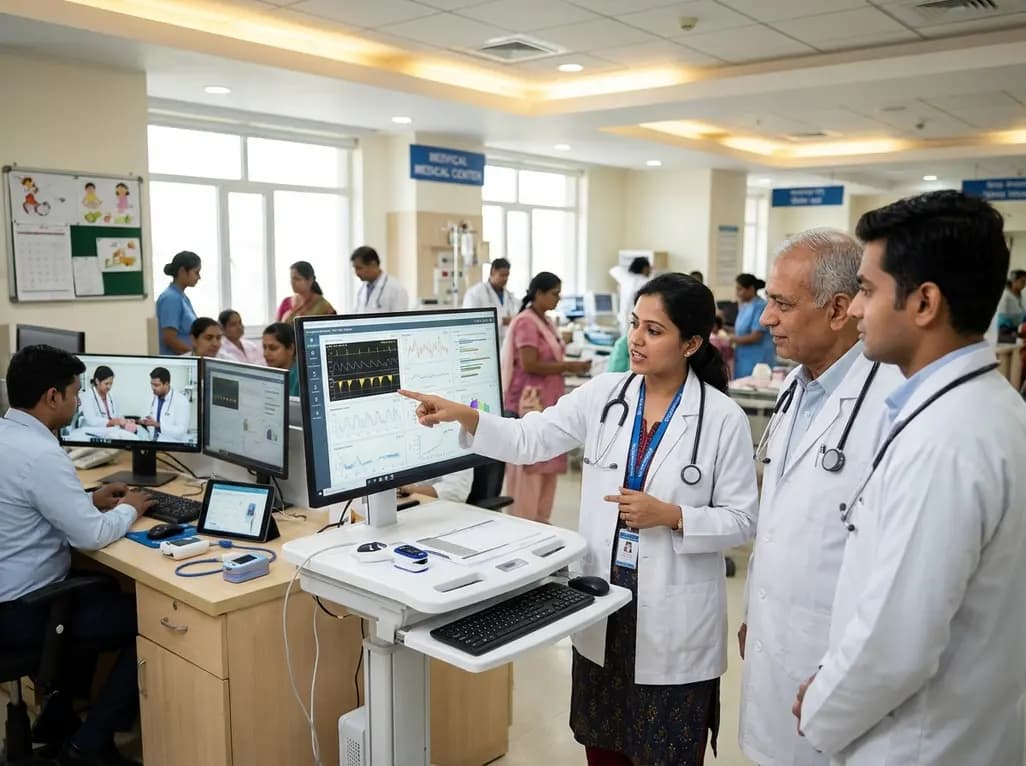
A landmark study details how an enterprise pediatric remote patient management model expanded from a single cardiology pilot to 16 diverse specialty programs by combining centralized digital operations with specialty clinical leadership.
Today
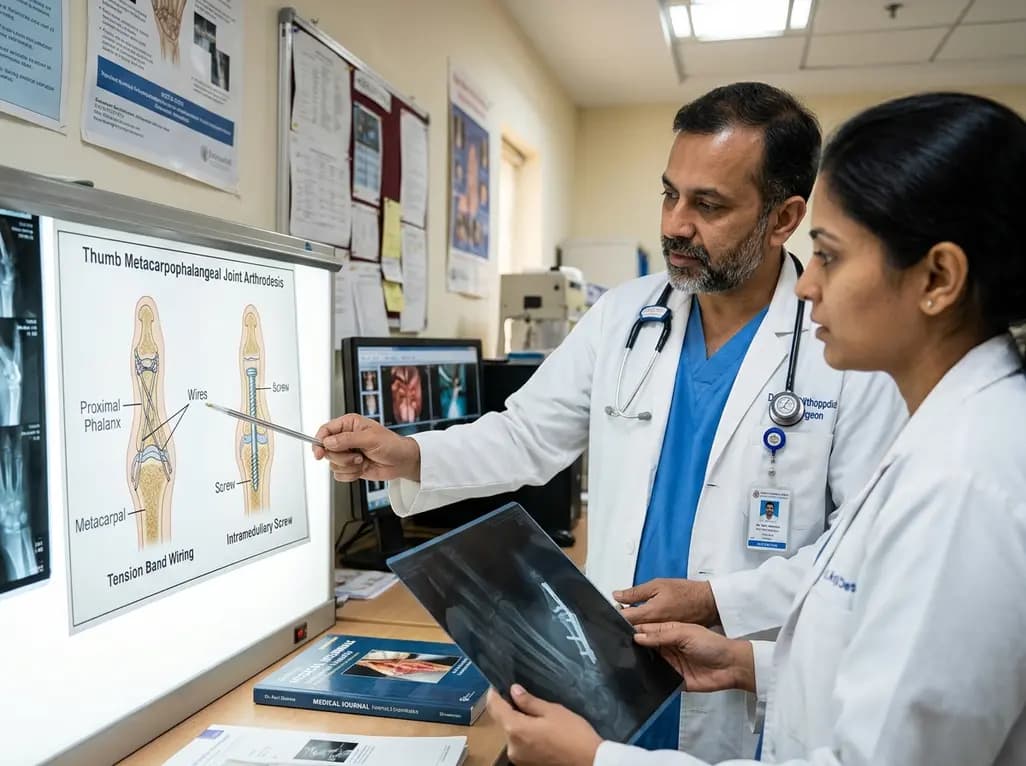
A comparative review of tension band wiring and intramedullary screw fixation in thumb metacarpophalangeal arthrodesis, evaluating union rates, hardware complications, and clinical outcomes.
Yesterday
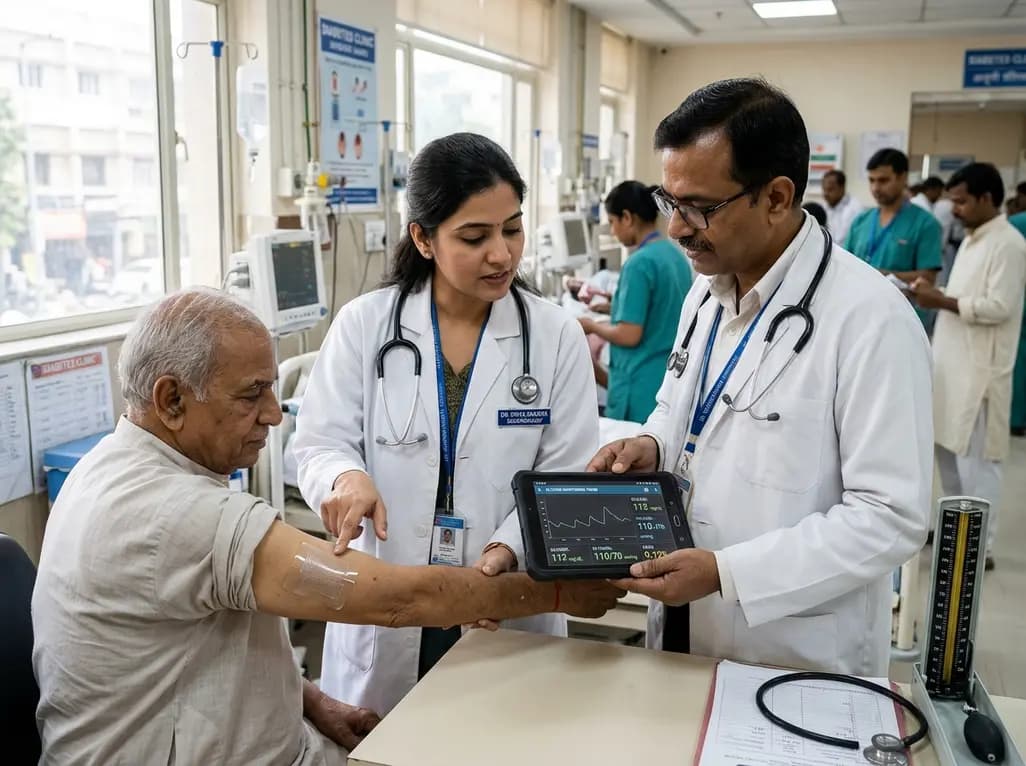
A breakthrough ultrathin multimodal sensor decouples physical hemodynamic monitoring from disposable electrochemical calibration, achieving long-term wearable glucose prediction with 81.36% accuracy and a 9.12% MARD. This offers a robust, drift-free solution for outpatient metabolic surveillance.
Yesterday
