.webp&w=384&q=75)

Loading, please wait...
Loading, please wait...

Researchers have recently developed a highly efficient palladium-catalyzed drug synthesis technique that streamlines the creation of complex molecular structures. This method utilizes a three-component coupling system involving bromoalkynes, diazoesters, and boronates. Historically, such transformations were restricted to two-component systems. However, this new approach expands the chemical toolkit significantly. Consequently, scientists can now access allenes and 1,5-enynes more reliably than ever before.
The core of this reaction relies on carbene migratory insertion. This process generates allenylpalladium or propargylpalladium intermediates through oxidative addition and carbene formation. Specifically, the reaction selectively delivers either allenes or 1,5-enynes based on the structure of the boronate substrate used. This versatility is crucial for pharmaceutical development because these structural motifs are frequently found in bioactive molecules.
To demonstrate the practical utility of this method, the team successfully synthesized two important pharmaceutical agents. First, they applied the technique to produce Aminoglutethimide. This drug serves as a potent aromatase inhibitor and is primarily used in treating hormone-dependent breast cancer and Cushing’s syndrome. Second, the researchers synthesized Anileridine, a highly effective opioid analgesic. These successful applications show that the method can simplify the manufacturing of essential medications. Moreover, the concise synthesis routes reduce the number of steps required, potentially lowering production costs.
Density Functional Theory (DFT) calculations have further clarified the mechanism behind the substrate-dependent chemoselectivity. These insights allow chemists to predict outcomes more accurately. Thus, this innovation represents a significant step forward in both theoretical and practical medicinal chemistry. Indeed, the ability to build complex molecules from simple building blocks is a major goal in drug discovery.
The three-component coupling system allows for the rapid construction of complex scaffolds in fewer steps. This efficiency reduces waste and improves the overall yield of high-value pharmaceutical intermediates.
Aminoglutethimide is used for managing estrogen-dependent cancers and adrenal disorders. Anileridine is a potent analgesic used for pain management, although it is less common than other opioids today.
Disclaimer: This content is for informational and educational purposes only. It does not constitute medical advice or professional drug manufacturing guidelines. Refer to the latest local and national guidelines for clinical practice.
References
1. Liu XD et al. Palladium-Catalyzed Three-Component Coupling Through Carbene Migratory Insertion: Access to Allenes and 1,5-Enynes. Angew Chem Int Ed Engl. 2026 May 18. doi: 10.1002/anie.8821005. PMID: 42149632.
2. Santen RJ, Misbin RI. Aminoglutethimide: review of pharmacology and clinical use. Pharmacotherapy. 1981;1(2):95-120. doi: 10.1002/j.1875-9114.1981.tb03554.x.
3. National Center for Biotechnology Information. PubChem Compound Summary for CID 2196, Anileridine. Accessed May 2026.
"
Read summarized clinical updates, watch expert medical content, and earn CME certifications right from your smartphone.
Open your smartphone camera to scan and install.





A new palladium-catalyzed three-component coupling method streamlines the synthesis of drugs like aminoglutethimide and anileridine, enhancing drug developm...
5 months ago

Explore vital recurrent stroke predictors in lacunar stroke patients managed with intensive blood pressure lowering. This analysis examines trial findings from SPS3 to uncover residual vascular risks, metabolic factors, and targeted secondary prevention strategies for high-risk neurological patients.
Today

Odisha has established India's first state-level clinical protocol specifically tailored for pregnant women with sickle cell disease. Developed with NHM and UNICEF, the framework provides structured antenatal screening, crisis mitigation, standardized referral pathways, and specialized interdisciplinary care.
Today

India is advancing preventive healthcare by integrating genomics, artificial intelligence, and quantum technologies. With the SANGAM programme sequencing one million Indian genomes, clinicians can unlock personalized therapies, detect cardiometabolic risks early, and curb the burden of diabetes and heart disease.
Today
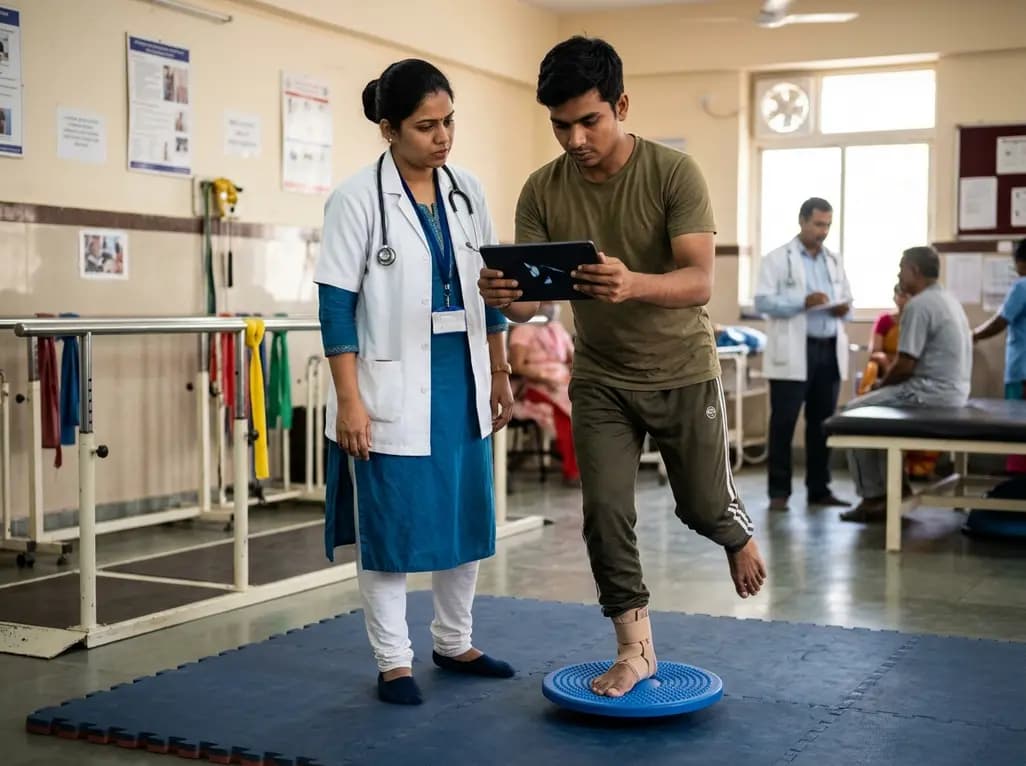
A randomized controlled trial demonstrates that an eight-week dual-task training intervention significantly improves static and dynamic postural control over standard balance exercises in individuals with chronic ankle instability, addressing critical neurocognitive deficits during athletic and daily activities.
Today

A retrospective cohort study of 7,716 ICU patients from the MIMIC-IV database demonstrates that Gradient Boosting Decision Trees significantly outperform traditional SOFA scores in predicting in-hospital mortality among patients with sepsis and diabetes, with SHAP analysis providing clinical interpretability.
Today
