

Loading, please wait...
Loading, please wait...

Cutaneous wound healing requires an intricate sequence of biological events, encompassing rapid hemostasis, robust bacterial clearance, and sustained tissue regeneration. However, standard clinical dressings often fail because they provide only passive barrier protection rather than dynamic, phase-specific therapeutic delivery. To resolve this therapeutic limitation, researchers have developed innovative pagoda-inspired microneedles that actively address each biological stage. This biomimetic platform integrates quaternized chitosan, antimicrobial peptides, and vascular endothelial growth factor into a single, hierarchical structure designed to transform surgical and chronic wound care.
Clinicians frequently manage complicated wounds that stall within prolonged inflammatory phases. Effective healing normally transitions through hemostasis, acute inflammation, cellular proliferation, and extracellular matrix remodeling. Unfortunately, persistent microbial colonization and impaired microvascular perfusion frequently derail this orderly progression. In diabetic ulcers and traumatic injuries, bacterial contamination triggers severe tissue necrosis and blocks re-epithelialization. Consequently, patients face recurrent infections and protracted hospital stays.
Traditional topical ointments and conventional gauze fail to sustain optimal drug concentrations in deeper tissue beds. Moreover, systemic antibiotics often achieve inadequate localized bioavailability in ischemic margins, thereby increasing the risk of antimicrobial resistance. Excessive wound exudate further disrupts the physiological environment by dissolving standard adhesives and macerating healthy peri-wound skin. Therefore, modern wound management requires an adaptable device that physically anchors to the bed, immediately arrests bleeding, and progressively delivers bioactives according to biological demand. Advanced biomaterials must dynamically orchestrate these temporal requirements to prevent chronic wound formation.
To emulate dynamic biological processes, bioengineers designed pagoda-inspired microneedles with an intricate layered architecture. The unique tiered geometry mimics the microstructural tiers of classical Asian pagodas, providing multi-tiered surfaces that optimize drug loading and mechanical interlocking. Consequently, the tiered needles penetrate stratum corneum barriers without causing excessive micro-trauma, anchoring securely within wet, irregular wound beds. This mechanical fixation prevents accidental patch displacement during everyday patient movement.
Furthermore, investigators engineered a distinct spatial hierarchy within each individual needle tip. The outermost surface features a durable coating of quaternized chitosan, which provides immediate surface-level biochemical activity upon contact. Beneath this protective shield, the needle shaft incorporates two distinct drug-loaded reservoirs. The upper stratum contains high concentrations of antimicrobial peptides, whereas the basal tip segment houses vascular endothelial growth factor. This elegant spatial segregation prevents unwanted molecular interactions before deployment. As a result, the physical geometry directly enables programmed, sequential drug elution that mirrors natural healing cascades.
The therapeutic superiority of this platform stems from its chronologically ordered pharmacological release profile. Upon initial wound application, the outermost quaternized chitosan layer establishes immediate direct contact with exudate and hemorrhaging capillaries. Quaternized chitosan carries abundant positive quaternary ammonium charges that electrostatically attract negatively charged erythrocytes and platelets. Thus, the polymer rapidly aggregates cellular components, accelerates thrombogenesis, and achieves rapid local hemostasis without relying on systemic clotting factors.
Subsequently, the dissolution of the upper needle layer releases antimicrobial peptides into the infected tissue microenvironment. These cationic peptides disrupt bacterial cell membranes through selective electrostatic binding, rapidly killing both Gram-positive and Gram-negative pathogens while curbing biofilm formation. Furthermore, antimicrobial peptides exhibit negligible cytotoxicity toward host keratinocytes. As the needle base degrades, it steadily releases vascular endothelial growth factor directly into the dermal substrate. Because VEGF acts primarily on vascular endothelial cells, its localized release stimulates endothelial proliferation, sprouting angiogenesis, and mature capillary formation. Consequently, the emerging capillary networks re-establish essential tissue perfusion, supporting vigorous granulation tissue formation. This phased sequence ensures that bactericidal action precedes tissue rebuilding.
Rigorous preclinical animal experiments confirm that this tiered microneedle design markedly outpaces conventional dressings across multiple quantitative metrics. In rodent full-thickness cutaneous defect models, the microneedle system demonstrated immediate hemostatic efficacy, reducing bleeding times by over seventy percent compared to untreated controls. In addition, bacterial counts within infected wound beds dropped drastically following microneedle application, confirming potent in vivo antimicrobial defense.
Histological and immunohistochemical analyses revealed substantial physiological remodeling within the treated dermal layers. Specifically, tissue specimens demonstrated elevated expression of CD31 and vascular endothelial growth factor receptor 2, indicating exuberant functional neovascularization. Enhanced capillary density restored local tissue oxygenation and supplied essential micronutrients to migrating fibroblasts. Consequently, treated specimens exhibited dense, organized collagen deposition with superior parallel fiber alignment rather than disordered scar tissue. Furthermore, the microneedle platform suppressed major pro-inflammatory cytokines, including interleukin-6 and tumor necrosis factor-alpha. By attenuating sustained inflammation and promoting re-epithelialization, the patch achieved near-complete epidermal closure in significantly shortened timeframes.
For healthcare practitioners in India, these technological developments hold enormous clinical relevance. Chronic non-healing wounds, particularly diabetic foot ulcers, represent a massive public health burden across the subcontinent. Millions of Indian diabetic patients suffer from microvascular disease and neuropathy, making them exceptionally vulnerable to non-healing wounds and secondary multidrug-resistant infections. Consequently, clinicians constantly seek wound care solutions that curb resistant pathogens without overusing systemic broad-spectrum antibiotics.
Moreover, postoperative wound dehiscence and surgical site infections frequently challenge surgical teams in busy tertiary care and rural health centers alike. The pagoda-inspired microneedle patch provides a portable, self-adherent dressing that requires minimal specialized equipment to apply. Its rapid hemostatic action makes it particularly valuable for emergency trauma management and intraoperative capillary ooze control. In addition, the sustained delivery of angiogenic factors addresses the persistent ischemia that plagues diabetic ulcers in Indian cohorts. As researchers transition this platform toward human clinical trials, Indian surgical, dermatological, and primary care specialties should actively follow these translational advancements. Integrating smart biomimetic dressings into daily practice could revolutionize wound care and lower complication rates.
The pagoda-inspired geometry utilizes multi-tiered, stepped micro-ridges along each needle shaft to generate superior mechanical interlocking with tissue. When clinicians press the patch onto wet, irregular wound surfaces, the tiered architecture penetrates the epidermal barrier smoothly while anchoring firmly against dynamic shear forces. Consequently, the dressing resists spontaneous detachment during patient movement. This stable micro-anchoring maintains constant contact between therapeutic layers and the underlying wound bed without requiring secondary sutures or painful surgical clips.
Quaternized chitosan features permanently charged positive quaternary ammonium moieties along its polymer backbone. When the patch touches hemorrhaging tissue, these cationic groups electrostatically interact with negatively charged sialic acid residues on red blood cell membranes and circulating platelets. Therefore, this molecular attraction accelerates immediate cellular aggregation, fibrin polymerization, and local clot formation. Furthermore, the polymer maintains potent intrinsic bactericidal activity, simultaneously sealing capillary micro-bleeding and guarding vulnerable tissue beds against acute bacterial contamination.
Yes, this microneedle patch significantly overcomes bacterial resistance by delivering potent antimicrobial peptides directly into the sub-epidermal wound matrix. Unlike traditional antibiotics that rely on specific metabolic pathways, antimicrobial peptides disrupt microbial cell membrane integrity through rapid physical permeabilization. Consequently, bacteria cannot easily develop defensive mutations against this mechanical membrane lysis. In addition, by delivering the peptides locally beneath protective microbial biofilms, the system achieves lethal antimicrobial concentrations while preventing systemic drug toxicity.
Disclaimer: This content is for informational and educational purposes only... Refer to the latest local and national guidelines for clinical practice.
References

Read summarized clinical updates, watch expert medical content, and earn CME certifications right from your smartphone.
Open your smartphone camera to scan and install.





Novel pagoda-inspired microneedle patches offer a multiphase therapeutic platform for wound healing. Coated with quaternized chitosan and loaded with antimicrobial peptides and VEGF, they achieve rapid hemostasis, eradicate pathogens, and accelerate neovascularization.
Today
A test-negative case-control study shows the 2025-2026 trivalent influenza vaccine provided 46% adjusted effectiveness against medically attended influenza in adults aged 60 and older, with 42% protection against influenza A and 60% against influenza B, supporting continued seasonal immunization.
Today

Assam reduced maternal sepsis deaths from 21% to 8% through rigorous infection prevention protocols and digital monitoring. Explore the clinical strategies, sterilization quality checks, early recognition pathways, and antimicrobial stewardship lessons essential for obstetric teams across India.
Today

A real-world cohort study of 6,537 patients from the FOUNTAIN platform demonstrates that initiating finerenone significantly reduces albuminuria by 40.7% with minimal eGFR decline and manageable hyperkalemia risk, confirming its practical effectiveness and safety in diabetic kidney disease.
Today
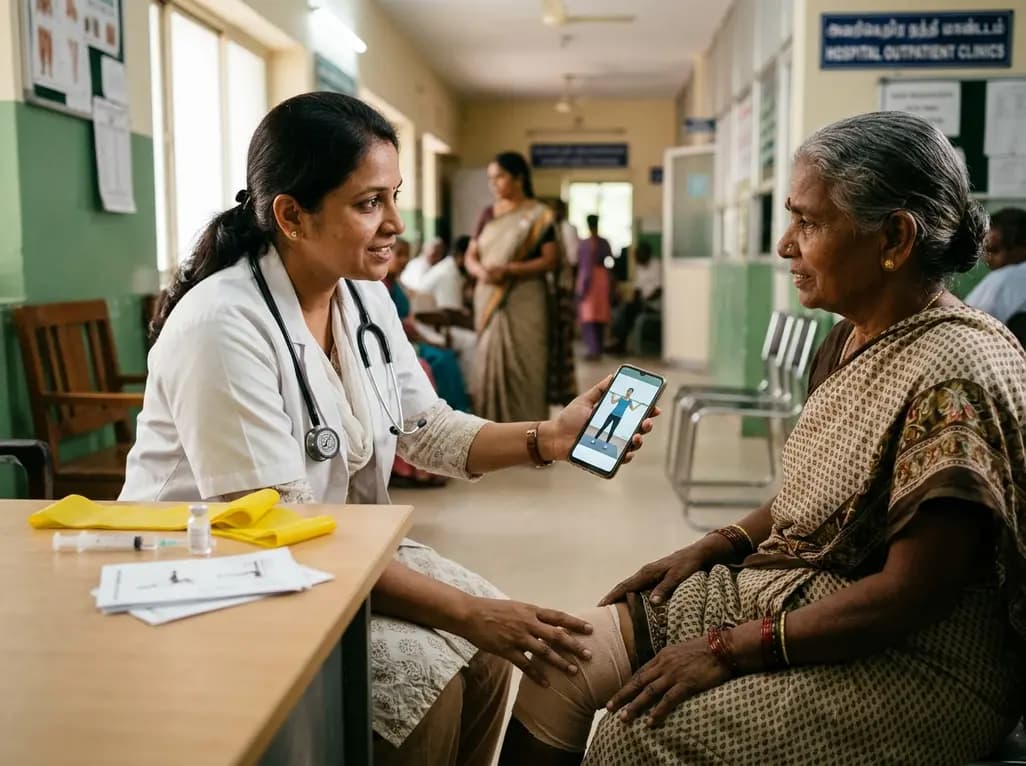
Adding a 12-week tele-supervised resistance band exercise program to intra-articular hyaluronic acid injections significantly improves physical function, chair stands, and mobility in knee osteoarthritis, despite showing no additive reduction in baseline pain scores.
Today

New evidence links altered sex steroids, cortisol elevation, and glycemic stress to natural killer cell dysfunction in type 2 diabetes. Understanding these endocrine-immune pathways provides valuable insights for Indian clinicians managing metabolic inflammation and infection susceptibility in diabetic patients.
Today
