

Loading, please wait...
Loading, please wait...

Seasonal viral respiratory infections impose a substantial clinical burden on geriatric populations across the globe. In particular, recent surveillance data highlight the protective impact of the seasonal trivalent influenza vaccine among vulnerable older cohorts. However, real-world protection often fluctuates across distinct seasons and geographic terrains due to ongoing viral antigenic drift. Furthermore, age-related immunosenescence attenuates robust antibody responses in seniors, making systematic post-marketing surveillance essential. Consequently, evaluating vaccine performance under routine healthcare conditions provides vital clarity for physicians managing vulnerable elderly patients.
Real-world observational investigations offer vital insights that randomized controlled trials cannot fully capture across heterogeneous geriatric populations. Specifically, clinical investigators conducted a rigorous test-negative case-control study during the 2025-2026 respiratory season in Eastern China to evaluate trivalent influenza vaccine performance. The research team recruited older adults aged 60 years and above who presented with acute respiratory illness at sentinel hospitals. Among 532 eligible individuals, laboratory reverse-transcription polymerase chain reaction testing confirmed 156 positive influenza cases, whereas 376 patients served as test-negative controls. Current-season vaccination coverage reached 32.7% among confirmed influenza cases compared to 48.4% among test-negative controls. Multivariable logistic regression revealed an adjusted overall vaccine effectiveness of 46% against medically attended, laboratory-confirmed influenza. Therefore, the immunization program conferred moderate and statistically robust protection under routine clinical practice conditions. In addition, diagnostic restriction sensitivity analyses confirmed the stability of these primary effectiveness estimates. These empirical results emphasize that seasonal vaccination markedly decreases outpatient presentations and respiratory consultations. Clinicians should therefore interpret these findings as concrete proof of community-level vaccine benefit during active transmission periods.
The test-negative case-control design represents the gold standard methodology for assessing seasonal respiratory vaccine effectiveness. By selecting controls from patients who seek medical care for acute respiratory symptoms but test negative for influenza, researchers effectively control for healthcare-seeking behavior. Moreover, this approach minimizes bias arising from differential access to diagnostic facilities or physician testing tendencies. In this clinical evaluation, investigators applied strict operational criteria to define vaccination status. Specifically, they classified patients who received the vaccine at least 14 days before symptom onset as fully vaccinated. In contrast, researchers excluded individuals vaccinated within 13 days of onset from primary analyses to eliminate confounding from incomplete seroconversion. Multivariable logistic regression models controlled for crucial clinical confounders, including underlying cardiovascular and metabolic diseases. Furthermore, the researchers calculated vaccine effectiveness as one minus the adjusted odds ratio multiplied by one hundred percent. Consequently, the derived point estimates reflect genuine immunological mitigation rather than observational selection artifacts. This rigorous design reinforces confidence in the validity of seasonal vaccine evaluations across routine hospital settings.
Detailed lineage analysis demonstrates that seasonal vaccine performance varies substantially between circulating viral lineages. In this study, the trivalent formulation exhibited differential protective benefits across distinct influenza types. Specifically, adjusted vaccine effectiveness reached 42% against influenza A viruses, confirming substantial protection during widespread regional circulation. Even more impressively, the adjusted effectiveness climbed to 60% against influenza B lineages. Although subtype-specific estimates had wider confidence intervals due to limited sample sizes, the directional trends remained uniformly protective. Importantly, extensive interaction analyses indicated no statistically significant divergence in protection across distinct age strata. In addition, vaccine-mediated protection did not differ between patients with pre-existing chronic conditions and those without baseline morbidities. Hence, the vaccine preserved its protective efficacy across complex clinical profiles, including diabetic and hypertensive individuals. These robust findings demonstrate that seasonal vaccines maintain clinically meaningful protective capacity against both major circulating viral lineages. Physicians must recognize that even moderate strain-specific effectiveness translates into thousands of averted hospital encounters annually.
Immunosenescence poses a continuous challenge to standard immunization protocols in aging populations worldwide. As human immune systems mature, thymic involution and declining naive T-cell repertoires weaken initial antibody responses following antigenic exposure. Consequently, antibody titers elicited by standard-dose formulations among older individuals often peak lower than titers observed in young adults. Nevertheless, observational data demonstrate that clinical protection against severe disease and hospitalization remains clinically significant. In this cohort, elderly patients derived nearly 50% relative risk reduction against acute medically attended infection. Moreover, vaccination substantially reduces downstream secondary complications, such as secondary bacterial pneumonia, acute myocardial infarction, and decompensated heart failure. Therefore, clinicians must look beyond raw seroconversion thresholds when counseling elderly patients regarding annual immunization benefits. Routine vaccination attenuates overall symptom severity even when breakthrough infections occur. Proactive preventive strategies thereby preserve independent functional status and reduce catastrophic hospital readmissions among frail geriatric outpatients.
India faces unique epidemiological challenges regarding seasonal influenza due to regional variations in peak transmission cycles and low adult vaccination coverage. In tropical and subtropical regions across India, influenza surges often align with monsoon rains rather than classic winter peaks. Nevertheless, adult immunization guidelines from the Association of Physicians of India strongly recommend annual vaccination for adults aged 60 and older. Furthermore, elderly Indian patients carry a high prevalence of chronic metabolic disorders, ischemic heart disease, and chronic obstructive pulmonary disease. These comorbidities markedly elevate the risk of fatal influenza complications and acute coronary syndromes. However, vaccine hesitancy and lack of physician recommendation persistently depress adult uptake rates across the country. Clinicians must actively discuss seasonal immunization during routine chronic disease follow-ups and outpatient consultations. Additionally, primary care physicians should initiate vaccination ahead of local transmission peaks to ensure adequate antibody protection. Incorporating routine vaccine discussions into geriatric preventive checkups will substantially reduce avoidable outpatient admissions and mortality.
Vaccine effectiveness frequently differs between circulating viral strains due to variable antigenic match and lineage-specific mutation rates. In this real-world evaluation, the trivalent influenza vaccine yielded an adjusted effectiveness of 42% against influenza A strains and 60% against influenza B lineages. Both point estimates demonstrated statistically significant mitigation against medically attended respiratory illness, showing that seasonal vaccination delivers consistent cross-strain clinical protection across older adult populations.
Investigators favor the test-negative case-control design because it effectively minimizes healthcare-seeking behavior bias among symptomatic participants. By comparing laboratory-confirmed influenza-positive cases directly against symptomatic patients who test negative for the virus, researchers control for shared confounding tendencies, such as health literacy and facility access. Consequently, this established epidemiological methodology provides highly accurate, real-world estimates of vaccine effectiveness under routine clinical delivery conditions in community and hospital settings.
Leading Indian medical organizations, including the Association of Physicians of India, strongly advocate annual seasonal influenza vaccination for all adults aged 60 years and older. In addition, individuals suffering from chronic comorbidities such as diabetes mellitus, chronic kidney disease, or cardiovascular disorders should receive top priority. Clinicians should ideally administer the vaccine prior to the onset of the local monsoon or winter respiratory peaks to optimize individual and population-level protective immunity.
Disclaimer: This content is for informational and educational purposes only... Refer to the latest local and national guidelines for clinical practice.
References
Shen Y et al. Effectiveness of the 2025-2026 trivalent influenza vaccine against laboratory-confirmed influenza among older adults in Eastern China: A test-negative case-control study. Hum Vaccin Immunother. 2026 Dec undefined. doi: 10.1080/21645515.2026.2759393. PMID: 43000208.
Koul PA, et al. Consensus statement on influenza vaccination in India: An update by the Association of Physicians of India. J Assoc Physicians India. 2023;71(10):11-20.
World Health Organization. Vaccines against influenza: WHO position paper – May 2022. Wkly Epidemiol Rec. 2022;97(19):185-208.

Read summarized clinical updates, watch expert medical content, and earn CME certifications right from your smartphone.
Open your smartphone camera to scan and install.





A test-negative case-control study shows the 2025-2026 trivalent influenza vaccine provided 46% adjusted effectiveness against medically attended influenza in adults aged 60 and older, with 42% protection against influenza A and 60% against influenza B, supporting continued seasonal immunization.
Today

Assam reduced maternal sepsis deaths from 21% to 8% through rigorous infection prevention protocols and digital monitoring. Explore the clinical strategies, sterilization quality checks, early recognition pathways, and antimicrobial stewardship lessons essential for obstetric teams across India.
Today

A real-world cohort study of 6,537 patients from the FOUNTAIN platform demonstrates that initiating finerenone significantly reduces albuminuria by 40.7% with minimal eGFR decline and manageable hyperkalemia risk, confirming its practical effectiveness and safety in diabetic kidney disease.
Today
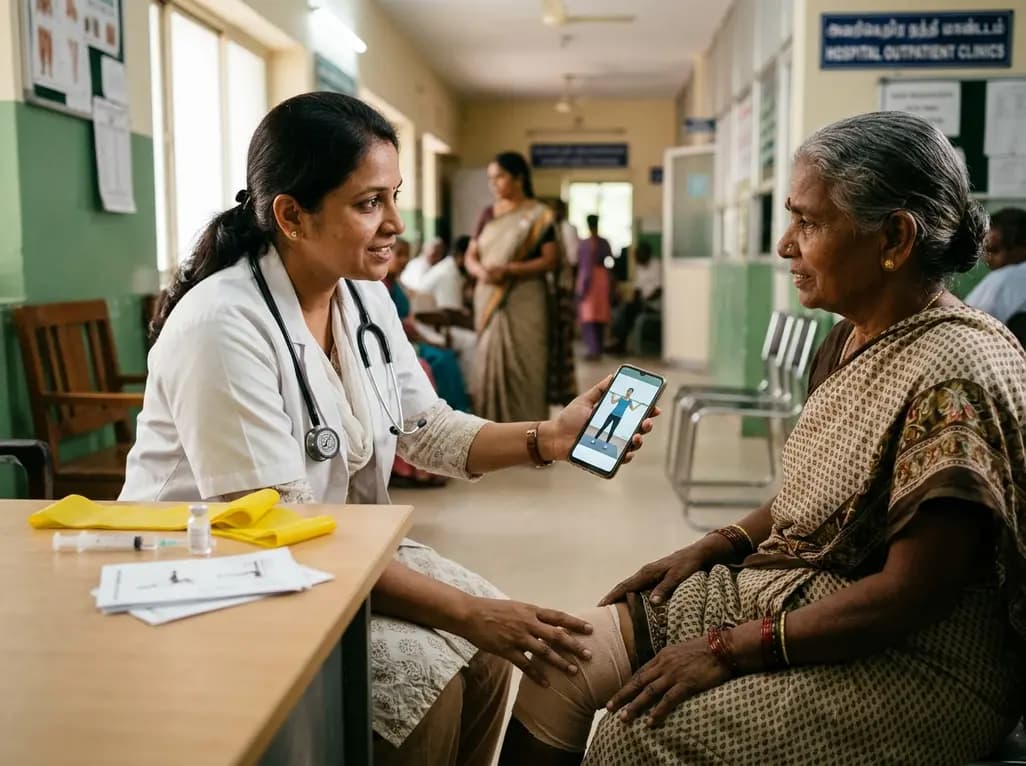
Adding a 12-week tele-supervised resistance band exercise program to intra-articular hyaluronic acid injections significantly improves physical function, chair stands, and mobility in knee osteoarthritis, despite showing no additive reduction in baseline pain scores.
Today

New evidence links altered sex steroids, cortisol elevation, and glycemic stress to natural killer cell dysfunction in type 2 diabetes. Understanding these endocrine-immune pathways provides valuable insights for Indian clinicians managing metabolic inflammation and infection susceptibility in diabetic patients.
Today
