.webp&w=384&q=75)

Loading, please wait...
Loading, please wait...

Choosing the right orthodontic adhesive removal methods is a critical final step in fixed appliance therapy. After removing brackets, clinicians must effectively clear the remaining resin without damaging the natural tooth. Consequently, the choice of tools directly impacts the long-term integrity and aesthetics of the patient's enamel.
Recent experimental research highlights that different rotary instruments produce varying levels of enamel loss and surface roughness. For instance, the high-speed 18-fluted tungsten carbide (TC) bur often provides the fastest cleanup times. However, this efficiency comes at a cost, as these burs frequently cause the greatest amount of enamel loss. Furthermore, they tend to leave a higher amount of residual adhesive compared to more conservative methods. In contrast, sequential polishing discs and low-speed TC burs prove much gentler on the tooth structure.
Additionally, the method used to inspect the tooth surface significantly influences the quality of the cleanup. While many dentists rely on tactile examination with a dental explorer, marking the surface with a black pencil provides superior results. This visual aid allows practitioners to identify remnants more accurately. Therefore, integrating visual marking protocols into clinical practice can lead to a cleaner enamel surface with fewer scratches.
Moreover, practitioners should always prioritize enamel preservation over procedural speed. Although diamond burs might seem effective, they often create clinically unacceptable surface roughness. Utilizing a multistep protocol involving initial removal with fine carbide burs followed by polishing discs typically yields the safest outcomes for patients. Thus, a careful approach ensures that the smile achieved through orthodontics remains healthy for a lifetime.
The 18-fluted tungsten carbide bur is generally the fastest tool for clearing resin. Nevertheless, it is associated with higher enamel loss and more residual remnants than other techniques.
Yes, marking the enamel with a black pencil before cleaning helps clinicians see residual adhesive more clearly. This technique results in a cleaner and smoother final surface compared to tactile exploration alone.
Disclaimer: This content is for informational and educational purposes only. It is not intended as medical advice or a substitute for professional clinical judgment. Refer to the latest local and national guidelines for clinical practice.
References
Ahrari F et al. The enamel loss and adhesive remnants after bracket removal and various adhesive removal methods: an in vitro experimental study. Saudi Dent J. 2026 Feb 10. doi: 10.1007/s44445-026-00120-8. PMID: 41665794.
Ghaleb L et al. Evaluation of enamel surface integrity after orthodontic bracket debonding: comparison of three different system. BMC Oral Health. 2024;24(1):315.
Lee H. Effect of various residual adhesive removal methods on enamel surface after bracket debonding: a Systematic Review. Dent J. 2018;6(3):40.

Read summarized clinical updates, watch expert medical content, and earn CME certifications right from your smartphone.
Open your smartphone camera to scan and install.





This study evaluates various adhesive removal methods after orthodontic debonding, highlighting the balance between clinical efficiency and enamel preservat...
8 months ago

Recent epidemiological data reveals a dramatic surge in summer heat mortality driven by human-induced climate warming. This analysis explores the pathophysiological impacts on cardiac and renal systems, diagnostic dilemmas in death certification, and essential emergency cooling protocols for acute clinical care.
Today

Odisha has established India's first state-level clinical protocol specifically tailored for pregnant women with sickle cell disease. Developed with NHM and UNICEF, the framework provides structured antenatal screening, crisis mitigation, standardized referral pathways, and specialized interdisciplinary care.
Today

India is advancing preventive healthcare by integrating genomics, artificial intelligence, and quantum technologies. With the SANGAM programme sequencing one million Indian genomes, clinicians can unlock personalized therapies, detect cardiometabolic risks early, and curb the burden of diabetes and heart disease.
Today
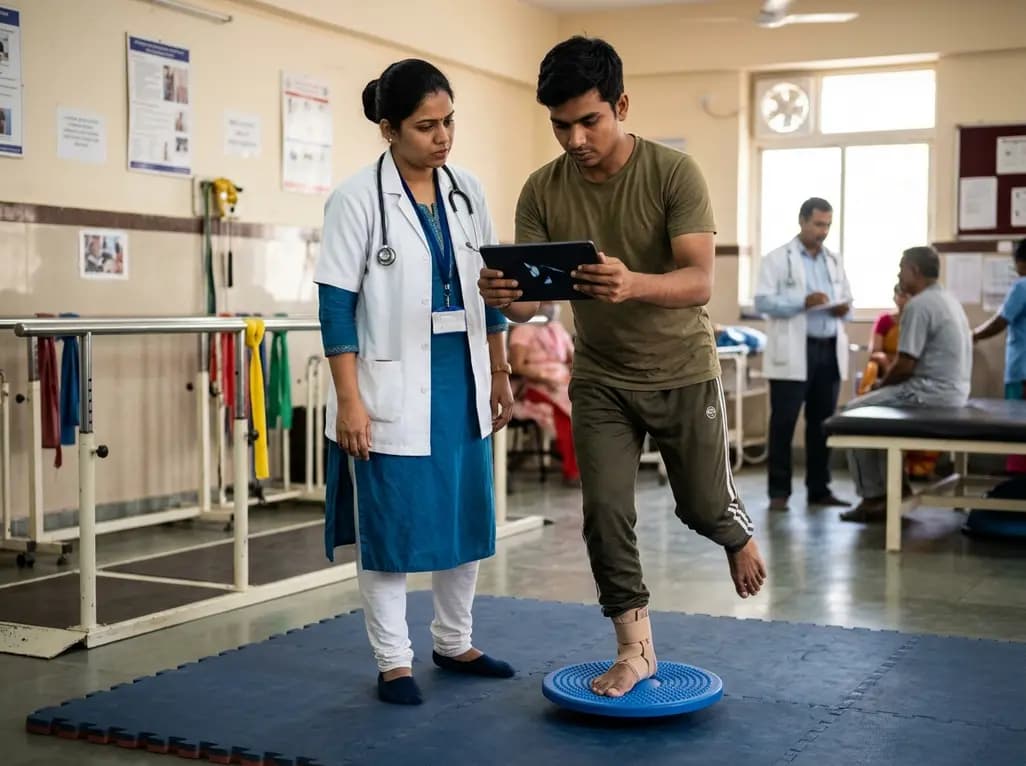
A randomized controlled trial demonstrates that an eight-week dual-task training intervention significantly improves static and dynamic postural control over standard balance exercises in individuals with chronic ankle instability, addressing critical neurocognitive deficits during athletic and daily activities.
Today

A retrospective cohort study of 7,716 ICU patients from the MIMIC-IV database demonstrates that Gradient Boosting Decision Trees significantly outperform traditional SOFA scores in predicting in-hospital mortality among patients with sepsis and diabetes, with SHAP analysis providing clinical interpretability.
Today
