.webp&w=384&q=75)

Loading, please wait...
Loading, please wait...
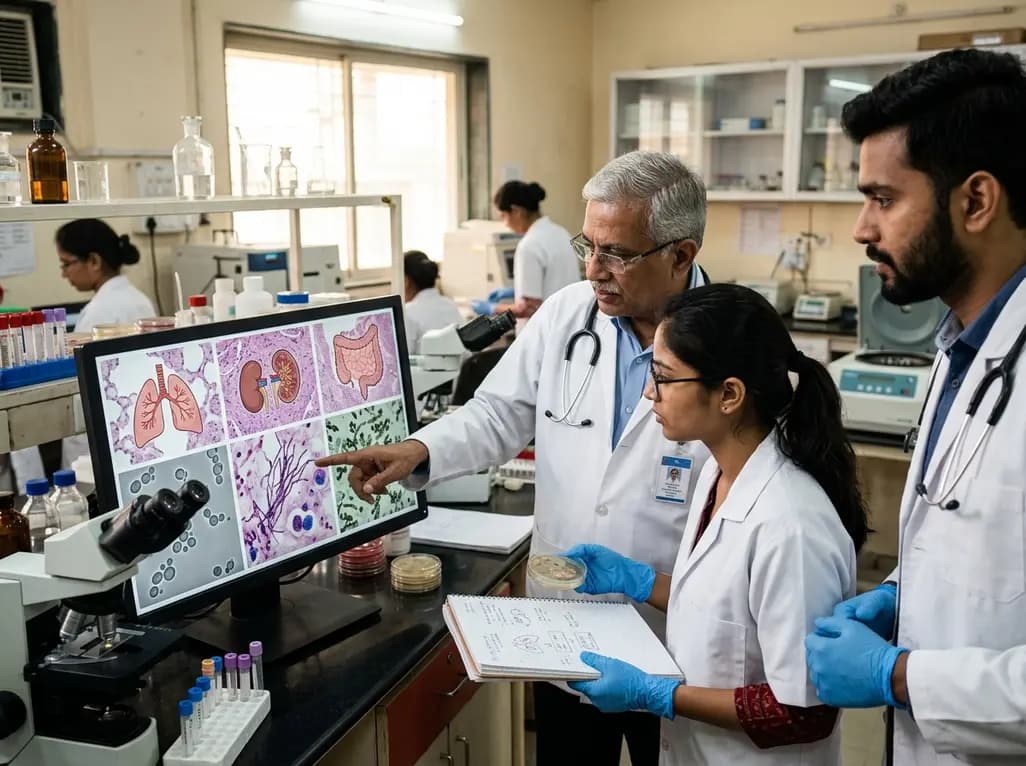
Candida albicans is a major opportunistic fungal pathogen that colonizes human mucosal surfaces and internal organs. During systemic infection, the organism adapts dynamically to distinct anatomical sites. Understanding diverse Candida albicans phenotypes provides essential insights into host-pathogen interactions, immune evasion, and localized clinical outcomes. Tissue microenvironments actively shape fungal gene expression, morphology, and metabolic pathways. Consequently, these organ-specific adaptations determine whether the pathogen remains a harmless commensal or causes severe tissue damage.
Tissue microenvironments expose Candida albicans to vastly different physical and chemical signals. Specifically, factors such as oxygen availability, nutrient abundance, pH variation, and host metabolites alter fungal cell wall architecture. For example, in the hypoxic renal parenchyma, the fungus triggers metabolic shifts towards glycolysis while modifying cell surface glucans. Similarly, gastrointestinal niches provide abundant short-chain fatty acids that influence yeast-to-hypha morphogenesis. Therefore, the host tissue acts as a direct regulatory driver, dictating phenotypic adaptation. Furthermore, these environmental cues modulate the expression of virulence factors, including secreted proteinases and candidalysin. As a result, Candida albicans dynamically tailors its structural profile to survive local host defenses. Additionally, tissue-resident macrophages continuously sense these phenotypic alterations, triggering localized immune cascades. Understanding these microenvironmental triggers helps clinicians appreciate how fungal populations adapt within specific organs. Thus, targeting tissue-specific metabolic adaptation represents a promising therapeutic avenue.
The kidney is a primary target organ during systemic candidiasis, characterized by high fungal burden and micro-abscess formation. Within renal tissue, Candida albicans encounters specialized immune cells and distinct metabolic stress. Consequently, fungal cells undergo extensive hyphal filamentation, penetrating tubular epithelial barriers. Moreover, renal-resident macrophages and infiltrating neutrophils respond vigorously to these filamentous forms. However, the fungus alters its cell wall chitin and mannan layers to mask pathogen-associated molecular patterns. Therefore, this structural remodelling impairs recognition by pattern recognition receptors like Dectin-1. Additionally, the localized hyperosmotic environment of the renal medulla alters fungal stress response pathways. Consequently, fungal cells enhance stress resistance genes to withstand osmotic shock and host oxidative burst. Furthermore, localized immune responses in the kidney often cause severe collateral tissue damage. Clinicians treating deep-seated organ infections must consider these tissue-pathogen interactions, as renal fungal persistence frequently complicates systemic antifungal therapy.
In the gastrointestinal tract, Candida albicans predominantly exists as a peaceful commensal organism. However, disruption of mucosal integrity or antibiotic-induced dysbiosis alters this delicate equilibrium. Specifically, intestinal epithelial cells secrete antimicrobial peptides while mucosal lymphocytes maintain immune tolerance. Under stress, the fungus alters its transcription factor networks, triggering a switch from commensal yeast to invasive hyphae. Moreover, normal gut microbiota generate metabolites that actively suppress hyphal formation. Consequently, loss of commensal flora removes these inhibitory signals, promoting invasive fungal phenotypes. Furthermore, invasive hyphae produce candidalysin, a cytolytic toxin that damages enterocytes and triggers inflammatory cytokine release. Therefore, localized intestinal immune responses attempt to re-establish mucosal barrier function through specialized interleukin signaling. Compromised gut barriers allow systemic fungal translocation into the portal circulation. Consequently, preserving intestinal mucosal homeostasis remains vital for preventing invasive systemic fungal disease.
Central nervous system invasion represents a severe complication of systemic fungal infection. To enter brain parenchyma, Candida albicans must cross the tight junctions of the blood-brain barrier. Specifically, fungal hyphae utilize specialized adhesins and invasins to interact with endothelial cells. Furthermore, once inside the brain microenvironment, fungal cells encounter resident microglia and astrocytes. Consequently, microglia initiate localized inflammatory responses by releasing pro-inflammatory cytokines and reactive oxygen species. However, the unique metabolic milieu of the brain induces specific fungal stress responses. For instance, low nutrient levels induce fungal amino acid biosynthesis and glyoxylate pathway activation. Additionally, fungal cells modify surface wall components to evade microglial phagocytosis and complement deposition. Therefore, neuro-inflammation often persists, causing significant neuronal damage and cerebral edema. Deciphering neuro-specific fungal phenotypes will help guide novel neuroprotective and targeted antifungal clinical strategies.
The emergence of tissue-specific fungal phenotypes directly impacts therapeutic success and clinical outcomes. Specifically, organ-derived stress responses upregulate efflux pumps and alter ergosterol biosynthesis, contributing to localized drug tolerance. Moreover, fungal biofilm formation on indwelling catheters and tissue surfaces creates protective niches against antifungal agents. Consequently, standard systemic antifungal therapy may achieve variable tissue concentrations and efficacy across different organs. Furthermore, host immune status profoundly influences whether localized responses clear or exacerbate infection. Neutropenic patients lack effective phagocytic clearance, allowing uninhibited hyphal growth and severe tissue destruction. Conversely, excessive immune activation in immunocompetent hosts can lead to immunopathology and organ dysfunction. Therefore, understanding tissue-specific host-pathogen interactions is critical for refining clinical management protocols. Physicians must consider organ-specific drug delivery, microenvironment factors, and host immune status when designing optimal antifungal strategies.
Research into organ-specific fungal phenotypes is rapidly expanding, offering novel insights into host-pathogen interactions. Advanced single-cell transcriptomics now allows researchers to map fungal gene expression within specific host tissue microdomains. Specifically, these cutting-edge techniques reveal heterogeneous fungal sub-populations coexisting within a single infected organ. Furthermore, organ-on-a-chip models replicate complex tissue barriers and fluid dynamics, providing realistic platforms for studying localized invasion. Consequently, scientists can evaluate how host tissue signals drive fungal morphogenesis and immune evasion. Moreover, identifying tissue-specific virulence factors offers promising targets for site-directed antifungal therapies. Blocking specific stress response pathways could selectively disarm the pathogen in vulnerable organs like kidneys or brain. Integrating host immunological profiling with fungal phenotypic mapping will enable personalized therapeutic interventions, transforming our clinical approach to complex invasive candidiasis.
Host tissue microenvironments present distinct physical, metabolic, and chemical conditions, such as varying oxygen levels, pH, and nutrient availability. Candida albicans senses these unique signals and rapidly alters its transcriptional profile, cell wall architecture, and metabolic pathways. Consequently, the fungus transitions between yeast and hyphal forms, upregulates specific virulence factors, and adapts its stress responses to survive localized host immune attacks and establish tissue-specific infection.
Different organs harbor specialized tissue-resident immune cells, including renal macrophages, intestinal lymphocytes, and microglial cells. Each tissue microenvironment modulates host immune receptor expression and cytokine production. Concurrently, organ-specific fungal phenotypes display altered surface antigens and cell wall components. As a result, localized host-pathogen interactions vary significantly, leading to distinct inflammatory cascades, tissue clearance dynamics, or immune-mediated tissue injury depending on the specific anatomical site affected.
Tissue-specific fungal adaptation leads to localized variations in drug tolerance, virulence factor expression, and biofilm formation. Consequently, standard systemic antifungal therapies may exhibit inconsistent efficacy across different organ systems. Clinicians must account for tissue drug penetration, organ-specific fungal stress responses, and local host immune status. Novel therapeutic strategies aim to target tissue-specific adaptation pathways, combining targeted antifungal agents with immunomodulatory therapies to improve clinical outcomes in invasive infection.
Disclaimer: This content is for informational and educational purposes only and does not constitute medical advice. Healthcare professionals should rely on their clinical judgment and refer to official clinical guidelines for treatment decisions. Refer to the latest local and national guidelines for clinical practice.
References

Read summarized clinical updates, watch expert medical content, and earn CME certifications right from your smartphone.
Open your smartphone camera to scan and install.





Discover how organ-specific Candida albicans phenotypes adapt to host microenvironments, influencing tissue-level antifungal immunity, fungal virulence, and clinical management strategies in invasive candidiasis.
last month

A breakthrough study reveals that propionyl-CoA catabolism acts as a vital metabolic gatekeeper for fatty acid oxidation in pancreatic ductal adenocarcinoma. By preventing toxic metabolite accumulation and protecting mitochondrial enzymes, this pathway exposes critical therapeutic targets for oncology.
Today
A landmark study reveals that circMCM3 promotes cisplatin resistance in cervical squamous cell carcinoma by recruiting USP49 to stabilize PTBP1 and CCND1. Targeting this newly identified molecular axis presents a promising therapeutic avenue to restore chemotherapy sensitivity and improve gynaecological outcomes.
Today
A 24-week trial shows that patients starting amlodipine/benazepril maintain stable blood pressure across all seasons, whereas those on benazepril/hydrochlorothiazide require significantly more up-titration when initiated in winter (18.9% vs. 5.0%), highlighting amlodipine's superior seasonal hemodynamic stability.
Today
A rare case of a pediatric pathological femoral fracture caused by occult telangiectatic osteosarcoma demonstrates the risks of misdiagnosis after trauma, where intramedullary nailing prompted iatrogenic tumor dissemination and required modular total endoprosthetic reconstruction.
Today
A comprehensive analysis of DRCRnet studies reveals that 15.1% of participants discontinue diabetic retinopathy clinical trials. Identifying baseline demographic and clinical predictors helps ophthalmologists and endocrinologists mitigate real-world treatment dropouts and protect long-term visual outcomes.
Today
