.webp&w=384&q=75)

Loading, please wait...
Loading, please wait...
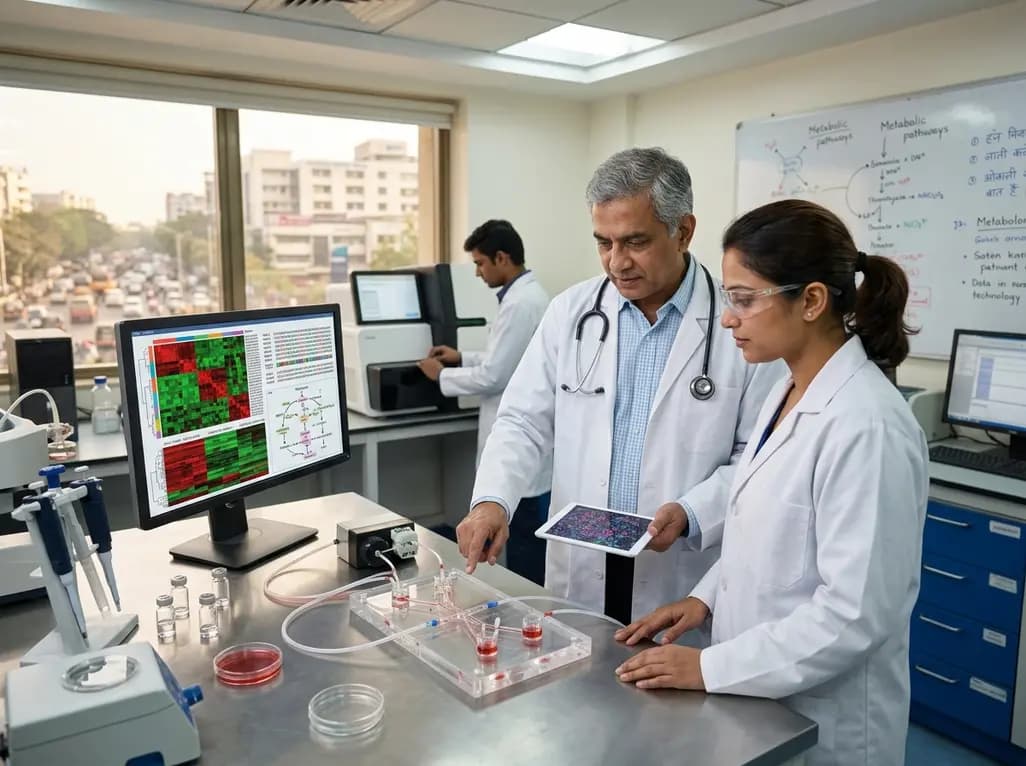
Modern biomedical research faces a significant challenge in translating laboratory findings into successful clinical outcomes. Conventional 2D cell cultures and animal models often fail to replicate human physiology accurately. Consequently, researchers have turned to Organ-on-a-Chip (OOC) technology to create biomimetic environments. These microfluidic platforms simulate the architectural and functional characteristics of human organs. However, structural replication alone is insufficient for complete biological understanding. The integration of Organ-on-a-Chip and Omics technologies provides a multi-dimensional view of cellular behavior. Omics methodologies, including genomics and proteomics, offer comprehensive molecular data that complement the dynamic nature of OOC systems. This synergy allows scientists to observe how tissue-specific environments influence molecular expression. By bridging these two fields, we can narrow the gap between benchside research and bedside application. This review examines how this interdisciplinary approach drives a paradigm shift in translational medicine. Researchers are now able to conduct high-resolution analyses that were previously impossible. Ultimately, this integration facilitates more accurate predictions of human responses to therapeutic interventions.
The success of OOC platforms relies on sophisticated engineering principles. Engineers utilize microfabrication techniques to create channels that mimic human vasculature and interstitial spaces. Furthermore, these systems incorporate dynamic mechanical forces, such as shear stress and cyclic stretching. These forces are essential because they replicate the physical environment of living tissues. For instance, lung-on-a-chip models use vacuum-driven membranes to simulate breathing motions. Similarly, heart-on-a-chip systems utilize electrical stimulation to promote cardiomyocyte maturation. Additionally, the classification of OOC systems often depends on their complexity. Single-organ chips focus on specific tissue functions, whereas multi-organ chips, or body-on-a-chip models, study inter-organ communication. These systems utilize biocompatible materials like polydimethylsiloxane (PDMS) to ensure transparency and oxygen permeability. Consequently, researchers can perform real-time imaging while maintaining precise control over the microenvironment. The structural configuration must support the long-term viability of primary human cells or induced pluripotent stem cells. Therefore, the selection of scaffold materials and fluid flow rates is critical. These engineering considerations provide the necessary foundation for subsequent molecular analysis through high-throughput omics technologies.
While OOC systems provide the physical framework, omics technologies deliver the molecular depth required for precision medicine. Genomics allows for the assessment of genetic variations that might influence drug response. Moreover, transcriptomics reveals the active gene expression patterns within the chip at specific time points. Proteomics goes a step further by identifying the functional proteins produced by the cells. Subsequently, metabolomics provides a snapshot of the metabolic processes occurring within the microenvironment. Integrating these data types allows for a holistic understanding of biological systems. For example, researchers can track how a specific drug alters the metabolic flux of a liver-on-a-chip. Furthermore, single-cell omics can identify rare cell populations within the chip that might drive disease progression. This level of detail is vital for developing personalized treatment strategies. In addition, the high-throughput nature of these methodologies enables the screening of thousands of molecules simultaneously. As a result, the drug discovery process becomes more efficient and cost-effective. By combining molecular data with physiological feedback, clinicians can better understand individual patient variations. This multi-layered approach is the cornerstone of modern translational research.
One of the most promising applications of Organ-on-a-Chip and Omics is in environmental toxicity and drug metabolism. Traditional toxicity testing relies heavily on animal models, which often yield results that do not translate to humans. However, OOC platforms using human cells can more accurately predict hepatotoxicity or nephrotoxicity. When researchers integrate these models with metabolomics, they can identify specific biomarkers of cellular stress. Consequently, pharmaceutical companies can detect potential safety issues much earlier in the development cycle. Additionally, these systems are invaluable for studying host-microbiome interactions. For instance, a gut-on-a-chip can simulate the interaction between intestinal cells and the microbiota under flow conditions. Transcriptomic analysis of these interactions reveals how microbial metabolites influence human gene expression. Furthermore, this synergy allows for the study of complex drug-drug interactions in a controlled setting. Scientists can observe how the metabolism of one compound affects the toxicity of another across different organ mimetics. Therefore, this technology reduces the reliance on animal testing while increasing the reliability of safety data. It provides a robust framework for assessing the human-specific risks of new chemical entities and environmental pollutants.
The integration of real-time sensors and artificial intelligence (AI) is transforming OOC research. Modern OOC platforms often feature embedded biosensors that monitor parameters like pH, oxygen levels, and glucose consumption. These sensors provide a continuous stream of data, allowing for longitudinal studies of tissue health. However, the sheer volume of data generated by multi-omics and biosensors can be overwhelming. This is where AI and machine learning algorithms become essential. AI can process high-dimensional datasets to identify patterns that might be invisible to human researchers. Moreover, AI-driven models can predict long-term tissue responses based on early molecular changes. Specifically, deep learning techniques help in correlating morphological changes captured by imaging with molecular signatures from omics. This real-time integration allows for immediate adjustments to the experimental conditions, such as modifying flow rates or nutrient concentrations. Consequently, the systems become more autonomous and precise. In addition, AI helps in the development of virtual twins, which are digital representations of the physical OOC systems. These digital twins can simulate thousands of scenarios before physical experiments are conducted. Therefore, the combination of biosensing and AI significantly accelerates the pace of biomedical innovation.
Looking ahead, the future of this field lies in the development of whole-organ mimetics and patient-specific models. While current OOC systems are impressive, replicating the full complexity of a human organ remains a challenge. Future engineering efforts will focus on enhancing vascularization and incorporating immune system components. Furthermore, the standardization of sample collection techniques for omics analysis is necessary to ensure reproducibility. Researchers must also address the limitations of PDMS, such as the absorption of small molecules, by exploring alternative materials. Additionally, the regulatory landscape must evolve to accept OOC and omics data in clinical trial submissions. The FDA Modernization Act 2.0 has already paved the way for non-animal testing methods. Subsequently, we expect to see an increase in the use of OOC systems for personalized oncology, where a patient’s own cells are used to screen for the most effective chemotherapy. In conclusion, the integration of Organ-on-a-Chip and Omics represents a transformative frontier. Although hurdles remain, the potential for these technologies to improve human health is vast. By continuing to refine these tools, the scientific community can move closer to a future of truly personalized and effective medicine.
Organ-on-a-Chip technology significantly improves drug metabolism studies by providing a human-relevant microenvironment. Unlike traditional static cultures, these chips simulate fluid flow and mechanical strain, which are crucial for realistic cellular behavior. When integrated with metabolomics, researchers can track metabolic pathways in real-time. This allows for the identification of human-specific metabolites that animal models might miss, thereby increasing the predictive accuracy of drug safety and efficacy profiles before human trials begin.
Artificial Intelligence is vital for managing the massive datasets generated by combining microfluidic biosensors with multi-omics methodologies. AI algorithms can identify subtle correlations between physiological changes, such as oxygen consumption, and molecular alterations like gene expression shifts. Furthermore, machine learning helps in modeling complex biological interactions and predicting long-term outcomes. This computational power transforms raw data into actionable insights, making the research process faster, more efficient, and significantly more precise for clinical applications.
Developing whole-organ mimetics involves overcoming several engineering and biological challenges. A major hurdle is achieving full vascularization to ensure proper nutrient and oxygen delivery to thick tissue layers. Additionally, maintaining the long-term functional stability of multiple cell types working in unison is difficult. Researchers must also refine sample collection techniques to avoid disturbing the microenvironment during omics analysis. Addressing these issues is essential for creating reliable models that accurately reflect the complex physiology of entire human organs.
Disclaimer: This content is for informational and educational purposes only... Refer to the latest local and national guidelines for clinical practice.
References
Cheng Z et al. Bridging Organ-on-a-Chip and Omics: A Multi-Dimensional Frontier in Biomedical Research. Biotechnol Bioeng. 2026 Jul 06. doi: 10.1002/bit.70280. PMID: 42405448.
Marx U et al. Biology-inspired microphysiological system (MPS) approaches to solve the prediction dilemma of substance testing. ALTEX. 2020;37(3):365-394. doi: 10.14573/altex.2005041.
Low LA et al. Organs-on-chips: into the next decade. Nat Rev Drug Discov. 2021;20(5):345-361. doi: 10.1038/s41573-020-0079-3.

Read summarized clinical updates, watch expert medical content, and earn CME certifications right from your smartphone.
Open your smartphone camera to scan and install.





Organ-on-a-Chip and Omics technologies are merging to bridge the translational gap in biomedical research. This review explores how integrating high-throughput molecular analysis with tissue-specific mimetics enables high-resolution insights into drug metabolism, disease mechanisms, and precision medicine.
3 months ago

Recent epidemiological data reveals a dramatic surge in summer heat mortality driven by human-induced climate warming. This analysis explores the pathophysiological impacts on cardiac and renal systems, diagnostic dilemmas in death certification, and essential emergency cooling protocols for acute clinical care.
Today

Odisha has established India's first state-level clinical protocol specifically tailored for pregnant women with sickle cell disease. Developed with NHM and UNICEF, the framework provides structured antenatal screening, crisis mitigation, standardized referral pathways, and specialized interdisciplinary care.
Today

India is advancing preventive healthcare by integrating genomics, artificial intelligence, and quantum technologies. With the SANGAM programme sequencing one million Indian genomes, clinicians can unlock personalized therapies, detect cardiometabolic risks early, and curb the burden of diabetes and heart disease.
Today

A randomized controlled trial demonstrates that an eight-week dual-task training intervention significantly improves static and dynamic postural control over standard balance exercises in individuals with chronic ankle instability, addressing critical neurocognitive deficits during athletic and daily activities.
Today

A retrospective cohort study of 7,716 ICU patients from the MIMIC-IV database demonstrates that Gradient Boosting Decision Trees significantly outperform traditional SOFA scores in predicting in-hospital mortality among patients with sepsis and diabetes, with SHAP analysis providing clinical interpretability.
Today
