.webp&w=384&q=75)

Loading, please wait...
Loading, please wait...
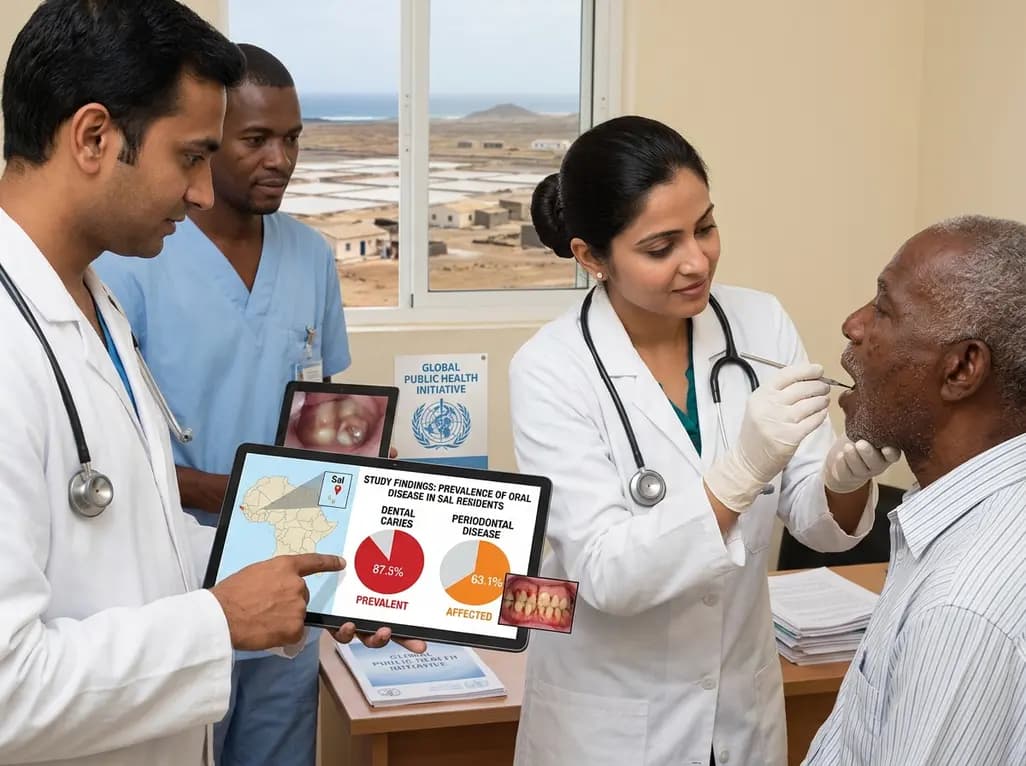
Evaluating the oral health status of populations in lower-middle-income countries remains essential for developing targeted public health interventions. Recently, researchers conducted a comprehensive cross-sectional study on Sal, one of the Cape Verde islands, to assess the prevalence of dental diseases. This research provides a critical look at the burden of oral conditions in a setting that mirrors many epidemiological challenges found in India.
The study involved 1,371 participants, including both children and adults. Notably, the researchers found a caries prevalence of 87.5%. The mean DMFT (decayed, missing, and filled teeth) scores were 3.7 for children and 7.5 for adults. Furthermore, over 52% of the participants showed consequences of untreated caries, such as pulp involvement or abscesses. Consequently, these figures indicate a massive gap between the need for treatment and the current availability of dental services.
Periodontal health also presented a significant concern. Specifically, 63.1% of adults exhibited periodontal disease, defined by high DPSI scores. Although toothbrush ownership was high at 96%, many residents lacked consistent access to fluoridated toothpaste. Therefore, the high prevalence of disease persists despite basic hygiene knowledge, highlighting systemic barriers to oral care.
The research also explored how oral health status influences the quality of life. Adults completed the OHIP-14 questionnaire, which revealed a strong correlation between untreated dental issues and reduced well-being. For example, dental pain and functional limitations frequently interfered with daily activities. Moreover, multivariable regressions identified tobacco use and infrequent dental visits as major risk factors for deteriorating oral health. However, the study suggests that socio-economic factors play the most dominant role in determining health outcomes in this population.
Clinicians in similar economic settings must emphasize preventive education. While personal hygiene tools are common, regular professional check-ups remain rare. Thus, integrating oral health into primary care could help mitigate the burden of these diseases globally.
Poor dental health often leads to chronic pain, difficulty chewing, and social anxiety. As a result, individuals with high rates of caries or periodontal disease report a significantly lower quality of life compared to those with healthy dentition.
High caries rates often stem from a combination of increasing sugar consumption and limited access to professional preventive care. Additionally, even when toothbrushing is practiced, the lack of affordable fluoridated toothpaste can diminish its protective effects.
Disclaimer: This content is for informational and educational purposes only. It does not constitute professional medical advice, diagnosis, or treatment. Always seek the advice of your physician or other qualified healthcare provider with any questions you may have regarding a medical condition. Refer to the latest local and national guidelines for clinical practice.
References
Volgenant CMC et al. Oral Health on Sal, Cape Verde: A Population-Based, Cross-Sectional Study. Int Dent J. 2026 Jun 11. doi: undefined. PMID: 42275744.
Petersen PE. The World Oral Health Report 2003: continuous improvement of oral health in the 21st century--the approach of the WHO Global Oral Health Programme. Community Dent Oral Epidemiol. 2003.
Kassebaum NJ et al. Global Burden of Severe Periodontitis in 1990-2010: A Systematic Review and Meta-regression. J Dent Res. 2014.
"
Read summarized clinical updates, watch expert medical content, and earn CME certifications right from your smartphone.
Open your smartphone camera to scan and install.





A cross-sectional study in Sal, Cape Verde, reveals a high prevalence of dental caries (87.5%) and periodontal disease (63.1%) among residents, emphasizing the urgent need for enhanced preventive dental care in lower-middle-income regions.
4 months ago

A retrospective analysis reveals that cavotricuspid isthmus ablation using a variable-loop pulsed field ablation catheter achieves acute conduction block safely and efficiently during concomitant atrial fibrillation procedures.
Today
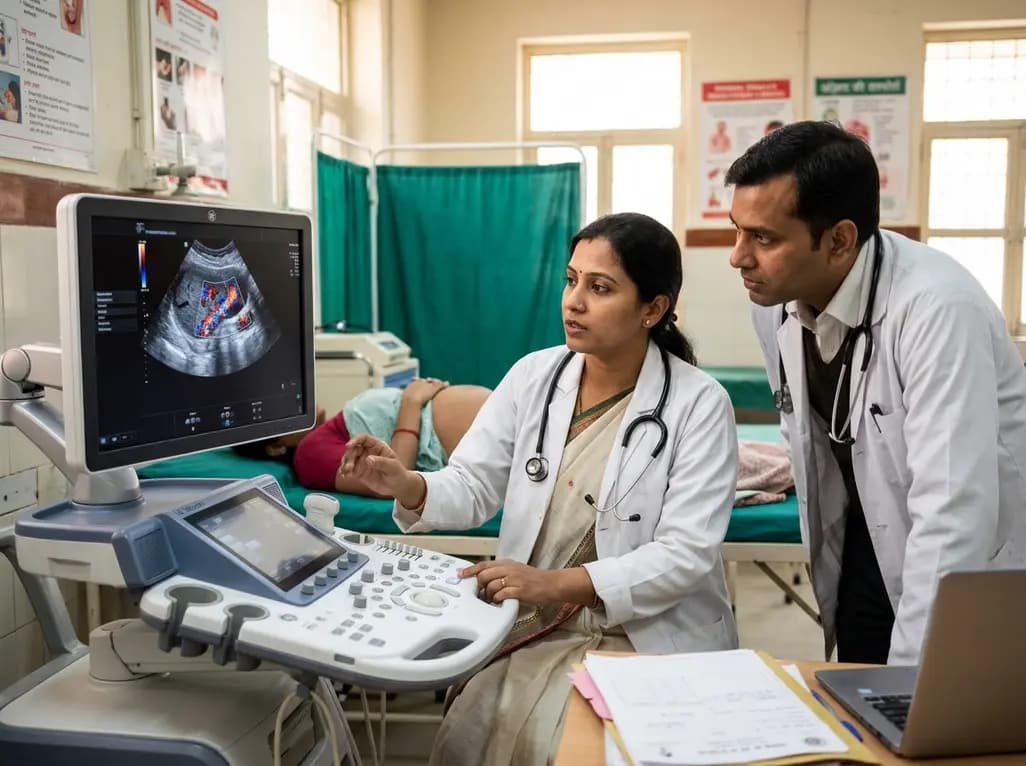
A study in Ultrasound in Obstetrics & Gynecology shows that quantitative vascularization of the anterior fornix/cervix with transvaginal ultrasound reliably identifies placenta accreta spectrum and predicts severe intraoperative hemorrhage, offering vital objective risk stratification.
Today
A clinical study highlights how coupling interval variability assessed through Poincaré plots differentiates right ventricular outflow tract premature ventricular contractions from left ventricular origins, optimizing patient selection and procedural strategy for radiofrequency catheter ablation.
Today

A novel proof-of-concept study presents a six-degree-of-freedom articulated manikin neck equipped with linear potentiometers. The system provides real-time kinematic motion feedback during cervical immobilisation, delivering sub-degree tracking accuracy to improve pre-hospital trauma training and patient safety.
Today

Protein O-GlcNAcylation couples cellular nutrient status to vital neuronal functions. This review explores how disrupted O-GlcNAc cycling drives both neurodevelopmental delays and neurodegenerative cascades, positioning metabolic post-translational modifications as therapeutic targets in clinical neurology.
Today
