.webp&w=384&q=75)

Loading, please wait...
Loading, please wait...

Operative vaginal delivery remains an indispensable skill in modern obstetrics, offering a safe alternative to second-stage cesarean sections when indicated. Clinicians often choose between vacuum extraction and forceps based on clinical training, urgency, fetal station, and perineal anatomy. However, the comparative outcomes and maternal-neonatal risks across different instrument modalities remain a topic of rigorous debate. In particular, sequential instrumentation—where clinicians attempt vacuum extraction first and subsequent forceps application after failure—raises notable safety concerns. Recent evidence from a retrospective cohort study evaluated 967 singleton deliveries to compare maternal, intrapartum, and neonatal parameters among vacuum, forceps, and sequential modalities. Additionally, investigators integrated machine learning algorithms to elucidate key clinical predictors influencing instrument selection. Understanding these comparative findings empowers obstetricians to make timely, evidence-based decisions during challenging second-stage labor scenarios. Consequently, mastering the indications and limitations of each device helps reduce both maternal trauma and neonatal morbidity. In busy labor rooms across India, where operative resources vary widely, refining clinical judgment surrounding assisted birth is essential. Therefore, examining real-world comparative data provides invaluable guidance for standardizing labor ward protocols and optimizing perinatal outcomes.
When managing prolonged second-stage labor or acute non-reassuring fetal status, selecting the appropriate instrument is critical. Forceps provide effective traction and rotation, making them particularly valuable when rapid delivery is mandatory or maternal expulsive efforts are completely exhausted. In contrast, vacuum extractors exert traction on the fetal vertex, relying partly on maternal pushing while requiring less regional anesthesia. However, each modality carries distinct physiological trade-offs. The recent cohort analysis highlighted distinct demographic patterns across these delivery modes. Forceps deliveries occurred predominantly in younger, primiparous women who required higher rates of regional analgesia and episiotomy. Conversely, obstetricians utilized vacuum extraction more frequently in older women of higher parity who presented with favorable umbilical cord base excess values. Sequential instrument use accounted for a smaller proportion of cases but represented complex, refractory second-stage arrest. Furthermore, the decision-to-delivery interval was significantly prolonged in the sequential cohort, averaging nearly 27 minutes compared to approximately 17 minutes for single-instrument deliveries. This notable delay underscores the critical time penalty associated with changing instruments mid-procedure. Consequently, clinicians must exercise extreme caution before transitioning between devices during emergent deliveries.
Clinical safety remains the primary determinant when selecting between assisted vaginal delivery techniques. Forceps application achieved higher rates of successful vaginal delivery without instrument switching, yet it was associated with an increased incidence of higher-order perineal tears. Specifically, third- and fourth-degree perineal lacerations and episiotomy extensions occurred more frequently among forceps deliveries than uncomplicated vacuum extractions. In contrast, vacuum extraction demonstrated lower rates of severe maternal pelvic floor trauma but showed higher rates of minor fetal scalp injuries, including cephalohematoma and superficial abrasions. Most importantly, the sequential vacuum-plus-forceps group demonstrated the highest composite complication rates. Neonates delivered via sequential instrumentation exhibited higher risks of subgaleal hemorrhage, low 5-minute Apgar scores, and unexpected neonatal intensive care admissions. Maternal morbidity in this group also escalated, marked by increased blood loss and extensive genital tract trauma. Therefore, obstetric guidelines strongly discourage routine sequential instrument application. When a primary instrument fails to achieve progressive descent after proper application and traction, immediate reassessment is vital. Consequently, transitioning promptly to an emergency cesarean delivery is often safer than attempting a second instrument.
Identifying intrapartum predictors that guide instrument choice can refine clinical workflows and enhance decision-making algorithms. The study utilized a Random Forest machine learning classifier to rank the most influential variables governing modality selection. Maternal parity, maternal age, gestational age, estimated fetal weight, and fetal station at the time of application emerged as top predictive features. Additionally, maternal body mass index and the depth of regional anesthesia played substantial roles in model classification. The machine learning model achieved notable predictive accuracy, demonstrating that clinical patterns strongly dictate instrument choice in real-world practice. For instance, multiparous patients with lower fetal stations and adequate contractions favored vacuum extraction. In contrast, nulliparous patients with higher fetal stations and dense epidural blocks were consistently managed with forceps. Furthermore, intrapartum acid-base status, reflected by fetal scalp or cord blood gas parameters, heavily influenced the urgency of the intervention. These predictive insights reinforce the premise that assisted vaginal birth is rarely a random choice. Instead, it represents a nuanced calculation of maternal pelvimetry, fetal descent, and time-critical clinical dynamics.
In Indian healthcare settings, the choice of operative vaginal delivery carries unique operational considerations. High-volume public tertiary hospitals and peripheral maternity centers frequently encounter severe second-stage labor arrest requiring swift intervention. However, operator proficiency varies widely, and access to round-the-clock emergency cesarean capability may differ across semi-urban and rural facilities. Forceps delivery requires advanced technical training and regular practice to maintain competence, whereas vacuum extractors offer a more accessible learning curve for resident doctors. Nevertheless, inappropriate vacuum application can result in traction failure and devastating fetal scalp injuries. Therefore, structured simulation-based training in instrumental delivery should be expanded across Indian medical colleges. Moreover, clear institutional protocols must define strict safety criteria before any assisted delivery commences. Clinicians must confirm full cervical dilation, ruptured membranes, engaged head, exact vertex position, and adequate analgesia. In addition, labor wards must establish clear thresholds to abandon assisted attempts. Implementing a strict two-pull rule or limiting traction duration prevents protracted second-stage delays and reduces sequential instrument hazards. Consequently, institutional guidelines must prioritize maternal-fetal safety above avoiding cesarean delivery.
Managing a failed vacuum extraction demands immediate, structured action to avert catastrophic perinatal outcomes. When vacuum detachment occurs repeatedly or no descent is achieved after three contractions, the procedure must cease immediately. Clinicians should resist the temptation to routinely apply forceps as a rescue modality unless specific, highly favorable conditions exist. For example, rescue forceps should only be considered if the fetal vertex is visibly crowning, full pelvic assessment confirms no obstruction, and a senior obstetrician is directly performing the procedure. Otherwise, immediate transfer to the operating theater for a second-stage cesarean section is the safest standard of care. During cesarean delivery following deeply impacted fetal head arrest, obstetricians must employ specialized techniques such as fetal head disimpaction devices or reverse breech extraction. Furthermore, neonatologists should be present in the delivery room whenever instrumental delivery is attempted, particularly in cases involving sequential instrumentation. Continuous monitoring for signs of neonatal shock, subgaleal hematoma, and intracranial bleeding is imperative during the first 24 hours post-delivery. Through meticulous protocol adherence and rapid multidisciplinary coordination, maternity teams can optimize clinical outcomes and prevent severe birth trauma.
Obstetricians indicate operative vaginal delivery during the second stage of labor for maternal exhaustion, prolonged labor arrest, or non-reassuring fetal heart rate patterns. Furthermore, medical conditions prohibiting maternal pushing, such as severe cardiac disease, serve as key indications. Proper prerequisites, including full cervical dilation, ruptured membranes, and an engaged fetal vertex, must always be confirmed before applying any instrument.
Sequential instrument use significantly increases both maternal and neonatal morbidity compared to single-instrument deliveries. Switching from vacuum to forceps introduces substantial decision-to-delivery delays, compounding intrapartum fetal hypoxia. In addition, multiple traction vectors escalate the risk of severe subgaleal hemorrhage, skull fractures, and severe maternal third- or fourth-degree perineal lacerations. Therefore, guidelines recommend transitioning directly to cesarean delivery upon primary failure.
Operator experience directly determines the success and safety of operative vaginal delivery. Skilled clinicians accurately evaluate fetal position, station, and pelvic capacity, ensuring appropriate instrument placement and traction direction. Furthermore, experienced obstetricians promptly recognize failure to progress, avoiding excessive traction attempts. Consequently, regular simulation training and supervised clinical practice are essential to maintaining high procedural competence and minimizing birth trauma.
Disclaimer: This content is for informational and educational purposes only and does not constitute medical advice, diagnosis, or treatment. Healthcare professionals should rely on their clinical judgment and verify information independently. Refer to the latest local and national guidelines for clinical practice.
References

Read summarized clinical updates, watch expert medical content, and earn CME certifications right from your smartphone.
Open your smartphone camera to scan and install.





A study of 967 deliveries compares vacuum, forceps, and sequential operative vaginal delivery, highlighting predictive factors, maternal trauma, and neonatal risks to guide clinical decision-making.
4 weeks back

A systematic review of 41 preclinical studies reveals that baicalin dampens systemic inflammation, inhibits NF-κB and NLRP3 pathways, and improves organ preservation in sepsis models. However, substantial study heterogeneity and a complete lack of human clinical trials highlight the need for further translational research.
Today
Discover the crucial distinctions between mesonephric and mesonephric-like proliferations of the female genital tract. Learn the key histomorphologic, immunohistochemical, and molecular differences essential for accurate diagnosis and clinical management.
Today
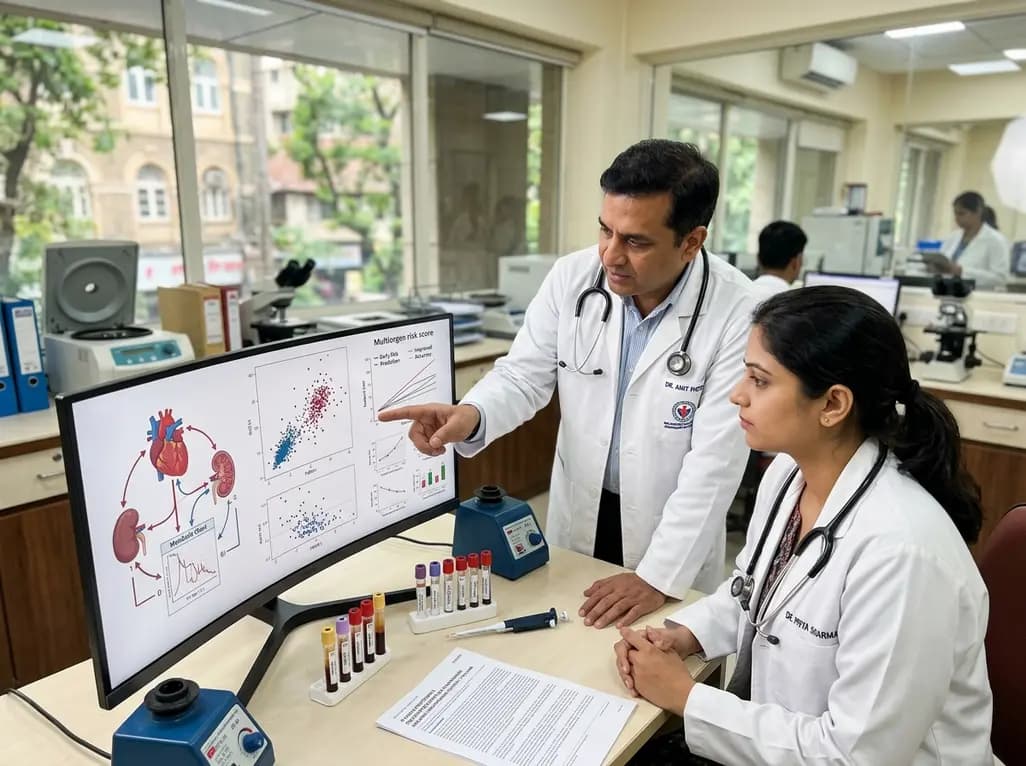
A large UK Biobank study reveals that plasma proteomic signatures capture preclinical organ damage and improve multiorgan risk prediction across early CKM syndrome stages 0 to 2 beyond traditional PREVENT clinical models.
Today
A narrative review investigates whether the articularis genus muscle functions as an independent anatomical entity or blends with the vastus intermedius. We evaluate its morphology, role in retracting the suprapatellar bursa, and direct clinical significance in anterior knee pain and arthroplasty.
Today

A Bayesian multilevel meta-analysis reveals that aerobic training combined with moderate carbohydrate restriction modestly lowers HbA1c in type 2 diabetes. However, sparse data and very low certainty leave incremental benefits over exercise or diet alone unproven, highlighting the need for individualized care.
Today
