.webp&w=384&q=75)

Loading, please wait...
Loading, please wait...

Assisted reproductive technology continues to evolve rapidly across the globe. Consequently, the clinical demand for donor gametes has expanded significantly over the past decade. Understanding oocyte donor motivations remains essential for reproductive endocrinologists, clinical embryologists, and fertility counselors. Historically, research emphasized physical safety and immediate procedural success. However, modern reproductive medicine increasingly recognizes the complex psychosocial dimensions of gamete donation. A comprehensive systematic review synthesized empirical data from thirty-seven international studies to evaluate what drives women to donate eggs. Additionally, the study investigated how donors view anonymity and potential contact with donor-conceived offspring. As reproductive policies adapt to emerging genetic tracking technologies and shifting legal norms, fertility specialists must reexamine their consent and counseling protocols.
The synthesis of international empirical studies reveals that oocyte donor motivations center predominantly on a combination of altruism and financial reimbursement. Altruistic desires to help infertile couples achieve parenthood represent the most commonly cited factor across diverse cultural settings. Many donors report personal connections to infertility, having observed family members or close friends struggle with conception. Therefore, these donors view gamete donation as a profound gift of life. In contrast, financial compensation serves as a strong primary or secondary motivator in jurisdictions where monetary remuneration is permitted. Economic incentives frequently motivate younger women, including university students or mothers seeking supplemental household income. However, financial motivation rarely operates in total isolation. Most commercial donors also express genuine empathetic feelings toward recipient families. In jurisdictions with strictly non-remunerated or altruistic systems, relational solidarity and empathy dominate donor narratives. These findings highlight that donor drivers are multifaceted. Consequently, fertility teams must recognize that economic and altruistic intentions often coexist, requiring nuanced pre-donation psychological assessments.
Perspectives on anonymity vary considerably depending on local legal architectures and prevailing cultural norms. In open-identity jurisdictions, such as the United Kingdom and several Scandinavian nations, donors demonstrate high acceptance of future identity disclosure. In fact, many modern donors in these regions actively prefer transparent models that respect the future rights of donor-conceived individuals. Conversely, in jurisdictions operating under strict anonymity mandates, donors frequently prioritize personal privacy and clear boundary setting. They often fear potential legal entanglements or unwanted parental obligations. Furthermore, cultural stigma surrounding third-party reproduction in certain societies reinforces the desire for complete donor confidentiality. Nevertheless, the global expansion of direct-to-consumer genetic testing and commercial genealogy platforms has disrupted traditional anonymity. Donors increasingly recognize that absolute secrecy is no longer technically guaranteed. As a result, clinicians must counsel prospective donors that technological advancements may reveal genetic links regardless of statutory anonymity frameworks.
Donors hold diverse and nuanced expectations regarding future interactions with offspring conceived from their gametes. The systematic review highlighted that a substantial proportion of donors remain open to contact once the offspring reaches adulthood. However, their desired level of involvement varies significantly. Most donors express an interest in sharing medical updates, genetic heritage, or general life updates without assuming a maternal or parental role. They consistently respect the recipient parents as the true social and legal guardians of the child. Meanwhile, some donors express curiosity regarding whether their donation successfully resulted in live births. Others prefer to leave the initiative for post-eighteen contact entirely to the donor-conceived individuals. Conversely, a distinct subgroup of donors prefers no future contact, citing a desire for finality and personal closure. These varying perspectives demonstrate that donor expectations are not static. Because expectations can shift across different life stages, structured longitudinal registries and mediation services are increasingly valuable.
The systematic evidence underscores the urgent need for structured, comprehensive clinical counseling protocols within fertility centers. Traditionally, pre-donation counseling concentrated heavily on medical risks, such as ovarian hyperstimulation syndrome and procedural discomfort. While physical safety remains paramount, reproductive specialists must also address the long-term psychosocial implications of donation. Specifically, counselors must guide donors through hypothetical scenarios involving future outreach from donor-conceived individuals. Counselors must also discuss the psychological effects of disclosing donor status to the donor's own biological children and partners. Furthermore, informed consent must transcend a single administrative transaction. Instead, clinics should provide continuous counseling resources and access to post-donation support networks. By establishing ongoing communication channels, fertility programs ensure that donors receive necessary guidance as their personal circumstances and family structures evolve over time.
In India, the Assisted Reproductive Technology Regulation Act of 2021 has transformed third-party reproduction into a strictly governed domain. The Indian statutory framework mandates absolute donor anonymity and strictly prohibits commercial gamete transactions. Donors must be married women between twenty-three and thirty-five years of age who have at least one living child. Moreover, a donor may undergo oocyte retrieval only once in her lifetime, with mandatory health insurance coverage provided by the commissioning party. These legal mandates directly address ethical concerns regarding exploitation and donor health. However, as global evidence demonstrates, anonymous donors still navigate distinct psychological realities regarding potential genetic offspring. Indian clinicians and registered ART banks must provide culturally sensitive, robust pre-donation counseling that aligns with national statutes. By balancing regulatory compliance with empathetic psychological evaluation, Indian reproductive medicine can uphold the highest standards of bioethics and donor welfare.
Empirical evidence demonstrates that altruistic motivations exist across both compensated and non-compensated donation systems. In altruistic frameworks, empathy and personal exposure to infertility serve as primary drivers. In commercial systems, financial reimbursement often initiates donor interest, but altruistic sentiment remains an essential co-factor. Consequently, fertility specialists must recognize that financial incentives and genuine philanthropic desires commonly coexist within prospective donors.
Direct-to-consumer genetic testing and public DNA databases have substantially undermined traditional anonymity guarantees. Even in statutory anonymous jurisdictions, donor-conceived individuals and donors can readily establish biological connections through shared genetic markers. Therefore, clinical counseling must explicitly inform donors that complete lifelong anonymity cannot be guaranteed, encouraging realistic long-term expectations regarding inadvertent discovery or outreach.
Specialized psychological counseling prepares prospective donors for the lifelong emotional and relational implications of gamete donation. Beyond evaluating medical eligibility, counselors help donors explore personal boundaries, potential feelings toward donor-conceived offspring, and family disclosure strategies. This comprehensive preparation minimizes future psychological distress, ensures genuine informed consent, and safeguards the psychosocial well-being of all involved parties.
Disclaimer: This content is for informational and educational purposes only and should not be considered medical or legal advice. Healthcare professionals must exercise independent clinical judgment and refer to the latest local and national guidelines for clinical practice.
References

Read summarized clinical updates, watch expert medical content, and earn CME certifications right from your smartphone.
Open your smartphone camera to scan and install.





A comprehensive systematic review synthesizes global empirical evidence on oocyte donor motivations, perspectives on anonymity, and expectations regarding future contact with donor-conceived offspring, providing key guidance for clinical counseling and reproductive policy.
last month

This clinical review examines the dangerous intersection of climate change and antimicrobial resistance (AMR). It highlights thermal selection, altered transmission pathways, and the imperative for One Health and Planetary Health adaptation frameworks to preserve therapeutic efficacy.
Today
Discover the crucial distinctions between mesonephric and mesonephric-like proliferations of the female genital tract. Learn the key histomorphologic, immunohistochemical, and molecular differences essential for accurate diagnosis and clinical management.
Today
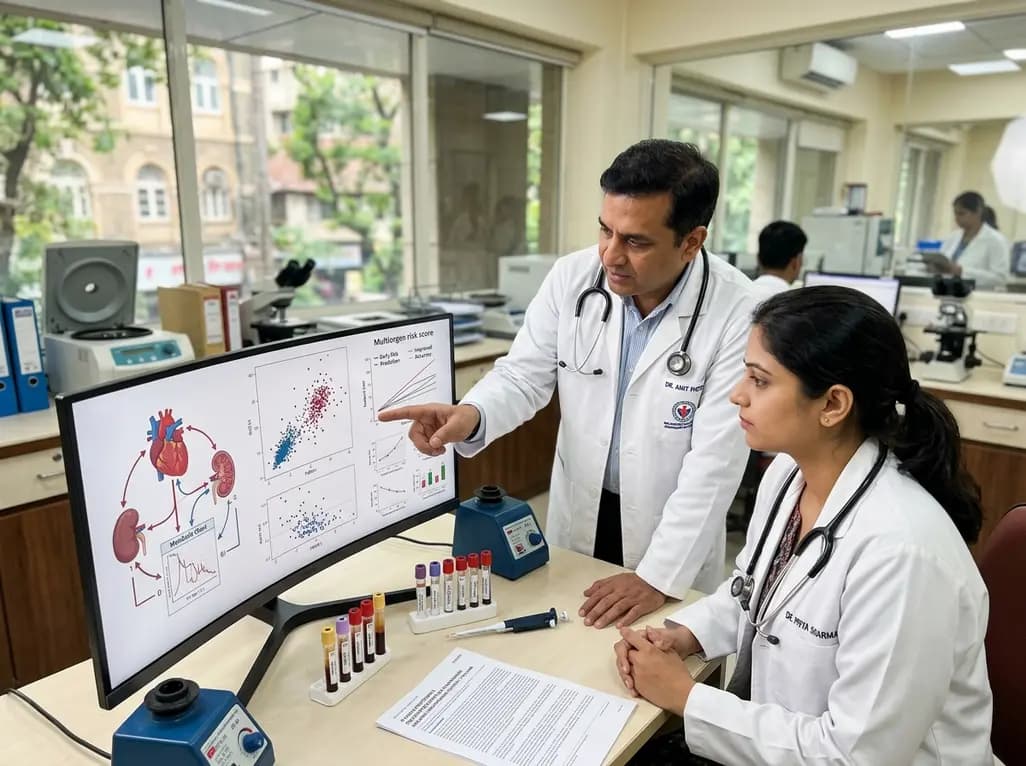
A large UK Biobank study reveals that plasma proteomic signatures capture preclinical organ damage and improve multiorgan risk prediction across early CKM syndrome stages 0 to 2 beyond traditional PREVENT clinical models.
Today

A narrative review investigates whether the articularis genus muscle functions as an independent anatomical entity or blends with the vastus intermedius. We evaluate its morphology, role in retracting the suprapatellar bursa, and direct clinical significance in anterior knee pain and arthroplasty.
Today

A Bayesian multilevel meta-analysis reveals that aerobic training combined with moderate carbohydrate restriction modestly lowers HbA1c in type 2 diabetes. However, sparse data and very low certainty leave incremental benefits over exercise or diet alone unproven, highlighting the need for individualized care.
Today
