.webp&w=384&q=75)

Loading, please wait...
Loading, please wait...
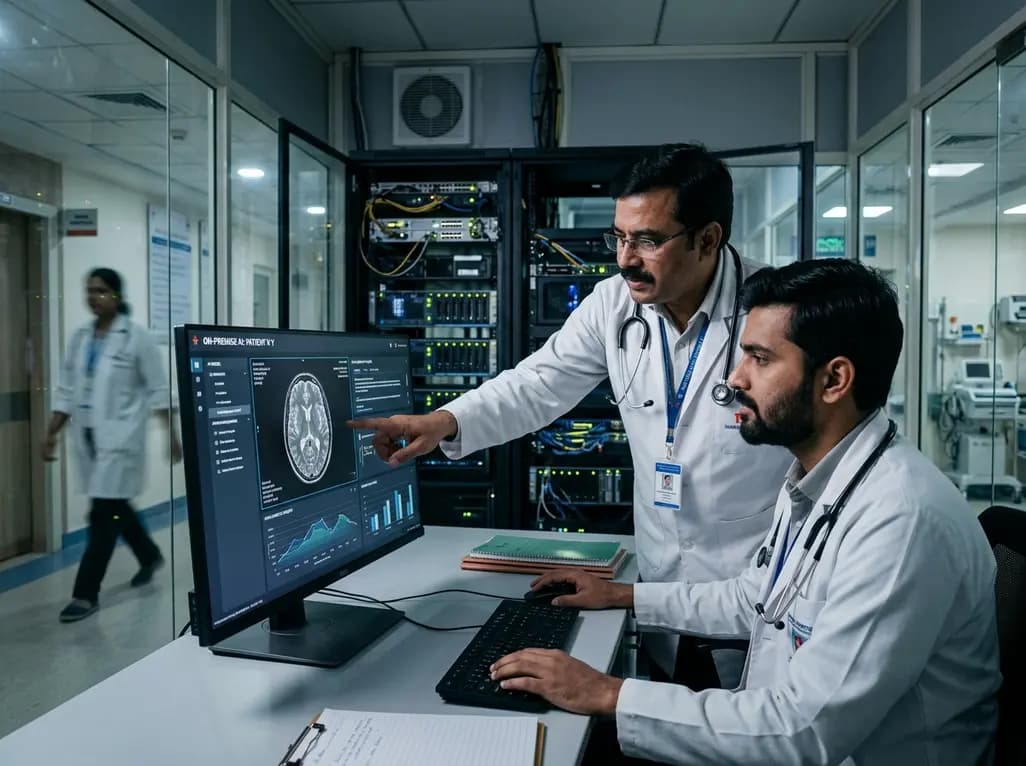
Modern medical centers face a critical turning point as digitisation accelerates across the global healthcare ecosystem. Historically, healthcare facilities focused primarily on converting paper-based records into electronic medical files. However, leading healthcare institutions in India are now looking beyond basic electronic storage. During an executive roundtable hosted at Apple's Bengaluru office alongside industry leaders from Brilyant and mCURA, experts highlighted that on-premise healthcare AI represents the true future of hospital operations. Rather than simply archiving patient charts, modern health systems must convert decades of clinical experience into actionable, secure institutional intelligence. Consequently, healthcare technology is pivoting toward hospital-controlled intelligent systems that learn continuously while keeping sensitive clinical information strictly within internal networks.
For decades, hospitals have accumulated immense repositories of clinical insights and treatment outcomes. However, this valuable knowledge frequently remains siloed across isolated departments, physical charts, and individual physician practices. When seasoned clinicians retire or transition to other facilities, their practical expertise often leaves with them. Implementing on-premise healthcare AI allows medical institutions to systematically aggregate, structure, and contextualise fragmented records into a unified knowledge repository.
Moreover, this intelligent layer preserves institutional treatment pathways and departmental protocols for ongoing clinical guidance. By deploying local computational infrastructure, hospitals can process massive volumes of historical data without exposing sensitive identifiers to public networks. As a result, healthcare administrators gain greater operational oversight, while medical teams receive real-time, evidence-based recommendations tailored to their facility's specific demographics. Furthermore, this approach transforms standard electronic health records into dynamic clinical assets. Instead of functioning as passive digital filing cabinets, institutional systems actively assist healthcare teams in identifying subtle patterns, drug interactions, and diagnostic correlations during routine clinical evaluations. Ultimately, health systems retain complete ownership and sovereign control over their clinical algorithms, ensuring continuous learning and long-term organizational value.
While massive large language models have captured significant global attention, their deployment in clinical environments presents distinct operational challenges. Cloud-hosted models require continuous internet bandwidth, incur substantial operational expenses, and raise understandable concerns regarding patient data sovereignty and regulatory compliance. In contrast, hospital-controlled Small Language Models (SLMs) offer a highly efficient, privacy-first alternative for modern healthcare providers.
Because engineers train SLMs on domain-specific medical literature and curated institutional datasets, these compact models deliver exceptional clinical precision with minimal computational overhead. Furthermore, healthcare teams can host SLMs directly on internal hospital servers or edge devices without transmitting confidential patient information across external networks. Consequently, hospitals ensure strict compliance with regional data privacy laws, such as India's Digital Personal Data Protection Act. In addition, local models eliminate external latency, delivering near-instantaneous decision support during high-pressure clinical encounters. Therefore, SLMs mitigate the risk of generalized model hallucinations by strictly adhering to validated hospital protocols and verified medical literature. This focused architectural design ensures that artificial intelligence serves as a dependable, highly specialized copilot rather than an unpredictable diagnostic black box for busy clinical departments.
The outpatient department (OPD) represents the primary point of entry for the vast majority of patients seeking medical care. However, physicians in busy Indian OPDs regularly face overwhelming patient volumes, tight consultation windows, and tedious documentation demands. Implementing Agentic AI alongside integrated hardware solutions directly addresses these operational bottlenecks.
Rather than requiring manual data entry after every consultation, intelligent OPD systems capture structured clinical notes, diagnostic orders, and prescriptions in real time. Moreover, autonomous AI agents can coordinate routine administrative workflows, such as updating longitudinal patient summaries, scheduling follow-up investigations, and flagging anomalous vital signs. Consequently, doctors spend significantly less time typing into computers and far more time engaging directly with their patients. Additionally, structured point-of-care documentation ensures that every patient interaction feeds cleanly into the hospital's central clinical intelligence core. Over time, this continuous data pipeline enriches the hospital's predictive capabilities, enabling smoother patient transitions, reduced outpatient wait times, and enhanced adherence to post-consultation care plans. As a result, both operational efficiency and patient satisfaction scores improve dramatically across multi-specialty clinical facilities.
Unequal distribution of medical specialists remains one of the most pressing public health challenges across emerging economies. Secondary healthcare centers and rural clinics frequently lack immediate access to experienced sub-specialists in fields like cardiology, endocrinology, and neurology. Fortunately, on-premise clinical intelligence systems offer an effective framework to democratise specialized clinical wisdom.
By distilling complex departmental pathways into accessible digital workflows, institutional AI allows general practitioners and junior resident doctors to access expert guidance at the point of care. For instance, when a general physician evaluates a patient presenting with complex multisystem symptoms, the local model can suggest guideline-directed diagnostic workups based on verified specialist protocols. Importantly, this technology does not replace human clinical judgment or autonomously dictate patient therapy. Instead, it serves as a reliable decision-support layer that reinforces clinical safety and standardises care quality across remote branches. Consequently, patients receive timely, accurate interventions without requiring immediate physical transfer to tertiary metropolitan centers. Ultimately, this scalable knowledge dissemination strengthens primary healthcare delivery and reduces overall financial burdens for families navigating complex chronic diseases.
Senior clinicians develop profound diagnostic intuition over decades of clinical practice, recognizing subtle disease phenotypes that standard medical textbooks rarely describe. However, hospitals historically lacked mechanisms to capture this nuanced clinical acumen. To address this limitation, healthcare technologists are pioneering the concept of creating a digital twin of a doctor.
With appropriate clinician consent, rigorous governance, and thorough validation, advanced machine learning models can map an experienced doctor's diagnostic approach to complex medical scenarios. Furthermore, this digital framework models how seasoned experts interpret borderline laboratory findings, manage multimorbidity, and personalize therapeutic regimens. Consequently, future generations of medical trainees and resident doctors can interact with these knowledge models to understand expert decision-making processes. Moreover, preserving this intellectual capital protects hospitals against sudden institutional knowledge loss when senior specialists retire. Additionally, these personalized clinical models provide ongoing decision support that aligns with individual physician philosophies while maintaining institutional standards. As the technology matures, doctor digital twins will fundamentally enhance medical education, peer consultations, and lifelong clinical mentoring across healthcare networks.
Q1: What distinguishes on-premise healthcare AI from cloud-based medical artificial intelligence?
On-premise healthcare AI runs directly on local hospital servers and hardware rather than routing sensitive information to remote cloud networks. Consequently, this architecture ensures that confidential patient health records never leave the hospital's secured intranet. Furthermore, local deployment drastically reduces operational latency, prevents third-party data breaches, and provides seamless compliance with national data protection regulations while allowing institutions to train models on their proprietary clinical protocols.
Q2: How do Small Language Models assist physicians in everyday clinical practice?
Small Language Models are lightweight artificial intelligence models trained specifically on medical literature and hospital-specific guidelines. In everyday clinical practice, these models assist physicians by summarizing longitudinal health histories, generating structured consultation notes, and recommending evidence-based treatment pathways. Because they operate locally with minimal computational demands, SLMs deliver rapid decision support during outpatient consultations without suffering from the high latency or factual inaccuracies often seen in large public models.
Q3: Will artificial intelligence systems replace the clinical judgment of human doctors?
No, artificial intelligence systems cannot replace human clinical judgment, diagnostic empathy, or ethical decision-making. Instead, these technologies function as intelligent clinical copilots designed to streamline documentation, surface institutional protocols, and reduce cognitive fatigue among healthcare providers. Physicians retain complete authority and ultimate legal responsibility for diagnostic conclusions and treatment decisions, using AI insights solely to enhance precision, safety, and operational workflow efficiency.
Disclaimer: This content is for informational and educational purposes only. It does not constitute medical advice or replace professional judgment. Refer to the latest local and national guidelines for clinical practice.
References

Read summarized clinical updates, watch expert medical content, and earn CME certifications right from your smartphone.
Open your smartphone camera to scan and install.





Discover how Indian hospitals are moving beyond basic digitisation to adopt on-premise AI, Small Language Models, and intelligent OPD workflows. Learn how local AI architectures protect patient data, bridge specialist shortages, and capture institutional clinical wisdom.
last month

A Bayesian multilevel meta-analysis reveals that aerobic training combined with moderate carbohydrate restriction modestly lowers HbA1c in type 2 diabetes. However, sparse data and very low certainty leave incremental benefits over exercise or diet alone unproven, highlighting the need for individualized care.
Today
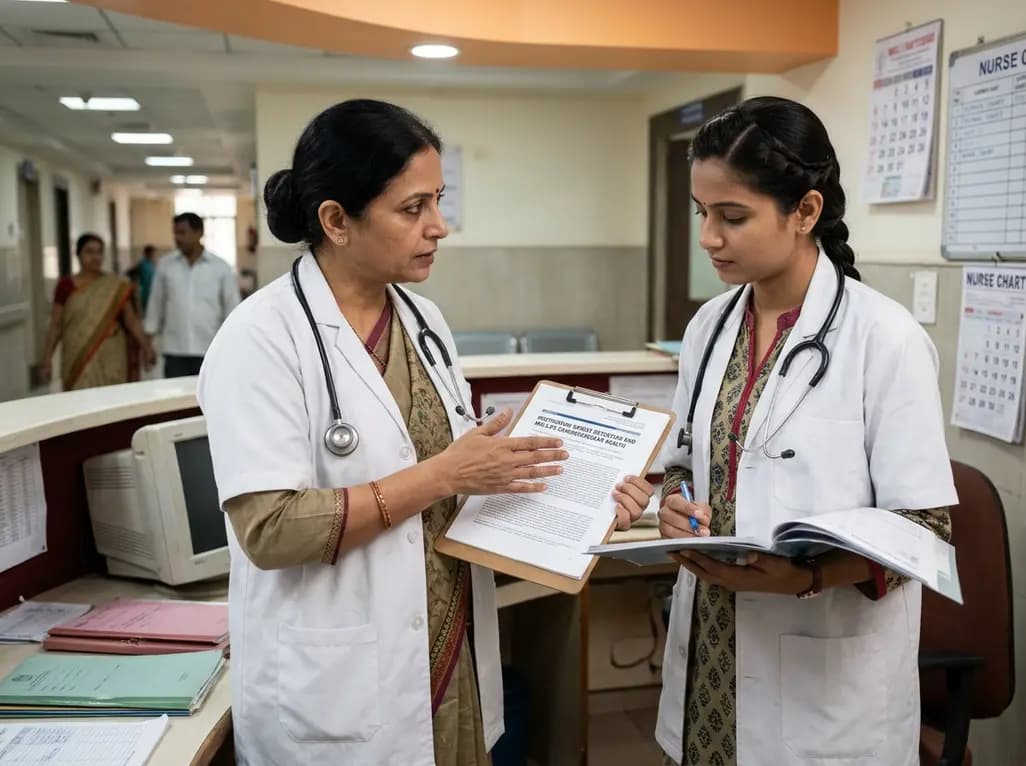
Findings from Project Viva indicate that sustained postpartum weight retention, rather than excessive gestational weight gain alone, directly worsens women's mid-life cardiovascular health, degrading blood pressure and glycemic parameters decades after delivery.
Today
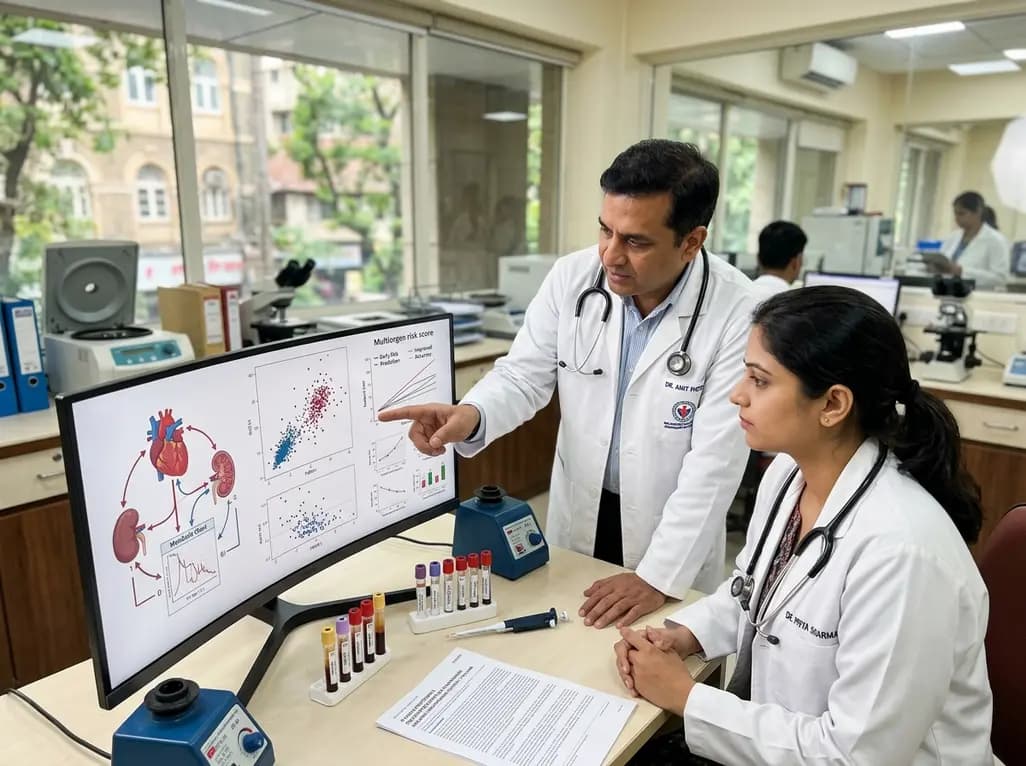
A large UK Biobank study reveals that plasma proteomic signatures capture preclinical organ damage and improve multiorgan risk prediction across early CKM syndrome stages 0 to 2 beyond traditional PREVENT clinical models.
Today
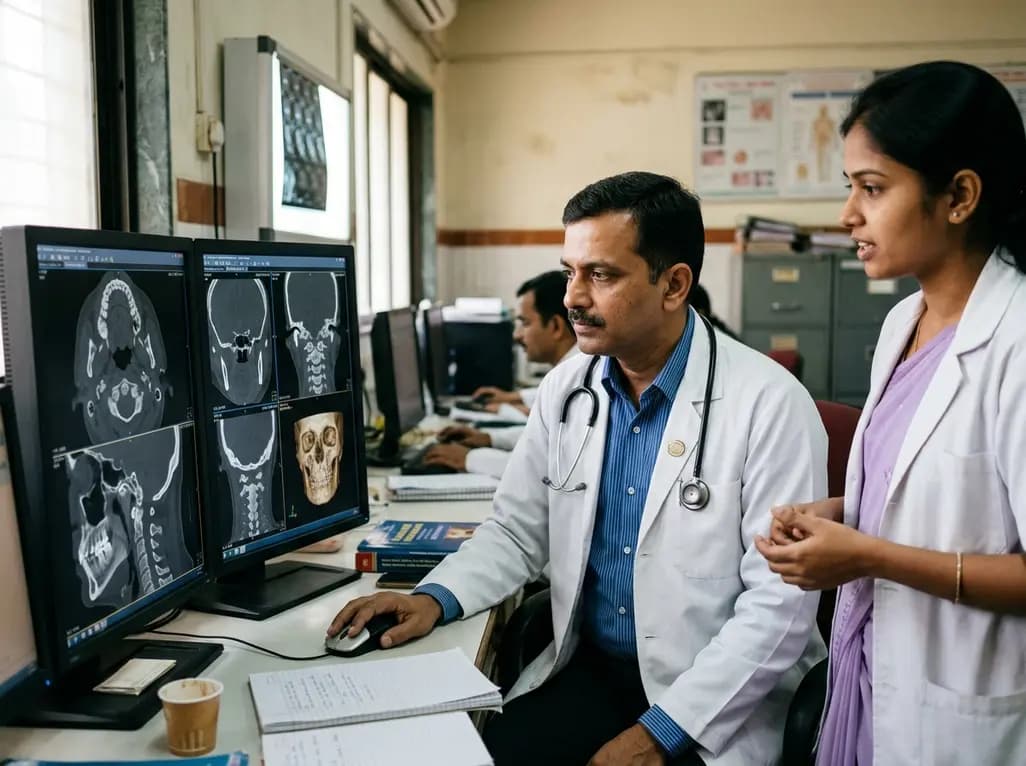
A retrospective CBCT study reveals that superior TMJ space asymmetry correlates moderately with occipital condyle-atlas-axis asymmetry in unilateral TMJ osteoarthritis, highlighting an imaging correlate between jaw biomechanics and upper cervical alignment rather than a standalone diagnostic marker.
Today
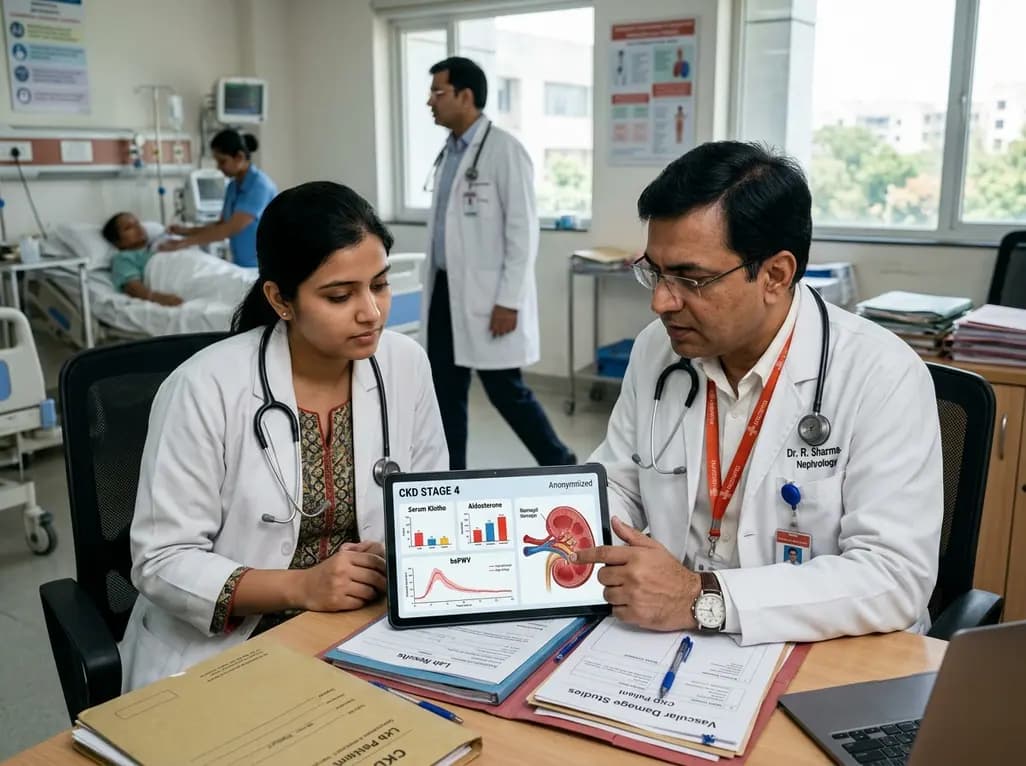
A cross-sectional investigation highlights the complex pathophysiological links between serum Klotho deficiency, secondary hyperaldosteronism, and vascular damage in CKD. Discover key insights into non-invasive vascular stiffness markers and targeted therapeutic pathways for cardiorenal protection.
Today
