.webp&w=384&q=75)

Loading, please wait...
Loading, please wait...

Timely intervention for deteriorating inpatients represents a cornerstone of modern hospital safety. While track-and-trigger systems provide vital baseline measurements, frontline providers know that successfully recognising clinical deterioration demands far more than recording aberrant vital signs. Nurses remain the primary surveillance shield at the bedside, yet their capacity to escalate care relies heavily on human factors. A comprehensive systematic review synthesises evidence across 24 primary studies to explore how nurses perceive their non-technical skills during acute patient decline. Their findings underscore that non-technical competencies profoundly dictate whether early signs translate into life-saving clinical interventions.
Track-and-trigger frameworks, such as early warning scores, establish standardized thresholds for patient decompensation. However, numerical scoring tools cannot replace cognitive evaluation and dynamic interpersonal interactions. Frontline nurses routinely navigate complex, rapidly evolving bedside scenarios where subtle behavioural changes precede overt physiological collapse. Consequently, non-technical skills serve as the critical cognitive and social bridge between noticing an abnormality and mobilising medical assistance.
These competencies encompass situational awareness, rapid problem-solving, assertiveness, and interprofessional communication. In acute care environments, nurses continually process ambiguous sensory cues while managing heavy clinical workloads. Therefore, relying exclusively on automated protocols often delays escalation when a patient looks unwell despite normal vital signs. When hospitals emphasize technical data over holistic appraisal, clinicians may hesitate to sound the alarm. Conversely, recognizing that non-technical competencies drive early intervention encourages clinicians to trust clinical discernment. Systematic synthesis reveals that non-technical expertise allows bedside clinicians to synthesize multifaceted data points rapidly. As a result, fostering these non-technical capabilities elevates overall diagnostic vigilance and bridges the gap between numerical triggers and definitive bedside resuscitation.
Situational awareness represents the bedrock of proactive inpatient monitoring. Nurses constantly gather contextual cues, interpret their physiological relevance, and project potential trajectories to prevent sudden decompensation. Furthermore, experienced bedside clinicians rely heavily on intuition, often described as an acute sense that something is amiss. This intuitive grasp develops through repeated exposure to subtle patterns, such as altered breathing dynamics, subtle pallor, or fluctuating agitation.
Although subjective intuition may seem difficult to quantify, research shows it correlates strongly with genuine physiological decline. Consequently, intuitive unease frequently prompts closer surveillance hours before automated monitors register abnormal parameters. Nevertheless, junior clinicians often struggle to articulate these subtle impressions during multidisciplinary discussions. When structured escalation tools fail to incorporate nurse intuition, valuable early warning windows close rapidly. Therefore, healthcare organizations must legitimize intuitive concern as an authentic escalation trigger. By integrating formal situational awareness frameworks into routine shift handovers, healthcare teams can systematically explore subtle clinical anomalies. In addition, encouraging nurses to articulate perceptual observations sharpens clinical acumen across the entire ward team. Ultimately, refining situational awareness transforms passive monitoring into active patient rescue.
Effective communication forms the operational bridge between identifying instability and delivering definitive emergency therapy. When a patient deteriorates, nurses must convey urgency clearly, concisely, and persuasively to attending medical teams. However, entrenched professional hierarchies frequently impede transparent dialogue across acute hospital wards. Bedside nurses often encounter skepticism or dismissive attitudes from senior colleagues when reporting early physiological abnormalities.
To overcome these interpersonal hurdles, structured communication protocols provide a shared language for escalating care. Furthermore, cohesive teamwork fosters mutual respect, enabling bedside clinicians to express legitimate clinical concerns without friction. When multidisciplinary teams conduct collaborative bedside rounds, they establish shared mental models that streamline urgent decision-making. In contrast, fragmented communication divides clinical care and fosters dangerous misunderstandings during rapid resuscitation attempts. Therefore, healthcare institutions must actively dismantle hierarchical silos through interprofessional simulation training. By practicing high-stakes scenarios together, doctors and nurses build mutual trust and standardize their communicative expectations. In turn, seamless interprofessional collaboration ensures that when bedside clinicians request urgent review, the entire medical team responds rapidly with targeted clinical interventions.
A pervasive barrier identified across healthcare literature is the acute fear of criticism or retribution among junior nurses. When bedside clinicians worry about appearing incompetent, they often delay activating rapid response teams. Instead, inexperienced nurses may second-guess their assessments, spend precious minutes seeking peer validation, or wait for vital signs to deteriorate further. Consequently, unsupportive ward cultures inadvertently jeopardize patient safety by penalizing proactive escalation.
Establishing psychological safety is essential for high-reliability healthcare delivery. In a psychologically safe environment, clinicians know that reporting a false alarm will earn educational feedback rather than public humiliation. Moreover, supportive nurse leaders play an indispensable role in cultivating this protective atmosphere by validating staff concerns during stressful shifts. When clinical supervisors actively praise junior nurses for calling rapid response teams, they reinforce a culture of proactive vigilance. Additionally, hospitals must treat every escalation as a collaborative learning opportunity rather than an adversarial confrontation. As organizational leadership eliminates punitive responses to well-intentioned calls, bedside clinicians feel genuinely empowered to speak up promptly. Ultimately, mitigating fear directly accelerates time-to-bedside care and prevents catastrophic cardiac arrests.
Optimising patient outcomes requires acute care facilities to embed non-technical skill training directly into institutional policies. Historically, hospital continuing education prioritized psychomotor proficiencies and automated algorithms over cognitive and interpersonal competencies. However, contemporary evidence demonstrates that technical and non-technical skills must progress in tandem to optimize inpatient survival. Therefore, hospital administrators must allocate dedicated resources toward interprofessional crisis resource management and simulation-based training.
These educational modules should immerse mixed clinical teams in realistic deterioration scenarios, emphasizing closed-loop communication, situational leadership, and structured debriefing. In addition, hospitals should refine rapid response activation criteria to formally include clinical worry alongside vital sign thresholds. When institutional protocols validate subjective concern, they grant frontline nurses explicit administrative authority to seek help immediately. Furthermore, regular debriefings following rapid response activations provide actionable insights to refine ward dynamics and reinforce psychological safety. By transforming hospital infrastructure to champion non-technical proficiencies, healthcare organizations build a resilient workforce capable of mitigating clinical deterioration before irreversible organ failure occurs.
Early warning scoring systems detect physiological derangements using predefined vital sign thresholds. However, numerical scores cannot capture subtle visual cues, interpret ambiguous trends, or convey urgent clinical concerns across complex multidisciplinary teams. Non-technical skills, including situational awareness and structured communication, empower bedside clinicians to interpret clinical deterioration early. Consequently, these competencies bridge the gap between recognizing physiological decline and mobilizing rapid medical assistance before severe decompensation occurs.
Psychological safety ensures that bedside nurses can escalate clinical concerns without fearing reprimand, ridicule, or professional humiliation. When psychological safety is absent, clinicians frequently hesitate to trigger rapid response teams, delaying vital medical interventions. Conversely, a supportive, blame-free culture validates clinical intuition and encourages proactive communication. As a result, healthcare teams respond promptly to early warning signs, which directly reduces in-hospital cardiac arrests and improves inpatient survival rates.
Hospitals can cultivate robust non-technical competencies by implementing interprofessional simulation training and crisis resource management courses. These educational programs bring physicians and nurses together to practice structured communication tools, situational awareness, and collaborative decision-making under realistic conditions. Furthermore, routinely conducting non-punitive post-event debriefings reinforces positive team dynamics and builds psychological safety. This comprehensive approach empowers frontline clinicians to recognize and respond to acute clinical deterioration rapidly and confidently.
Disclaimer: This content is for informational and educational purposes only. It is not intended to provide medical advice or to be a substitute for professional medical advice, diagnosis, or treatment. Always seek the advice of your physician or other qualified health provider with any questions you may have regarding a medical condition. Refer to the latest local and national guidelines for clinical practice.
References

Read summarized clinical updates, watch expert medical content, and earn CME certifications right from your smartphone.
Open your smartphone camera to scan and install.





A systematic review highlights that recognising clinical deterioration requires robust non-technical skills alongside physiological scoring. Psychological safety, situational awareness, and effective team communication are essential to overcome fear of criticism and ensure timely escalation in hospital wards.
last month
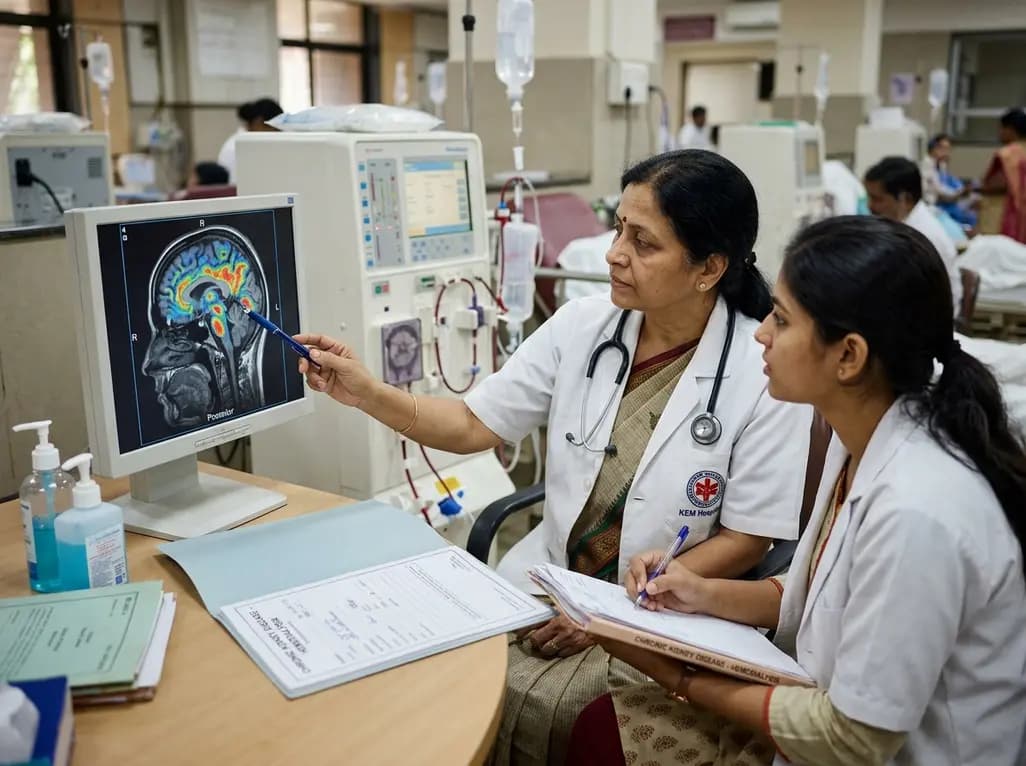
A retrospective clinical analysis reveals that hemodialysis-associated cognitive dysfunction arises from synergistic pathological mechanisms, including severe chronic anemia, worsening renal clearance, abnormal regional brain iron deposition, and an imbalance between neuroinflammatory and neurotrophic factors.
Today

A multiparametric MRI approach combining quantitative T2 shading, apparent diffusion coefficient (ADC) measurements, and morphological signs provides superior diagnostic accuracy over subjective evaluation to differentiate ovarian endometriomas from benign hemorrhagic cysts.
Today
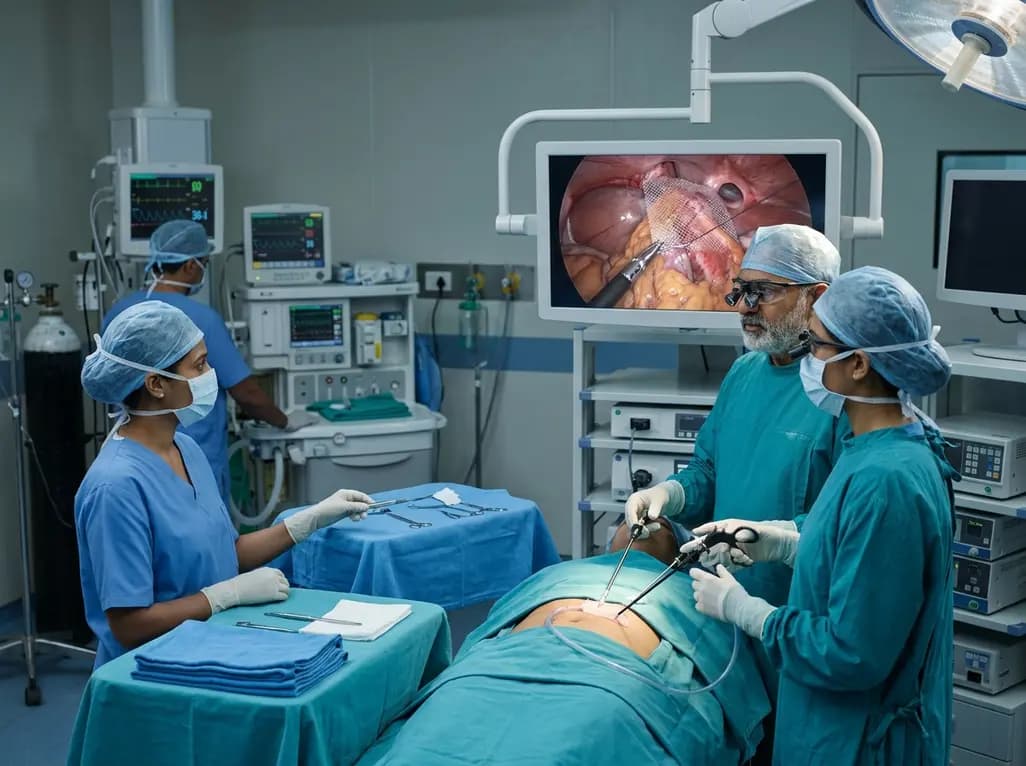
Discover a novel laparoscopic approach for iatrogenic diaphragmatic hernia repair following pedicled omentoplasty. This modified Sugarbaker technique integrates dorsal pedicle lateralization and round ligament reinforcement to secure the diaphragmatic defect while preserving vital omental vascularity.
Yesterday
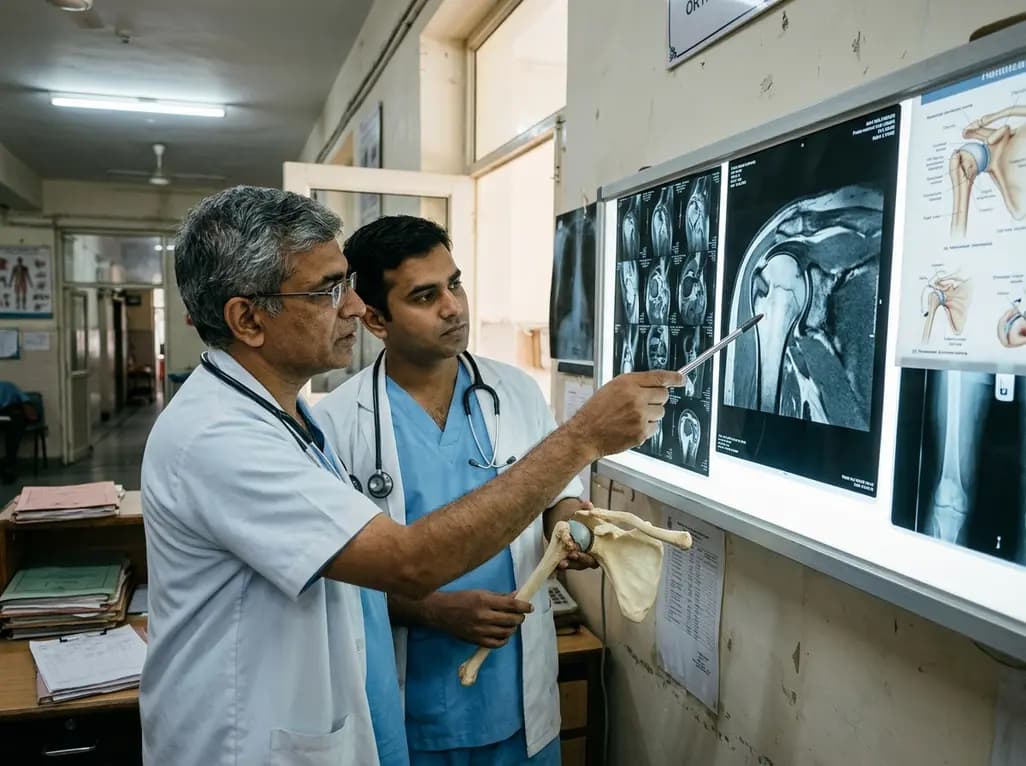
Evaluating Hill-Sachs lesion size and the distance to dislocation is critical in recurrent shoulder instability. As bone loss concepts shift from binary on-track classifications to continuous risk assessment, clinicians must identify when isolated Bankart repair is insufficient and supplementary procedures are needed.
Today
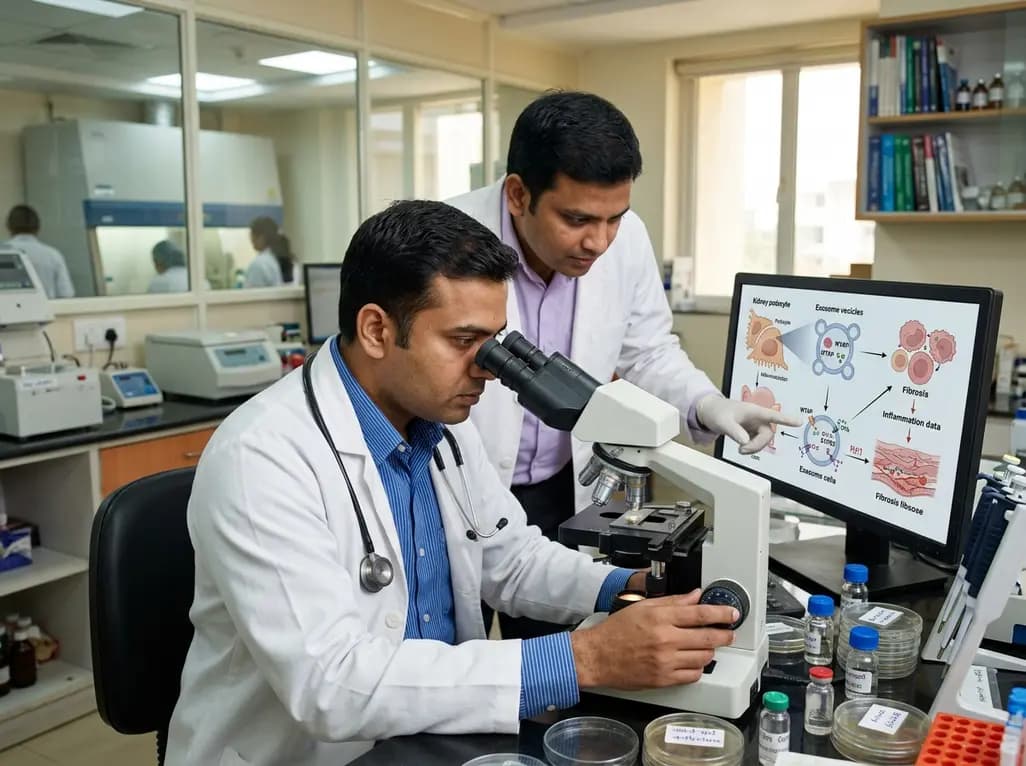
New research reveals that M1 macrophage-derived exosomes aggravate diabetic nephropathy by transferring WTAP to stabilize S1PR2 mRNA. Silencing WTAP in these vesicles attenuates endothelial injury and renal fibrosis, pointing toward innovative nanomedicine therapies.
Today
