

Loading, please wait...
Loading, please wait...

The National Pharmaceutical Pricing Authority (NPPA) has officially extended the knee implant price cap by two months. Consequently, existing ceiling prices for total knee replacement components will remain valid until January 15, 2027. This temporary extension comes as regulatory officials review extensive representations from medical device manufacturers and healthcare industry bodies. Furthermore, the decision provides critical stability for orthopedic surgeons and healthcare institutions across India. Thousands of elderly individuals require total knee arthroplasty each month to regain pain-free mobility. Therefore, pricing predictability plays a vital role in clinical planning and hospital administration. While regulatory authorities deliberate broader pricing reforms, surgical centers can continue standard procurement workflows without immediate disruptions.
The knee implant price cap first entered Indian regulatory jurisprudence in August 2017. At that time, the NPPA invoked emergency powers under Paragraph 19 of the Drugs (Prices Control) Order, 2013. Market inquiries had exposed irrational trade markups exceeding several hundred percent along the commercial supply chain. Consequently, these inflated costs caused severe financial distress for patients undergoing joint replacement procedures. Many patients delayed essential surgeries due to extreme out-of-pocket expenses. Therefore, the central authority intervened by fixing statutory ceiling rates for femoral, tibial, and patellar components.
Over the subsequent years, the government renewed these ceiling limits through regular annual notifications. For instance, the authority extended the framework in November 2025 to maintain regulatory continuity. Historically, healthcare analysts estimated that millions of Indians suffer from advanced osteoarthritis requiring arthroplasty. However, only a tiny fraction of that population could historically afford reconstructive surgery. The implementation of price caps immediately reduced overall procedural expenses by nearly sixty-five percent. As a result, procedure volumes expanded significantly across both private and tertiary government hospitals. Clinicians could recommend necessary interventions without forcing families into medical bankruptcy.
Under Order S.O. 6222(E), the government extended the pricing mandate that was scheduled to expire on November 15, 2026. Specifically, this interim order preserves the operational guidelines and ceiling values established under previous notifications. The authority reaffirmed that operational notes governing component categorization remain active during this period. Furthermore, the two-month window allows administrative bodies to scrutinize market data thoroughly. Regulators must reconcile requests from multinational corporations with the priorities of indigenous device fabricators.
Importantly, the pricing agency has invited comprehensive cost submissions through its specialized digital data portals. Healthcare administrators must maintain strict compliance with these published caps. Penal provisions under the DPCO apply directly if distributors or private hospitals attempt overcharging. In addition, institutions must display updated pricing sheets prominently on their premises and digital portals. State drug controllers continue to monitor procurement channels across urban and rural centers. Thus, the temporary extension prevents regulatory vacuums while policy experts analyze long-term pricing adjustments. Orthopedic units can reliably schedule elective arthroplasties throughout the early winter months.
The ongoing regulatory debate centers heavily on trade margin rationalisation across the medical device sector. Industry groups argue that capping margins at the first point of sale offers a transparent pricing approach. In particular, the Association of Indian Medical Device Industry strongly advocates for trade margin rationalisation. Domestic medtech enterprises have achieved substantial manufacturing self-reliance over recent years. Today, Indian manufacturers fabricate advanced knee systems featuring highly cross-linked polyethylene and cobalt-chromium alloys.
Consequently, domestic industry leaders emphasize that future pricing frameworks should reward indigenous innovation. Policies under Make in India and Atmanirbhar Bharat aim to reduce import dependencies in specialized medical hardware. However, device manufacturers also face rising raw material costs and evolving regulatory standards. Capping trade margins rather than imposing rigid product-level price caps could balance commercial viability with consumer equity. Therefore, policymakers are evaluating whether a trade margin framework can replace historical blunt caps. Such an approach could foster continued investment in research while preventing predatory hospital markups.
For practicing arthroplasty surgeons, pricing stability directly influences clinical workflows and implant selection. Predictable implant rates allow surgical teams to offer transparent package pricing to prospective patients. Moreover, clear cost structures eliminate financial friction during preoperative counseling and consent. Surgeons must balance biomechanical needs, bone quality, and patient activity levels when choosing specific implant designs. Standard cruciate-retaining and posterior-stabilized systems remain universally accessible within the mandated ceiling.
Furthermore, surgeons frequently encounter complex primary cases and severe varus deformities requiring modular augments. When pricing remains regulated, multidisciplinary hospital teams can coordinate inventory without facing sudden fiscal deficits. Operation theatre supervisors can maintain adequate consignment stock across multiple size matrices. Consequently, surgical teams minimize intraoperative compromises caused by incomplete size selections or sudden supplier stockouts. In addition, institutional financial counselors can provide dependable estimates for patients navigating insurance pre-authorizations. Therefore, maintaining consistent price caps protects clinical autonomy and procedural efficiency across tertiary surgical departments.
Modern joint reconstruction requires a delicate balance between technological innovation and public health access. On one hand, robotic-assisted arthroplasty and patient-specific instrumentation demand substantial capital investment from healthcare centers. On the other hand, the vast majority of elderly patients require basic, high-quality, durable joint replacements. When regulatory authorities fix ceiling prices, they must ensure that premium technologies do not vanish from the market. In the past, certain multinational suppliers withdrew cutting-edge premium designs following price restrictions.
Nevertheless, domestic medtech manufacturers have progressively stepped forward to fill critical technological voids. Local engineering teams now produce specialized biocompatible coatings and high-flexion knee designs locally. As a result, Indian patients enjoy broader access to state-of-the-art prosthetic joints at competitive price points. Healthcare administrators expect the upcoming January 2027 NPPA review to incorporate this technological evolution. Ultimately, collaborative dialogue between clinical societies, medtech innovators, and regulatory authorities will shape sustainable joint arthroplasty policies in India.
Q1: What does the recent NPPA notification announce regarding knee implant pricing?
The National Pharmaceutical Pricing Authority extended the validity of existing ceiling prices for orthopaedic knee implants until January 15, 2027. This decision maintains price caps originally scheduled to expire on November 15, 2026. Furthermore, the extension grants regulators adequate time to evaluate formal representations from domestic manufacturers and international device suppliers while ensuring uninterrupted affordability for patients undergoing knee replacement surgery across India.
Q2: Why is the government considering trade margin rationalisation for orthopaedic devices?
Trade margin rationalisation seeks to cap excessive markups between the first point of sale and final hospital billing. Historically, uncontrolled distributor margins caused substantial out-of-pocket expenses for patients. By regulating trade margins, policymakers aim to ensure fair consumer prices while giving manufacturers sufficient commercial incentives to innovate. Consequently, this balanced approach supports domestic medtech growth under Make in India initiatives without compromising patient affordability or product quality.
Q3: How does the knee implant price extension impact hospital operations and surgical practice?
The two-month price extension gives orthopedic departments operational stability and cost predictability for surgical packages. Hospitals can maintain standard implant inventories and consignment arrangements without immediate risk of supplier price hikes. In addition, clinicians can counsel patients with transparent estimates for primary total knee arthroplasty. Healthcare facilities must continue displaying approved ceiling rates prominently and comply strictly with all statutory price caps during this interim period.
Disclaimer: This content is for informational and educational purposes only. It does not constitute medical advice or replace professional judgment. Refer to the latest local and national guidelines for clinical practice.
References

Read summarized clinical updates, watch expert medical content, and earn CME certifications right from your smartphone.
Open your smartphone camera to scan and install.





The National Pharmaceutical Pricing Authority has extended the existing ceiling prices for knee replacement implants until January 15, 2027. This regulatory move allows stakeholders to review trade margin rationalization while ensuring uninterrupted and affordable access to total knee arthroplasty across India.
Today

The launch of a fully equipped diagnostic laboratory in Panipat represents a significant step in decentralizing specialized pathology. Clinicians gain rapid access to advanced molecular testing, targeted oncology panels, and comprehensive routine investigations, enabling timely intervention and elevated patient care.
Today
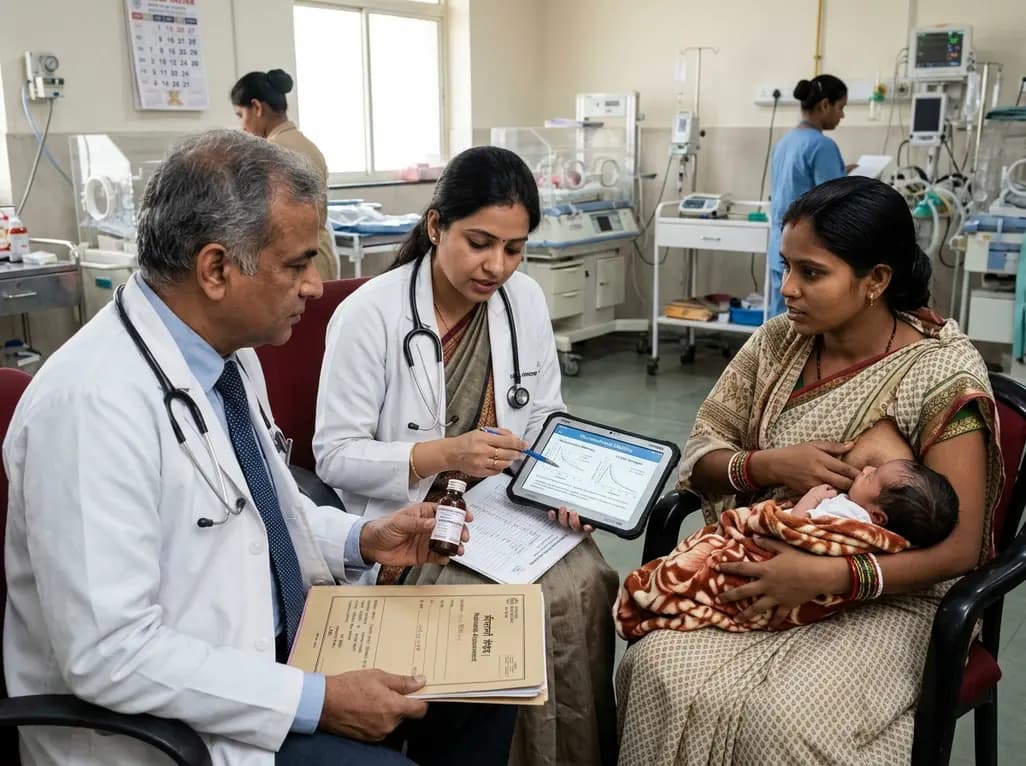
Maternal codeine therapy during breastfeeding sparks debate regarding neonatal opioid toxicity. This review re-evaluates the Toronto case, explores PBPK modeling, and highlights how maternal and neonatal pharmacogenomics converge to inform safer postpartum pain management.
Today

Novel intranasal simvastatin transbilosomes demonstrate superior bioavailability and cardioprotective efficacy compared to oral suspensions in experimental heart failure induced by doxorubicin and ischemia/reperfusion injury.
Today
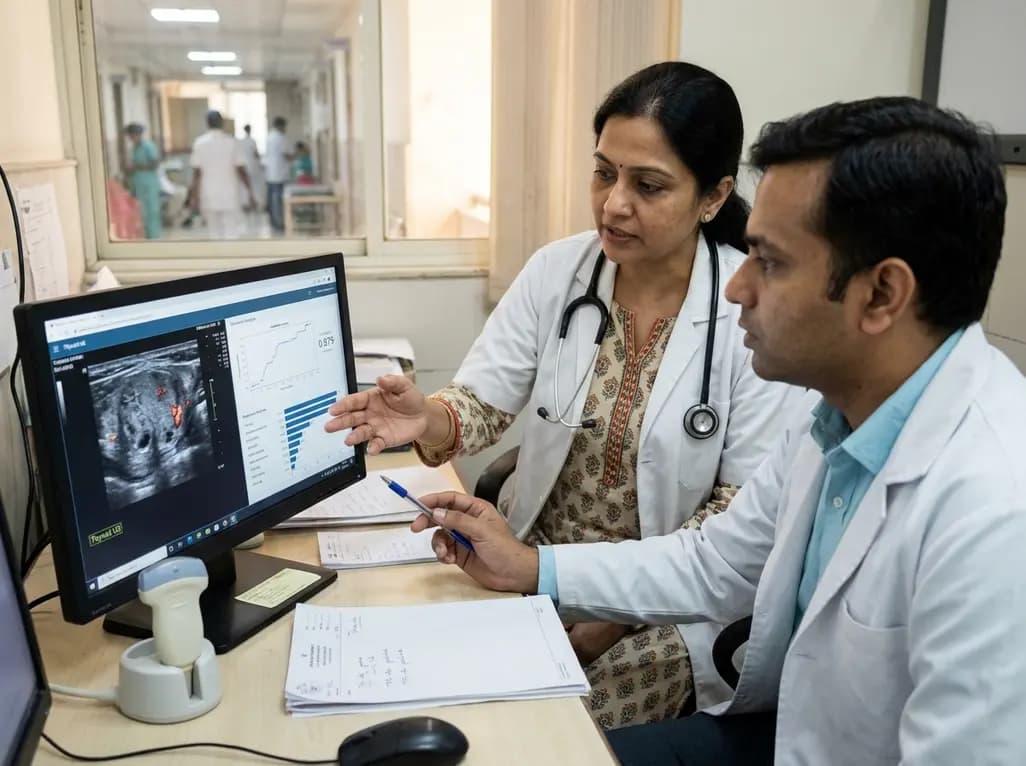
A multi-modal machine learning model integrating ultrasound radiomics, tumor morphology, TPO-Ab, and BRAF V600E accurately predicts lymph node metastasis in papillary thyroid carcinoma with concurrent Hashimoto's thyroiditis, achieving 0.879 accuracy.
Today
