.webp&w=384&q=75)

Loading, please wait...
Loading, please wait...
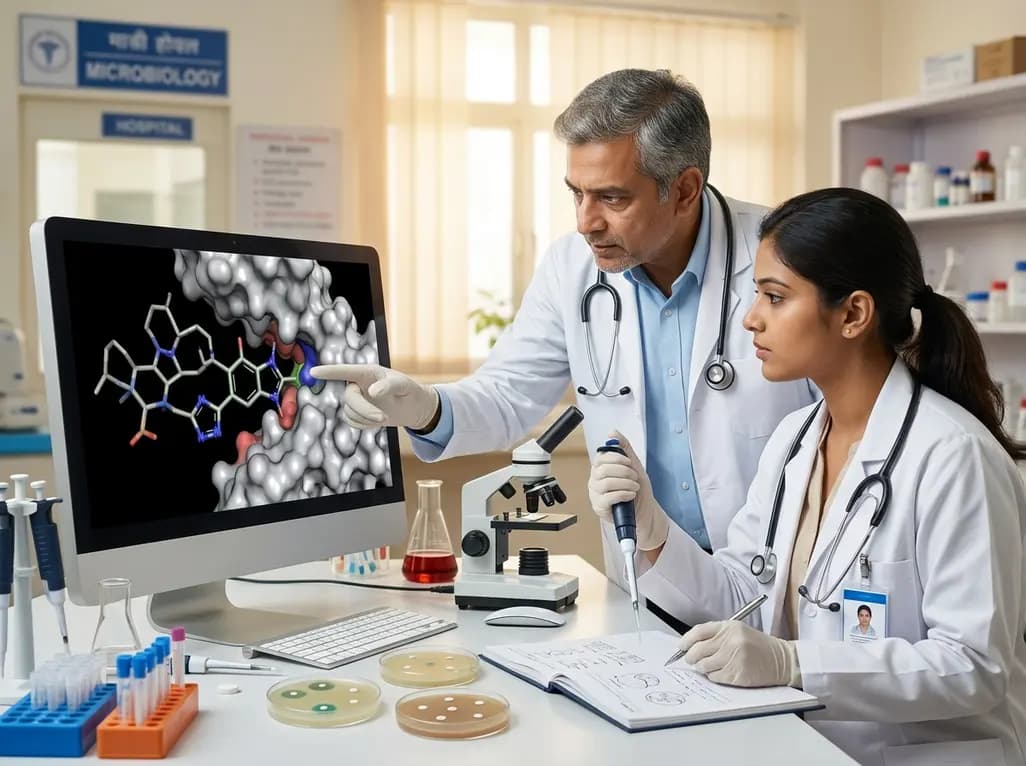
The global healthcare landscape is currently facing a dire threat from antimicrobial resistance (AMR), a crisis that is particularly pronounced within the Indian clinical environment. The rapid evolution of multi-drug resistant (MDR) pathogens has rendered many conventional antibiotics obsolete, necessitating the urgent discovery of novel therapeutic scaffolds. Recent research has turned its attention toward hybrid purine-triazole derivatives as a versatile and potent platform for drug design. These molecules leverage the biological importance of the purine ring, a scaffold naturally found in DNA and RNA, and the triazole moiety, which is highly regarded for its chemical stability and metabolic resistance. By combining these pharmacophores with the azomethine (Schiff base) group, scientists are creating sophisticated chemical structures capable of targeting essential bacterial life processes. This approach is not merely about creating new chemicals but about engineering precision tools that can bypass existing resistance mechanisms. In India, where high population density and varied antibiotic stewardship practices contribute to the spread of resistant strains like MRSA and carbapenem-resistant Enterobacteriaceae, such innovations are critical. This study explores the synthesis and evaluation of a new series of these hybrids, offering significant hope for next-generation anti-infective strategies.
The synthesis of these novel compounds involves a complex multi-step organic process, focusing on the creation of robust Schiff base linkages. Specifically, researchers recently developed two new purine-containing aldehydes, designated as 6a and 6b, which served as the essential precursors for the final derivatives (7-11). The integration of the triazole ring is highly significant because triazoles act as bioisosteres that can participate in hydrogen bonding, which greatly enhances the drug-receptor interaction. Furthermore, the azomethine group (C=N) acts as a flexible linker that further stabilizes the spatial configuration of the molecule. To ensure the purity and identity of these structures, advanced spectroscopic techniques including H and C Nuclear Magnetic Resonance (NMR) and High-Resolution Mass Spectrometry (HRMS) were employed. These analytical methods confirmed that the synthesized hybrid purine-triazole derivatives possessed the intended molecular geometry and functional group distribution. Understanding this chemical architecture is essential for medical professionals because structural nuances directly dictate the pharmacokinetic and pharmacodynamic profiles of the drug. These specific Schiff base purine derivatives represent a fusion of heterocyclic chemistry that aims to maximize biological interaction while simultaneously minimizing potential off-target effects in human cells.
Evaluating the antibacterial efficacy of these compounds involved testing them against a panel of clinically significant bacteria, including Staphylococcus aureus, Enterococcus faecalis, Escherichia coli, and Pseudomonas aeruginosa. The results were highly promising, particularly for compound 6b, which showed a Minimum Inhibitory Concentration (MIC) of 200 μg/mL against S. aureus. This is noteworthy because S. aureus remains a leading cause of hospital-acquired infections in India. Furthermore, Schiff bases 8 through 10 demonstrated significant activity against P. aeruginosa, a Gram-negative pathogen notorious for its intrinsic resistance to many antibiotic classes. Consequently, the effectiveness of these hybrids against such pathogens suggests high membrane permeability or a unique mechanism of uptake. Gram-negative bacteria possess a complex outer membrane that often serves as a barrier to drug entry; thus, these findings are clinically relevant. Compound 11 also showed notable inhibitory capacity against both E. coli and E. faecalis with MIC values ranging between 200 and 390 μg/mL. These values provide a quantitative benchmark for the potency of these agents. While these concentrations are currently higher than those of some established frontline antibiotics, they serve as a critical starting point for lead optimization in the pharmaceutical development pipeline.
To elucidate why these molecules are effective, researchers conducted extensive molecular docking studies, which simulate the interaction between the compounds and bacterial proteins. The study targeted proteins essential for bacterial viability, such as those involved in cell wall synthesis and DNA replication. Compounds 6a and 7 emerged as the leaders in this computational analysis, exhibiting remarkably high binding affinities across various targets. For instance, compound 6a showed a binding energy of -9.9 kcal/mol against E. faecalis, indicating a very stable and favorable interaction. These docking scores suggest that the molecules fit precisely into the active sites of bacterial enzymes, effectively "locking" them and preventing the bacteria from functioning or reproducing. The targets included E. coli (4URO) and S. aureus (4CJN), which are well-characterized proteins in the field of antimicrobial research. By identifying these strong interactions, the study provides a mechanistic rationale for the observed antibacterial activity of these hybrid purine-triazole derivatives. This computational insight is invaluable for researchers and clinicians, as it helps bridge the gap between bench-side chemistry and bedside application, eventually paving the way for more targeted and effective treatment protocols for resistant infections.
The discovery of these hybrids opens several exciting avenues for future pharmacological research. One of the most promising prospects is the potential for these molecules to act as multi-target inhibitors. Because the purine-triazole scaffold interacts with several different bacterial proteins, it may be harder for bacteria to develop resistance through a single genetic mutation. Consequently, these compounds could lead to more durable clinical outcomes in the long term. Moving forward, the research focus will likely shift to modifying the side chains of these derivatives to further lower the MIC values and improve water solubility. In the context of global health, the cost-effective synthesis of such compounds is also a vital consideration, especially for developing healthcare systems like India's. Developing drugs that are both effective and affordable is a cornerstone of any sustainable public health strategy. The current study serves as a foundational "proof of concept" that hybridizing different bioactive fragments can yield molecules with enhanced therapeutic potential. As we refine these chemical structures, the goal is to move into pre-clinical animal models to evaluate safety and toxicity, ensuring that these potent antibacterial agents are also safe for human administration.
For the Indian medical community, these findings are particularly relevant given the high burden of infectious diseases and the rise of antibiotic-resistant organisms. The prevalence of resistant E. faecalis and P. aeruginosa in Indian intensive care units necessitates a constant influx of new therapeutic options. While these hybrid purine-triazole derivatives are still in the early stages of development, they represent the type of innovative chemistry required to combat modern "superbugs." Clinicians should stay informed about such developments, as the transition from laboratory synthesis to clinical trials can be accelerated through collaborative research efforts. Furthermore, understanding the molecular basis of how these new agents work can help in the future implementation of personalized antibiotic therapy. The use of Schiff base derivatives highlights a return to traditional medicinal chemistry enhanced by modern computational tools. As we face the challenges of the post-antibiotic era, the integration of triazole and purine moieties offers a robust framework for developing medicines that can protect patients against some of the most stubborn pathogens. This research underscores the importance of continued investment in basic science to secure the future of infectious disease management globally.
The uniqueness of the purine-triazole hybrid lies in its synergistic combination of two highly bioactive scaffolds. Purines are essential components of cellular metabolism, allowing the drug to mimic natural substrates, while the triazole ring provides exceptional metabolic stability and increased binding affinity through hydrogen bonding. This dual-action structure allows the molecule to interact more effectively with bacterial targets, potentially bypassing existing resistance mechanisms that render traditional antibiotics ineffective against modern strains.
In the study, the newly synthesized derivatives were tested against four major pathogens. Specifically, compound 6b exhibited significant potency against Staphylococcus aureus, while Schiff base derivatives 8, 9, and 10 were particularly effective against Pseudomonas aeruginosa. Additionally, compound 11 demonstrated notable inhibitory activity against Escherichia coli and Enterococcus faecalis. These results are encouraging because they demonstrate the broad-spectrum potential of these compounds against both Gram-positive and Gram-negative bacteria.
Molecular docking serves as a powerful computational tool that predicts how a drug molecule interacts with specific bacterial proteins at a molecular level. In this research, docking studies confirmed that compounds 6a and 7 have high binding affinities, reaching up to -9.9 kcal/mol. This suggests a strong, stable bond with essential bacterial enzymes. By identifying these interactions early, researchers can focus on the most promising molecules, streamlining the drug development process and reducing costs.
Disclaimer: This content is for informational and educational purposes only. It does not constitute medical advice or a professional recommendation. Healthcare professionals should always rely on their clinical judgment and consult the most recent medical literature. Refer to the latest local and national guidelines for clinical practice.
References
Khaldoune K et al. Synthesis, characterization, and antibacterial activity of novel hybrid purine-triazole Schiff base derivatives. Bioorg Chem. 2026 Jul 10. doi: undefined. PMID: 42430824.
Ghasemi S, et al. Schiff base derivatives as potential antimicrobial agents: A review of recent biological evaluations. Journal of Molecular Structure. 2024;1295:136612.
World Health Organization. Antimicrobial Resistance: Global Report on Surveillance and Innovative Drug Pipelines. 2024.

Read summarized clinical updates, watch expert medical content, and earn CME certifications right from your smartphone.
Open your smartphone camera to scan and install.





This study highlights the synthesis of new Schiff base purine derivatives. These hybrid purine-triazole derivatives demonstrate significant antibacterial potential and strong molecular docking affinities against key bacterial proteins, offering a promising lead for novel antibiotic development.
3 months ago

Novel diimide and hydrazone scaffolds, particularly compound #C4, synergistically reactivate latent HIV-1 when combined with JQ1 or PKC activators. Demonstrating donor-matched proviral transcription ex vivo and non-canonical signaling, these findings advance shock and kill strategies toward reservoir eradication.
Today

A comparative cohort study evaluates vNOTES vs TLH hysterectomy for benign conditions, demonstrating shorter operative duration, faster return to daily activities, and equivalent female sexual function scores without increased dyspareunia.
Today

Review how tailored exercise programs benefit frail older patients with heart failure. Explore pathophysiological mechanisms, individualized training prescriptions, and strategies to overcome adherence barriers in clinical practice.
Yesterday

This comparative study evaluates posterior labral tears with and without glenohumeral instability, highlighting distinct demographic patterns, MRI underestimation in stable shoulders, and successful arthroscopic repair outcomes.
Yesterday

A clinical study demonstrates that early intervention with tocilizumab, either as monotherapy or bridged with corticosteroids, achieves significant proptosis reduction and resolves active inflammation in treatment-naive thyroid eye disease.
Today
