.webp&w=384&q=75)

Loading, please wait...
Loading, please wait...
ARHGEF1 deficiency represents a rare inherited disorder that clinicians traditionally associate with primary antibody deficiency and recurrent respiratory tract infections. The ARHGEF1 gene encodes an essential Rho guanine nucleotide exchange factor that activates RhoA downstream of heterotrimeric G protein signaling. Specifically, this intracellular regulator couples with Gα12/13 proteins following the stimulation of various cell surface receptors. In immune cells, ARHGEF1 orchestrates actin cytoskeleton dynamics, cell motility, and lymphocyte homing. Consequently, loss of ARHGEF1 expression impairs adaptive immunity, leading to hypogammaglobulinemia, deficient memory B cells, and bronchiectasis. However, clinicians have long questioned whether this genetic defect disrupts cellular signaling beyond the immune system.
Platelets express substantial levels of ARHGEF1 alongside other cytoskeletal signaling intermediaries. Because platelet activation requires rapid shape change, granule secretion, and integrin inside-out signaling, RhoA activation plays a pivotal role in primary hemostasis. Therefore, hematologists raised valid concerns regarding whether patients with ARHGEF1 deficiency experience subclinical or overt platelet dysfunction. Investigating these pathways provides critical insight into patient management and human platelet physiology. Furthermore, characterizing human phenotypes resolves critical discrepancies identified in previous experimental animal models.
Historically, animal models served as the primary foundation for exploring ARHGEF1 function in platelets. Preclinical studies demonstrated that mice lacking Arhgef1 exhibited severe hemostatic and thrombotic defects. Specifically, knockout mice showed markedly prolonged tail bleeding times and delayed arterial thrombus formation. In vitro assays revealed that murine platelets lacked effective granule secretion, failed to activate integrin αIIbβ3, and displayed impaired clot retraction. Furthermore, these murine platelets could not spread adequately on fibrinogen-coated surfaces. These striking observations led researchers to propose ARHGEF1 as an indispensable driver of platelet activation.
Consequently, many translational investigators proposed ARHGEF1 as a promising molecular target for novel antithrombotic therapies. They reasoned that blocking this exchange factor could prevent arterial thrombosis without triggering catastrophic bleeding complications. Nevertheless, translating murine phenotypes directly to human clinical hematology frequently introduces unexpected discrepancies. Murine platelets often possess distinct signaling cascades and varying expression levels of redundant enzymes compared to human cells. Therefore, evaluating human patients with ARHGEF1 deficiency became imperative for validating these physiological assumptions. Accordingly, rigorous clinical evaluations must establish whether human hemostasis truly mirrors the severe impairments seen in rodents.
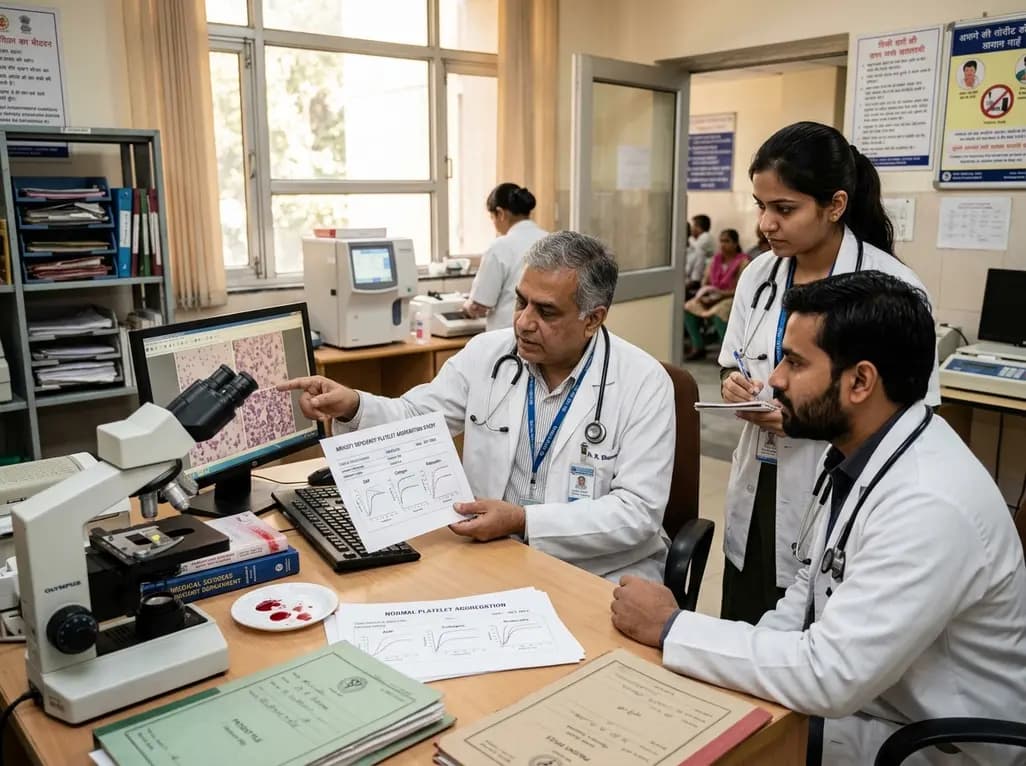
A landmark clinical evaluation recently addressed this fundamental question by characterizing platelet behavior in a patient with ARHGEF1 deficiency. Hematologists conducted an extensive functional evaluation to determine whether the patient suffered from an unrecognized primary platelet disorder. First, laboratory teams verified normal baseline complete blood counts and unremarkable platelet morphology on peripheral blood smears. The patient did not present with thrombocytopenia, giant platelets, or unusual structural anomalies. Next, clinicians evaluated in vitro platelet aggregation across a comprehensive panel of physiological agonists, including adenosine diphosphate, arachidonic acid, collagen, and thrombin receptor activator peptide.
Remarkably, the patient demonstrated robust, biphasic aggregation responses that matched healthy control samples across all tested agonists. In addition, flow cytometric assays confirmed normal surface expression of major platelet glycoproteins, including GPIb-V-IX and integrin αIIbβ3. Granule release assays demonstrated that platelets released ATP and P-selectin efficiently upon agonist stimulation. Similarly, platelet spreading assays on fibrinogen showed appropriate lamellipodia and filopodia extension. Thus, despite a complete congenital absence of ARHGEF1, the patient exhibited fully preserved platelet function and entirely normal primary hemostasis. Importantly, these rigorous laboratory assessments confirm that the patient maintains intact platelet-mediated plug formation without clinical bleeding diathesis.
The discovery of preserved platelet function in human ARHGEF1 deficiency underscores the robust signaling redundancy present in human megakaryocytes and platelets. While murine platelets exhibit profound vulnerability to ARHGEF1 loss, human platelets deploy compensatory molecular pathways to activate RhoA. For instance, human platelets abundantly express alternative Rho guanine nucleotide exchange factors, such as ARHGEF12, commonly designated as LARG. In addition, cells express ARHGEF2, also known as GEF-H1, alongside other regulatory signaling proteins. These alternative exchange factors can readily couple with Gα12/13 or Gαq signaling cascades upon agonist stimulation.
Consequently, these alternative GEFs ensure sufficient GTP loading onto RhoA, thereby preserving downstream signaling through Rho-associated kinase. This robust enzymatic compensation maintains essential cytoskeletal remodeling, myosin light chain phosphorylation, and granule centralization. Moreover, parallel signaling networks driven by calcium mobilization and protein kinase C activation independently support integrin inside-out activation. Therefore, human platelets bypass the ARHGEF1 defect entirely during hemostatic challenge. This critical divergence highlights how evolutionary differences in signaling redundancy protect human platelets from single-gene vulnerabilities that severely impair rodent platelets. As a result, human thrombocytes maintain normal mechanical stability and functional clot retraction even during vigorous physiological hemostatic demands.
These findings provide reassuring guidance for hematologists, pediatricians, and clinical immunologists managing patients with ARHGEF1 deficiency. Clinicians can confidently assure patients and families that this genetic condition does not inherently confer an increased risk of mucocutaneous bleeding. Accordingly, routine diagnostic workups for primary immunodeficiency do not require invasive platelet aggregometry unless the patient exhibits unexplained clinical hemorrhage. If an ARHGEF1-deficient patient does experience bleeding episodes, clinicians should investigate secondary etiologies rather than attributing symptoms to the primary genetic lesion. In practice, comprehensive management should prioritize immune reconstitution and aggressive pulmonary care rather than unnecessary hemostatic interventions.
Specifically, physicians must evaluate common secondary causes, such as autoimmune thrombocytopenia, drug-induced platelet inhibition, or mucosal trauma secondary to chronic infections. Furthermore, these insights carry profound implications for pharmaceutical development and drug discovery. Because targeting ARHGEF1 in mice generated dramatic antithrombotic effects, researchers had enthusiastically pursued ARHGEF1 inhibitors as potential cardiovascular therapeutics. However, the lack of platelet inhibition in human ARHGEF1 deficiency demonstrates that human platelets will likely resist such drugs due to functional redundancy. Hence, translational cardiology must carefully validate mouse signaling pathways in human tissue before committing substantial development resources. Ultimately, these clinical findings protect drug developers from pursuing ineffective antiplatelet strategies while enhancing clinical precision for affected patients.
No, clinical evidence confirms that ARHGEF1 deficiency does not cause an inherited bleeding diathesis in humans. Although knockout mice exhibit prolonged bleeding and defective platelet activation, human patients demonstrate completely normal platelet counts, morphology, and aggregation responses. Intact redundant signaling pathways preserve primary hemostasis effectively. Therefore, clinicians should investigate alternative secondary causes, such as medications or immune thrombocytopenia, if an affected patient experiences bleeding symptoms.
Human platelets maintain normal function because human megakaryocytic lineages possess redundant Rho guanine nucleotide exchange factors. Alternative enzymes, including ARHGEF12 and ARHGEF2, readily activate RhoA downstream of G protein-coupled receptors during agonist stimulation. These parallel pathways ensure sufficient actin cytoskeletal remodeling, integrin activation, and granule secretion. Consequently, human platelets successfully compensate for the loss of ARHGEF1, highlighting a distinct physiological difference between human hemostasis and rodent experimental models.
Clinicians do not need to perform routine platelet aggregation testing in asymptomatic patients with ARHGEF1 deficiency. Because primary platelet function remains fully preserved, standard pre-operative evaluations with complete blood counts and routine coagulation profiles are sufficient. Hematologists should reserve specialized light transmission aggregometry and flow cytometry for patients who exhibit unexplained mucocutaneous hemorrhage, significant bruising, or suspected concurrent acquired platelet dysfunction caused by concomitant pharmacological agents or autoimmunity.
Disclaimer: This content is for informational and educational purposes only... Refer to the latest local and national guidelines for clinical practice.
References

Read summarized clinical updates, watch expert medical content, and earn CME certifications right from your smartphone.
Open your smartphone camera to scan and install.





A study in Haematologica demonstrates that a patient with ARHGEF1 deficiency exhibits normal platelet function, aggregation, and hemostasis. This reveals significant species divergence from murine models and reassures clinicians that ARHGEF1 deficiency does not cause an intrinsic platelet bleeding disorder.
4 weeks back

This clinical review examines the dangerous intersection of climate change and antimicrobial resistance (AMR). It highlights thermal selection, altered transmission pathways, and the imperative for One Health and Planetary Health adaptation frameworks to preserve therapeutic efficacy.
Today
Discover the crucial distinctions between mesonephric and mesonephric-like proliferations of the female genital tract. Learn the key histomorphologic, immunohistochemical, and molecular differences essential for accurate diagnosis and clinical management.
Today
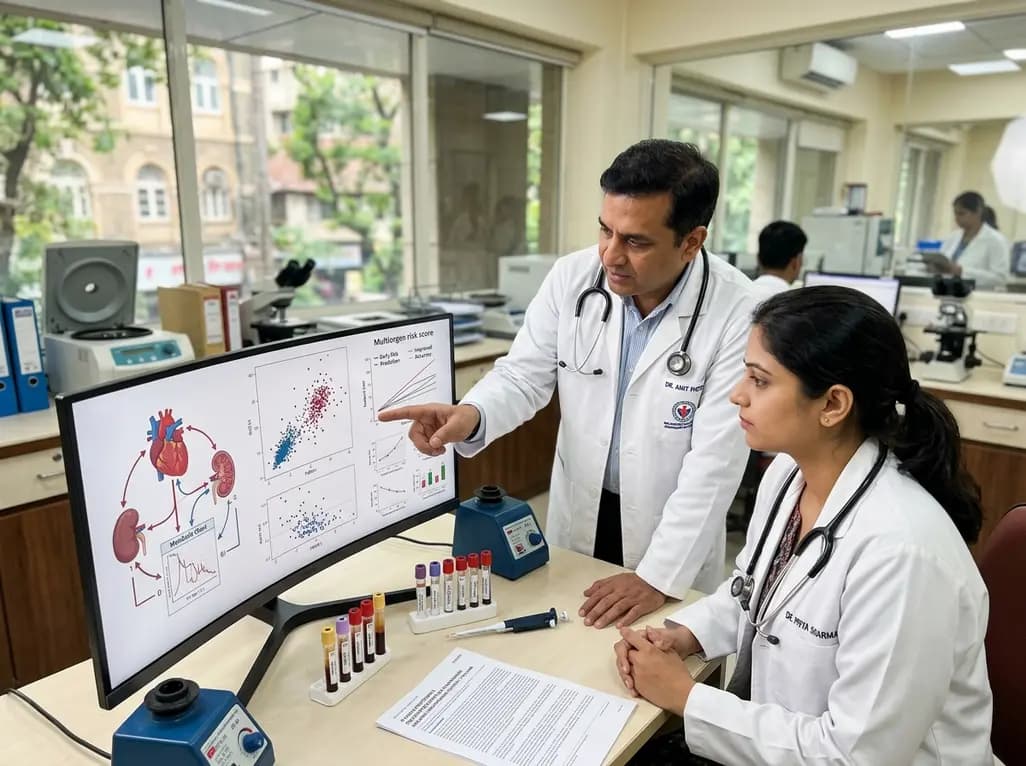
A large UK Biobank study reveals that plasma proteomic signatures capture preclinical organ damage and improve multiorgan risk prediction across early CKM syndrome stages 0 to 2 beyond traditional PREVENT clinical models.
Today

A narrative review investigates whether the articularis genus muscle functions as an independent anatomical entity or blends with the vastus intermedius. We evaluate its morphology, role in retracting the suprapatellar bursa, and direct clinical significance in anterior knee pain and arthroplasty.
Today

A Bayesian multilevel meta-analysis reveals that aerobic training combined with moderate carbohydrate restriction modestly lowers HbA1c in type 2 diabetes. However, sparse data and very low certainty leave incremental benefits over exercise or diet alone unproven, highlighting the need for individualized care.
Today
