.webp&w=384&q=75)

Loading, please wait...
Loading, please wait...

Discharge planning is a critical component of perioperative care, especially in spine surgery. A recent study analyzed the nonroutine discharge predictors for patients undergoing surgery for grade 2 lumbar spondylolisthesis. Nonroutine discharge, defined as a transfer to inpatient rehabilitation or acute care facilities, significantly impacts healthcare costs and patient recovery trajectories. By identifying these factors early, surgeons can better manage patient expectations and optimize hospital resources. In addition, understanding these variables helps in streamlining the clinical pathway for high-risk patients.
The study utilized data from the Quality Outcomes Database (QOD) Spine CORe™ study group. To begin with, researchers examined 328 adult patients who underwent surgical intervention for grade 2 slippage. While several factors appeared relevant during initial analysis, multivariate regression revealed specific independent drivers. In particular, older age and an increased length of hospital stay (LOS) emerged as the primary nonroutine discharge predictors in this clinical cohort. For example, the average age for those with nonroutine discharge was approximately 67.4 years, compared to 59.4 years for those discharged home.
Interestingly, although univariate analysis suggested that higher Body Mass Index (BMI) and worse baseline disability scores (ODI) were associated with nonroutine discharge, they did not maintain independent significance. This suggests that while physiological and functional baselines matter, chronological age and the immediate postoperative recovery speed are more definitive markers. As a result, surgeons should prioritize early mobilization and comprehensive discharge planning for older patients to mitigate the risk of prolonged facility-based care. Furthermore, proactive planning can reduce the overall burden on the healthcare system.
Moreover, the data highlighted that 14.3% of patients required nonroutine discharge. Consequently, identifying these patients preoperatively allows for better resource allocation. For instance, early involvement of social workers or physical therapists can streamline the transition to post-acute care. Additionally, understanding these predictors helps in providing accurate prognostic information to families. Ultimately, focusing on these variables may help reduce the economic burden associated with extended facility stays after spinal fusion or decompression. In conclusion, age and length of stay remain the most reliable markers for planning post-surgical care.
Nonroutine discharge refers to a patient being transferred to a post-acute care setting, such as an inpatient rehabilitation facility or a skilled nursing facility, instead of returning directly to their home after surgery.
Older patients often have more comorbidities, decreased physiological reserve, and a slower recovery rate. These factors frequently necessitate professional assistance and rehabilitation services that cannot be easily provided in a home environment.
A longer hospital stay often indicates a more complex postoperative course or complications. This increased duration in the acute care setting strongly correlates with the need for continued monitoring or therapy in a non-acute facility.
Disclaimer: This content is for informational and educational purposes only. It does not constitute medical advice or a professional relationship. Always seek the advice of your physician or other qualified health provider with any questions you may have regarding a medical condition. Refer to the latest local and national guidelines for clinical practice.
References
Linzey JR et al. What are the predictors of nonroutine discharge after surgery for grade 2 lumbar spondylolisthesis? A Spine CORe™ analysis of QOD data. Neurosurg Focus. 2026 May 01. doi: 10.3171/2025.12.FOCUS25955. PMID: 42066364.
Elsamadicy AA et al. Patient- and hospital-related risk factors for non-routine discharge after lumbar decompression and fusion for spondylolisthesis. Clin Neurol Neurosurg. 2021 Nov;210:106902. doi: 10.1016/j.clineuro.2021.106902. PMID: 34481141.
Karhade AV et al. Predicting nonroutine discharge after elective spine surgery: external validation of machine learning algorithms. J Neurosurg Spine. 2019 Jul 26;31(4):584-590. doi: 10.3171/2019.5.SPINE1987. PMID: 31349223.

Read summarized clinical updates, watch expert medical content, and earn CME certifications right from your smartphone.
Open your smartphone camera to scan and install.





A study identifies age and length of stay as the primary predictors of nonroutine discharge after surgery for grade 2 lumbar spondylolisthesis....
5 months ago

A retrospective cohort study of 7,716 ICU patients from the MIMIC-IV database demonstrates that Gradient Boosting Decision Trees significantly outperform traditional SOFA scores in predicting in-hospital mortality among patients with sepsis and diabetes, with SHAP analysis providing clinical interpretability.
Today
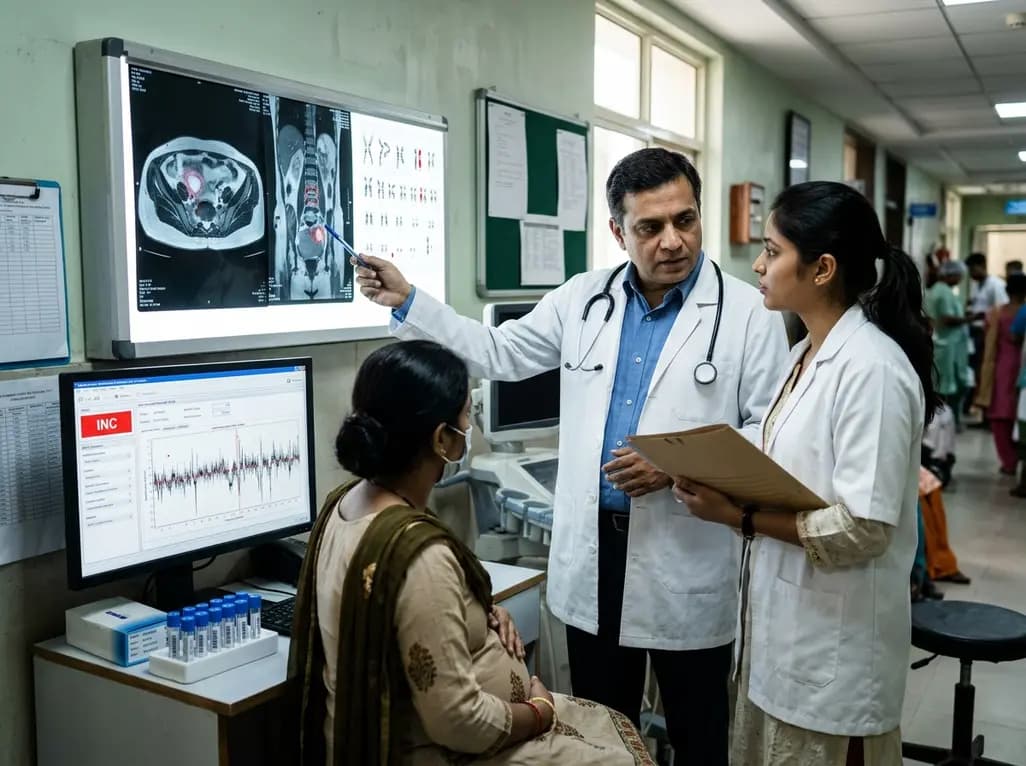
Occult maternal malignancy accounts for 3.82% of persistent unreportable NIPT results with genomic noise. Multiple chromosomal aberrations, notably on chromosome 18, warrant thorough oncological evaluation and whole-body MRI to ensure timely maternal diagnosis while preserving fetal care.
Today
This article reviews the forensic and clinical complexities of acute myocarditis arising on left ventricular hypertrophy in children, highlighting early diagnostic red flags and multidisciplinary postmortem autopsy protocols.
Today

This comparative study evaluates posterior labral tears with and without glenohumeral instability, highlighting distinct demographic patterns, MRI underestimation in stable shoulders, and successful arthroscopic repair outcomes.
Yesterday

A clinical study demonstrates that early intervention with tocilizumab, either as monotherapy or bridged with corticosteroids, achieves significant proptosis reduction and resolves active inflammation in treatment-naive thyroid eye disease.
Yesterday
