.webp&w=384&q=75)

Loading, please wait...
Loading, please wait...
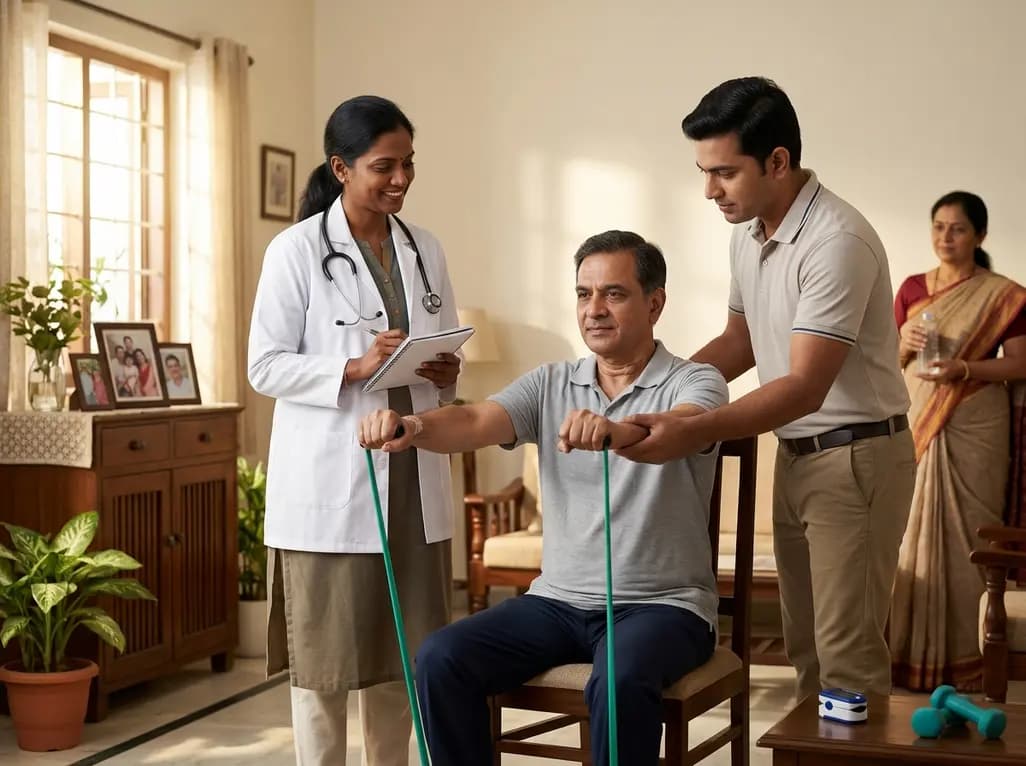
Post-Intensive Care Syndrome (PICS) represents a significant and growing challenge for survivors of critical illness and their families. Although many patients survive their initial ICU stay, they often face a complex set of physical, cognitive, and mental health issues. While traditional clinic-based follow-ups have shown mixed results, medical researchers are now exploring non-clinic-based strategies to provide better support. This shift is essential because many patients face significant hurdles that make returning to a hospital setting difficult.
A recent scoping review analyzed 45 studies to understand the feasibility of these alternative recovery models. Most interventions currently focus on physical and psychological recovery domains. However, the data shows a wide variety of approaches, ranging from home-based exercise programs to tele-rehabilitation and telephone follow-ups. Although these methods appear feasible in a research setting, their overall clinical effectiveness remains under-investigated in most current literature.
Furthermore, the review highlighted a critical gap in care for family members, often referred to as PICS-Family (PICS-F). Only a small fraction of the analyzed studies targeted these caregivers exclusively. Consequently, since caregivers often shoulder the massive burden of patient recovery, expanding support services for them is necessary for achieving long-term success. Additionally, the lack of standardized outcome measures makes it difficult to compare different non-clinic strategies effectively.
Therefore, future research must prioritize evaluating effectiveness rather than just feasibility. There is a specific and urgent need to address the cognitive domain, which remains frequently overlooked in current rehabilitation models. By refining these non-clinic strategies, healthcare providers can ensure a more holistic and accessible recovery process for both patients and their loved ones. Ultimately, improving aftercare requires a coordinated effort that extends well beyond the hospital walls.
PICS involves a combination of physical impairments, cognitive decline, and mental health issues such as anxiety, depression, or PTSD that persist after an ICU discharge.
Non-clinic interventions, such as home visits or digital health tools, increase accessibility and reduce the physical and financial burden on patients who have limited mobility or live far from specialized centers.
Caregivers of ICU survivors often experience significant psychological distress. Addressing their needs through PICS-F interventions helps maintain the family unit's stability and improves the patient's overall recovery environment.
Disclaimer: This content is for informational and educational purposes only. It does not constitute professional medical advice, diagnosis, or treatment. Always seek the advice of your physician or other qualified healthcare provider with any questions you may have regarding a medical condition. Refer to the latest local and national guidelines for clinical practice.
References
Abu Fraiha Y et al. Non clinic-Based Interventions to Mitigate Post-Intensive Care Syndrome: A Scoping Review. Crit Care Explor. 2026 Jun 01. doi: 10.1097/CCE.0000000000001434. PMID: 42302310.
Society of Critical Care Medicine (SCCM). Understanding Post-Intensive Care Syndrome. 2024.
Rawal G, Yadav S, Kumar R. Post-intensive Care Syndrome: An Overview. J Crit Care Med (Targu Mures). 2017;3(2):90-94. doi:10.1515/jccm-2017-0016.
"
Read summarized clinical updates, watch expert medical content, and earn CME certifications right from your smartphone.
Open your smartphone camera to scan and install.





A scoping review evaluates non-clinic-based follow-up and rehabilitation for adult ICU survivors facing Post-Intensive Care Syndrome (PICS). While these strategies are feasible, more research is needed to determine their effectiveness in improving cognitive and family-centered outcomes.
4 months ago

Health authorities recently identified the first documented human infection of Shamonda virus in an immunocompromised individual in France. While the World Health Organization currently assesses wider transmission risk as very low, the event highlights critical One Health vectors and arboviral diagnostic awareness.
Today

Occult maternal malignancy accounts for 3.82% of persistent unreportable NIPT results with genomic noise. Multiple chromosomal aberrations, notably on chromosome 18, warrant thorough oncological evaluation and whole-body MRI to ensure timely maternal diagnosis while preserving fetal care.
Today

This article reviews the forensic and clinical complexities of acute myocarditis arising on left ventricular hypertrophy in children, highlighting early diagnostic red flags and multidisciplinary postmortem autopsy protocols.
Today

A randomized controlled trial demonstrates that an eight-week dual-task training intervention significantly improves static and dynamic postural control over standard balance exercises in individuals with chronic ankle instability, addressing critical neurocognitive deficits during athletic and daily activities.
Today

A retrospective cohort study of 7,716 ICU patients from the MIMIC-IV database demonstrates that Gradient Boosting Decision Trees significantly outperform traditional SOFA scores in predicting in-hospital mortality among patients with sepsis and diabetes, with SHAP analysis providing clinical interpretability.
Today
