.webp&w=384&q=75)

Loading, please wait...
Loading, please wait...
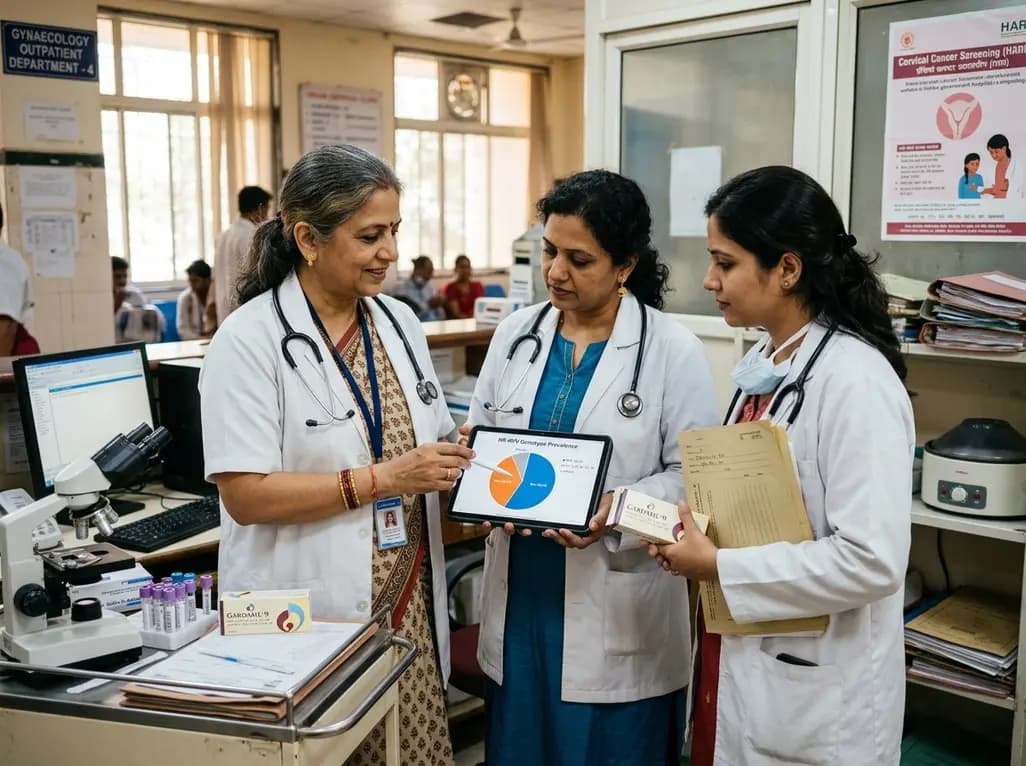
Persistent infection with high-risk HPV genotypes remains the primary etiological factor for cervical intraepithelial neoplasia and invasive cervical carcinoma globally. While conventional public health interventions predominantly target types 16 and 18, recent epidemiological surveillance reveals a substantial prevalence of alternative oncogenic strains in high-risk populations. A pivotal cross-sectional study conducted in Jayapura, Papua, investigated female sex workers to elucidate viral genotype distribution in underserved regions. The investigation revealed that non-16/18 strains accounted for the vast majority of oncogenic infections. Consequently, these findings raise critical considerations regarding cervical screening modalities, prophylactic vaccination paradigms, and preventive oncology strategies across high-burden settings.
Clinicians have historically focused on human papillomavirus genotypes 16 and 18 because these two genotypes drive approximately 70 percent of invasive cervical cancers worldwide. However, researchers recognize at least twelve additional high-risk viral strains, including types 31, 33, 35, 39, 45, 51, 52, 56, 58, 59, 66, and 68. In several regional cohorts across Southeast Asia and the Indian subcontinent, non-16/18 oncogenic variants demonstrate considerable epidemiological activity.
These alternative strains can establish persistent cervical mucosal infections that advance to high-grade cervical intraepithelial neoplasia. Furthermore, certain genotypes, such as HPV 45 and 58, frequently associate with adenocarcinomas and rapid malignant progression in specific ethnic populations. When clinicians encounter populations with high occupational exposure or limited screening access, the microbial landscape often reflects intense transmission dynamics. Consequently, reliance on assays that only detect classic genotypes can create substantial diagnostic blind spots. Healthcare systems must therefore understand the broader spectrum of oncogenic viruses to deliver effective primary and secondary prevention. Comprehensive genotyping data allow clinicians to stratify patient risk accurately and implement timely diagnostic colposcopy.
The Jayapura study investigated 75 female sex workers attending a reproductive health facility using real-time PCR genotyping assays. Notably, 44 percent of the cohort tested positive for oncogenic viral DNA. Among those who tested positive, an overwhelming 91 percent carried at least one non-16/18 high-risk HPV strain. In contrast, only three participants harbored solitary infections attributable to HPV 16 or 18. Furthermore, only 4 percent of participants reported receiving prior prophylactic vaccination, illustrating substantial gaps in community immunization coverage.
Multivariable regression analysis demonstrated that younger age significantly correlated with higher positivity rates. Specifically, each additional year of age was associated with an adjusted odds ratio of 0.928, confirming higher susceptibility among younger individuals entering high-risk environments. Frequency of sexual contact also trended toward increased risk, whereas barrier contraception showed unstable statistical estimates despite theoretical protection. These epidemiological findings indicate that intense exposure dynamics facilitate rapid transmission of diverse viral types. Moreover, the heavy concentration of non-16/18 strains highlights that bivalent or quadrivalent vaccine regimens offer incomplete protection in highly exposed cohorts. Therefore, clinical programmes must expand surveillance beyond traditional focal points.
Current national immunization initiatives in many low- and middle-income nations rely heavily on bivalent or quadrivalent prophylactic vaccines. While these vaccines provide robust protection against HPV 16 and 18—and quadrivalent formulas additionally prevent genital warts caused by types 6 and 11—they do not neutralize other oncogenic strains. The nonavalent vaccine directly addresses this shortfall by conferring immunity against five additional high-risk HPV types: 31, 33, 45, 52, and 58.
Mathematical models suggest that nonavalent coverage can elevate cervical cancer protection from 70 percent to nearly 90 percent. When high-risk communities exhibit a 91 percent predominance of non-16/18 high-risk HPV genotypes, quadrivalent immunization alone leaves patients vulnerable to oncogenic transformation. Therefore, transitioning to nonavalent formulations represents a logical and urgent step for high-risk public health initiatives. In addition, health authorities should consider targeted catch-up vaccination programs for vulnerable female cohorts, including commercial sex workers and immunocompromised individuals. Clinicians must educate patients that while earlier-generation vaccines reduce overall population risk, comprehensive protection requires broader multivalent coverage. Proactive immunisation strategies will significantly decrease future disease burden and healthcare expenditures.
Cytological screening through conventional Papanicolaou smears has historically reduced cervical cancer rates across organized healthcare systems. However, cytology exhibits low sensitivity and depends heavily on subjective cytopathological interpretation and rigorous sample preparation. In contrast, validated molecular HPV-DNA testing provides superior analytical sensitivity and objective risk stratification. Molecular assays can detect minimal viral loads well before cellular morphology exhibits dysplastic changes.
International bodies, including the World Health Organization, strongly advocate for primary molecular screening over standalone cytology. When molecular platforms incorporate extended genotyping or pooled non-16/18 channels, clinicians can rapidly triage patients based on specific oncogenic risk. For example, a positive result for non-16/18 high-risk HPV genotypes warrants reflex liquid-based cytology or immediate colposcopic evaluation in high-risk demographics. Furthermore, molecular platforms accommodate self-sampling devices, overcoming cultural and logistical barriers in marginalized communities. In regions with minimal healthcare infrastructure, introducing molecular primary screening drastically reduces loss to follow-up through rapid point-of-care workflows. Consequently, healthcare providers must champion molecular diagnostic adoption to identify pre-invasive cervical lesions effectively and prevent invasive malignancy.
In India, cervical cancer remains one of the leading causes of cancer-related mortality among women, claiming tens of thousands of lives each year. While indigenous quadrivalent vaccines improve national immunization accessibility, clinicians in private and institutional practice must appreciate local strain variations. High-risk cohorts, including female sex workers and women living with HIV, frequently harbor non-16/18 high-risk HPV genotypes that require vigilant surveillance.
Primary care physicians and gynaecologists should integrate regular molecular HPV-DNA screening into routine clinical care for sexually active women starting at age 30. When counseling patients about immunization, clinicians should explain the differential coverage between quadrivalent and nonavalent formulations. For older or sexually active patients, physicians must emphasize that vaccination prevents new infections but cannot clear existing viral integration. Furthermore, healthcare teams should establish multidisciplinary referral pathways to ensure that screen-positive individuals undergo prompt colposcopy, biopsy, and excisional treatment when indicated. Combining broad-spectrum vaccination with accessible molecular screening establishes the strongest defense against cervical malignancy across diverse Indian populations.
Non-16/18 high-risk HPV genotypes, including types 31, 33, 45, 52, and 58, account for approximately 20 percent of cervical cancers worldwide. Although HPV 16 and 18 carry the highest individual oncogenic potential, these other high-risk strains cause persistent epithelial infections. Over time, unresolved infections induce cervical dysplasia and intraepithelial neoplasia. Consequently, patients infected with non-16/18 oncogenic genotypes require regular clinical monitoring, reflex cytological examination, and timely colposcopic assessment to prevent malignant transformation.
Molecular HPV-DNA testing demonstrates significantly higher clinical sensitivity compared to conventional Papanicolaou cytology. Molecular assays detect viral nucleic acids before morphologic cellular alterations appear under microscopic examination. Moreover, HPV-DNA testing provides objective results, reducing the human error inherent in manual slide reading. This high negative predictive value safely extends screening intervals to five years for negative patients. Furthermore, molecular tests support self-collection swabs, improving screening accessibility in underserved communities.
Routine nonavalent booster doses are not universally mandated for individuals who have completed a full quadrivalent vaccination series. However, the nonavalent vaccine offers expanded protection against five additional high-risk HPV genotypes (31, 33, 45, 52, and 58). Sexually active women, healthcare workers, or high-risk individuals seeking broader protection may receive the nonavalent vaccine after clinical consultation. Nevertheless, clinicians must emphasize that regular cervical screening remains essential regardless of prior vaccination history.
Disclaimer: This content is for informational and educational purposes only... Refer to the latest local and national guidelines for clinical practice.
References

Read summarized clinical updates, watch expert medical content, and earn CME certifications right from your smartphone.
Open your smartphone camera to scan and install.





A recent study highlights the predominance of non-16/18 high-risk HPV genotypes among high-risk cohorts, demonstrating the urgent need for nonavalent HPV vaccination and molecular HPV-DNA screening to optimize cervical cancer prevention strategies.
4 weeks back

A systematic review of 41 preclinical studies reveals that baicalin dampens systemic inflammation, inhibits NF-κB and NLRP3 pathways, and improves organ preservation in sepsis models. However, substantial study heterogeneity and a complete lack of human clinical trials highlight the need for further translational research.
Today
Discover the crucial distinctions between mesonephric and mesonephric-like proliferations of the female genital tract. Learn the key histomorphologic, immunohistochemical, and molecular differences essential for accurate diagnosis and clinical management.
Today
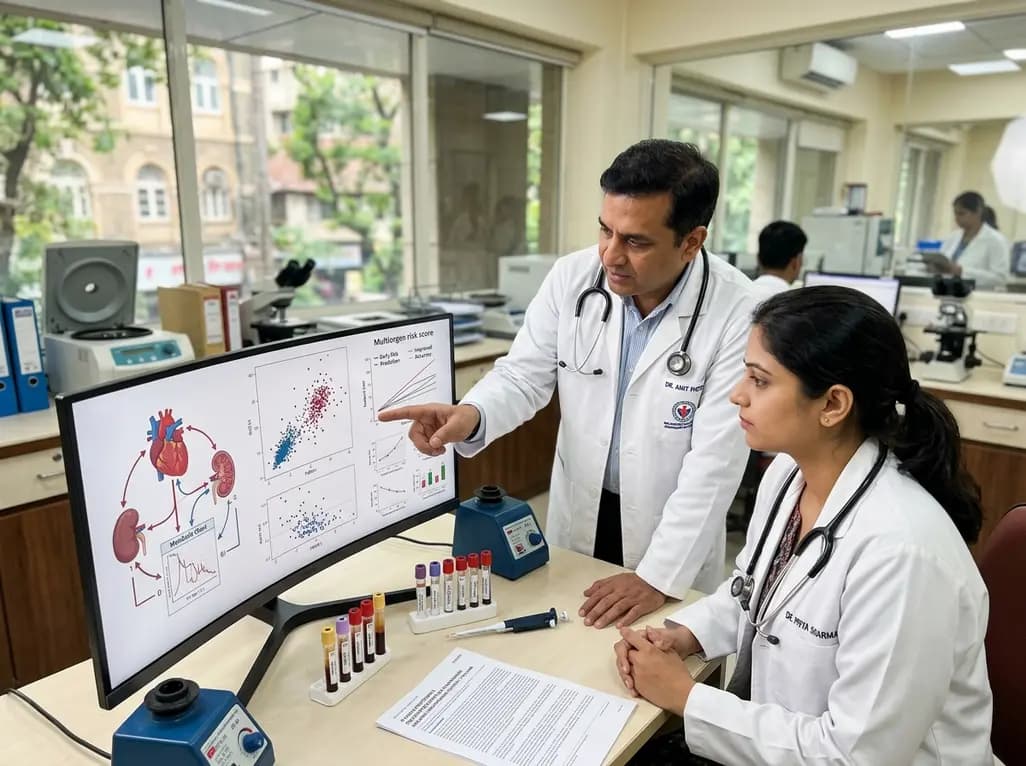
A large UK Biobank study reveals that plasma proteomic signatures capture preclinical organ damage and improve multiorgan risk prediction across early CKM syndrome stages 0 to 2 beyond traditional PREVENT clinical models.
Today
A narrative review investigates whether the articularis genus muscle functions as an independent anatomical entity or blends with the vastus intermedius. We evaluate its morphology, role in retracting the suprapatellar bursa, and direct clinical significance in anterior knee pain and arthroplasty.
Today
A Bayesian multilevel meta-analysis reveals that aerobic training combined with moderate carbohydrate restriction modestly lowers HbA1c in type 2 diabetes. However, sparse data and very low certainty leave incremental benefits over exercise or diet alone unproven, highlighting the need for individualized care.
Today
