.webp&w=384&q=75)

Loading, please wait...
Loading, please wait...
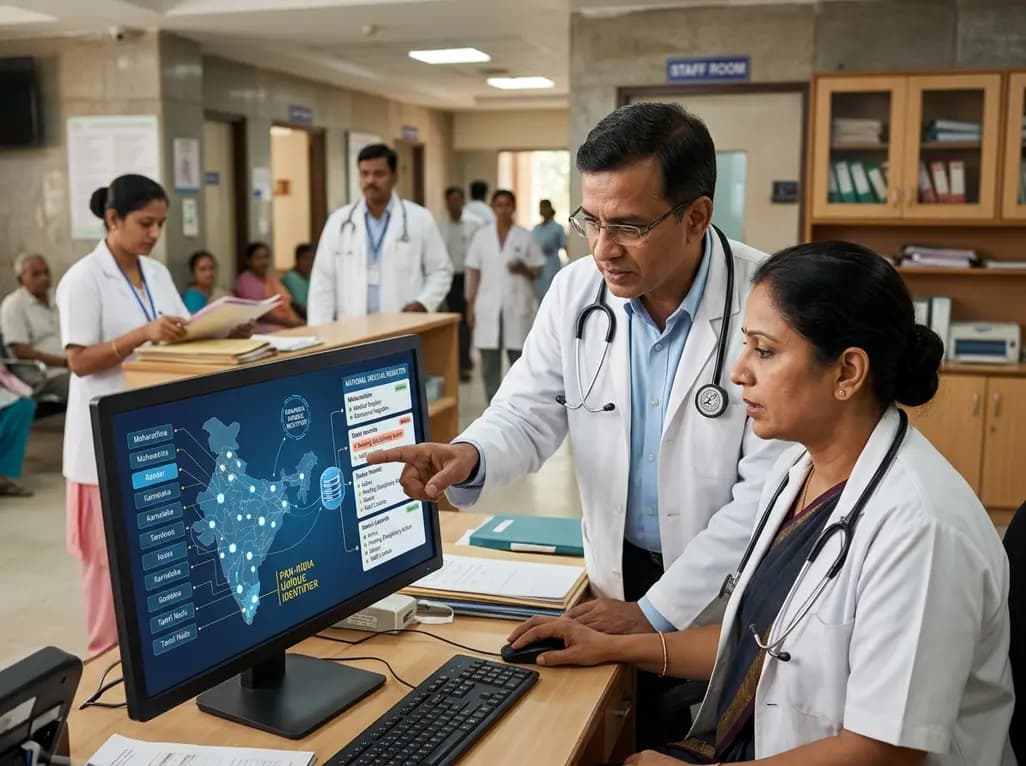
The National Medical Commission (NMC) has introduced a landmark regulatory reform to centralize the monitoring of medical practitioners across India. Under the newly released draft regulations, the National Medical Register will serve as a single digital clearinghouse to document professional credentials, licensure validity, and disciplinary actions nationwide. Consequently, regulatory enforcement will no longer remain confined within state boundaries. State Medical Councils and central authorities will maintain synchronized electronic records. This comprehensive initiative aims to enhance public transparency, streamline practitioner mobility, and strengthen professional accountability throughout the Indian healthcare delivery system.
Under the draft Registration of Medical Practitioners and Licence to Practice Medicine (Amendment) Regulations, 2026, the National Medical Register forms the technological core of practitioner governance. The Ethics and Medical Registration Board (EMRB) will maintain this real-time digital repository to unify fragmented state databases. Furthermore, the central framework assigns every qualified doctor a Unique Identification (UID) number upon primary verification. This system guarantees that physician records remain accessible across regional boundaries without administrative friction. Therefore, healthcare administrators can easily verify registration authenticity before hiring or granting hospital privileges.
Additionally, the portal dynamically records whether a medical licence is currently active, expired, or suspended. State Medical Councils will feed local data directly into the central hub to avoid information asymmetry. As a result, the centralized digital architecture eliminates manual record retrieval between different geographic jurisdictions. Moreover, regulatory boards can immediately identify lapses in compliance or questionable documentation. This synchronized infrastructure ultimately provides a dependable foundation for transparent medical governance throughout all Indian states and Union Territories.
Historically, disciplinary actions taken by an individual State Medical Council were rarely tracked uniformly across interstate borders. Under the proposed regulations, however, any formal complaint involving medical negligence, unethical behaviour, or professional misconduct will follow a standardized reporting mechanism. The State Medical Council in whose physical jurisdiction an alleged violation occurs retains original investigative authority. Once that council issues a ruling, authorities will reflect the decision directly on the digital portal.
Consequently, if a medical council suspends a practitioner or recommends disciplinary sanctions, the system automatically synchronizes these penalties across the National Medical Register and the practitioner’s primary state register. Furthermore, this electronic integration ensures that suspended practitioners cannot relocate to another state to resume practice undetected. State authorities and the central board will also hold statutory powers to inspect council compliance records regularly. Thus, the new framework significantly raises accountability standards and protects patient safety by upholding unified ethical oversight.
Beyond disciplinary oversight, the proposed framework dramatically simplifies interstate mobility for licensed medical practitioners. Previously, doctors moving across state lines frequently navigated cumbersome paperwork and separate state registration fees. In contrast, the draft rules establish a streamlined \"One Nation, One Licence\" operational model. Once a doctor completes registration with a primary State Medical Council and obtains an assigned UID, they can lawfully practise medicine anywhere in India without securing multiple redundant licences.
Moreover, the National Medical Commission has specified that obtaining the central UID will incur no fee for existing doctors. Clinicians already registered under the legacy Indian Medical Register must simply update their credentials through the designated online portal within a prescribed window. Therefore, this administrative integration drastically reduces bureaucratic burdens on clinicians relocating for employment or providing emergency medical support. In addition, healthcare facilities can onboard qualified specialists rapidly while maintaining full statutory confidence.
The draft regulations uphold a standardized five-year validity period for every medical practice licence issued across the country. To ensure regulatory discipline, practitioners must apply for periodic renewal before the expiry date. If a clinician fails to complete renewal within a three-month grace period following expiration, the system automatically marks their registration as inactive. Consequently, the practitioner legally loses the authorization to treat patients until they complete formal reactivation protocols.
Furthermore, this time-bound mechanism ensures that the national database reflects only actively certified medical personnel. The regulations also introduce clear appellate safeguards for applicants facing administrative rejections. Specifically, if a State Medical Council rejects a registration or renewal application, the practitioner can file an appeal with the EMRB within thirty days. If the appellate authority upholds the doctor's petition, the state council must issue the corresponding registration within fifteen days, thereby guaranteeing procedural fairness.
The revised regulations introduce specific statutory provisions catering to international practitioners and foreign-trained medical graduates. In particular, the draft establishes a structured framework for issuing Good Standing Certificates to international doctors seeking recognized professional mobility. Additionally, overseas doctors participating in postgraduate fellowships or advanced super-specialty training programs in India can secure temporary registration valid for up to twenty-four months.
This structured pathway allows academic medical institutions to host global medical talent while maintaining rigorous oversight standards. Furthermore, the National Medical Commission has withdrawn its prior preliminary draft from April 2026 to incorporate wider stakeholder feedback within this fresh August notification. The commission continues to accept public suggestions before formally codifying these rules into law. Ultimately, these progressive updates modernize statutory healthcare administration, elevating India's clinical regulatory ecosystem to meet contemporary international standards.
Q1: How does the new tracking system impact a doctor's ability to practise across different Indian states?
Once a practitioner receives their unique identification number linked to the central register, they can practice in any Indian state or Union Territory without applying for separate state licences. However, any disciplinary action taken by one state council will automatically reflect in the central database and primary register, preventing unauthorized practice across regional borders.
Q2: What happens if a medical practitioner fails to renew their practice licence within the specified timeline?
A medical licence remains valid for five years under the draft framework. If a doctor fails to renew the licence within three months after its expiration date, their registration status automatically changes to inactive. Consequently, the clinician cannot legally engage in clinical practice until they complete the formal renewal and regularization process.
Q3: What recourse is available to a medical practitioner if their registration or renewal application is rejected?
If a State Medical Council rejects an application for registration or licensing, the doctor has the right to file an appeal before the Ethics and Medical Registration Board within thirty days. If the board rules in favour of the applicant, the relevant state council must grant the registration within fifteen days.
Disclaimer: This content is for informational and educational purposes only. It does not constitute medical advice or replace professional judgment. Refer to the latest local and national guidelines for clinical practice.
References

Read summarized clinical updates, watch expert medical content, and earn CME certifications right from your smartphone.
Open your smartphone camera to scan and install.





The National Medical Commission has published draft regulations to electronically link state registers with a centralized National Medical Register. This reform introduces a pan-India unique identifier, enabling centralized tracking of disciplinary orders, licence validity, and seamless cross-state practice.
last month

A systematic review of 41 preclinical studies reveals that baicalin dampens systemic inflammation, inhibits NF-κB and NLRP3 pathways, and improves organ preservation in sepsis models. However, substantial study heterogeneity and a complete lack of human clinical trials highlight the need for further translational research.
Today
Discover the crucial distinctions between mesonephric and mesonephric-like proliferations of the female genital tract. Learn the key histomorphologic, immunohistochemical, and molecular differences essential for accurate diagnosis and clinical management.
Today
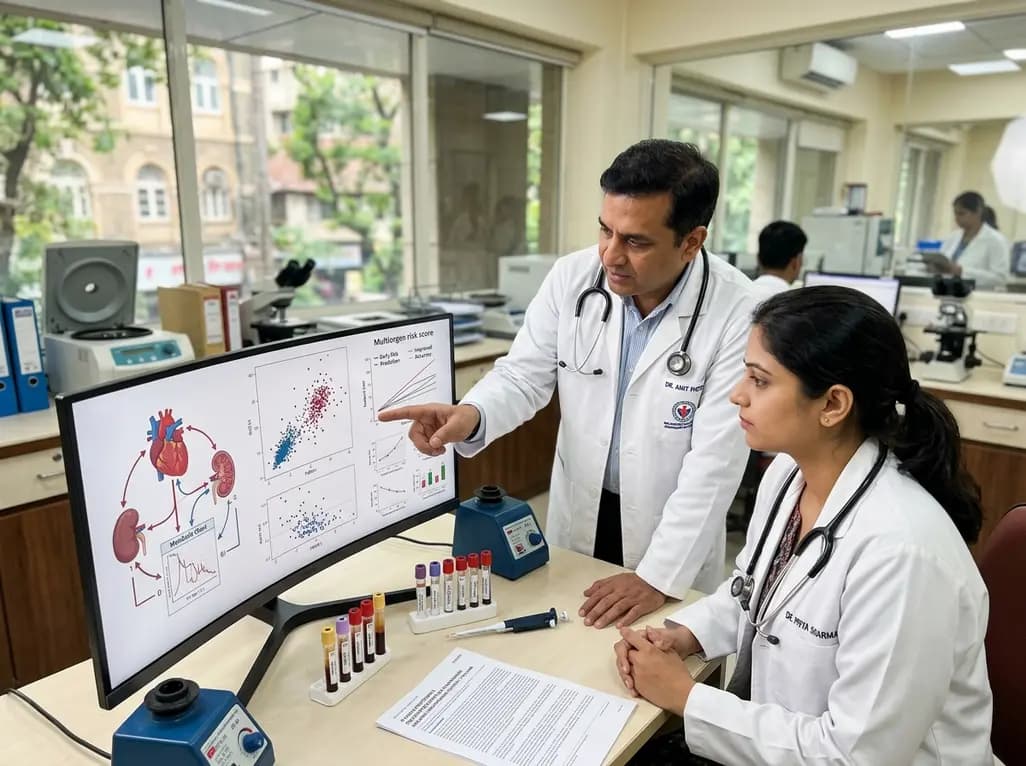
A large UK Biobank study reveals that plasma proteomic signatures capture preclinical organ damage and improve multiorgan risk prediction across early CKM syndrome stages 0 to 2 beyond traditional PREVENT clinical models.
Today
A narrative review investigates whether the articularis genus muscle functions as an independent anatomical entity or blends with the vastus intermedius. We evaluate its morphology, role in retracting the suprapatellar bursa, and direct clinical significance in anterior knee pain and arthroplasty.
Today

A Bayesian multilevel meta-analysis reveals that aerobic training combined with moderate carbohydrate restriction modestly lowers HbA1c in type 2 diabetes. However, sparse data and very low certainty leave incremental benefits over exercise or diet alone unproven, highlighting the need for individualized care.
Today
