.webp&w=384&q=75)

Loading, please wait...
Loading, please wait...
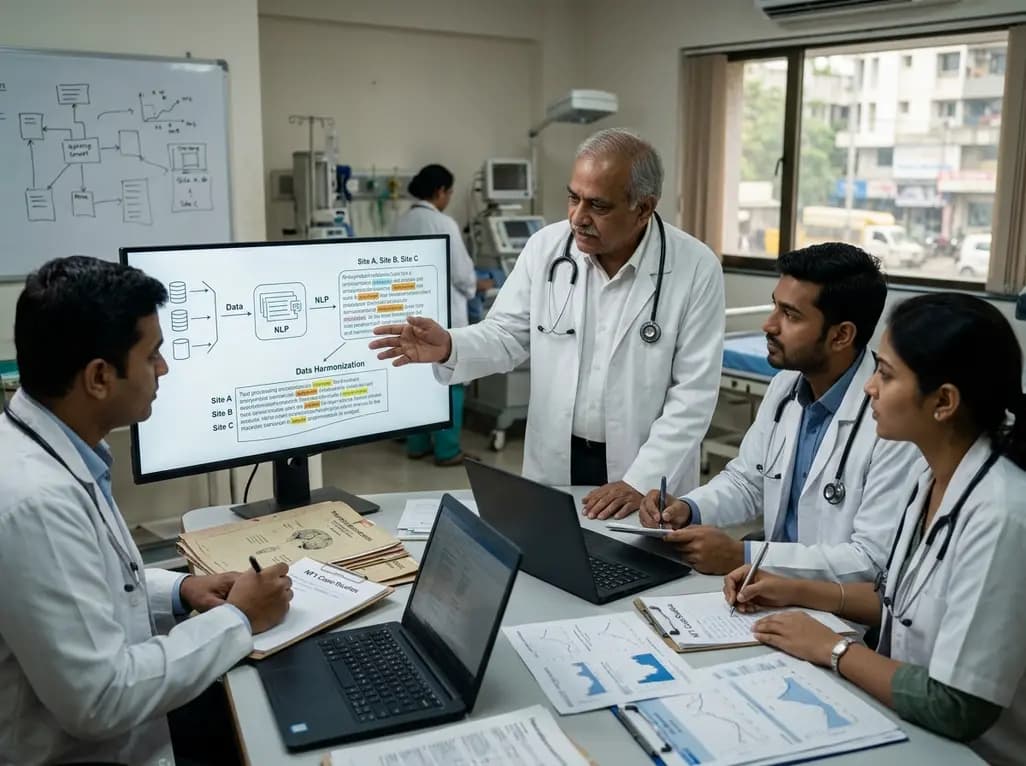
Electronic health record systems store vast amounts of descriptive medical observations that drive modern clinical research and precision care. However, unstructured narrative text often presents major obstacles for automated analytics. In complex multisystem genetic conditions, standardized recording remains difficult to maintain across diverse healthcare providers. A multicenter retrospective observational study published in Neurology: Clinical Practice examined how variations in electronic health records affect data harmonization. The researchers demonstrated that variable physician terminology poses significant barriers to automated phenotyping algorithms. Consequently, optimizing NF1 clinical documentation represents an urgent priority for modern neuro-oncology, clinical informatics, and pediatric registries.
Neurofibromatosis type 1 is an autosomal dominant neurocutaneous condition affecting multiple organ systems with highly variable phenotypic expression. Patients frequently develop café-au-lait macules, neurofibromas, optic pathway gliomas, skeletal dysplasias, and cognitive challenges. Because the disorder evolves dynamically over a patient's lifespan, comprehensive medical tracking requires longitudinal evaluations across multiple distinct subspecialties. Neurologists, dermatologists, pediatricians, ophthalmologists, and oncologists all contribute detailed progress notes during routine surveillance.
However, each clinical discipline frequently utilizes distinct vocabulary to describe identical phenotypic traits. For instance, an ophthalmologist might describe an optic pathway lesion using specific anatomical descriptors, whereas a general pediatrician might record a broader diagnostic term. This fragmentation creates significant lexical heterogeneity within electronic health records. Machine learning and natural language processing pipelines struggle when identical underlying pathologies carry numerous divergent descriptors. Therefore, resolving documentation inconsistencies is essential to establish reliable digital registries, monitor disease progression, and facilitate equitable clinical trial enrollment.
To evaluate the extent of documentation divergence, investigators analyzed thousands of outpatient progress notes across two large tertiary pediatric centers. The research team implemented a rule-based natural language processing algorithm designed to identify ten core diagnostic features of the condition. In addition, the algorithm mapped the diverse lexicon utilized by clinicians over multiple consecutive years.
The computational model systematically evaluated progress notes for synonym usage, abbreviations, and informal shorthand expressions. Furthermore, the investigators measured the frequency and consistency of each term across different hospital sites, clinical departments, and individual healthcare providers. The results highlighted striking linguistic divergence within electronic health records. Even within the same medical institution, clinicians frequently described identical diagnostic findings using radically different vocabulary. Although natural language processing models can capture structured parameters efficiently, unstructured narrative fields require robust lexicons to prevent critical omissions during automated phenotyping workflows.
The observational investigation evaluated 5,393 outpatient progress notes representing 1,661 individual pediatric patients. Across this substantial dataset, researchers identified profound lexical variation for the majority of core clinical features. Preferred standardized terminology appeared in only a minority of reviewed notes, highlighting an ongoing reliance on idiosyncratic documentation practices.
Specifically, clinically significant manifestations such as optic pathway gliomas were documented using dozens of distinct nonstandard synonyms and colloquial phrases. Cutaneous neurofibromas demonstrated slightly higher internal consistency within individual health systems, yet the documented terms lagged behind modern clinical trial nomenclature. In contrast, plexiform neurofibromas and attention-deficit/hyperactivity disorder exhibited relatively higher documentation consistency across provider notes. These discrepancies indicate that clinician familiarity with specialized diagnostic criteria directly shapes charting patterns. When clinicians use variable terminology, automated health surveillance pipelines may misinterpret or entirely miss key prognostic indicators.
Beyond vocabulary variation, the study uncovered substantial gaps in longitudinal documentation completeness across patient records. Features documented comprehensively during initial diagnostic consultations frequently vanished from subsequent follow-up progress notes. Clinicians often focused solely on acute interval developments rather than maintaining a complete longitudinal inventory of chronic phenotypic manifestations.
This phenomenon creates significant challenges for secondary health data utilization. When natural language processing tools analyze longitudinal medical records, missing historical features may cause algorithms to register false negatives. Consequently, longitudinal observational research can underestimate disease prevalence or mischaracterize the timing of clinical complications. Incomplete charting also weakens machine learning classifiers designed to predict clinical trajectories or therapeutic responses. Establishing systematic longitudinal charting standards will ensure that electronic health records accurately reflect cumulative disease burden over time.
To overcome these documentation barriers, the study authors developed a standardized, data-informed clinical lexicon mapped to international medical terminology ontologies. Aligning provider notes with established coding systems, such as SNOMED CT and the Human Phenotype Ontology, bridges the gap between everyday bedside charting and advanced computational phenotyping.
Standardized vocabularies allow natural language processing tools to extract nuanced clinical information reliably without requiring exhaustive site-specific manual calibration. Moreover, unified terminology enhances multicenter data harmonization, which is vital for rare and complex genetic disorders where single institutions rarely possess sufficient sample sizes. By establishing common data models and shared lexical libraries, clinical networks can accelerate patient recruitment for targeted pharmacological trials. Harmonized records also facilitate robust real-world evidence generation, allowing researchers to evaluate emerging therapies across heterogeneous global populations.
The findings provide practical lessons for multidisciplinary clinical teams managing complex genetic conditions. Health systems must adopt intuitive documentation templates that guide clinicians toward standardized terminology without increasing administrative charting burden. Smart clinical decision support tools and structured electronic health record drop-down fields can prompt providers to record core surveillance features consistently.
Furthermore, integrating natural language processing feedback directly into electronic health record workflows can assist clinicians during routine documentation. Automated systems can suggest standardized terminology or alert clinicians when previously recorded features are omitted from follow-up summaries. As artificial intelligence tools become integral to daily healthcare delivery, clean structured data will determine the accuracy of predictive algorithms. Improving clinical documentation practices ultimately enhances communication across specialties, prevents diagnostic oversights, and optimizes long-term patient outcomes.
Lexical variation introduces substantial noise and classification errors into automated health record extraction pipelines. When clinicians use diverse nonstandard terms for identical disease features, natural language processing algorithms miss critical diagnostic markers. This fragmentation undermines observational cohort studies, reduces phenotyping accuracy, and limits the reliability of real-world evidence generation across healthcare institutions.
Plexiform neurofibromas often carry dedicated surveillance protocols, distinct oncologic implications, and specific therapeutic interventions that demand standardized terminology. In contrast, cutaneous neurofibromas are common benign superficial lesions that clinicians frequently describe using varied informal descriptors, which often lag behind modern nomenclature used in clinical trials and genetic consensus guidelines.
Healthcare institutions can implement standardized electronic clinical templates mapped to biomedical ontologies such as SNOMED CT. Additionally, deploying natural language processing tools that provide real-time vocabulary prompts and structured longitudinal checklists ensures consistent phenotypic capture across multidisciplinary teams while minimizing administrative documentation burden for practicing physicians.
Disclaimer: This content is for informational and educational purposes only and does not constitute medical advice, diagnosis, or treatment. Always consult a qualified healthcare provider with any questions regarding medical conditions or clinical decisions. Refer to the latest local and national guidelines for clinical practice.
References

Read summarized clinical updates, watch expert medical content, and earn CME certifications right from your smartphone.
Open your smartphone camera to scan and install.





A multicenter study demonstrates how natural language processing can resolve lexical variation and longitudinal gaps in electronic health record documentation for neurofibromatosis type 1.
last month

A clinical report details delayed metal hypersensitivity following laparoscopic surgery, manifesting as progressive neuropathy and autonomic failure. Surgical clip removal and kink correction stabilized symptoms, underscoring the necessity of diagnostic vigilance when standard workups remain negative.
Today

A multiparametric MRI approach combining quantitative T2 shading, apparent diffusion coefficient (ADC) measurements, and morphological signs provides superior diagnostic accuracy over subjective evaluation to differentiate ovarian endometriomas from benign hemorrhagic cysts.
Yesterday
A landmark case report reveals a donor heart beating for a century in a 63-year-old recipient, challenging conventional age limits in cardiac transplantation and offering critical lessons on organ longevity, donor selection, and long-term graft survival.
Today
A randomized trial compared myofascial release and dry needling for chondromalacia patellae in adult females. While both reduced knee pain, myofascial release combined with exercise produced superior quadriceps strength and improved the hamstring-to-quadriceps torque ratio.
Today
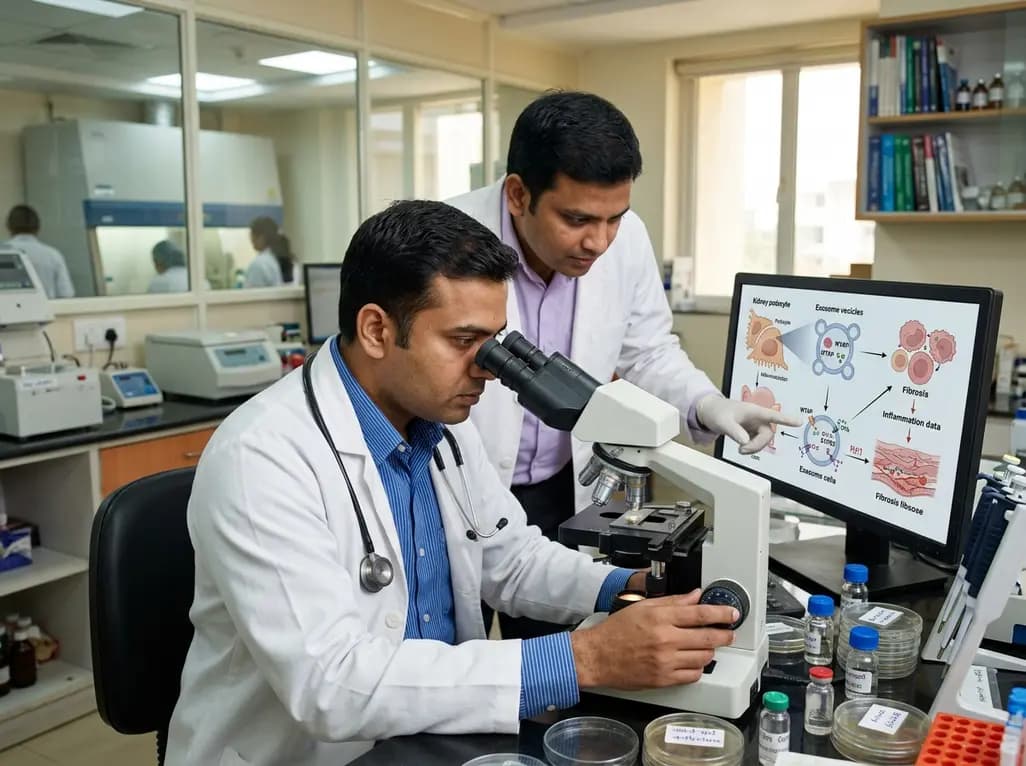
New research reveals that M1 macrophage-derived exosomes aggravate diabetic nephropathy by transferring WTAP to stabilize S1PR2 mRNA. Silencing WTAP in these vesicles attenuates endothelial injury and renal fibrosis, pointing toward innovative nanomedicine therapies.
Yesterday
