.webp&w=384&q=75)

Loading, please wait...
Loading, please wait...
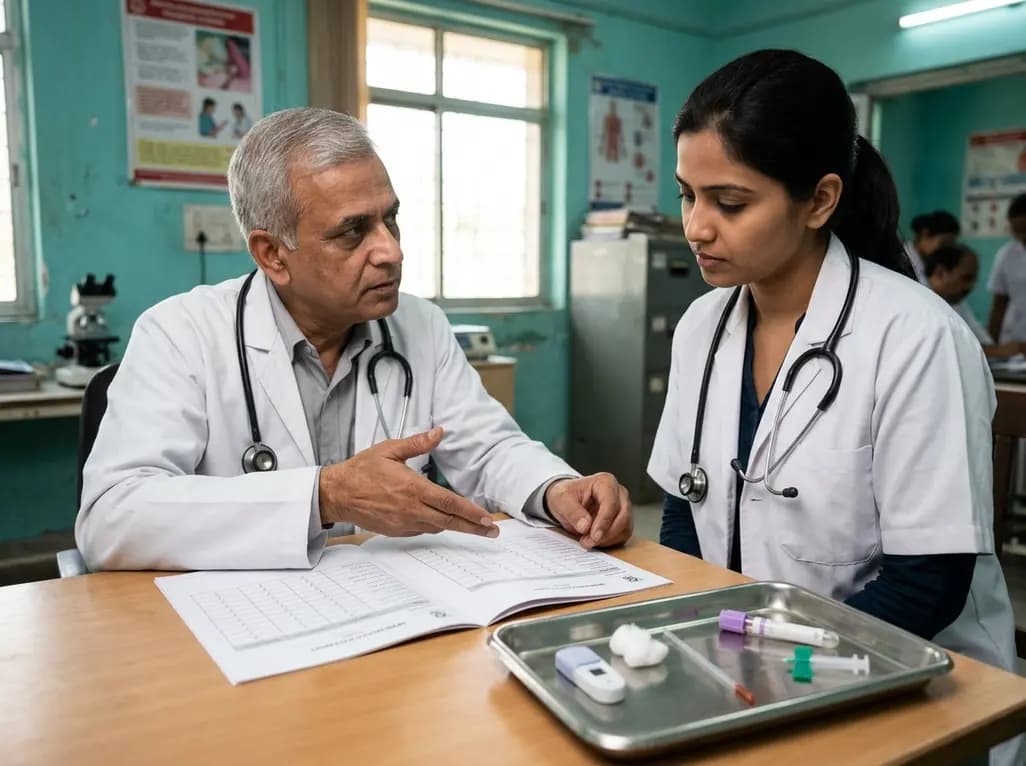
The recently released National Family Health Survey (NFHS)-6 Fact Sheets have sparked intense debate among public health professionals in India. Surprisingly, the newly published documents omit the critical NFHS-6 anaemia data. Consequently, several experts raised questions regarding this sudden exclusion. However, the Union Health Ministry quickly clarified that the exclusion stems from methodological changes aimed at ensuring data accuracy.
In previous survey rounds, researchers estimated haemoglobin levels using the capillary finger-prick blood sampling method. Nevertheless, many scientific experts argued that capillary sampling often leads to skewed or overestimated anaemia prevalence rates. Therefore, the government decided to suspend this practice for NFHS-6 to prevent data errors. Instead, future anaemia estimates will rely on venous blood samples, which experts consider the gold standard for haemoglobin estimation.
To fill this diagnostic gap, the government will use data from the Indian Council of Medical Research (ICMR)’s Diet and Biomarkers Survey. Because this specialized survey utilizes venous blood samples, it will provide much more reliable and accurate clinical estimates. While some public health experts worry about the lack of immediate comparability with NFHS-5, the government maintains that data quality remains the highest priority. Thus, the new methodology will establish a far more robust baseline for future public health programs.
Importantly, officials rejected any claims that they permanently dropped key public health indicators. Currently, the ministry is working to streamline India’s statistical systems by routing indicators to the most authoritative source. For example, dedicated systems like Swachh Survekshan Grameen track sanitation and clean cooking fuel. Concurrently, NFHS-6 has introduced several new indicators, including antenatal care utilization, financial inclusion, and elderly population share.
Q1: Why was the NFHS-6 anaemia data excluded from the latest fact sheets?
The government excluded the data due to accuracy concerns surrounding the capillary blood sampling method used in earlier rounds. Instead, anaemia estimates will be sourced from a dedicated ICMR survey utilizing venous blood samples.
Q2: Will the final NFHS-6 report contain child health and family planning details?
Yes. The released fact sheets represent only the first stage of data dissemination. The upcoming comprehensive National Report will include detailed family planning indicators, child health interventions, and women’s health parameters.
Q3: Which survey will provide the new anaemia estimates for India?
The Indian Council of Medical Research (ICMR)’s Diet and Biomarkers Survey (DABS) will provide the updated anaemia estimates using the more accurate venous blood sampling method.
Disclaimer: This content is for informational and educational purposes only. It does not constitute medical advice or replace professional judgment. Refer to the latest local and national guidelines for clinical practice.
References

Read summarized clinical updates, watch expert medical content, and earn CME certifications right from your smartphone.
Open your smartphone camera to scan and install.





The Indian Health Ministry excluded anaemia from NFHS-6 fact sheets over capillary blood testing concerns, shifting to ICMR's venous sample survey....
3 months ago

A new study reveals that lipid-related metabolic dysregulation, marked by elevated TG/HDL-C ratio and glymphatic changes, independently impacts survival in idiopathic normal pressure hydrocephalus.
Today
A premature neonate developed upper limb compartment syndrome after uterine rupture extruded the arm through a scar defect. Conservative management with continuous monitoring yielded complete functional recovery and normal limb growth at 10-year follow-up, highlighting non-operative safety in selected cases.
Today
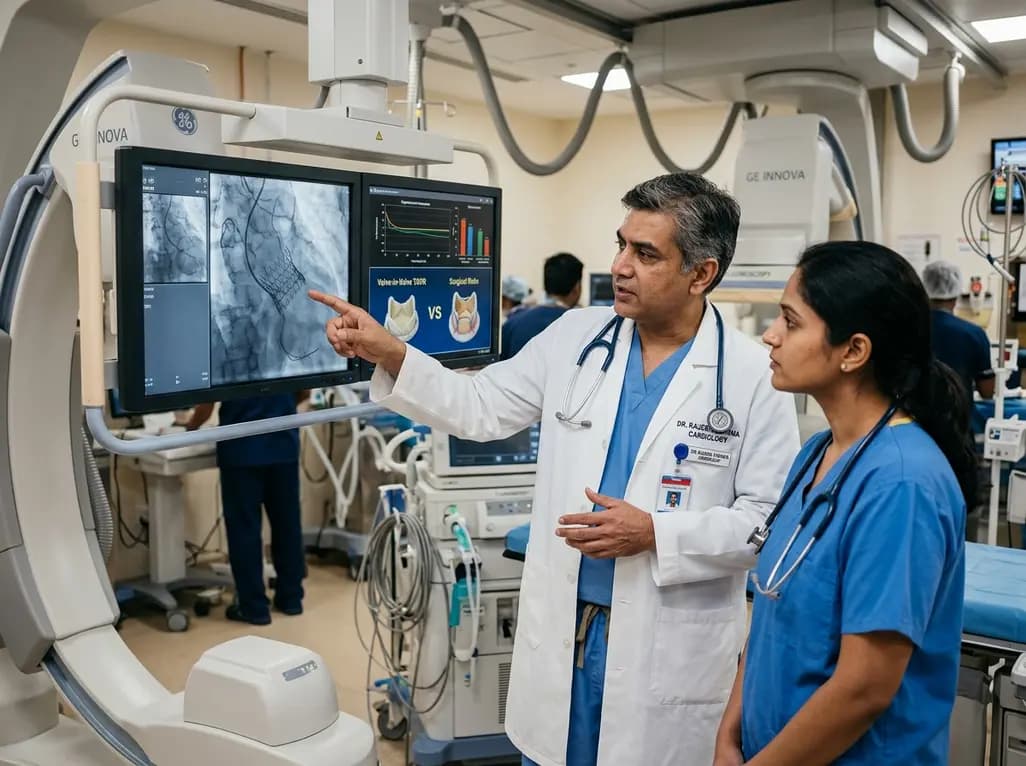
A meta-analysis of 13 propensity score-matched studies shows ViV-TAVR delivers lower early mortality and reduced bleeding compared to redo-SAVR for degenerated bioprosthetic aortic valves, though long-term hemodynamics warrant careful anatomical and patient-centered evaluation.
Today
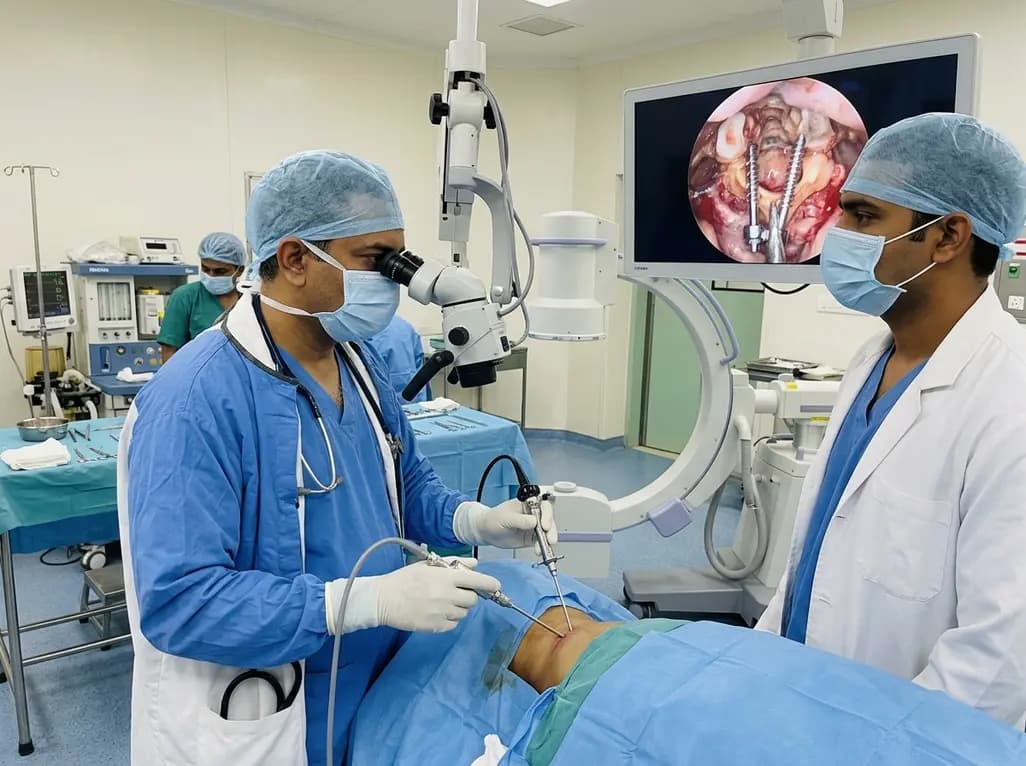
Endoscopic posterior cervical fusion combines minimally invasive decompression, joint preparation, and rigid screw-rod fixation for atlantoaxial pathologies. Early clinical findings demonstrate solid bony union, excellent symptom relief, and minimal soft-tissue morbidity without significant vascular compromise.
Yesterday
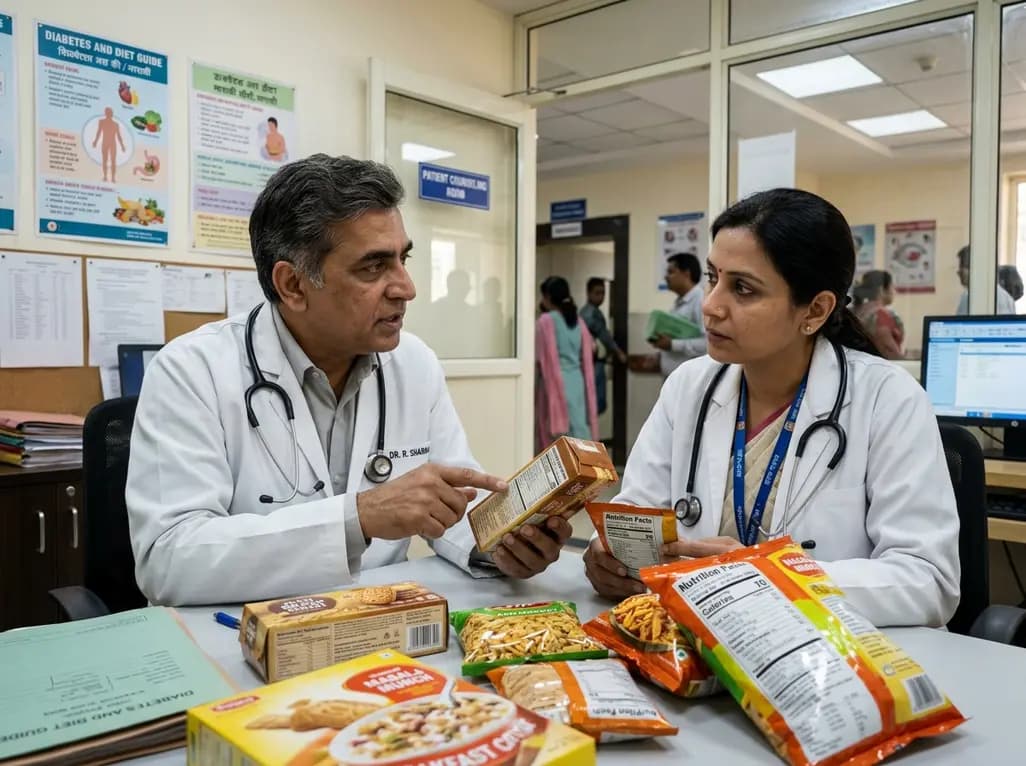
The All-India Food Processors' Association has approached the Supreme Court to oppose FSSAI's proposed per-100g benchmark for front-of-pack warning labels, advocating instead for a per-serving threshold. We explore the regulatory showdown, nutritional evidence, and implications for clinical lifestyle counseling.
Today
