.webp&w=384&q=75)

Loading, please wait...
Loading, please wait...

The newborn vitamin K shot represents one of the most critical prophylactic interventions administered immediately after birth. Recently, pediatricians have reported an alarming surge in parental refusals of this standard therapy. This hesitancy places vulnerable infants at high risk for catastrophic hemorrhagic events. Healthcare providers worldwide, including across India and the United States, recognize intramuscular phytonadione as essential. Consequently, understanding the drivers of refusal and reinforcing clinical evidence are vital priorities for neonatal health.
Recent clinical surveillance demonstrates an unprecedented rise in prophylaxis rejection among new parents. According to extensive hospital registry analyses, non-receipt rates jumped over fifty-seven percent within six months. Furthermore, recent data reveals that nearly eight percent of newborns left the hospital without receiving the injection. This rate represents a marked departure from historical baseline levels observed over previous decades.
In addition, pediatric healthcare providers note that rising skepticism closely mirrors broader vaccine hesitancy trends. Many parents mistakenly conflate standard vitamin supplementation with routine immunizations. Consequently, public discourse and shifting policy messages have amplified maternal anxiety regarding early neonatal interventions. Health practitioners across primary care and hospital nurseries report encountering persistent parental doubts daily.
Therefore, pediatric practices have adapted their clinical workflows to mitigate immediate risks. Some outpatient clinics now routinely stock the injectable vitamin to offer delayed catch-up prophylaxis. Nevertheless, early hospital-based administration remains the gold standard of care. Because delays leave neonates completely unprotected during their most vulnerable window, clinicians emphasize immediate postnatal delivery. As hesitancy figures continue to rise, tracking these refusal patterns becomes indispensable for pediatric departments everywhere.
Human neonates enter the world with naturally low systemic reserves of vitamin K. This physiological shortfall occurs because vitamin K crosses the human placenta very poorly during gestation. In addition, the immature fetal and neonatal liver maintains minimal hepatic storage of this fat-soluble vitamin. Furthermore, the sterile neonatal gut lacks the bacterial flora necessary to synthesize endogenous menaquinones. Because human breast milk contains relatively low concentrations of vitamin K, exclusively breastfed infants face sustained physiological deficits.
Consequently, deficient infants cannot adequately carboxylate essential coagulation factors in the liver. Specifically, prothrombin (Factor II), Factor VII, Factor IX, and Factor X require vitamin K-dependent gamma-carboxylation to bind calcium. Without this biochemical modification, the clotting cascade fails to function efficiently. Therefore, spontaneous microvascular injury or minor trauma can rapidly trigger uncontrolled hemorrhage.
Moreover, without immediate postnatal supplementation, an infant remains severely deficient until approximately six months of age. Clinical investigations demonstrate that unsupplemented infants face an eighty-one-fold higher risk of experiencing severe hemorrhage compared to vaccinated peers. Thus, intramuscular phytonadione acts as an essential physiological bridge during the initial months of life. It supplies immediate bioavailable vitamin K to prevent catastrophic coagulopathic crises.
Vitamin K deficiency bleeding typically manifests across three distinct clinical timeframes: early, classic, and late. Early deficiency presents within the first twenty-four hours, frequently associated with maternal medications that disrupt vitamin metabolism. Classic deficiency occurs between day two and day seven of life, often presenting with gastrointestinal bleeding, cutaneous bruising, or persistent umbilical oozing. Although these forms cause serious morbidity, late-onset deficiency carries the most catastrophic clinical prognosis.
Notably, late vitamin K deficiency bleeding arises between two and twenty-four weeks of age. Exclusively breastfed infants who never received neonatal prophylaxis represent the primary cohort at risk. In over fifty percent of late-onset cases, spontaneous intracranial hemorrhage occurs. Consequently, affected infants often present with acute encephalopathy, bulging fontanelles, intractable seizures, or sudden cardiovascular collapse.
Furthermore, critical care specialists emphasize that one out of every five infants with severe intracranial bleeding will die. Among surviving infants, long-term neurologic sequelae—including cerebral palsy, severe developmental delay, and microcephaly—occur with distressing regularity. Because catastrophic bleeds occur without prior warning symptoms, clinical prophylaxis provides the only reliable safeguard against devastating permanent disability.
Recent observational data highlight an unexpected gender disparity regarding neonatal vitamin refusal. Specifically, researchers observed that infant girls experience refusal rates approximately twice as high as infant boys. In clinical cohorts, nearly nine percent of female newborns missed prophylaxis compared to seven percent of male newborns. This discrepancy stems directly from elective neonatal surgical procedures, particularly male circumcision.
Many healthcare systems enforce strict clinical protocols that prohibit surgical circumcision in neonates lacking documented vitamin K administration. Because neonatal circumcision carries a substantial bleeding risk without adequate coagulation factors, parents who desire the procedure reluctantly accept the injection. Conversely, parents of newborn girls face no such immediate procedural prerequisite. As a result, maternal hesitancy translates into higher actual omission rates for female infants.
Consequently, neonatologists express profound concern that severe bleeding episodes may disproportionately harm infant girls over coming years. This gender dynamic illustrates how parental risk perceptions shift when tied to immediate tangible procedures rather than invisible future risks. Therefore, pediatricians must proactively counter this disparity during prenatal and immediate postpartum discussions with equal vigilance for all infants.
Healthcare providers must employ compassionate, structured communication strategies to address parental vaccine and vitamin hesitancy. First, clinicians should clarify that phytonadione is a vital natural micronutrient rather than a synthetic drug or biological vaccine. In addition, providers should explain the clear biological reasons why every newborn requires immediate protection. By normalizing the injection as standard newborn safety care, physicians build necessary clinical trust.
Furthermore, healthcare facilities should implement standardized refusal protocols requiring informed consent documentation. When parents understand that late bleeding occurs silently in the brain, many reconsider their initial opposition. Physicians should also respectfully address fears surrounding formulation additives or historical debunked claims regarding childhood malignancies. Thorough clinical trials have decisively confirmed the safety profile of intramuscular phytonadione across millions of infants.
Moreover, obstetricians and pediatricians must coordinate prenatal counseling during third-trimester visits. Introducing newborn prophylaxis before delivery gives prospective parents adequate time to digest evidence without delivery-room stress. If parents adamantly decline intramuscular injection, clinicians must educate them on the limitations and rigorous adherence demands of oral regimens. Ultimately, persistent and empathetic clinical advocacy remains the primary defense against preventable neonatal mortality.
Q1: Why are newborn infants naturally deficient in vitamin K at birth?
Newborns enter the world with naturally low vitamin K levels because the vitamin transfers poorly across the human placenta during gestation. In addition, the immature neonatal liver stores very little vitamin K, and the sterile newborn gut cannot synthesize it. Furthermore, human breast milk contains relatively low concentrations of the nutrient. Consequently, without early supplementation, infants remain highly vulnerable to severe hemorrhagic disorders during their first six months.
Q2: What is the main difference between intramuscular and oral vitamin K prophylaxis?
Intramuscular phytonadione administration delivers a single, dependable dose that forms a tissue depot, ensuring sustained bioavailability and nearly complete protection against both classic and late-onset deficiency bleeding. In contrast, oral regimens require multiple, strictly timed doses and depend heavily on gastrointestinal absorption. Because parental non-compliance or subclinical malabsorption can lead to breakthrough intracranial hemorrhage, major pediatric guidelines worldwide strongly favor the single intramuscular shot.
Q3: How should pediatricians counsel parents who refuse the newborn vitamin K shot?
Pediatricians should initiate compassionate prenatal discussions explaining that vitamin K is an essential clotting vitamin rather than a synthetic vaccine. Furthermore, clinicians must clearly outline the silent, catastrophic nature of late-onset intracranial hemorrhage and long-term neurological disability. Requiring standardized informed refusal forms and empathetically dispelling misconceptions regarding carcinogenicity or unnecessary additives often reassures hesitant parents, encouraging them to accept this critical preventive care.
Disclaimer: This content is for informational and educational purposes only. It does not constitute medical advice or replace professional judgment. Refer to the latest local and national guidelines for clinical practice.
References

Read summarized clinical updates, watch expert medical content, and earn CME certifications right from your smartphone.
Open your smartphone camera to scan and install.





Refusals of the routine newborn vitamin K injection have surged sharply, leaving unprotected infants vulnerable to life-threatening vitamin K deficiency bleeding and intracranial hemorrhage. Pediatricians highlight the urgent need to address parental vaccine mistrust and provide proactive, evidence-based guidance.
4 weeks back

Red blood cell transfusion is critical in sickle cell disease management but brings significant immunological complexity, including alloimmunisation and iron overload. Extended RBC phenotyping and tailored protocols optimize clinical safety.
Today
Discover the crucial distinctions between mesonephric and mesonephric-like proliferations of the female genital tract. Learn the key histomorphologic, immunohistochemical, and molecular differences essential for accurate diagnosis and clinical management.
Today
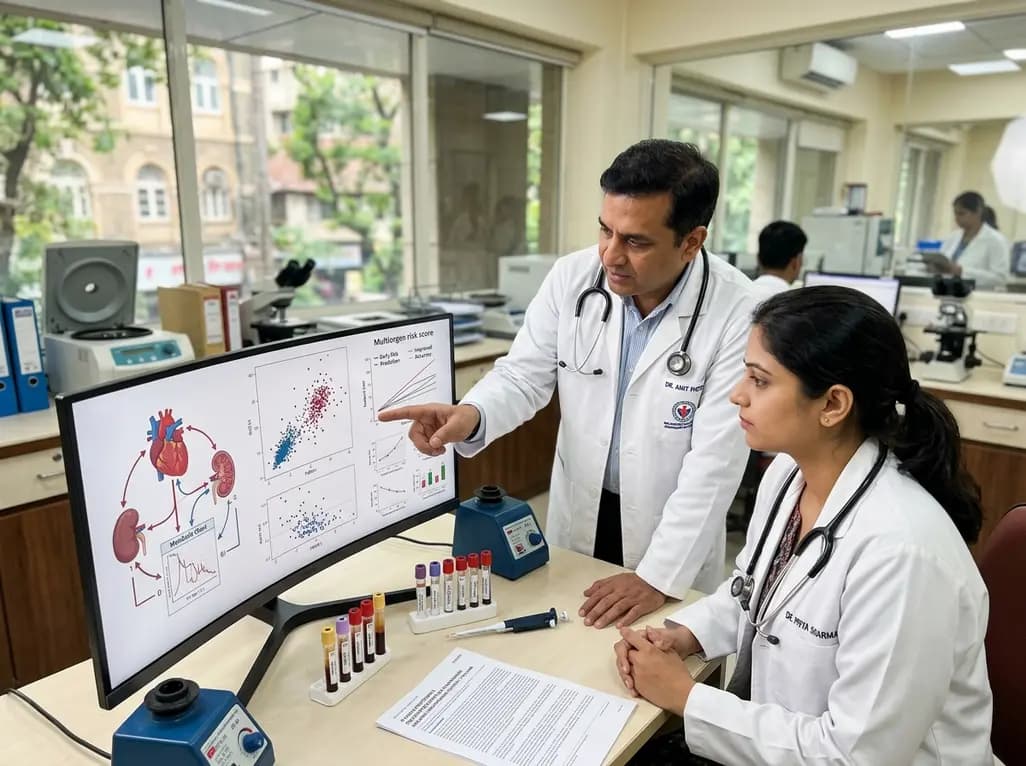
A large UK Biobank study reveals that plasma proteomic signatures capture preclinical organ damage and improve multiorgan risk prediction across early CKM syndrome stages 0 to 2 beyond traditional PREVENT clinical models.
Today

A retrospective CBCT study reveals that superior TMJ space asymmetry correlates moderately with occipital condyle-atlas-axis asymmetry in unilateral TMJ osteoarthritis, highlighting an imaging correlate between jaw biomechanics and upper cervical alignment rather than a standalone diagnostic marker.
Today

A Bayesian multilevel meta-analysis reveals that aerobic training combined with moderate carbohydrate restriction modestly lowers HbA1c in type 2 diabetes. However, sparse data and very low certainty leave incremental benefits over exercise or diet alone unproven, highlighting the need for individualized care.
Today
