.webp&w=384&q=75)

Loading, please wait...
Loading, please wait...

Autism spectrum disorder influences the entire family ecosystem, profoundly altering daily domestic routines and interpersonal dynamics. While extensive medical research focuses directly on autistic children and parental caregivers, researchers often overlook neurotypical siblings. A qualitative study conducted by Nazik in 2026 explores these crucial perspectives using interpretative phenomenological analysis. Consequently, the investigation provides clinicians with vital insights into the unique psychological landscape navigated by these young family members.
Growing up alongside a brother or sister with neurodevelopmental differences creates a complex domestic environment. Neurotypical youth regularly observe early disruptions in home life, communication, and emotional balance. Furthermore, they encounter distinct familial expectations that alter standard developmental milestones. Many siblings find themselves oscillating between deep affection and profound emotional isolation. Therefore, evaluating sibling narratives helps healthcare teams understand domestic adjustment, identify early distress, and design targeted family interventions.
The relationship between neurotypical individuals and their autistic siblings is remarkably fluid, complex, and non-linear. Participants in qualitative research describe sibling bonds that fluctuate continuously between warmth and distance. For instance, shared moments of joyful play or calm interaction foster genuine closeness. However, unpredictable behavioral dysregulation, aggressive outbursts, or severe communication barriers can abruptly strain these fragile connections.
Verbal and nonverbal communication deficits frequently prevent reciprocal interactions that typically characterize childhood sibling relationships. Neurotypical youth often struggle to interpret nonverbal cues, repetitive behaviors, or sensory overloads. Consequently, these communicative impasses generate substantial frustration and confusion, especially during early developmental stages. Despite these challenges, many siblings cultivate innovative non-verbal strategies to foster ongoing connection. Pediatric teams should provide age-appropriate education to help children understand neurodivergent communication and maintain healthy relational boundaries.
A dominant theme emerging from sibling narratives involves the early assumption of substantial domestic duties. Neurotypical children frequently step into surrogate caregiving and protective roles to assist their parents. For example, they supervise daily routines, assist with personal care, and manage behavioral crises in public spaces. Furthermore, this dynamic often leads to emotional parentification, wherein children internalize adult duties prematurely.
Overwhelmed by intense autism therapies, parents may inadvertently expect neurotypical children to display exaggerated maturity. Siblings frequently suppress their own emotional vulnerabilities, academic concerns, or recreational desires to avoid overburdening their parents. Because of this self-imposed restraint, young siblings may develop chronic internalized stress, anxiety, or perfectionism. Clinicians must actively evaluate these hidden family pressures during routine clinical encounters. Specifically, physicians should guide parents to establish balanced expectations that protect childhood development.
Although the domestic challenges of autism are considerable, neurotypical siblings often demonstrate remarkable psychological growth and resilience. Qualitative analysis reveals that siblings construct diverse coping mechanisms to manage chronic household stress. Specifically, many siblings cultivate adaptive problem-solving skills, creative communication techniques, and internal emotional regulation strategies.
Moreover, these lived experiences frequently accelerate personal maturity, fostering advanced empathy, patience, and social sensitivity. Sibling participants consistently report a heightened appreciation for neurodiversity and human vulnerability. Because they witness systemic challenges firsthand, they often champion social inclusion and demonstrate compassionate leadership among peers. Additionally, many siblings channel these formative experiences into healthcare, special education, and psychology careers. Clinicians can reinforce these positive outcomes by validating their experiences through strength-based counseling approaches.
Beyond the domestic environment, neurotypical siblings encounter significant psychosocial challenges across broader community settings. In public spaces, behavioral dysregulation, sensory meltdowns, or unusual vocalizations from an autistic sibling can attract unwanted attention and intrusive stares. Consequently, neurotypical youth frequently experience embarrassment, distress, and social anxiety during public family outings.
Furthermore, social stigma and community misunderstandings regarding autism spectrum disorder directly affect the neurotypical sibling. Many children experience peer exclusion, awkward questioning, or teasing at school. Sibling participants note that explaining their sibling's condition to uninformed peers can be emotionally draining. As a result, some siblings become hesitant to invite friends home, leading to progressive social isolation. Healthcare centers can mitigate these burdens by establishing specialized peer support groups where siblings share common experiences.
The qualitative findings from recent research underscore the urgent need for holistic, family-centered autism care. Current clinical protocols predominantly target the individual milestones of the diagnosed child. However, pediatricians, child psychiatrists, and family physicians must systematically incorporate neurotypical siblings into comprehensive management plans.
Clinicians should implement brief screening questions to evaluate sibling mental health, adjustment difficulties, and caregiving burdens during family consultations. Furthermore, primary care providers should deliver age-appropriate psychoeducation directly to siblings, explaining neurodevelopmental conditions clearly and dispelling irrational guilt. Multidisciplinary teams must also connect families with community-based sibling workshops and respite services. Ultimately, acknowledging sibling contributions and addressing their specific emotional needs strengthens family resilience and optimizes therapeutic outcomes for all household members.
Neurotypical siblings experience both psychological growth and emotional strain. While many cultivate advanced empathy, patience, and resilience, they also face heightened risks for chronic stress, anxiety, and internalized guilt. Early caregiving responsibilities and public stigma can exacerbate psychological distress if clinical and familial support remains inadequate.
Autism impacts every household member, altering parental stress, family routines, and sibling relationships. Family-centered care ensures that clinicians address the psychosocial needs of parents and neurotypical siblings alongside the diagnosed child. This holistic framework reduces caregiver burnout, promotes domestic stability, and optimizes developmental outcomes across the family unit.
Pediatricians should encourage parents to protect dedicated one-on-one time with neurotypical children and establish clear limits on caregiving duties. Additionally, clinicians should provide age-appropriate psychoeducation about autism, screen siblings regularly for anxiety or depressive symptoms, and recommend structured peer support groups to reduce social isolation.
Disclaimer: This content is for informational and educational purposes only and is not intended as medical advice, diagnosis, or treatment. It does not replace professional clinical judgment. Healthcare professionals should make individualized decisions based on each patient's specific circumstances. While we strive to present current and accurate medical news, please note that clinical knowledge rapidly evolves. Refer to the latest local and national guidelines for clinical practice.
References
1. Nazik A Echoes of autism in family life: Neurotypical siblings' perspectives. PLoS One. 2026. doi: 10.1371/journal.pone.0356696. PMID: 42647488.
2. Jones EA, Fiske K, Minchwyld H, et al. Sibling support and adjustment in families of children with autism spectrum disorder. J Autism Dev Disord. 2020;50(4):1234-1245.
3. Shivers CM, Jackson JB, McGregor CM. Functioning among typically developing siblings of individuals with autism spectrum disorder: A meta-analysis. Clin Child Fam Psychol Rev. 2019;22(3):258-283.

Read summarized clinical updates, watch expert medical content, and earn CME certifications right from your smartphone.
Open your smartphone camera to scan and install.





A qualitative study highlights the complex lived experiences of neurotypical siblings of autistic individuals, revealing dual realities of caregiving strain and personal growth. Clinicians must embrace family-centered care models that proactively address sibling mental health and psychosocial needs.
4 weeks back

A systematic review of 41 preclinical studies reveals that baicalin dampens systemic inflammation, inhibits NF-κB and NLRP3 pathways, and improves organ preservation in sepsis models. However, substantial study heterogeneity and a complete lack of human clinical trials highlight the need for further translational research.
Today

Discover the crucial distinctions between mesonephric and mesonephric-like proliferations of the female genital tract. Learn the key histomorphologic, immunohistochemical, and molecular differences essential for accurate diagnosis and clinical management.
Today
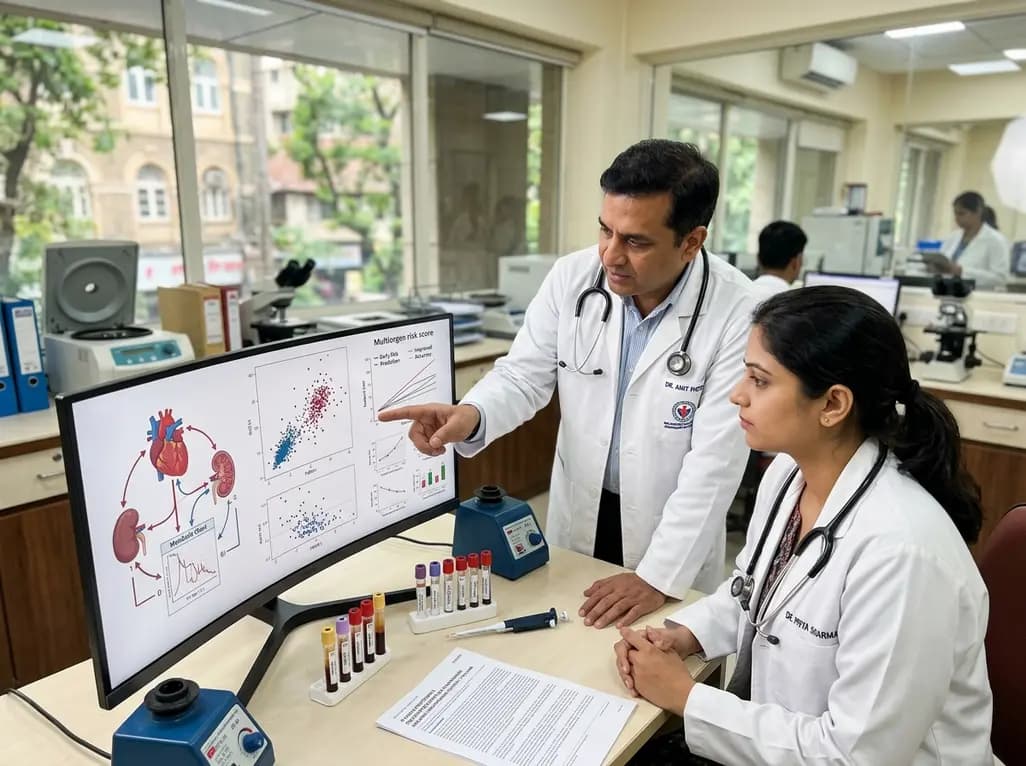
A large UK Biobank study reveals that plasma proteomic signatures capture preclinical organ damage and improve multiorgan risk prediction across early CKM syndrome stages 0 to 2 beyond traditional PREVENT clinical models.
Today

A narrative review investigates whether the articularis genus muscle functions as an independent anatomical entity or blends with the vastus intermedius. We evaluate its morphology, role in retracting the suprapatellar bursa, and direct clinical significance in anterior knee pain and arthroplasty.
Today

A Bayesian multilevel meta-analysis reveals that aerobic training combined with moderate carbohydrate restriction modestly lowers HbA1c in type 2 diabetes. However, sparse data and very low certainty leave incremental benefits over exercise or diet alone unproven, highlighting the need for individualized care.
Today
