

Loading, please wait...
Loading, please wait...

Acute ischemic stroke from large-vessel occlusion represents a critical medical emergency requiring urgent recanalization. Although endovascular thrombectomy restores cerebral perfusion effectively, secondary reperfusion injury frequently compromises long-term neurological recovery. Therefore, clinicians urgently need adjunctive pharmacological therapies to protect vulnerable tissue within the ischemic penumbra. Recent translational investigations highlight the investigational neuroprotectant 2-iminobiotin as a promising candidate to mitigate post-ischemic metabolic injury. Consequently, researchers completed a randomized phase 2a clinical trial evaluating this novel agent alongside standard mechanical thrombectomy.
Ischemic cerebral injury triggers an immediate cascade of metabolic failure, excitotoxicity, and excessive production of free radicals. Nitric oxide synthase enzymes display divergent effects during acute cerebral ischemia. Specifically, neuronal and inducible nitric oxide synthases synthesize toxic quantities of peroxynitrite, which drives cellular necrosis and microvascular breakdown. In contrast, endothelial nitric oxide synthase maintains cerebral microcirculation and supports vascular autoregulation. The neuroprotectant 2-iminobiotin selectively inhibits both neuronal and inducible isoforms without suppressing endothelial synthase.
Furthermore, preclinical research indicates that this selective inhibition dampens neuroinflammation and limits secondary neuronal death after sudden hypoxia-ischemia. When catheter intervention restores circulation, the influx of oxygenated blood inadvertently triggers severe oxidative stress. By blunting toxic nitric oxide production, 2-iminobiotin protects membrane integrity and stabilizes mitochondrial function during reoxygenation. Additionally, the molecule diffuses readily across damaged blood-brain barrier structures to access vulnerable penumbral neurons rapidly. Consequently, selective enzymatic inhibition provides a strong biological rationale for clinical neuroprotection in acute stroke settings.
To evaluate translational safety, Dutch investigators conducted a single-center, randomized, double-blind, placebo-controlled phase 2a trial. The research team recruited forty adult patients presenting with acute ischemic stroke due to large-vessel occlusion. Every enrolled patient qualified for emergent endovascular thrombectomy according to standard clinical criteria. Following initial evaluation, clinicians randomly assigned participants in a 1:1 ratio to receive either 2-iminobiotin or a matched placebo. Notably, treatment began promptly and continued as a continuous intravenous infusion over twenty-four hours.
Moreover, the protocol established rigorous surveillance endpoints to detect adverse drug reactions. The primary safety outcome encompassed continuous vital sign monitoring and intensive pharmacokinetic sampling throughout the initial twenty-eight hours. Additionally, physicians recorded all serious adverse events occurring within seven days of treatment allocation. Secondary outcomes evaluated neurological change on the stroke scale and magnetic resonance infarct volume at twenty-four to forty-eight hours. Finally, the team assessed functional independence using the modified Rankin Scale and documented all-cause mortality at ninety days.
The phase 2a trial demonstrated that continuous infusion of 2-iminobiotin maintained an exceptional safety profile among acute stroke patients. Baseline clinical characteristics showed excellent balance between groups, with a median cohort age of seventy-six years and forty percent female representation. Throughout the twenty-four-hour infusion, hemodynamic parameters remained remarkably stable across both cohorts. Specifically, arterial blood pressure, heart rate, and oxygenation did not diverge between the active and control arms. Furthermore, patients tolerated the infusion without any hypersensitivity reactions or unexpected dropouts.
Remarkably, the study revealed fewer serious adverse events in the active treatment cohort compared to placebo. Overall, seventeen serious adverse events occurred during the observation window. Six active patients (thirty percent) experienced serious adverse events versus eleven placebo patients (fifty-five percent). Meanwhile, detailed pharmacokinetic profiling confirmed predictable drug behavior in this elderly population. The median systemic drug exposure reached an area under the curve of 320 ng·h/mL. Consequently, researchers confirmed that clearance models reliably forecast therapeutic blood concentrations without toxic accumulation.
Although safety represented the primary objective, secondary efficacy analyses revealed intriguing clinical signals that warrant attention. At day seven post-infusion, both treatment arms achieved an identical median score of three on the National Institutes of Health Stroke Scale. However, the active arm demonstrated a narrower interquartile range of one to eleven, compared to zero to sixteen in the placebo group. Similarly, follow-up neuroimaging at twenty-four to forty-eight hours showed a median cerebral infarct volume of 12.5 mL in the active cohort versus 13.7 mL in controls.
More importantly, long-term functional evaluations at ninety days indicated meaningful biological activity. Patients receiving the active neuroprotectant recorded a median modified Rankin Scale score of three, with an interquartile distribution spanning from one to three. In contrast, placebo-treated patients exhibited an interquartile spread spanning from two to six, reflecting substantially greater disability. Additionally, ninety-day mortality dropped strikingly in the active group. Only fifteen percent of active patients died by ninety days, compared to forty percent of placebo recipients. Therefore, these preliminary observations suggest tangible cytoprotective effects during acute tissue reperfusion.
Endovascular thrombectomy revolutionized emergency management for large-vessel occlusion over the past decade. Nevertheless, nearly half of successfully recanalized patients fail to achieve functional independence at three months. This persistent therapeutic ceiling highlights the destructive nature of ischemia-reperfusion injury and microvascular failure. Past neuroprotection trials largely failed because experimental compounds could not reach occluded cerebral vascular territories before irreversible infarction occurred. Fortunately, modern catheter thrombectomy eliminates this delivery obstacle by rapidly reopening proximal arterial occlusions, creating an ideal window for pharmacological neuroprotection.
Consequently, administering neuroprotective agents alongside mechanical recanalization establishes a potent synergistic paradigm for acute stroke care. Intravenous neuroprotectants can preserve penumbral tissue before arterial puncture, protect microvessels during clot extraction, and prevent reperfusion-mediated free radical damage thereafter. Moreover, predictable pharmacokinetics simplify intensive care dosing without complicating acute hemodynamic goals. For acute stroke teams, combining pharmacological neuroprotection could reduce hospital stays and lessen rehabilitative burdens. Thus, this phase 2a milestone represents a crucial bridge toward combined mechanical and medical stroke rescue.
2-Iminobiotin is a selective inhibitor of neuronal and inducible nitric oxide synthase enzymes. By sparing endothelial nitric oxide synthase, the drug preserves vital microvascular perfusion while preventing the excessive generation of peroxynitrite and toxic free radicals. Consequently, this targeted mechanism protects vulnerable neurons and cellular membranes from secondary ischemia-reperfusion injury.
Historic neuroprotection trials failed primarily because occluded intracranial vessels prevented systemically administered drugs from reaching salvageable ischemic tissue before irreversible necrosis occurred. Today, emergent endovascular thrombectomy immediately re-establishes arterial blood flow. This rapid recanalization delivers circulating neuroprotective agents directly into vulnerable penumbral territories, thereby overcoming previous pharmacological delivery barriers and maximizing neuronal survival.
The trial confirmed excellent safety and well-predicted pharmacokinetics during a twenty-four-hour continuous infusion. Patients receiving the drug experienced fewer serious adverse events than control subjects. Secondary findings revealed a notable reduction in ninety-day mortality from forty percent to fifteen percent, alongside a tighter functional disability distribution on the modified Rankin Scale.
Disclaimer: This content is for informational and educational purposes only and should not be considered medical advice. Always consult a qualified healthcare professional regarding any medical condition or treatment. Refer to the latest local and national guidelines for clinical practice.
References

Read summarized clinical updates, watch expert medical content, and earn CME certifications right from your smartphone.
Open your smartphone camera to scan and install.





A randomized phase 2a trial evaluated the safety, tolerability, and pharmacokinetics of neuroprotectant 2-iminobiotin in acute ischemic stroke patients undergoing thrombectomy. The drug was well tolerated with predictable pharmacokinetics and showed promising signals, including reduced 90-day mortality.
Today

A large retrospective cohort study demonstrates that explainable machine learning models, notably XGBoost, accurately predict hospital admission at emergency triage. By analyzing routine triage parameters, hospitals can streamline bed allocation, decrease boarding times, and alleviate acute care overcrowding.
Today

A new quality-improvement initiative reveals that universal maternal mental health screening in the NICU increased screening rates from 29.5% to 95.0%, with nearly 60% of screened mothers requiring psychosocial referrals, highlighting the urgent need for embedded mental health resources.
Today
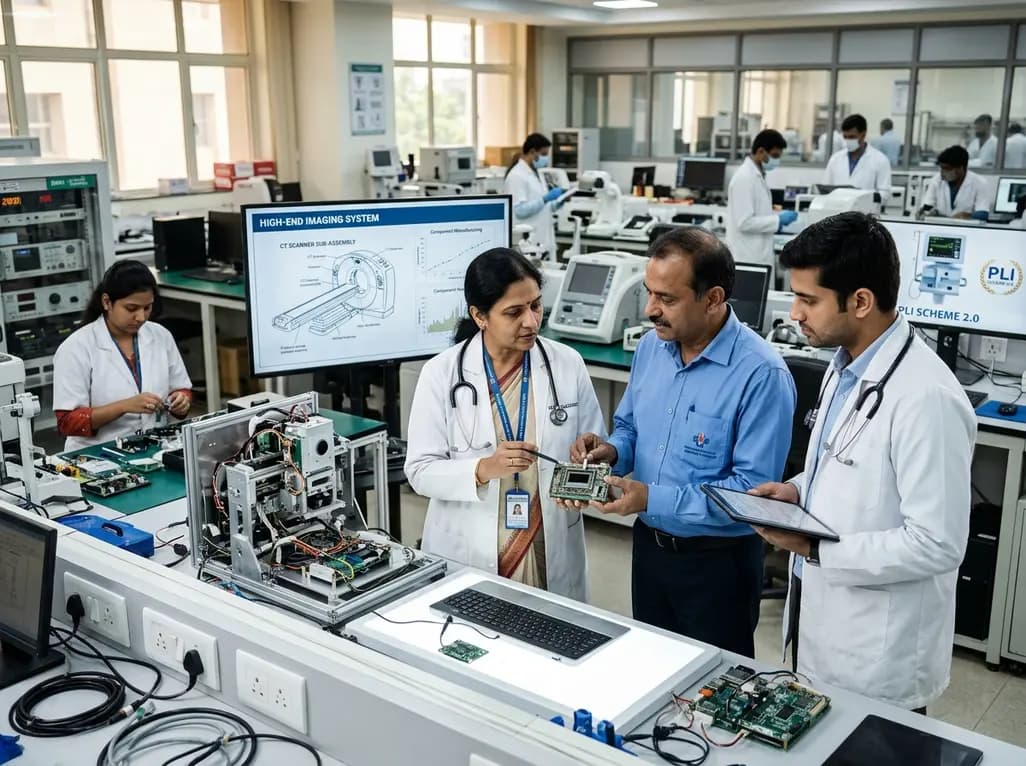
The Department of Pharmaceuticals has extended the medical devices PLI scheme to 2035-36 with a Rs 2,700 crore outlay. Featuring relaxed investment barriers and eliminated sales thresholds, the revised framework targets deep manufacturing, high-end diagnostics, critical MedTech components, and supply resilience.
Today
A metabolomic study reveals that aging delays glutathione synthesis and gamma-glutamylcysteine accumulation following muscle injury. Although precursor supplementation targets this enzymatic bottleneck, in vitro tests show no immediate effect on myogenesis, highlighting the complexity of muscle repair in older adults.
Today

A systematic review evaluates psychological interventions for smoking cessation in diabetes, showing short-term success but highlighting challenges in long-term abstinence.
Today
