.webp&w=384&q=75)

Loading, please wait...
Loading, please wait...

Cervical dystonia (CD) is a complex movement disorder characterized by involuntary neck muscle contractions. Identifying reliable cervical dystonia neurophysiological markers is essential for improving diagnostic accuracy and monitoring treatment efficacy. A recent study specifically evaluated F-wave and cutaneous silent period (CSP) parameters in patients with caput-pattern idiopathic CD during the waning phase of botulinum toxin (BoNT) therapy. Researchers compared these findings with healthy controls to pinpoint alterations in spinal inhibition and segmental excitability.
The study enrolled 21 patients and 21 matched healthy volunteers. Researchers utilized a standard F-wave protocol alongside an expanded CSP measurement protocol. Because conduction velocity depends on anatomical distance, the researchers incorporated precise measurements to ensure a reliable evaluation of neural pathway efficiency. Consequently, this approach offered a clearer picture of both afferent and efferent neural function in the waning phase of treatment.
The results revealed significant neurophysiological differences between patients and healthy individuals. Patients with caput-pattern CD demonstrated prolonged F-wave maximal and mean latencies. Furthermore, they showed increased F-wave chronodispersion and amplitude compared to the control group. These findings indicate a state of spinal hyperexcitability that persists even during the therapeutic cycle of botulinum toxin.
Similarly, the study identified substantial changes in the cutaneous silent period. Patients exhibited significantly shortened CSP duration and end latency. This reduction suggests a loss of spinal and supraspinal inhibition, which is a hallmark of dystonic pathophysiology. Therefore, these electrophysiological changes highlight the persistent sensorimotor network dysfunction in CD patients, particularly as the effects of botulinum toxin begin to wane.
These cervical dystonia neurophysiological markers provide valuable objective data for clinicians. Distinguishing between idiopathic dystonia and pseudodystonia often presents a diagnostic challenge. However, the identification of markers like increased F-wave chronodispersion and shortened CSP duration can offer greater diagnostic clarity. Moreover, these parameters may serve as candidate biomarkers for future therapeutic trials and long-term patient monitoring.
Additionally, the research emphasizes that botulinum toxin therapy may modulate central sensorimotor pathways beyond its local effect on muscle tissue. Understanding these mechanisms helps in tailoring treatment intervals and optimizing dosage for individual patients. These insights are particularly relevant for specialists in India managing chronic movement disorders and pain management cases.
The study identified prolonged F-wave latencies, increased chronodispersion, and shortened cutaneous silent period (CSP) duration as key markers of spinal hyperexcitability and reduced inhibition in cervical dystonia.
While botulinum toxin primarily works through local chemodenervation, research suggests it also modulates central sensorimotor pathways. The study observed these neurophysiological changes during the waning phase, indicating a return to hyperexcitable states as the toxin's effect diminishes.
The CSP reflects the inhibitory mechanisms within the spinal cord and brainstem. A shortened CSP duration indicates a failure of these inhibitory circuits, which contributes to the involuntary muscle contractions seen in dystonia.
Disclaimer: This content is for informational and educational purposes only and does not constitute medical advice. Always seek the advice of a qualified healthcare provider regarding any medical condition. Refer to the latest local and national guidelines for clinical practice.
References
Drużdż A et al. Neurophysiological assessment of F-, M-waves and cutaneous silent period in patients with caput patterns of cervical dystonia in the waning phase of botulinum toxin therapy. Neurol Neurochir Pol. 2026 Apr 01. doi: 10.5603/pjnns.109338. PMID: 41919456.
Albanese A et al. Phenomenology and classification of dystonia: a consensus update. Mov Disord. 2013;28(7):863-73.
Hallett M. Pathophysiology of dystonia. J Neural Transm Suppl. 2006;(70):485-8.
"
Read summarized clinical updates, watch expert medical content, and earn CME certifications right from your smartphone.
Open your smartphone camera to scan and install.





New research highlights spinal hyperexcitability and reduced inhibition in cervical dystonia patients during the waning phase of botulinum toxin therapy....
6 months ago
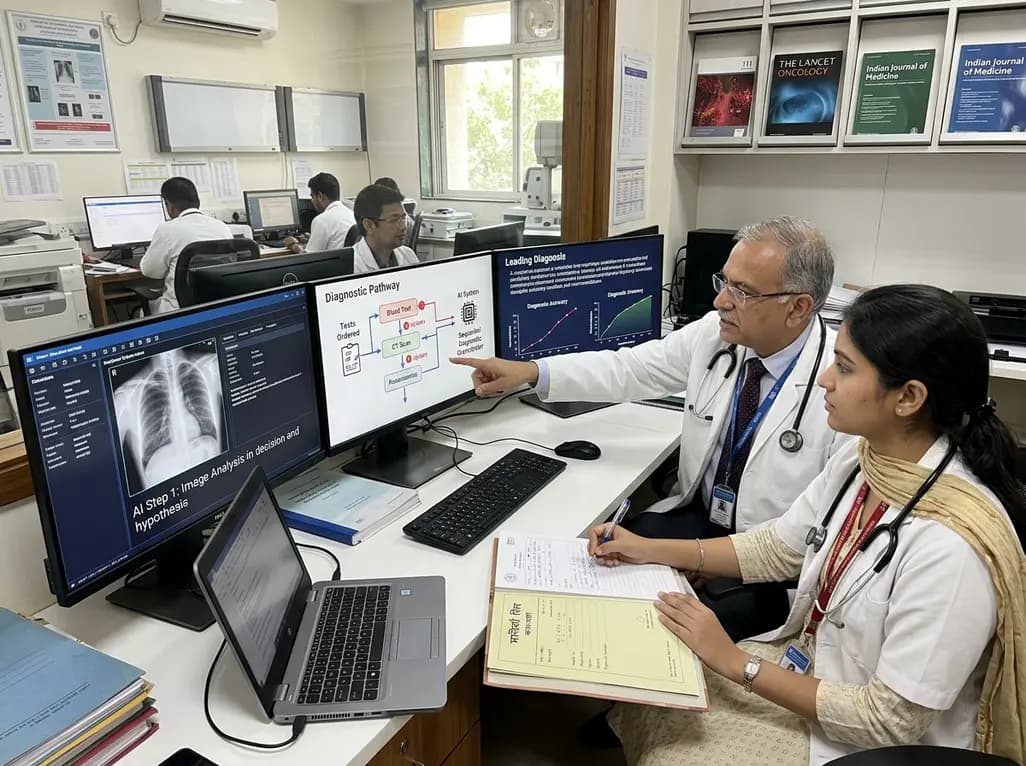
A breakthrough peer-reviewed study demonstrates that a sequential AI diagnosis system can mirror real-world clinical reasoning. By ordering stepwise tests and updating hypotheses dynamically, this multi-agent orchestrator achieved superior diagnostic accuracy while reducing investigative costs.
Today

A prenatal case highlights severe glutaric acidemia type II presenting as bilateral hyperechoic cystic kidneys at 18 weeks. Whole-exome sequencing revealed a novel homozygous ETFDH frameshift variant, demonstrating the power of rapid genetic testing in fetal renal anomalies.
Today

Review how tailored exercise programs benefit frail older patients with heart failure. Explore pathophysiological mechanisms, individualized training prescriptions, and strategies to overcome adherence barriers in clinical practice.
Yesterday

This comparative study evaluates posterior labral tears with and without glenohumeral instability, highlighting distinct demographic patterns, MRI underestimation in stable shoulders, and successful arthroscopic repair outcomes.
Yesterday

A clinical study demonstrates that early intervention with tocilizumab, either as monotherapy or bridged with corticosteroids, achieves significant proptosis reduction and resolves active inflammation in treatment-naive thyroid eye disease.
Yesterday
