.webp&w=384&q=75)

Loading, please wait...
Loading, please wait...

Neuromuscular choristoma (NMC) represents a rare developmental lesion involving the infiltration of mature skeletal muscle into peripheral nerves. While historically considered stable, clinical evidence shows these lesions can progress into aggressive desmoid-type fibromatosis (DTF). This transformation typically occurs within the same nerve territory. Understanding neuromuscular choristoma MRI progression is vital for early detection and avoiding iatrogenic triggers like unnecessary biopsies.
A recent institutional study by Maldonado AA et al. analyzed sequential MR images to establish a classification framework. Consequently, researchers identified three distinct radiological stages that characterize the transition from a benign lesion to a more aggressive state.
The study highlights that Group II patients face a significantly higher risk. In fact, 100% of patients in this group developed DTF within a mean period of 3 years. Furthermore, nearly 36% of Group I patients progressed to Group III over a longer mean interval of 6.2 years. These findings suggest that specific MRI changes serve as "red flags" for imminent tumor formation.
Radiologists and neurologists should adopt structured surveillance protocols. Because DTF is locally aggressive, early identification of Group II features allows for closer monitoring. Clinicians should also exercise extreme caution with biopsies, as trauma often triggers the rapid growth of DTF. Therefore, MRI remains the gold standard for non-invasive longitudinal management.
Group II, or "NMC Plus," is identified by atypical foci of low T1/T2 signal intensity and moderate to significant post-contrast enhancement. These findings distinguish it from the classic stable NMC.
Serial MRI helps track the transition from benign choristoma to aggressive fibromatosis. Since Group II patients show a 100% progression rate within three years, frequent imaging is essential to adjust management before the mass extends beyond the nerve sheath.
Disclaimer: This content is for informational and educational purposes only. It does not constitute professional medical advice, diagnosis, or treatment. Always seek the advice of your physician or other qualified health provider with any questions you may have regarding a medical condition. Refer to the latest local and national guidelines for clinical practice.
References

Read summarized clinical updates, watch expert medical content, and earn CME certifications right from your smartphone.
Open your smartphone camera to scan and install.





A study defines three radiological groups to track the progression of neuromuscular choristoma (NMC) into aggressive desmoid-type fibromatosis (DTF) via MRI...
6 months ago

A retrospective cohort study reveals that frailty quadruples the odds of pressure injuries in hospitalized older adults. Integrating the Clinical Frailty Scale with comprehensive geriatric care is crucial for identifying vulnerability early and implementing targeted multidisciplinary prevention.
Today

Occult maternal malignancy accounts for 3.82% of persistent unreportable NIPT results with genomic noise. Multiple chromosomal aberrations, notably on chromosome 18, warrant thorough oncological evaluation and whole-body MRI to ensure timely maternal diagnosis while preserving fetal care.
Today

This article reviews the forensic and clinical complexities of acute myocarditis arising on left ventricular hypertrophy in children, highlighting early diagnostic red flags and multidisciplinary postmortem autopsy protocols.
Today
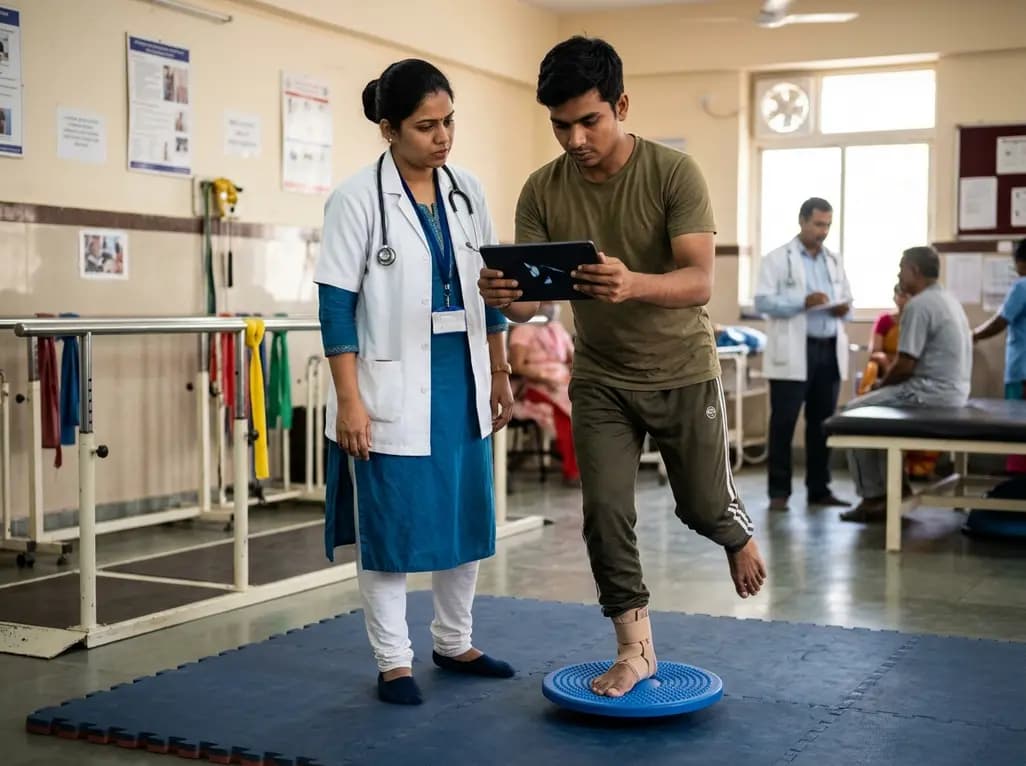
A randomized controlled trial demonstrates that an eight-week dual-task training intervention significantly improves static and dynamic postural control over standard balance exercises in individuals with chronic ankle instability, addressing critical neurocognitive deficits during athletic and daily activities.
Today

A retrospective cohort study of 7,716 ICU patients from the MIMIC-IV database demonstrates that Gradient Boosting Decision Trees significantly outperform traditional SOFA scores in predicting in-hospital mortality among patients with sepsis and diabetes, with SHAP analysis providing clinical interpretability.
Today
