.webp&w=384&q=75)

Loading, please wait...
Loading, please wait...

Major depressive disorder imposes a substantial therapeutic burden across global healthcare settings, particularly where psychiatric specialist shortages limit access to evidence-based psychotherapy. Specifically, clinicians frequently encounter patients who cannot attend conventional twelve to twenty weekly psychotherapy sessions due to financial, occupational, or geographical barriers. Consequently, researchers have evaluated shortened, technology-augmented psychotherapeutic interventions designed to expand patient access while maintaining high therapeutic fidelity. A landmark clinical trial examined the therapeutic efficacy and neurobiological plasticity induced by brief computer-assisted CBT in patients diagnosed with major depressive disorder. In this trial, participants completed a structured hybrid protocol combining five therapist-administered manualized sessions with interactive digital training modules. The results demonstrated substantial symptom reduction alongside measurable neuroplastic alterations across critical neural networks. Furthermore, these clinical outcomes mirrored the symptom improvements typically achieved through conventional, lengthy psychotherapy programs. Clinicians now possess objective neuroimaging evidence demonstrating that brief digital interventions directly remodel core emotional circuitry. Therefore, this scalable therapeutic framework presents an exciting avenue for psychiatric care, bridging treatment gaps across overburdened healthcare systems. Understanding how digital modalities reorganize neural connectivity allows clinicians to prescribe evidence-based behavioral interventions with greater precision and clinical confidence.
The randomized controlled study investigated seventy-two individuals diagnosed with major depressive disorder alongside forty healthy control participants. Researchers randomly assigned the clinical cohort to either the brief computer-assisted therapy program or a waitlist control condition. Specifically, the active intervention comprised only five therapist-administered, manualized cognitive behavioral therapy sessions delivered alongside structured home computer training exercises. Meanwhile, investigators acquired high-resolution functional magnetic resonance imaging data from all participants at baseline. They repeated functional neuroimaging scans for the clinical cohort following intervention completion to track circuit alterations over time. Additionally, the research team implemented linear mixed-effects models to evaluate prospective changes in depression severity across the treatment timeline. Linear regression models compared baseline and post-treatment functional connectivity patterns between depressed participants and healthy controls. Thus, the rigorous experimental architecture established clear controls against spontaneous remission and scanning artifacts. Moreover, by limiting direct therapist contact to just five sessions, the protocol evaluated a resource-conscious model that clinicians can integrate into busy outpatient settings. Ultimately, the methodology demonstrated that structured digital homework effectively consolidates direct psychotherapeutic principles without sacrificing clinical rigor, patient safety, or therapeutic adherence.
The clinical outcomes revealed remarkable therapeutic improvements among participants completing the shortened hybrid protocol. Following treatment completion, depressed participants exhibited highly significant reductions on both clinician-rated and patient-reported outcome measures. Specifically, scores on the Montgomery-Åsberg Depression Rating Scale and the Beck Depression Inventory decreased significantly throughout treatment. In contrast, participants assigned to the waitlist control arm did not experience comparable symptomatic recovery during the parallel evaluation period. Furthermore, the magnitude of depressive symptom reduction closely paralleled historical benchmarks established by standard, sixteen-session cognitive behavioral therapy protocols. Depressed individuals gained practical coping mechanisms that prevented maladaptive cognitive spiraling during acute distress. Patients acquired cognitive restructuring techniques during therapist sessions and reinforced these strategies through regular home computerized exercises. Consequently, this frequent digital engagement empowered patients to identify and challenge dysfunctional cognitive distortions during everyday life. In addition, the low session burden reduced patient attrition and promoted consistent treatment completion. Accordingly, these clinical findings confirm that computer-augmented behavioral interventions produce substantial mood improvement within brief therapeutic windows. Clinicians can confidently recommend shortened hybrid therapy protocols as viable alternatives when full-course psychotherapy remains inaccessible to patients.
Beyond symptom reduction, the trial documented striking neuroplastic remodeling across functional brain networks. Functional magnetic resonance imaging revealed significant connectivity shifts following completion of the computer-assisted intervention. Specifically, researchers observed more negative functional connectivity between the dorsolateral prefrontal cortex and the subgenual anterior cingulate cortex. Similarly, the default mode network established significantly more negative connectivity with the subgenual anterior cingulate cortex. In addition, the frontoparietal network developed increased positive connectivity with several crucial subcortical structures. These subcortical structures included the nucleus accumbens, bilateral amygdalae, bilateral hippocampi, and the subgenual anterior cingulate cortex. Meanwhile, the default mode network exhibited enhanced positive functional connectivity with both ventral and dorsal bilateral anterior insular cortices. Importantly, investigators noted a statistically significant correlation between reductions in Beck Depression Inventory scores and increased frontoparietal-subgenual cingulate connectivity. Therefore, neuroimaging established that psychological interventions trigger tangible biological adaptations within distributed emotional and executive networks. These neuroimaging findings prove that targeted psychotherapeutic interventions induce neuroplastic changes that normalize depressive pathophysiological circuit disruptions. Moreover, observing physical alterations in resting-state connectivity underscores the biological legitimacy of digital psychotherapeutic modalities. Clinicians gain measurable parameters validating neurocircuit repair.
The observed connectivity shifts clarify the neural mechanisms supporting therapeutic recovery while offering pragmatic insights for psychiatric practice in India. Major depression characteristically impairs top-down prefrontal control over hyperactive limbic and affective hubs. Consequently, patients experience persistent ruminative thought patterns, emotional dysregulation, and heightened negative affective bias. However, the hybrid intervention augmented prefrontal connectivity with subcortical and paralimbic structures, successfully re-establishing regulatory equilibrium. Specifically, increased decoupling between the dorsolateral prefrontal cortex and the subgenual cingulate reflects restored cognitive inhibition over deep emotional distress. Furthermore, enhanced coordination between the frontoparietal control network and limbic structures facilitates conscious cognitive reappraisal. In India, where a severe shortage of psychotherapists restricts psychiatric access, these mechanistic insights provide immense clinical relevance. Most suburban and rural patients depend entirely on pharmacotherapy due to high therapy expenses and distant facilities. Consequently, implementing a brief five-session hybrid model preserves scarce clinical bandwidth while providing robust biological and symptomatic benefits. Additionally, objective neuroimaging proof helps destigmatize mental health care, reassuring Indian patients that psychotherapy drives physical brain remodeling. Therefore, integrating computer-augmented behavioral therapy into clinical workflows can expand access, optimize resources, and modernize mood disorder treatment nationwide.
Computer-assisted CBT combines brief therapist consultations with structured digital training exercises. While traditional psychotherapy requires sixteen to twenty in-person sessions, this hybrid format uses only five therapist encounters. Patients complete interactive computerized modules between sessions to master cognitive restructuring skills, achieving comparable clinical improvement while significantly reducing clinician time and healthcare costs.
Neuroimaging demonstrates that the intervention enhances negative functional connectivity between the prefrontal cortex and subgenual anterior cingulate cortex. Additionally, it strengthens positive connectivity between frontoparietal networks and subcortical structures, including the amygdala and nucleus accumbens. These neuroplastic modifications re-establish top-down executive regulation over hyperactive limbic regions, directly alleviating depressive symptoms.
Yes, clinicians can readily adapt computer-assisted protocols within outpatient clinics and hospital psychiatry departments. This hybrid model mitigates therapist shortages by reducing direct clinical session time by nearly seventy percent. Furthermore, clinicians can prescribe digital cognitive modules on home computers or mobile devices, expanding evidence-based psychotherapeutic care across underserved rural and semi-urban communities.
Disclaimer: This content is for informational and educational purposes only... Refer to the latest local and national guidelines for clinical practice.
References

Read summarized clinical updates, watch expert medical content, and earn CME certifications right from your smartphone.
Open your smartphone camera to scan and install.





A clinical trial demonstrates that brief computer-assisted CBT remaps frontoparietal and prefrontal brain connectivity in major depressive disorder while delivering clinical outcomes comparable to standard psychotherapy, offering a scalable solution to clinical workforce shortages.
Today

The CARE study protocol introduces a multilingual, RAG-powered conversational interface designed by IIT Bombay to support tobacco cessation in India. Evaluating feasibility and behavioral outcomes across three cessation centers, this digital health initiative aims to enhance quitting support for diverse users.
Today

A large UK cohort study of 1.4 million women shows that pregnancy complications, including gestational diabetes, hypertension, and preterm birth, substantially raise long-term risks for hypertension, chronic kidney disease, type 2 diabetes, and cardiovascular events, highlighting early postpartum intervention needs.
Today
A cross-sectional study reveals that hypertension knowledge, illness perceptions, depression, and substance use significantly predict self-care behaviors. Addressing mental health and cognitive beliefs in primary care is crucial for optimal blood pressure control and cardiovascular disease prevention.
Today
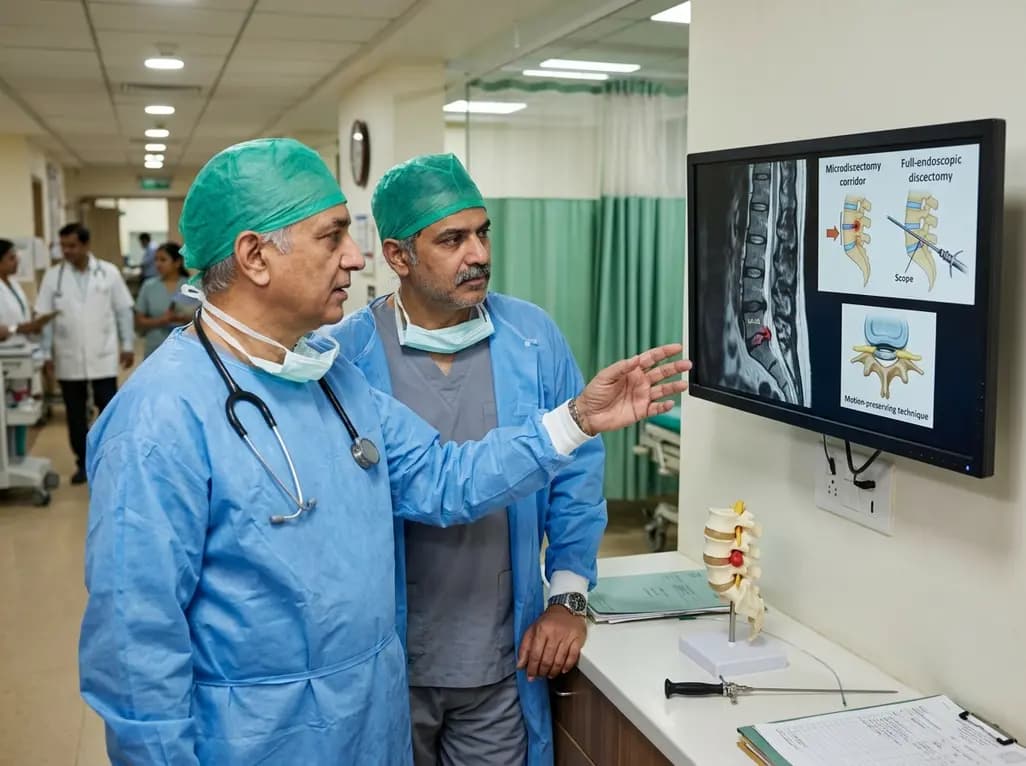
This clinical overview examines recent advancements in lumbar disc herniation surgery, comparing microscopic and full-endoscopic discectomy while highlighting biportal techniques and emerging motion-preserving innovations for spine specialists.
Today

Small interfering RNA (siRNA) therapeutics harness RNA interference to degrade disease-causing messenger RNA. By delivering hepatocyte-targeted, durable gene silencing, agents targeting PCSK9, LPA, and angiotensinogen offer potent cardiovascular risk reduction with infrequent, biannual dosing schedules.
Today
