

Loading, please wait...
Loading, please wait...
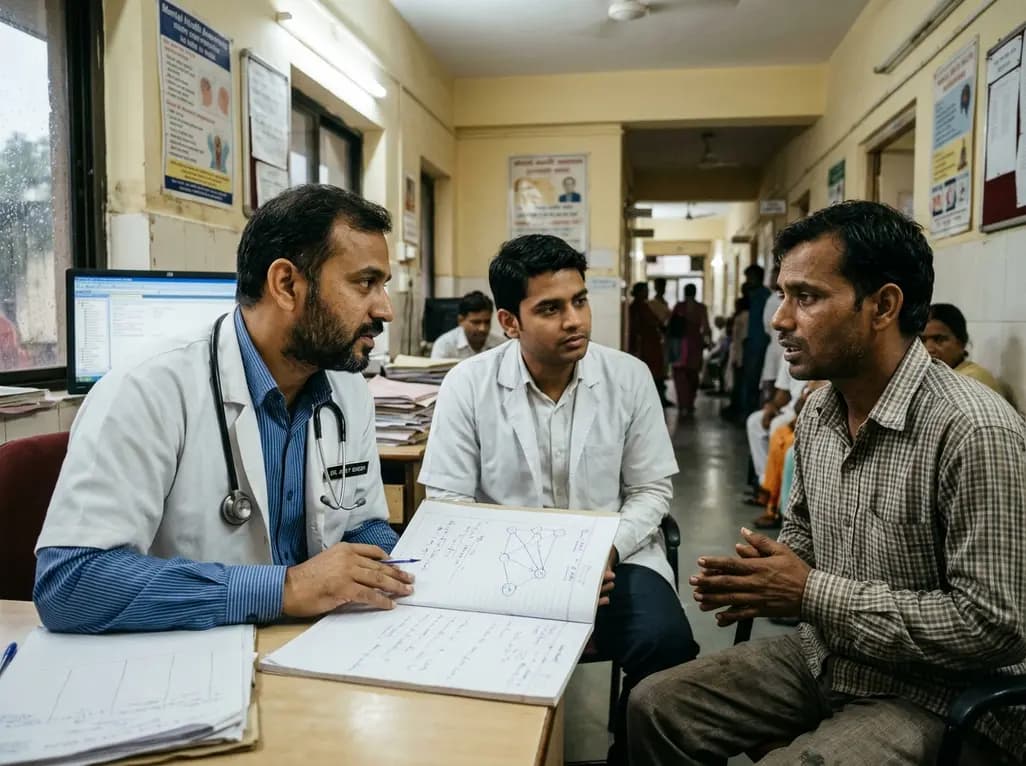
Understanding the intricate relationship between depression and PTSD symptoms is crucial for clinicians dealing with displaced and conflict-affected communities. Forcibly displaced persons frequently endure prolonged interpersonal violence, catastrophic loss, and severe socio-economic insecurity. Consequently, affective disturbances and trauma-related disorders exhibit high rates of comorbidity in these groups. Traditional diagnostic frameworks frequently treat major depression and post-traumatic stress disorder as separate entities. However, this categorical approach obscures how individual symptoms interact to sustain clinical distress. Recent investigations in psychiatric epidemiology increasingly leverage network theory to address this clinical limitation. By conceptualizing disorders as complex systems of mutually reinforcing features, clinicians gain deeper insight into psychopathology. Specifically, this paradigm permits healthcare teams to identify which clinical features drive overall distress and which bridge distinct diagnostic domains.
A recent large-scale investigation evaluated mental health profiles among 9,397 participants in the Cox's Bazar Panel Survey. The cohort comprised forcibly displaced Rohingya refugees and adjacent host-community members in Bangladesh. Researchers administered the Patient Health Questionnaire-9 alongside the Harvard Trauma Questionnaire-16 to assess affective and trauma manifestations. Subsequently, the investigators constructed regularized partial correlation networks to evaluate symptom centrality, bridge strength, and overall network stability. Furthermore, they implemented Bayesian network modelling to evaluate directed acyclic graphs. This advanced computational step highlighted potential directional dependencies among co-occurring complaints. Importantly, the overall network demonstrated robust stability, evidenced by a correlation stability coefficient of 0.75. Therefore, the empirical network topology provides reliable statistical insights rather than random sample noise.
Centrality analysis revealed that specific cognitive and affective features dominate the structural architecture of the network. Notably, guilt, anhedonia, recurrent traumatic thoughts, emotional detachment, hopelessness about the future, and rumination emerged as the most central nodes. In network theory, highly central symptoms exert disproportionately strong influences across the entire pathological network. When a patient experiences severe guilt or intrusive memories, these manifestations rapidly activate adjacent nodes. For example, persistent rumination over past traumas can intensify feelings of worthlessness and sustained anhedonia. Moreover, Bayesian directed acyclic graphs suggested that anhedonia and intrusive memories frequently trigger subsequent emotional detachment. Consequently, therapeutic interventions that fail to deactivate these central cognitive nodes may achieve only partial or transient symptomatic relief.
Bridge symptoms represent critical pathways through which psychopathology spreads from one disorder community to another. In this study, bridge-strength metrics identified guilt and physical health problems as the primary connectors between affective and post-traumatic clusters. Guilt frequently arises from survival conflict, perceived moral injury, or inability to protect family members during forced migration. Consequently, unaddressed guilt can easily trigger depressive hopelessness while perpetuating post-traumatic hyperarousal. Similarly, somatic complaints and unexplained physical ailments operate as key bridge nodes. Displaced individuals often experience psychological suffering through bodily idioms of distress, such as musculoskeletal pain and gastrointestinal upset. Therefore, primary care physicians must recognize that persistent somatic concerns may bridge affective despondency and unexpressed traumatic memories.
The researchers also performed subgroup and sensitivity analyses across different settlement types and between biological sexes. Intriguingly, overall network structure did not differ significantly between male and female participants. In contrast, network architecture varied noticeably according to settlement conditions. Displaced refugees residing in densely populated camps exhibited distinct symptom configurations compared to host-community members in standard rural villages. Ongoing environmental stressors, including lack of clean water, cramped shelters, and restricted freedom of movement, constantly reshape symptom expression. Therefore, clinicians working in humanitarian emergencies cannot adopt a monolithic treatment model. Instead, healthcare teams must account for contextual post-migration living difficulties. Addressing basic environmental stressors often alleviates the chronic autonomic arousal that fuels psychiatric symptom connectivity.
These findings provide clear guidance for designing streamlined psychiatric interventions in resource-constrained environments. Intervening directly upon central nodes offers greater systemic efficiency than diffuse, generalized supportive therapy. Specifically, cognitive processing techniques targeting trauma-related guilt, prolonged rumination, and intrusive recall can disrupt the network core. Clinicians should integrate evidence-based protocols, such as narrative exposure therapy and culturally adapted cognitive behavioral therapies. Furthermore, addressing somatic symptoms through collaborative care models prevents distress from bridging into full-scale depressive episodes. Healthcare providers must screen systematically for guilt and somatization during general medical encounters. Ultimately, deactivating pivotal bridge nodes can prevent the recursive spiral of comorbid depression and post-traumatic stress.
The primary bridge symptoms identified in large-scale network models are excessive guilt and physical health problems. Guilt links post-traumatic intrusion with depressive worthlessness. Meanwhile, somatic complaints channel trauma-related physiological arousal into profound affective exhaustion, allowing clinical distress to spread readily across both diagnostic domains.
Living conditions alter symptom connectivity significantly. Displaced refugees in dense camps endure chronic environmental stressors, material deprivation, and movement limitations. These persistent hardships amplify autonomic arousal and alter network architecture, requiring clinicians to address socio-environmental stability alongside formal psychotherapy.
Bayesian network modelling generates directed acyclic graphs to evaluate probabilistic directional relationships among symptoms. Unlike undirected correlation networks, Bayesian methods identify which clinical features likely trigger or sustain downstream symptoms, helping clinicians prioritize the most influential therapeutic targets during intervention planning.
Disclaimer: This content is for informational and educational purposes only and should not be taken as professional medical advice. Always consult a healthcare professional for diagnosis and treatment decisions. Refer to the latest local and national guidelines for clinical practice.
References

Read summarized clinical updates, watch expert medical content, and earn CME certifications right from your smartphone.
Open your smartphone camera to scan and install.





Discover insights from a large-scale network analysis of depression and PTSD symptoms in displaced populations. Learn how guilt, rumination, and somatic complaints serve as critical bridge symptoms to inform targeted, culturally attuned psychiatric interventions.
Today

A large retrospective cohort study demonstrates that explainable machine learning models, notably XGBoost, accurately predict hospital admission at emergency triage. By analyzing routine triage parameters, hospitals can streamline bed allocation, decrease boarding times, and alleviate acute care overcrowding.
Today

A new quality-improvement initiative reveals that universal maternal mental health screening in the NICU increased screening rates from 29.5% to 95.0%, with nearly 60% of screened mothers requiring psychosocial referrals, highlighting the urgent need for embedded mental health resources.
Today

The Department of Pharmaceuticals has extended the medical devices PLI scheme to 2035-36 with a Rs 2,700 crore outlay. Featuring relaxed investment barriers and eliminated sales thresholds, the revised framework targets deep manufacturing, high-end diagnostics, critical MedTech components, and supply resilience.
Today
A metabolomic study reveals that aging delays glutathione synthesis and gamma-glutamylcysteine accumulation following muscle injury. Although precursor supplementation targets this enzymatic bottleneck, in vitro tests show no immediate effect on myogenesis, highlighting the complexity of muscle repair in older adults.
Today

A systematic review evaluates psychological interventions for smoking cessation in diabetes, showing short-term success but highlighting challenges in long-term abstinence.
Today
